Reviewed by the Help Dementia Editorial Team — our editors review every article for accuracy against guidance from the National Institute on Aging, the Alzheimer’s Association, and peer-reviewed sources.
Yes, new blood tests are fundamentally changing how Alzheimer’s disease is detected—and they’re doing it in ways that seemed impossible just five years ago. Two major FDA-cleared tests have recently launched that can identify Alzheimer’s pathology with accuracy comparable to invasive brain imaging and spinal fluid tests. As of February 2026, for the first time, a primary care doctor can order a simple blood test and receive results that reliably indicate whether Alzheimer’s disease processes are already happening in a patient’s brain, even before memory problems appear.
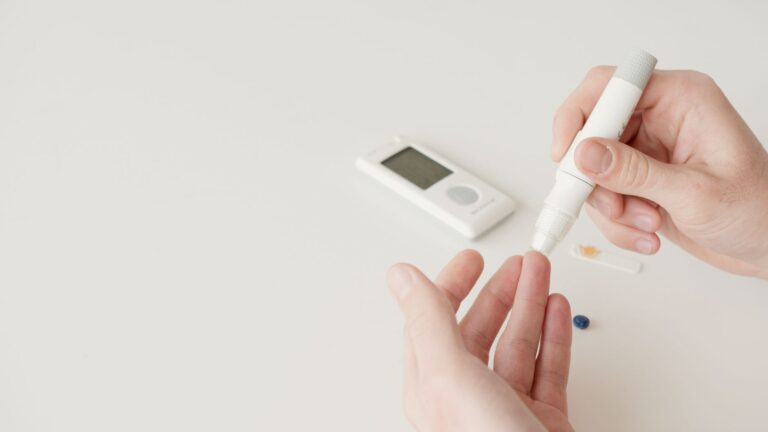
The most significant breakthrough is that these tests can now predict Alzheimer’s disease onset years before symptoms emerge. A single blood test can estimate when a person might begin showing cognitive decline, giving patients and their families a window to plan, prepare, and pursue early interventions. Unlike previous detection methods that required PET scans, MRI imaging, or painful spinal taps, a finger-prick blood sample—collected at home and mailed without refrigeration—can reveal the same critical biomarkers that indicate Alzheimer’s disease is developing.
Table of Contents
- How Accurate Are These New Alzheimer’s Blood Tests?
- Understanding the Plasma Biomarkers Behind Detection
- From Lab Samples to Home Collection: The Accessibility Breakthrough
- Cost, Coverage, and Access Barriers in 2026
- What Blood Tests Miss: Limitations and Important Caveats
- Predicting When Symptoms May Appear
- Clinical Guidance, Guidelines, and What Happens After a Positive Test
- The Broader Picture and What’s Next
- Conclusion
How Accurate Is the New Blood Test for Alzheimer’s?
The Lumipulse G test, which measures phosphorylated tau 217 (pTau217) and beta-amyloid 1-42, achieved FDA clearance on May 16, 2025, and demonstrated extraordinary diagnostic accuracy. When researchers compared the blood test results to PET imaging—the gold standard for detecting Alzheimer’s pathology in the brain—the pTau217 test predicted these brain changes with more than 90% accuracy. Using a two-cutoff approach, the test achieved 93-94.7% sensitivity (ability to correctly identify people with Alzheimer’s pathology) and 93.9-95% specificity (ability to correctly identify those without it). For perspective on these numbers: the area-under-the-curve (AUC) measurement for pTau217 blood tests ranges from 0.95 to 0.97, which places them in the same accuracy range as cerebrospinal fluid (CSF) tests—invasive procedures that require a lumbar puncture—and as accurate as tau-PET brain scans that cost thousands of dollars and expose patients to radiation.
The Elecsys pTau-181 test, launched nationwide by Labcorp on February 11, 2026, uses an optimal diagnostic cutoff of 1.7 pg/mL and achieved 74% sensitivity and 84% specificity in clinical studies. While these figures are slightly lower than pTau217, they remain clinically meaningful for identifying people at risk. The key limitation to understand: blood test accuracy is high for detecting Alzheimer’s pathology in the brain, but detecting pathology is not the same as predicting who will develop dementia. Some people have Alzheimer’s pathology on brain scans but never experience significant cognitive decline during their lifetime. The blood tests are excellent at identifying the biological fingerprint of Alzheimer’s; they’re less precise at predicting who will progress to symptomatic disease.

Understanding the Plasma Biomarkers Behind Detection
Phosphorylated tau proteins (particularly pTau217 and pTau181) are fragments that accumulate in the blood when tau tangles form in the brain—one of the hallmark pathological features of Alzheimer’s disease. These proteins can be detected through blood tests because they leak from the brain into the cerebrospinal fluid and eventually into the bloodstream. When researchers measure phosphorylated tau levels, they’re essentially looking for a molecular signature that indicates Alzheimer’s disease processes are active, even if the person hasn’t noticed any memory problems yet. Beta-amyloid 1-42, the other protein measured in the Lumipulse test, tells a complementary story.
Lower levels of amyloid 1-42 in the blood—combined with elevated phosphorylated tau—indicate that amyloid plaques are accumulating in the brain and being cleared from circulation. This ratio-based approach (pTau217 in relation to beta-amyloid levels) improves diagnostic accuracy because it accounts for individual variation and provides a more complete picture of what’s happening in the brain. What these tests cannot reveal is how quickly the disease will progress, whether cognitive symptoms will ever become noticeable, or what specific memory or thinking problems a person might experience. A positive blood test indicates pathology exists; it doesn’t predict the timeline or severity of decline for any individual patient. This distinction matters enormously for counseling—a person with Alzheimer’s pathology at age 65 may experience decades of cognitive health before symptoms emerge, or they may never progress to dementia.
From Lab Samples to Home Collection: The Accessibility Breakthrough
One of the most consequential advances was the large-scale validation of finger-prick blood samples collected at home and mailed to laboratories without refrigeration or prior processing. Previously, researchers questioned whether biomarkers could survive the temperature changes and transport conditions of home collection. The answer turned out to be yes. This validation opened the door to truly accessible Alzheimer’s detection—no need to schedule an office visit, no needle anxiety, no transportation barriers. The practical implications are substantial.
A patient can complete a simple finger-prick test at home, mail the sample directly to a laboratory, and receive results that are as diagnostically reliable as blood drawn in a clinical setting. This method dramatically expands who can access Alzheimer’s biomarker testing, particularly for rural patients, those with mobility limitations, and people in areas without nearby specialty clinics. The Labcorp test launched in February 2026 is the first FDA-cleared blood test for Alzheimer’s specifically approved for use in primary care settings, meaning a patient’s regular doctor—not just neurologists or geriatricians—can now order the test. However, home collection introduces new variables: proper sample handling by the patient, timing of collection, and individual physiological factors all matter. Not everyone with good intentions will collect the sample correctly, and some samples may be compromised during shipping. Additionally, the widespread availability of home collection testing raises questions about informed consent—patients need to understand what a positive result means before they receive it, not after.

Cost, Coverage, and Access Barriers in 2026
The out-of-pocket cost for the Labcorp pTau-181 blood test is $227, which is affordable compared to PET imaging (often $2,000-$5,000) or other neuroimaging, but it may still represent a barrier for uninsured or underinsured patients. The more significant barrier is that Medicare does not currently cover Alzheimer’s blood tests, and private insurance coverage varies dramatically by carrier and plan. Some insurers may cover the test only if ordered by a neurologist, others only if the patient has documented cognitive symptoms, and many won’t cover it at all. This creates an inequitable situation where the diagnostic advantage of blood tests is most accessible to higher-income patients who can afford the $227 out-of-pocket cost.
Medicare beneficiaries—the population with the highest prevalence of Alzheimer’s disease and the greatest need for early detection—cannot access these tests through their insurance. Advocacy organizations and the Alzheimer’s Association have called for Medicare coverage, arguing that early identification of at-risk patients could improve research enrollment, enable earlier interventions, and help families plan for the future. The coverage landscape is shifting. As more insurance plans recognize the clinical utility of blood tests, especially following the Alzheimer’s Association’s 2025 clinical practice guideline, coverage may expand over the next few years. However, during this transition period, awareness of the true cost—including whether your specific insurance plan covers the test—is essential before ordering.
What Blood Tests Miss: Limitations and Important Caveats
Blood tests for Alzheimer’s biomarkers detect pathology, not disease. This distinction is crucial because amyloid plaques and tau tangles accumulate in the brains of cognitively normal older adults, sometimes for decades, without causing noticeable symptoms. A positive Alzheimer’s blood test means Alzheimer’s pathology is present; it does not mean a person will develop dementia in any specified timeframe. Some people with pathology on brain scans live out their lives with intact memory and thinking, while others progress rapidly to cognitive decline. The tests also cannot differentiate between early Alzheimer’s disease and other forms of cognitive decline.
If a patient has Alzheimer’s pathology plus vascular contributions to cognitive decline (from stroke history or hypertension), or Lewy body pathology (associated with Parkinson’s disease and related conditions), a blood test will only identify the Alzheimer’s component. This is why clinical context matters: a positive blood test should be one piece of a comprehensive assessment that includes cognitive testing, medical history, imaging, and evaluation for other causes of cognitive problems. Furthermore, blood tests available as of 2026 are optimized for research and diagnostic purposes. They’re not yet helpful for monitoring treatment response to Alzheimer’s medications or predicting which treatments will work best for any given patient. They identify who has the disease but not how to tailor treatment to individual biology.

Predicting When Symptoms May Appear
One of the most scientifically exciting findings is that researchers can estimate when a person is likely to develop Alzheimer’s symptoms using phosphorylated tau blood levels. Studies have shown that plasma pTau217 can predict progression to symptomatic disease years before symptoms or brain scan changes become evident. The higher the phosphorylated tau level, the shorter the expected timeline before cognitive symptoms emerge—though this prediction is probabilistic rather than certain for individuals.
A concrete example: a cognitively normal 60-year-old with a borderline elevated pTau217 level might be counseled that they have a substantial risk of developing cognitive symptoms within the next 5-10 years, whereas another 60-year-old with a very high level might be at risk within 1-3 years. These timelines help patients and families prepare, engage in preventive strategies (cardiovascular health, cognitive stimulation, sleep quality), and plan for potential future care needs. This prognostic capability is genuinely new and reflects a shift from simply diagnosing existing disease to predicting disease trajectory.
Clinical Guidance, Guidelines, and What Happens After a Positive Test
The Alzheimer’s Association published its first clinical practice guideline for blood-biomarker use in specialty settings in 2025, establishing standards for how and when doctors should use these tests. Primary care guidance is currently in development, which reflects the recent approval of the Labcorp test for primary care use. These guidelines emphasize that a positive blood test should always be followed by cognitive assessment—either formal neuropsychological testing or validated screening tools like the Montreal Cognitive Assessment—to determine whether cognitive changes are actually present.
After a positive blood test and negative cognitive assessment (no memory complaints or cognitive decline), the standard approach is counseling about modifiable risk factors: managing cardiovascular risk factors like hypertension and high cholesterol, staying cognitively and socially active, maintaining quality sleep, and reducing alcohol use. Some patients may be candidates for clinical trials testing preventive treatments, or may choose to pursue monitoring with repeat cognitive testing every 1-2 years. If cognitive symptoms are present along with a positive blood test, treatment options may include FDA-approved medications like lecanemab, which has shown modest benefits in slowing cognitive decline in early symptomatic disease.
The Broader Picture and What’s Next
The emergence of reliable blood tests for Alzheimer’s disease represents a transformation in how we detect and potentially manage this disease. For the first time, primary care doctors have a simple, accessible tool to identify at-risk patients before crisis strikes. This shifts Alzheimer’s detection from a crisis-driven model—where families seek a diagnosis after memory problems have become impossible to ignore—to a proactive screening model where detection happens during routine health care.
The next frontiers include expanded insurance coverage, larger studies to refine predictive timelines for different populations, and development of blood tests that can monitor how people respond to Alzheimer’s treatments. The field is moving rapidly. What seems cutting-edge in mid-2026 may be routine within five years. The key for patients and families is understanding that these tests represent a real advance in early detection—while also recognizing they’re one tool among many, and that positive results require thoughtful medical counseling, not panic.
Conclusion
New blood tests for Alzheimer’s disease represent a genuine breakthrough in early detection, with FDA-approved tests like Lumipulse G (pTau217) and Elecsys (pTau181) now offering diagnostic accuracy comparable to expensive brain imaging and invasive spinal taps. These tests can identify Alzheimer’s pathology years before symptoms appear and can even predict when symptoms may develop, giving patients and families time to prepare and engage in preventive strategies. Home collection methods have made testing accessible, and primary care doctors can now order these tests as part of routine care.
If you’re concerned about Alzheimer’s disease—either for yourself or a family member—understanding these new blood tests and discussing them with your doctor is an important step in accessing early detection. However, a positive result should always be paired with cognitive assessment and clinical counseling to determine what the test means for your specific situation. The conversation about Alzheimer’s detection has changed in 2026. It’s worth having with your healthcare provider.
You Might Also Like
- How Real-World Function Matters in Alzheimer’s Treatment
- Can Alzheimer’s News Help Build Better Blog Topics?
- Can New Technology Be Introduced After Diagnosis?
Related reading
- should Adults Ask Their Doctor About Alzheimer’s Blood Testing
- can Alzheimer’s Be Detected Before Memory Loss Begins
- why Early Alzheimer’s Testing Could Create New Ethical Questions
- could Urine Tests Become the Next Alzheimer’s Diagnostic Tool
- what FDA Breakthrough Status Means for an Alzheimer’s Urine Test
For more on this topic, see Alzheimer’s Association — clinical trials.