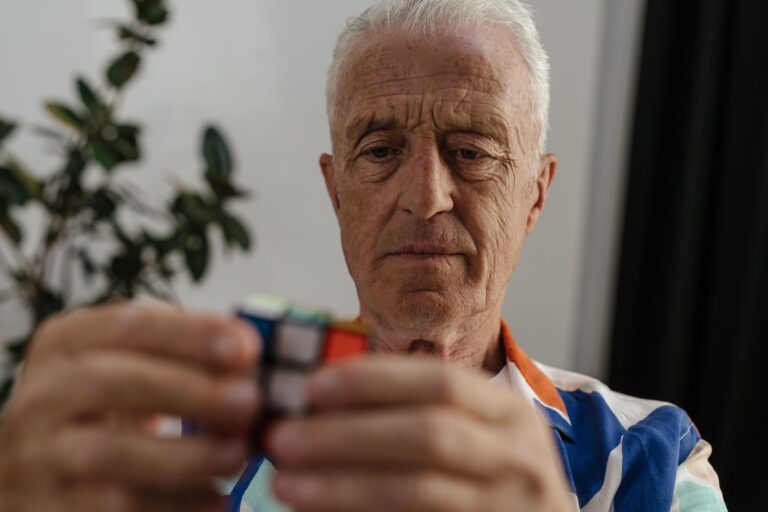
Collagen coffee marketed for memory loss has no clinical evidence in humans supporting this use. The beverage industry has added collagen to functional coffees with brain-health claims, but collagen itself has no European-authorized health claims for cognitive function—only unqualified protein claims for bone and muscle, and no randomized controlled trials have directly tested whether collagen supplementation improves cognitive function or prevents dementia. The broader question is whether adding collagen to coffee matters for someone at risk of memory loss. The short answer is no—not because collagen is harmful, but because the evidence supporting proven dementia-prevention strategies vastly outweighs any theoretical benefit from a protein ingredient.
Medical information disclaimer: This article is for general educational purposes only and does not provide medical advice, diagnosis, or treatment. Always consult a physician or other qualified health professional about symptoms, medications, tests, or treatment decisions.
Table of Contents
- Marketing Claims vs. Authorized Health Benefits
- What Research Actually Shows on Collagen and Brain Function
- Coffee's Dementia Link—Also Unproven
- What Proven Dementia Prevention Actually Looks Like
- Is Collagen Coffee at Least Safe?
- Frequently Asked Questions
Marketing Claims vs. Authorized Health Benefits
Collagen coffee brands market memory support and brain protection as key selling points, positioning the drink as a functional beverage for cognitive aging. However, this marketing gets ahead of the science. The functional beverage industry standards do not permit brain-health or memory claims for collagen; manufacturers can only claim it is a protein source for bone and muscle maintenance, which are the only legally authorized uses.
The disconnect matters because consumers reading a label or advertisement may assume that if a drink is marketed for memory, someone has tested it for memory benefit. They haven't. This is marketing outpacing evidence.
What Research Actually Shows on Collagen and Brain Function
A single unpeer-reviewed pilot study reported improved memory and EEG markers in participants who took marine collagen over 8 weeks, but it lacked a control group, randomization, or peer publication—too preliminary to support commercial claims. Collagen does contain glycine, an amino acid that laboratory studies suggest may support neurotransmitter function.
However, a systematic review of 34 randomized trials found glycine improved sleep and cognition only in healthy adults, not in people with dementia or memory loss. One concerning finding: collagen VI protein appears elevated in post-mortem Alzheimer's brains, raising questions about whether collagen accumulation might be pathological rather than protective.
Coffee's Dementia Link—Also Unproven
Combining collagen with coffee might seem to leverage coffee's own reputation for brain health. However, coffee's association with dementia risk is mixed: some prospective studies report reduced dementia in people drinking 2 or more cups daily, but meta-analyses find no statistically significant coffee-dementia relationship.
No causal mechanism has been established, and any protective effect remains speculative. Combining two ingredients with weak or unclear evidence for cognitive benefit does not add up to stronger evidence.
What Proven Dementia Prevention Actually Looks Like
Rather than speculation about collagen or coffee, significant research has identified concrete interventions that meaningfully reduce dementia risk. Evidence-based dementia prevention focuses on 12 modifiable risk factors—including physical activity, blood pressure control, cognitive training, hearing correction, and sleep quality—that account for approximately 40% of dementia cases.
Collagen appears in none of the NIH or CDC prevention guidance. If you or a family member is concerned about cognitive aging, these are the interventions where your effort will matter:.
- Regular physical activity (150+ minutes per week)
- Blood pressure management to target levels
- Hearing correction with devices if needed
- Cognitive engagement and lifelong learning
- Quality sleep and stress management
Is Collagen Coffee at Least Safe?
Collagen peptides used in functional beverages are chemically stable in hot coffee—heat degradation occurs above 150°C, and coffee is consumed at 71–85°C. From a safety standpoint, adding collagen to coffee carries no known risk for most people.
That safety does not, however, make it effective for memory loss. A safe product without benefit is simply an expensive protein source when cheaper alternatives exist—and it should not displace time or money from interventions that actually work.
Frequently Asked Questions
Could collagen be helping even if we haven't studied it yet?
Possible but unlikely. Clinical research on dementia has been intense for decades, and collagen has not emerged as a signal. If the effect existed, pilot studies would likely have detected it by now.
Is collagen coffee worth buying if I like the taste?
As a beverage choice, it is harmless and delivers protein like any protein source. Just do not expect cognitive benefit or treat it as preventive medicine.
Should I stop taking collagen supplements if I am concerned about Alzheimer's risk?
No medical reason exists to stop. Instead, invest your effort in the 12 proven dementia-prevention factors: exercise, blood pressure control, hearing correction, cognitive engagement, and sleep quality.