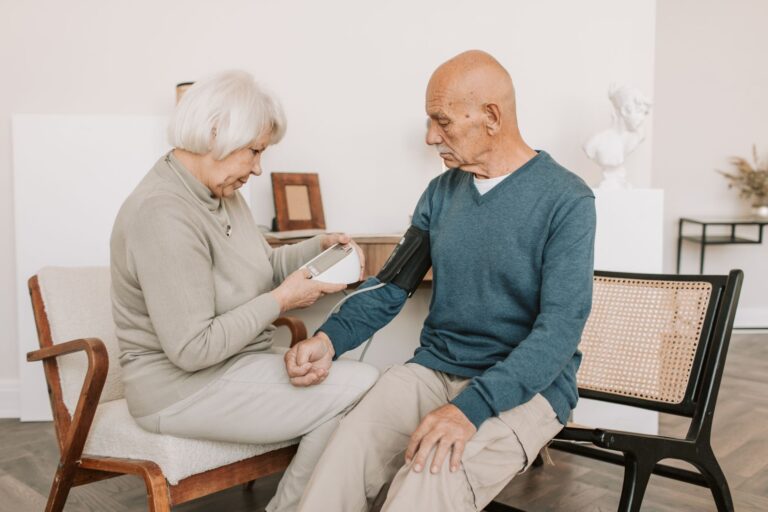
Yes, wearables can meaningfully help track sleep and movement patterns in people with dementia, offering caregivers data that would otherwise require constant observation. Smartwatches, fitness trackers, and specialized monitoring devices record metrics like sleep duration, restlessness, activity levels, and even heart rate variability—information that can reveal important changes in health status before they become obvious through casual observation. A caregiver might notice their loved one seems tired, but a wearable device shows that this person’s sleep fell from 6 hours nightly to 3 hours over two weeks, alerting them to potential pain, medication side effects, or delirium that needs attention. The key limitation is that wearables are tools, not diagnoses.
They detect *what* is happening (movement decline, fragmented sleep) but not always *why*. Relying solely on a device to monitor dementia creates blind spots. A wearable might show zero movement one evening, but that could mean the person fell asleep early, removed the device, or simply sat still for several hours. The technology shines when combined with direct observation, caregiver instinct, and clinical assessment.
Table of Contents
- What Can Wearables Actually Measure in Dementia Patients?
- Sleep Tracking in Dementia—What Caregivers Actually Learn
- Movement and Activity Decline as an Early Warning Sign
- Choosing the Right Device—Smartwatches vs. Specialized Monitors
- Privacy, Data Ownership, and Over-Reliance on Numbers
- Detecting Behavioral and Medical Crises Through Wearable Patterns
- Integration with Care Teams and Remote Monitoring
What Can Wearables Actually Measure in Dementia Patients?
Wearables capture discrete data points: heart rate, steps taken, sleep stages (light, deep, REM), time lying down, temperature shifts, and activity intensity. Accelerometers in the device detect motion and can distinguish between different types of activity—walking generates a different motion signature than standing or tremoring. Some advanced devices measure galvanic skin response (perspiration), which rises during agitation, anxiety, or stress. For people with dementia, this means a caregiver can see not just *how much* the person moved, but *when* and *how* they moved, and what their physiological state was during those times. The reality is messier than marketing suggests.
A wearable might label someone as “asleep” when they’re actually lying quietly in bed, awake but not moving. Conversely, nighttime thrashing might be counted as sleep disruption when it could be normal tossing or adjustment. Devices vary widely in accuracy—some are within 10–15% of clinical gold-standard measures like polysomnography, while others drift much higher. A device worn on the wrist will miss movement from legs or torso, creating incomplete data. Cost ranges from $50 for basic activity trackers to $400+ for medical-grade devices, and that doesn’t include the subscription or app service, which often costs $5–15 monthly and may lock data into proprietary ecosystems.
Sleep Tracking in Dementia—What Caregivers Actually Learn
Sleep fragmentation is extremely common in dementia; people with Alzheimer’s might wake 10–20 times per night, and wearables can highlight this pattern clearly. Instead of guessing whether sleep is the issue, a caregiver sees the data: Tuesday night, 4 hours of actual sleep across 8 separate blocks. Wednesday night, 6 continuous hours. This difference can drive decisions—if Tuesday correlated with behavioral problems on Wednesday, the caregiver now has a target: improve Tuesday’s sleep. However, sleep tracking has blind spots that frustrate many caregiver users.
A device can’t tell the difference between a person who’s asleep and a person who’s in a dark room, motionless but awake—a common state in advanced dementia. Some people with dementia experience “sundowning” (confusion and agitation in late afternoon and evening), and wearables might show increased heart rate or motion during these hours, but the device won’t explain *why* this is happening. Caregiver burnout also clouds the picture: a parent up at 3 a.m. reporting the wearable says they got “7 hours of sleep” is confusing and sometimes enraging if that data contradicts what the caregiver witnessed. Wearable sleep data is also prone to artifact—a restless sleeper’s constant motion can confuse algorithms into thinking they were awake when they were actually cycling through sleep stages.
Movement and Activity Decline as an Early Warning Sign
Reduced physical activity often precedes cognitive decline or signals a UTI, infection, depression, or pain in someone with dementia who can’t always communicate symptoms. A wearable that tracks step count or active minutes can show this drop: someone’s daily average falls from 4,000 steps to 1,500 steps, or active exercise time vanishes entirely. Paired with a family report that “Mom seems sadder lately” or “Dad stopped wanting to walk,” this data can prompt medical investigation before a crisis happens.
The downside is that a sudden activity drop might be completely benign—cold weather might reduce outdoor walks, a new medication might cause drowsiness, or the person might just be having a low week. A single wearable metric shouldn’t trigger alarm; instead, it should prompt the question “Why is this different?” Caregivers who rely too heavily on activity trends sometimes interpret normal variation as danger, leading to unnecessary doctor visits or medication adjustments. There’s also the risk of opposite bias: caregivers who see “1,200 steps today” marked as “low activity” but feel the person was fine that day start dismissing the wearable’s warnings, eroding trust in the tool’s actual useful alerts.
Choosing the Right Device—Smartwatches vs. Specialized Monitors
Most caregivers start with consumer smartwatches (Apple Watch, Fitbit, Garmin), which are affordable, familiar, and provide app dashboards for easy viewing. These devices are designed for healthy people, not dementia patients, but they work adequately for basic tracking. A Fitbit worn on the wrist will show sleep disruptions and daily movement, and the data syncs to an app a family member can monitor remotely. Some smartwatches include fall detection, which can be useful, though false alarms (sitting down hard, dropping onto a bed) are common.
Specialized medical wearables exist for dementia monitoring—devices like Empatica E4 or clinical-grade ankle monitors—but they’re expensive ($1,000–5,000), often require professional setup, and sometimes demand more technical overhead than a busy caregiver can manage. A specialized monitor might offer superior accuracy and longer battery life, but if a caregiver forgets to charge it or the subscription lapses, the device becomes useless. Conversely, a standard Fitbit is easy to replace if lost or damaged and works without professional installation. The tradeoff is accuracy for convenience: consumer devices are “good enough” for many situations, while medical-grade tools are more precise but less practical for casual, long-term home monitoring. Some caregivers benefit from hybrid approaches—a Fitbit for daily trends, combined with periodic in-person clinical assessments.
Privacy, Data Ownership, and Over-Reliance on Numbers
Every wearable device sends data to cloud servers, and that data is owned, processed, and sometimes sold by the manufacturer. A Fitbit tracks heart rate, sleep, location (if the watch has GPS), and behavioral patterns—intimate information about a vulnerable person. Privacy policies vary, but many devices share anonymized or pseudonymized data with third parties for research, marketing, or product improvement. For someone with dementia, whose cognitive decline and behaviors are already sensitive topics, this data collection can feel invasive. Caregivers should review privacy policies before purchasing and consider whether they’re comfortable with a corporation holding years of their loved one’s health data.
Another risk is algorithm bias. Most wearables are trained on data from young, healthy people, and they perform less accurately on older adults or people with irregular movement patterns (which is common in dementia—irregular gait, tremor, or restlessness). A device might systematically undercount or overcount sleep or activity for this population, creating a skewed baseline. Caregivers who internalize these skewed metrics can make decisions based on false trends. Some family members also report that seeing the wearable data compels them to override their own judgment: “The app says they’re fine, so I shouldn’t worry,” even if they directly observed something concerning. Data should augment caregiver observation, not replace it.
Detecting Behavioral and Medical Crises Through Wearable Patterns
Sudden spikes in nighttime heart rate, combined with decreased daytime activity and increased restlessness, can signal infection, pain, or delirium in a person with dementia who cannot verbalize symptoms. Emergency departments frequently encounter older adults with UTIs or pneumonia whose only presenting symptom is confusion or agitation; a wearable that shows the physiological shift hours or days before behavioral changes could trigger earlier intervention. One documented example: a caregiver noticed a resident’s Fitbit showed elevated resting heart rate (75 bpm vs. usual 62 bpm) and fragmented sleep, even though the person seemed behaviorally normal.
A subsequent medical workup identified an asymptomatic UTI, which was treated before progressing to sepsis. However, these patterns aren’t specific to serious illness—they also appear during normal anxiety, a change in routine, or simple frustration. Wearables can flag “something is different,” but they can’t diagnose. A caregiver who sees elevated heart rate and immediately assumes infection or pain is making an educated guess, not a medical conclusion.
Integration with Care Teams and Remote Monitoring
Some memory care facilities and homecare agencies now use wearable data in care planning, sharing trends with nurses or physicians during clinical reviews. A care team might use six months of Fitbit data to argue for medication adjustment (if sleep hasn’t improved despite interventions) or to justify increased mobility support (if step counts show progressive decline). This integration is most useful when the wearable data is treated as one input among many—caregiver observations, patient symptoms, medical history, and clinical exam remain essential. Remote monitoring via wearables also allows adult children to track a parent’s activity from a distance without constant phone calls or visits for reassurance.
A daughter might see her father’s sleep is stable and activity is normal, giving her peace of mind while allowing him to remain in his own home longer. Some families have reported that this data reduced anxiety and unnecessary emergency room visits. Conversely, the constant availability of data can also increase anxiety if a caregiver interprets every dip or fluctuation as a crisis. A person with dementia who hasn’t moved much by 2 p.m. doesn’t necessarily need emergency intervention; they might simply be resting before an evening activity.
- —