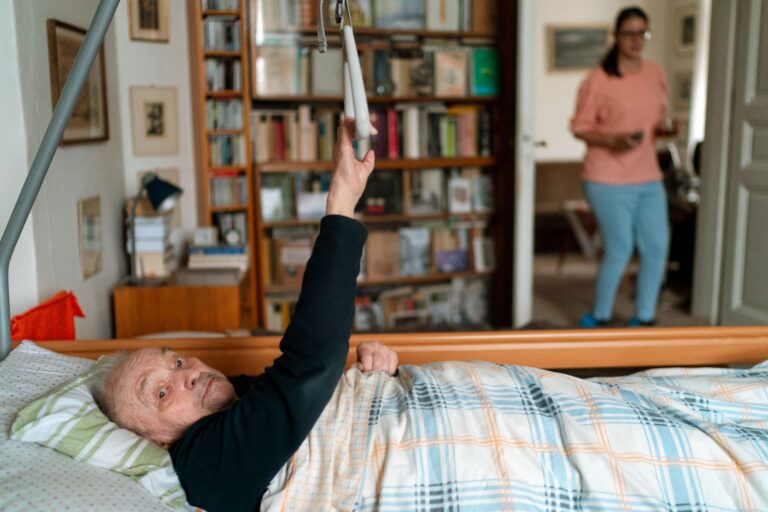
Yes, stabilization can count as success in Alzheimer’s care—if success is redefined as preserving present function rather than restoring lost capacity. For decades, Alzheimer’s treatment was viewed as a race against decline, a binary of either slowing progression or accepting defeat. But clinical evidence and caregiver experience increasingly show that holding someone at their current level of cognitive and functional ability, even for months or a year, is a meaningful win. A person who maintains the ability to recognize their adult children, feed themselves, and participate in conversation while their disease is still active represents real victory, not just damage control. The shift reflects a fundamental change in how care teams measure outcomes.
When Mrs. Chen, a 74-year-old woman with moderate Alzheimer’s, began receiving optimized medication and behavioral strategies, her cognitive test scores stopped declining for 11 months—an outcome that would have been considered negligible 15 years ago. Her family called it everything: a miracle, a reprieve, time. From her neurologist’s perspective, it was an interruption in decline that kept her safer, more independent, and more present for her family during a critical window. Stabilization is success because it is honest, measurable, and within reach when cure is not.
Table of Contents
- Is Stabilization Different from Remission or Cure in Alzheimer’s Disease?
- Why Stabilization Is Medically Difficult and Rare Without Active Intervention
- What Does Stabilization Look Like in Day-to-Day Life?
- What Strategies and Conditions Enable Stabilization?
- What Are the Risks and Realistic Limits of Stabilization Attempts?
- How Do Medical Goals Shift When Stabilization Is the Target?
- When Stabilization Fails, What Is Communicated to Families?
Is Stabilization Different from Remission or Cure in Alzheimer’s Disease?
Absolutely, and understanding that difference is crucial to setting realistic expectations. Stabilization means the rate of cognitive and functional decline slows significantly or pauses for a defined period—weeks, months, or occasionally a year or longer. It does not restore lost memory, repair damaged brain tissue, or reverse prior decline. Remission, common in some cancers or treatable neurological conditions, implies that disease markers disappear and symptoms resolve; Alzheimer’s disease does not go into remission. A cure would stop the underlying pathology—the accumulation of amyloid and tau proteins that destroy neurons—and currently no cure exists, though several new drugs show modest slowing effects in early symptomatic stages.
The practical difference matters enormously for family planning and resource allocation. A family told “we can stabilize your mother’s disease” should not expect her lost words to return or her forgotten children’s names to reappear. They should expect her to stay at her current level of function long enough to attend her grandson’s wedding, maintain basic hygiene without crisis intervention, or continue recognizing her spouse for another season. One major teaching hospital neurologist described it to families this way: “We’re not winning back ground. We’re holding the line where she stands right now.”.
Why Stabilization Is Medically Difficult and Rare Without Active Intervention
Untreated Alzheimer’s disease follows a predictable decline: most people lose 3–4 cognitive points annually on standard screening tests, and functional abilities erode along a similar curve. Stabilization requires deliberate, multi-system intervention to interrupt that trajectory. Lecanemab (Leqembi) and donanemab, the newest anti-amyloid monoclonal antibodies, have demonstrated modest slowing in early symptomatic stages—roughly 35% slowing of decline over 18 months in clinical trials—not halting or reversal. That means a person who would normally decline by 3 points in 18 months might decline by 2 points instead; over longer windows, the disease still progresses.
The medications also carry a real risk of amyloid-related imaging abnormalities (ARIA), which can cause brain microhemorrhages or microinfarcts, and they require biweekly or monthly infusions plus regular MRI monitoring. Beyond pharmacology, stabilization requires aggressive management of modifiable risk factors: blood pressure control, cognitive stimulation, physical exercise (studies show 30+ minutes of aerobic activity 3–4 times weekly correlates with slower cognitive decline), sleep quality, hearing correction, and depression treatment. A person on one medication alone, without lifestyle modifications, is unlikely to achieve meaningful stabilization. The barrier is not just access to new drugs but the coordination and discipline required to implement the full strategy. Many primary care practices lack the time and expertise to manage Alzheimer’s disease with precision; neurology wait lists stretch months in rural and underserved areas; and many people are already in moderate or advanced stages when they receive a clear diagnosis, at which point the newest antiamyloid drugs offer minimal benefit.
What Does Stabilization Look Like in Day-to-Day Life?
Stabilization manifests differently depending on disease stage. A person in the early symptomatic stage who is stabilized might stay independent in household management, maintain awareness of current events and recent appointments, and hold conversations with minimal prompting for weeks or months longer than they otherwise would. They still forget where they put their keys or repeat questions, but the frequency and severity do not accelerate on the expected timeline. One wife described her husband’s stabilization this way: “For nine months, he knew my name every day. He forgot what he had for breakfast, but he knew me.
That was enough.” In moderate stages, stabilization might mean a person continues to recognize family members, enjoys meals without requiring hand-feeding, and remains continent during the day, even as their ability to follow multi-step instructions or engage in complex conversation plateaus. They are not improving; they are not suddenly functional again. But they are not disappearing into their disease as rapidly as the curve would predict. Some people in stabilization can still participate in family dinners, listen to music and respond to emotion in it, or enjoy one-to-one interaction, whereas the unmedicated trajectory would have reduced them to basic survival responses months earlier. For many families, that extension of recognition and presence justifies the effort and cost of the interventions required to achieve it.
What Strategies and Conditions Enable Stabilization?
Stabilization requires a framework, not a single intervention. The most evidence-backed components include regular aerobic exercise (at least 3 days weekly), cognitive engagement through conversation or structured activities, blood pressure management (targeting roughly 130–140 systolic in older adults with cognitive impairment), treatment of sleep disorders, correction of hearing loss, management of depression and anxiety, and controlled use of certain medications. Some people stabilize on one of the new anti-amyloid monoclonal antibodies; others, particularly those in advanced stages, do not, and stabilization is achieved through lifestyle and medication optimization alone. Anticoagulation, statins, and NSAIDs are not reliable stabilization tools and carry trade-offs in people with dementia.
Low-dose donepezil or other cholinesterase inhibitors are standard but show modest benefit in the 2–4 point range over six months; they help some people more than others, and they cause nausea and diarrhea in a significant minority. Memantine, an NMDA antagonist, is similarly variable. The strategy that works best is individualized to the person’s stage, comorbidities, and goals—what stabilizes one person may not stabilize another. One memory care unit that tracks residents’ cognitive and functional status carefully found that stabilization was most likely in people who began intensive intervention within 6–9 months of symptom onset, participated in structured daily exercise and cognitive activities, maintained social engagement, and received consistent medication management from a single neurologist or geriatrician. No single factor alone was sufficient; it was the combination.
What Are the Risks and Realistic Limits of Stabilization Attempts?
The primary risk of anti-amyloid monoclonal antibodies is amyloid-related imaging abnormalities (ARIA). ARIA-E (edema, or swelling) occurs in 5–15% of treated populations and can cause headache, confusion, or vision changes; ARIA-H (microhemorrhages) occurs in 10–25% and is often asymptomatic but visible on MRI. Some microhemorrhages resolve on their own; others persist. A very small fraction of people have symptomatic brain microhemorrhages that require hospitalization or cause permanent neurological harm. Genetic factors, particularly the APOE4 allele status, influence who is at higher risk for ARIA; screening for APOE4 status is recommended before starting therapy, and close MRI surveillance is mandatory.
A second limitation: stabilization is temporary, not permanent. Even with optimal intervention, most people with Alzheimer’s disease eventually resume decline. The biological disease process continues; interventions buy time, not indefinite arrest. A person stabilized for 12 months on a combination of lecanemab, intensive exercise, and cognitive engagement may, after that window, enter a phase of faster decline as the disease overwhelms the protective effects of treatment. Families sometimes mistake a stabilization window for remission or recovery and become devastated when decline resumes—a psychological burden that careful communication at the start can help mitigate. Additionally, stabilization strategies require sustained effort: if a person stops aerobic exercise or cognitive engagement, or if medication adherence lapses, the protective effect erodes.
How Do Medical Goals Shift When Stabilization Is the Target?
When stabilization is the goal, the conversation with patients and families changes. Instead of “Can we slow this down?” the question becomes “For what period can we hold function stable, and what matters most during that time?” One geriatrician working with early-stage patients described asking: “Do you want to stabilize long enough to see your grandchildren graduate? To spend one more good season with your spouse? To stay in your home?” Those concrete, time-bound goals reshape which interventions make sense.
A person who is frail and has other advanced illnesses might not be a candidate for biweekly infusions and the associated risk; their stabilization strategy might center on medication optimization, exercise, and family connection instead. The goal is not aggressive treatment at all costs but targeted intervention aligned with what the person and their family value.
When Stabilization Fails, What Is Communicated to Families?
Not everyone achieves stabilization, and not everyone who achieves it sustains it. Some people decline despite optimized treatment, either because they begin treatment too late in the disease course or because their particular pathology—sometimes a mix of Alzheimer’s disease with Lewy bodies, vascular dementia, or frontotemporal degeneration—does not respond to current tools. When a family has invested months in implementing stabilization strategies and decline still accelerates, the experience can be demoralizing. A direct and honest conversation—”The strategies have not slowed the decline as much as we hoped; the disease is progressing despite our best efforts”—is more respectful than silence or vague reassurance.
It also creates space to shift goals: from stabilization to comfort, from slowing decline to quality of interaction, from extending independence to easing pain and anxiety. Some care teams use this moment to discuss hospice care, palliative goals, or a shift to caregiving focused on presence rather than intervention. Others continue trying different medication combinations or intensified exercise protocols, a choice that is valid if the person and family understand the trade-offs and the probability of success is not zero. The role of the clinician is to be clear about what has worked, what has not, and what the data suggests is likely to happen next—not to pretend stabilization is still plausible if the evidence suggests otherwise.