Reviewed by the Help Dementia Editorial Team — our editors review every article for accuracy against guidance from the National Institute on Aging, the Alzheimer’s Association, and peer-reviewed sources.
Yes, neighborhood design can meaningfully support dementia prevention by promoting physical activity, social engagement, and cognitive stimulation—factors that research consistently links to lower dementia risk. A walkable neighborhood with parks, shops, and community centers naturally encourages these protective behaviors in ways that car-dependent suburbs often do not. For example, elderly residents in neighborhoods with accessible green spaces and pedestrian-friendly streets show higher levels of social interaction and physical activity compared to those living in sprawling developments designed around automobile use. However, the relationship between neighborhood design and dementia risk is indirect rather than causal.
A well-designed neighborhood creates an environment where protective behaviors are easier and more appealing, but it cannot replace individual choices about diet, cognitive engagement, sleep quality, or medical care. A person living on a walkable street could still develop dementia if other risk factors—genetics, untreated hypertension, depression, or cognitive isolation—are present. The evidence suggests that neighborhood design works best as one element in a comprehensive dementia prevention strategy. When combined with medical monitoring, mental stimulation, and strong social connections, a supportive neighborhood environment can meaningfully reduce risk during the critical decades before symptoms might emerge.
Table of Contents
- How Does Neighborhood Walkability Influence Brain Health and Dementia Risk?
- What Role Do Mixed-Age Communities and Social Design Play in Dementia Prevention?
- How Do Green Spaces and Parks Contribute to Dementia Risk Reduction?
- What Architectural Features Specifically Support Cognitive Health in Older Adults?
- What Are the Hidden Barriers to Neighborhood-Based Dementia Prevention?
- Practical Examples of Neighborhood Features That Support Healthy Aging
- The Future of Neighborhood Design for Brain Health and Dementia Prevention
- Conclusion
- Frequently Asked Questions
How Does Neighborhood Walkability Influence Brain Health and Dementia Risk?
Walkable neighborhoods reduce dementia risk primarily by enabling regular physical activity, which is one of the most strongly protective factors against cognitive decline. Studies show that older adults who walk regularly have better memory function and larger hippocampi (the brain region crucial for memory formation) compared to sedentary peers. In walkable neighborhoods, this activity happens naturally—people walk to shops, visit neighbors, and access local amenities rather than driving everywhere. A person who walks 30 minutes daily on neighborhood streets accumulates cardiovascular benefits, maintains muscle mass, and sustains the vascular health that supports brain function. The contrast with car-dependent suburbs is striking.
In sprawling developments where destinations require driving, older adults often become more sedentary and socially isolated. Without the friction of walking to get somewhere, they’re less likely to encounter neighbors, shop locally, or maintain the social bonds that protect cognitive function. Research from the Journal of Urban Health found that residents of walkable neighborhoods reported 20-30% more social interaction than those in car-dependent areas, and this social engagement itself reduces dementia risk by an estimated 20-30%. One limitation of relying on walkability alone is that it works only for those physically capable of walking. An 85-year-old with arthritis or balance problems may struggle with neighborhood walking even if streets are designed well. Similarly, harsh weather, crime concerns, or poor lighting can negate the theoretical benefits of a walkable layout.

What Role Do Mixed-Age Communities and Social Design Play in Dementia Prevention?
Neighborhoods designed to house multiple generations and income levels provide more consistent cognitive stimulation and social engagement than age-segregated retirement communities or gated senior developments. When children, working adults, and seniors live in proximity, older adults have more casual social interactions—chatting with neighbors of different ages, helping younger families, participating in diverse community events. These varied social interactions exercise different parts of the brain and maintain cognitive flexibility in ways that interaction with age-peers alone does not. Mixed-use neighborhoods with local shops, cafes, and community spaces also support what researchers call “weak ties”—casual relationships with shopkeepers, other regulars, and community members.
These weak ties appear particularly protective against cognitive decline, perhaps because they require ongoing social calibration and memory work. An 78-year-old who visits the same coffee shop and chats with different people each week is engaging memory, attention, and social reasoning in ways that isolation does not demand. However, mixed-use communities don’t prevent isolation if residents lack the motivation or health to leave their homes. Someone with depression, anxiety, or early cognitive decline may remain homebound despite living in a vibrant neighborhood. Additionally, rapid gentrification in mixed-use neighborhoods can displace longtime residents and disrupt the social networks that provided protection, suggesting that design alone cannot overcome economic forces that fragment communities.
How Do Green Spaces and Parks Contribute to Dementia Risk Reduction?
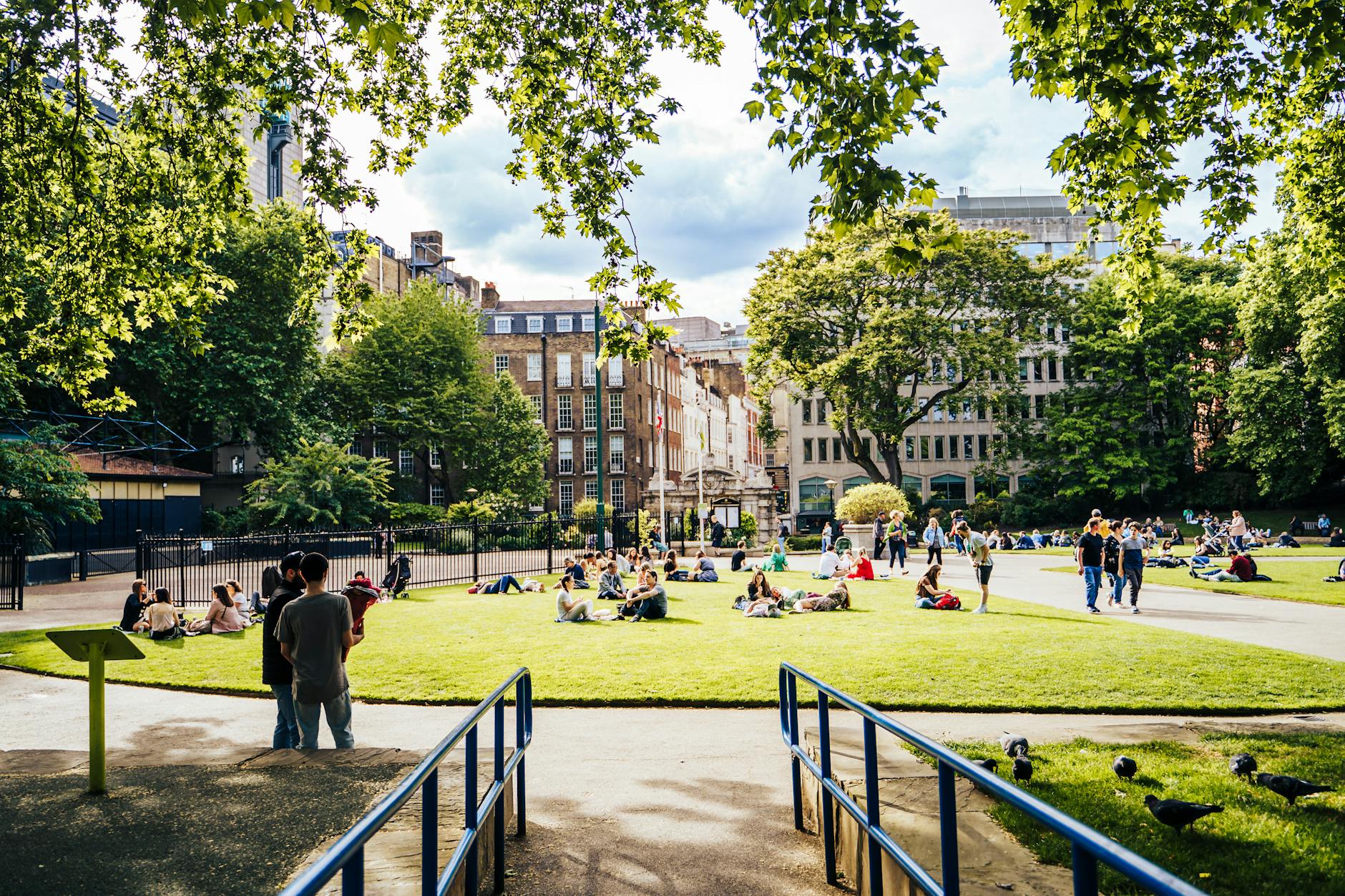
Access to parks and green spaces supports dementia prevention through multiple pathways: physical activity, stress reduction, and attention restoration. Walking in parks engages the brain differently than walking on streets—natural environments reduce mental fatigue and stress, two factors linked to cognitive decline. A study published in PLOS Medicine found that older adults with access to parks within a 10-minute walk had lower rates of depression, better sleep quality, and improved memory compared to those without nearby green space. The Kaplan Attention Restoration Theory suggests that natural environments allow directed attention to rest, reducing the mental exhaustion that impairs cognition. Parks also serve as community gathering spaces where older adults naturally congregate and interact.
A neighborhood park with benches, water features, and shaded areas encourages extended stays and social interaction in ways that car-dependent areas cannot match. For example, research in Toronto found that senior residents who regularly visited neighborhood parks reported stronger community connections and lower rates of cognitive complaints than those without park access. One important limitation is that park access alone does not guarantee use, especially among the most vulnerable populations. Older adults with mobility limitations, visual impairment, or fear of falling may be unable to access uneven terrain or distance from parking. Additionally, poorly maintained parks with inadequate lighting, bathroom facilities, or safety measures may deter use, particularly among women and minorities who may have safety concerns.
What Architectural Features Specifically Support Cognitive Health in Older Adults?
Neighborhoods designed with clear wayfinding, consistent street grids, and visible landmarks support cognitive health by reducing navigation stress and supporting spatial memory. For those with early cognitive decline, a neighborhood with disorienting layouts, confusing intersections, or ambiguous street signs creates unnecessary stress and may accelerate social withdrawal. A grid-based neighborhood where blocks are consistent, streets are clearly labeled, and landmarks are memorable allows older adults to navigate independently and maintain confidence, even as memory gradually declines. Ground-floor retail and amenities positioned to face streets rather than hidden behind parking lots creates visual richness and way-finding cues that support spatial memory and brain engagement.
Neighborhoods where daily destinations are visible and accessible from residential areas encourage exploration and maintain the cognitive stimulation that accompanies novelty and wayfinding. Compare this to neighborhoods where shops are invisible from residential streets, hidden behind strip malls and parking lots—these designs don’t support the casual cognitive engagement that characterizes protective neighborhood interaction. A significant tradeoff exists between safety and engagement: neighborhoods that prioritize car speed through wide streets and reduced pedestrian crossings are physically dangerous but also less cognitively engaging. Conversely, dense walkable neighborhoods with frequent intersections and shared street space demand more attention and navigation skill but carry higher traffic risk for those with delayed reaction times. The optimal design balances pedestrian safety (slow traffic, clear signals, maintained sidewalks) with cognitive engagement (visibility, varied destinations, wayfinding cues).
What Are the Hidden Barriers to Neighborhood-Based Dementia Prevention?
Health inequities mean that the most vulnerable older adults—low-income residents, racial minorities, and those in poor health—often live in neighborhoods that lack the walkability and green space protective factors. Someone living in an under-resourced neighborhood with broken sidewalks, limited retail, sparse parks, and high crime faces barriers to the physical activity and social engagement that neighborhood design could support. Even excellent design is ineffective if the neighborhood lacks basic safety, cleanliness, and functional infrastructure. Additionally, neighborhood design assumes older adults have the freedom to choose where they live, but economic and family constraints often determine housing.
An older adult may live in a car-dependent suburb because housing costs near walkable neighborhoods have risen beyond reach, or because family caregivers have chosen proximity to their own jobs. Framing dementia prevention primarily as a neighborhood design issue risks overlooking the economic and healthcare factors that more directly determine risk. The most critical limitation is that neighborhood design, no matter how excellent, cannot address biological dementia risk factors—untreated hypertension, diabetes, high cholesterol, or genetic predisposition. A person living in the most walkable, socially rich neighborhood can still develop dementia if cardiovascular disease, cognitive inactivity at home, or genetic factors dominate their risk profile. Neighborhood design is a multiplier for dementia prevention, not a foundation.

Practical Examples of Neighborhood Features That Support Healthy Aging
Portland, Oregon and Copenhagen, Denmark have designed neighborhoods specifically to support aging in place and cognitive health. Portland’s walkable neighborhoods with mixed housing types, accessible public transportation, and abundant green spaces show lower rates of senior isolation compared to national averages.
Copenhagen’s neighborhood design explicitly incorporates senior-focused features: ground-floor apartments with street-facing windows, small neighborhood parks with seating for rest, local markets and cafes within walking distance, and traffic-calming measures to reduce pedestrian injury. Reverse commuting—where young professionals live in older neighborhoods and revitalize them without displacement—has created some models of intergenerational community that supports elder cognitive health. These neighborhoods typically combine affordability with walkability and social vitality, though the model is limited by scalability and housing economics.
The Future of Neighborhood Design for Brain Health and Dementia Prevention
As dementia risk grows with aging populations, architects and urban planners are increasingly incorporating cognitive health into neighborhood design standards. New developments in urban planning explicitly consider dementia prevention, creating neighborhoods optimized for memory support, social engagement, and physical activity.
However, retrofitting existing neighborhoods—the majority of where older adults live—remains slower and more expensive than building new communities, suggesting that most dementia prevention will still depend on individual choice rather than environmental design. The relationship between neighborhood and dementia risk will likely become clearer as longitudinal studies follow older adults across different community types. This research may inform policy around zoning, housing affordability, and public investment in green space and walkability as a public health intervention, similar to how smoking and obesity prevention are now shaped by environmental design.
Conclusion
Neighborhood design can support dementia prevention by making protective behaviors—physical activity, social engagement, cognitive stimulation—easier and more appealing. Walkable, mixed-use neighborhoods with parks, diverse residents, and clear wayfinding provide the environmental conditions where older adults naturally maintain the activities that reduce cognitive decline risk. However, design alone cannot prevent dementia; it works best as one element in a comprehensive prevention strategy that includes medical care, cognitive engagement, sleep quality, and individual effort.
If you’re concerned about dementia risk for yourself or an older family member, consider whether your current neighborhood supports physical activity, social connection, and cognitive engagement. If barriers exist—unsafe walking, social isolation, or long distances to daily destinations—these may deserve as much attention as individual health behaviors. At the same time, remember that neighborhood is just one lever; medical monitoring, cognitive engagement at home, and maintained social connections matter regardless of zip code.
Frequently Asked Questions
Does living in a walkable neighborhood actually prevent dementia?
No, but it reduces risk by supporting the behaviors that do prevent dementia—physical activity, social connection, and mental stimulation. Neighborhood design is a risk-reducing environment, not a guarantee against cognitive decline.
What if I can’t afford to move to a better neighborhood?
Even in car-dependent or under-resourced neighborhoods, you can seek out local parks, community centers, and social groups to recreate some of the protective factors that neighborhood design naturally supports. Transportation services for seniors can partially substitute for walkability in some areas.
Are retirement communities or age-segregated housing bad for dementia prevention?
Age-segregated communities can support dementia prevention if they’re well-designed with mixed-use amenities, strong programming, and intergenerational connection (volunteer opportunities with younger people, for example). The key factor is social engagement and activity, not age diversity alone, though research suggests mixed-age neighborhoods may offer more consistent cognitive stimulation.
How important is neighborhood design compared to other dementia prevention factors?
Neighborhood design is one risk factor among many. Medical care (blood pressure, cholesterol management), cognitive engagement, sleep quality, diet, and genetics likely matter more in determining dementia risk. Think of neighborhood design as a multiplier that makes prevention easier, not a foundation of prevention itself.
Can I reduce dementia risk if I’m homebound?
Homebound status limits some neighborhood benefits, but cognitive and social engagement at home—family contact, online learning, cognitive games, reading—can still reduce dementia risk. Virtual social connection is not as protective as in-person interaction but is better than isolation.
What neighborhood features matter most for dementia prevention?
Safe, walkable streets; nearby parks or green space; local shops and cafes within walking distance; and visible, active street life appear to be the most important features. They all support the core protective behaviors: physical activity and social engagement.