No, coconut oil cannot reverse Alzheimer’s symptoms. Despite widespread claims that have circulated online since 2008, no major medical or Alzheimer’s organization endorses coconut oil as a treatment or prevention strategy for the disease. The largest and most rigorous clinical trial to date, the 2023 VCO-AD Study from Sri Lanka, found that 30 milliliters per day of virgin coconut oil for 24 weeks did not improve cognition in patients with mild-to-moderate Alzheimer’s compared to a canola oil placebo. The story is more nuanced than a simple yes or no, but the weight of evidence lands firmly on the side of caution. The claim gained traction largely through the experience of Dr. Mary Newport, a neonatologist whose husband Steve developed early-onset Alzheimer’s in his 50s.
In 2008, she reported that giving him about two tablespoons of coconut oil before a cognitive test he had previously failed seemed to help him pass it. Her article, “What If There Was a Cure for Alzheimer’s Disease and No One Knew?” went viral, and a 2012 Christian Broadcasting Network video on the Newports drew over five million views. But Steve Newport ultimately died in 2016 from Alzheimer’s and Lewy Body dementia, despite years of continued coconut oil supplementation. His story is a painful reminder that anecdote and clinical evidence are not the same thing. This article breaks down the science behind the coconut oil theory, examines what clinical trials have actually found, looks at emerging research on medium-chain triglycerides, and weighs the cardiovascular risks that coconut oil carries. If you or someone you love has Alzheimer’s, you deserve facts rather than false hope.
Table of Contents
- Where Did the Claim That Coconut Oil Reverses Alzheimer’s Come From?
- What Do Clinical Trials Actually Say About Coconut Oil and Alzheimer’s?
- MCT Research Is More Interesting Than Coconut Oil Headlines Suggest
- The Cardiovascular Cost of Coconut Oil That Nobody Mentions
- Why Major Alzheimer’s Organizations Have Rejected the Claim
- What Families Should Know Before Trying Coconut Oil
- Where Alzheimer’s Dietary Research Is Heading
- Conclusion
- Frequently Asked Questions
Where Did the Claim That Coconut Oil Reverses Alzheimer’s Come From?
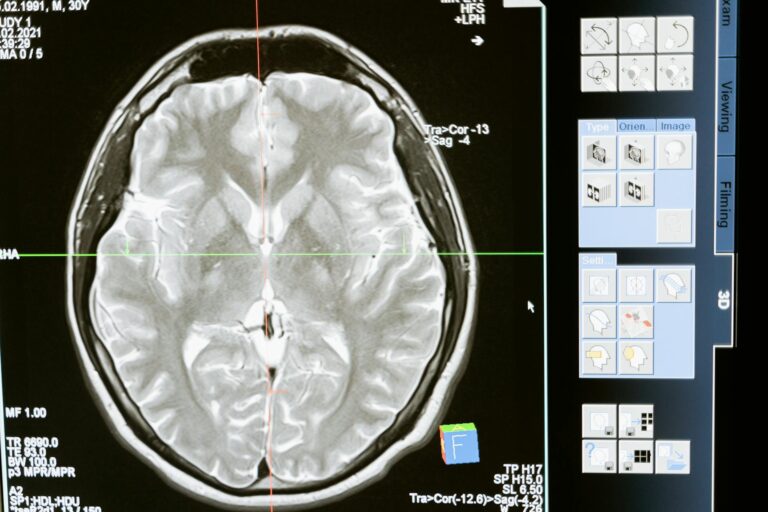
The theory rests on a legitimate observation about Alzheimer’s brains. Researchers have known for years that impaired glucose metabolism is an early hallmark of the disease. Brain cells that can no longer efficiently use glucose for energy begin to starve and die. Coconut oil is roughly 65 percent medium-chain triglycerides, which the liver converts into ketone bodies. Ketones can cross the blood-brain barrier and serve as an alternative fuel source. The logic seems straightforward: if the brain cannot use sugar, give it something else to burn. This reasoning led to the development of Axona, a prescription medical food containing MCTs derived from coconut and palm kernel oil, marketed specifically for Alzheimer’s patients. But here is where the story gets uncomfortable.
According to the Alzheimer’s Association, Axona’s manufacturer elected to market it as a “medical food” rather than conducting Phase 3 clinical trials to prove its effectiveness. That distinction matters enormously. Medical foods face far less regulatory scrutiny than drugs, meaning Axona reached patients without the kind of large-scale, placebo-controlled evidence that would be required of a pharmaceutical treatment. The product essentially sidestepped the standard of proof that the medical community relies on. Dr. Newport’s viral story amplified the idea that a simple grocery store product could do what billions of dollars in pharmaceutical research had not. It was a compelling narrative, the desperate wife, the miraculous improvement, the indifferent medical establishment. But compelling narratives can be dangerous when they substitute for evidence, and in this case, the evidence that followed told a different story.
What Do Clinical Trials Actually Say About Coconut Oil and Alzheimer’s?
Three key pieces of clinical research help frame where the science stands. A 2018 Spanish pilot study published in the Journal of Alzheimer’s Disease found improvements in episodic memory, temporal orientation, and semantic memory in Alzheimer’s patients given a coconut oil-enriched Mediterranean diet, particularly in women and those with mild-to-moderate disease. That sounds promising until you look closer. This was a small pilot study, not a large randomized trial. Pilot studies are designed to test whether a bigger study is worth running, not to prove that a treatment works. The more definitive answer came from the 2023 VCO-AD Study, a double-blind, randomized, placebo-controlled trial conducted in Sri Lanka.
Patients with mild-to-moderate Alzheimer’s received either 30 milliliters per day of virgin coconut oil or a canola oil placebo for 24 weeks. The result was clear: coconut oil did not improve cognition compared to placebo. The one exception was a subgroup finding suggesting some benefit for carriers of the APOE ε4 gene variant, a known genetic risk factor for Alzheimer’s. Subgroup findings in a single trial, however, are hypothesis-generating at best, not proof of anything. A 2024 systematic review and meta-analysis published in the journal Diseases attempted to synthesize all available research. It concluded that coconut oil improved cognitive scores in Alzheimer’s patients compared to controls, but the authors themselves noted that the studies were small and heterogeneous, meaning they used different methods, populations, and measures. When your best evidence is a collection of small, inconsistent studies, the honest conclusion is that we do not know yet, not that we have found a cure.
MCT Research Is More Interesting Than Coconut Oil Headlines Suggest
If you strip away the coconut oil branding and focus on medium-chain triglycerides as a compound, the research picture gets more interesting, but also more complicated. A 2025 study published in Brain, the prestigious Oxford Academic journal, found that MCT supplementation improved cognition and systemic metabolism in Alzheimer’s mouse models. That is genuinely noteworthy. But the same study delivered a surprise that undermines the original ketone-fuel theory: the cognitive improvements occurred without elevating circulating ketone levels. If the benefit is not coming from ketones, the entire mechanistic rationale for coconut oil as brain fuel begins to unravel. The same research team found another wrinkle.
While MCT supplementation showed metabolic benefits, a full ketogenic diet actually worsened metabolic vulnerability in the Alzheimer’s mice, increasing hyperglycemia, weight gain, and adiposity. This is a critical warning for anyone tempted to pursue extreme dietary interventions for dementia. More fat is not automatically better, and the type and context of fat consumption appear to matter enormously. A separate 2025 study published in Nature Communications Biology found that MCTs and ketogenic diets restored gut microbiome diversity in Alzheimer’s mouse models, bringing back more than 50 percent of the bacteria that had been altered by the disease. The gut-brain axis is an increasingly important area of Alzheimer’s research, and this finding opens up entirely new questions about how dietary fats might influence neurodegeneration. But mouse models are not humans, and the leap from restored gut bacteria in a laboratory mouse to reversed dementia in your grandmother is a very long one.

The Cardiovascular Cost of Coconut Oil That Nobody Mentions
Here is the tradeoff that most coconut oil advocates gloss over entirely. Coconut oil is 82 percent saturated fat, higher than butter at roughly 63 percent or lard at about 40 percent. The American Heart Association advises against the use of coconut oil based on seven controlled trials showing that it elevated LDL cholesterol, the kind associated with heart disease. Replacing other vegetable oils with coconut oil led to an average increase of about 10.47 milligrams per deciliter in LDL, which the AHA estimates translates to a 6 percent increase in risk of major vascular events. The World Health Organization and the United Kingdom’s National Health Service also advise against consuming large amounts of coconut oil due to cardiovascular risk. For someone with Alzheimer’s disease, who is often elderly and already at elevated risk for stroke and heart disease, this is not a minor footnote.
Adding two or more tablespoons of coconut oil daily, the amount Dr. Newport gave her husband, means adding a significant load of saturated fat to the diet. If the cognitive benefit is uncertain at best and the cardiovascular harm is well-documented, the risk-benefit calculation does not favor coconut oil as a therapeutic strategy. This does not mean coconut oil is poison or that using it in cooking is inherently dangerous. It means that consuming it in medicinal quantities, specifically to treat Alzheimer’s, introduces a cardiovascular risk that is not offset by proven neurological benefit. That is a distinction worth making clearly.
Why Major Alzheimer’s Organizations Have Rejected the Claim
The position statements from leading organizations are unambiguous. The Alzheimer’s Society in the United Kingdom states that “there is currently a lack of evidence to show that coconut oil plays a role in preventing or treating dementia or its symptoms.” Alzheimer’s Research UK has emphasized the need to separate coconut oil claims from fiction, noting that the evidence is based largely on anecdotes rather than rigorous clinical trials. The Cure Alzheimer’s Fund published a piece titled “Myth Busting: Why Coconut Oil Is Not a Cure for Alzheimer’s Disease.” Science Feedback, a fact-checking organization, rated the claim that coconut oil prevents or treats Alzheimer’s as not supported by current scientific evidence. These are not organizations with a financial incentive to suppress a cheap cure. They are research and patient advocacy groups whose entire mission is finding effective treatments for dementia.
When they say the evidence is not there, it is worth taking seriously. The conspiracy-minded response that “they don’t want you to know about coconut oil” falls apart under scrutiny. If a two-dollar jar of coconut oil could reverse Alzheimer’s, every researcher and caregiver on earth would celebrate. The harder truth is that Alzheimer’s disease is extraordinarily complex, involving amyloid plaques, tau tangles, neuroinflammation, vascular dysfunction, genetic factors, and metabolic disruption. The idea that a single dietary oil could override all of these interacting pathologies was always unlikely. That does not mean dietary interventions are worthless, but it does mean we should hold them to the same standard of evidence we demand from any other treatment.

What Families Should Know Before Trying Coconut Oil
If a family member has Alzheimer’s and you are considering coconut oil, the most important step is talking with their physician first. This is especially true if the person takes blood thinners, cholesterol-lowering medication, or has a history of heart disease. Adding large daily quantities of saturated fat can interact with medications and alter lipid profiles in ways that require monitoring.
Some families decide the potential benefit is worth trying despite limited evidence, and that is a personal decision made in consultation with a doctor. If you go that route, virgin coconut oil is the form most commonly used in studies, and the amounts tested in trials range from about two tablespoons to 30 milliliters per day. But go in with realistic expectations. The most rigorous trial we have showed no cognitive benefit, and the original case that started the entire movement ended with Steve Newport’s death from the disease he was supposed to be treating.
Where Alzheimer’s Dietary Research Is Heading
The most promising thread in this story is not coconut oil itself but the broader investigation into how metabolism, gut health, and dietary fat interact with neurodegeneration. The 2025 findings that MCTs improved cognition in mouse models through mechanisms other than ketone production suggest scientists may have been looking at the right general area but asking the wrong specific question.
If MCTs work through insulin signaling or microbiome restoration rather than direct brain fueling, that changes the research agenda in significant ways. Future clinical trials will likely focus on purified MCT supplements rather than whole coconut oil, and they will need to account for genetic variation, particularly the APOE ε4 status that showed up as a potential modifier in the 2023 trial. The path from here is more science, not less, and certainly not viral Facebook posts claiming a kitchen staple can do what decades of pharmaceutical research has not yet achieved.
Conclusion
The evidence is clear enough to state plainly: coconut oil has not been shown to reverse, treat, or prevent Alzheimer’s disease in any rigorous clinical trial. The theory that it could serve as alternative brain fuel is biologically plausible but has not held up under controlled testing. The most rigorous human trial found no cognitive benefit, the original advocate’s husband died of the disease, and every major Alzheimer’s organization has declined to endorse the claim. Meanwhile, coconut oil carries well-documented cardiovascular risks that are particularly concerning for the elderly population most affected by dementia.
None of this means we should stop researching the relationship between dietary fats, metabolism, and brain health. The emerging MCT research is genuinely interesting and may eventually lead to effective interventions. But those interventions will need to be proven in large, well-designed human trials before anyone should treat them as medicine. For now, the best advice for families facing Alzheimer’s is to pursue evidence-based treatments, maintain heart-healthy diets, stay physically and socially active, and remain skeptical of miracle cures that sound too simple for a disease this devastating.
Frequently Asked Questions
Is coconut oil the same as MCT oil?
No. Coconut oil is about 65 percent medium-chain triglycerides, while MCT oil is a concentrated extract that contains mostly caprylic and capric acid. The research on Alzheimer’s increasingly focuses on purified MCTs rather than whole coconut oil, and the two should not be treated as interchangeable.
Did Dr. Mary Newport’s husband improve with coconut oil?
Dr. Newport reported that her husband Steve showed improvement on a cognitive test after taking coconut oil in 2008. However, this was a single anecdotal observation, not a controlled study. Steve Newport continued using coconut oil for years but ultimately died in 2016 from Alzheimer’s and Lewy Body dementia.
Could coconut oil help people with a specific genetic risk for Alzheimer’s?
The 2023 VCO-AD Study found a possible benefit for carriers of the APOE ε4 gene variant, but this was a subgroup finding from a single trial. It is not strong enough evidence to base treatment decisions on and needs to be replicated in larger studies.
Is coconut oil safe to consume daily?
In typical cooking amounts, coconut oil is not considered dangerous for most people. However, consuming it in medicinal quantities of two or more tablespoons daily significantly increases saturated fat intake. The American Heart Association advises against coconut oil use due to its effect on LDL cholesterol, and the WHO and NHS echo similar concerns.
What does the Alzheimer’s Association say about coconut oil?
No major Alzheimer’s organization, including the Alzheimer’s Association, Alzheimer’s Society UK, Alzheimer’s Research UK, or the Cure Alzheimer’s Fund, endorses coconut oil as a treatment or prevention strategy for the disease. They uniformly cite a lack of rigorous clinical evidence.
Are there any proven dietary approaches for Alzheimer’s prevention?
The MIND diet, which combines elements of the Mediterranean and DASH diets, has the strongest observational evidence linking dietary patterns to reduced Alzheimer’s risk. It emphasizes leafy greens, berries, nuts, whole grains, fish, and olive oil while limiting red meat, butter, cheese, pastries, and fried food. Unlike coconut oil claims, the MIND diet has been studied in large population-based research.