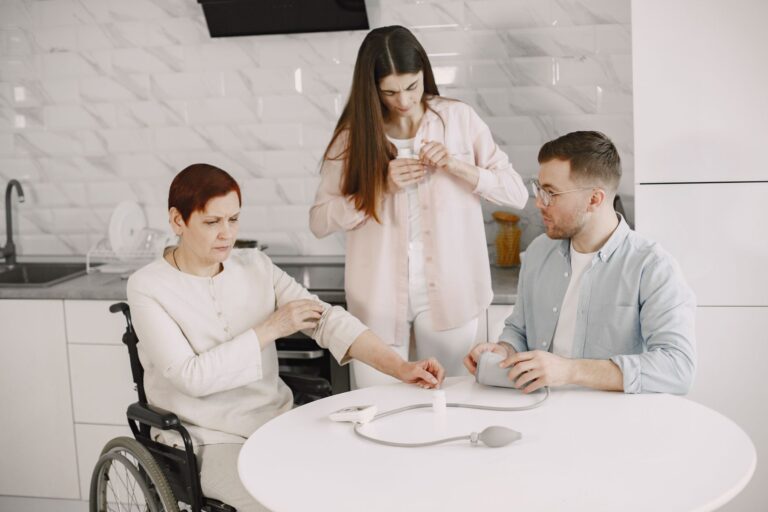
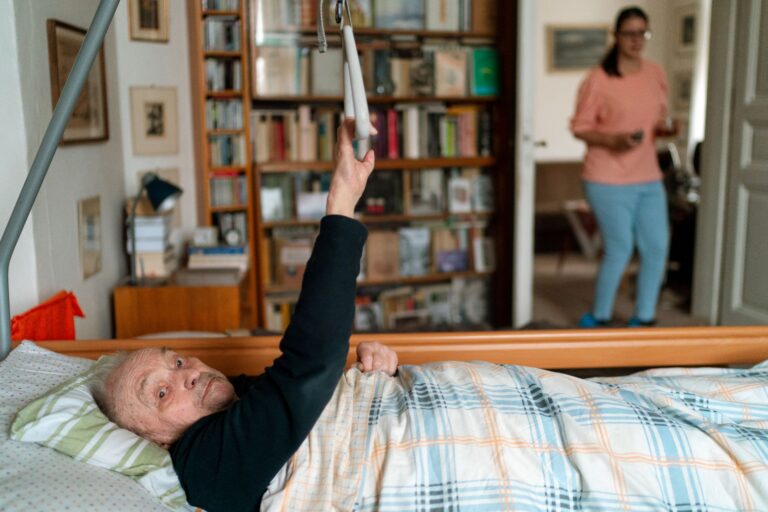
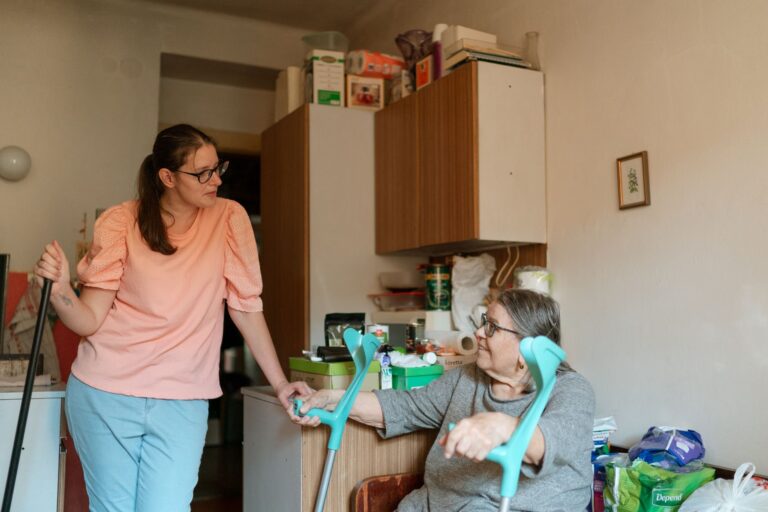
Yes, caregiver injuries are a genuine and frequently underreported occupational hazard in dementia care. A family member or professional caregiver assisting a person with advanced dementia faces daily physical risks—from accidental strikes during agitation, falls while transferring a confused patient, to cumulative strain from repeated lifting and support. The difference between dementia caregiving and other caregiving roles is the unpredictability: you cannot reason with someone experiencing sundowning or acute confusion, and their behavior can shift without warning from calm to combative in seconds.
The statistics reflect this reality. Research from caregiver support organizations indicates that roughly 40–60% of dementia caregivers report at least one physical injury during their tenure, with back injuries and bruises from falls or patient aggression being the most common. These injuries are not just inconveniences. A herniated disc sustained while helping a 180-pound patient out of bed can mean months of pain, physical therapy, and reduced ability to provide care—creating a cascade where the caregiver’s injury compromises the patient’s safety.
Table of Contents
- What Types of Physical Injuries Do Dementia Caregivers Sustain?
- How Does Dementia Behavior Increase Caregiver Injury Risk?
- Back and Musculoskeletal Injuries—The Caregiver’s Hidden Epidemic
- Prevention Strategies and Their Real-World Limitations
- Aggression, Sundowning, and Seasonal Spikes in Injury Risk
- Psychological Injury and Burnout as Amplifiers of Physical Risk
- Professional Caregivers and the Injury-Rate Gap
- Frequently Asked Questions
What Types of Physical Injuries Do Dementia Caregivers Sustain?
Dementia caregivers face a spectrum of injuries that differ from those in other settings because they stem from a combination of physical exertion and behavioral unpredictability. The most prevalent injuries include lower back strains from transferring or repositioning patients, shoulder impingements from repetitive pulling motions, knee injuries from kneeling to assist with toileting or bathing, and fractures or contusions from patient strikes, scratches, or falls. One 65-year-old daughter caring for her mother with late-stage Alzheimer’s sustained a compound fracture in her wrist after her mother, experiencing acute confusion and fear, grabbed her arm violently while being transferred to a shower chair.
That single event required surgery and eight weeks of immobilization, during which professional in-home care had to be arranged—doubling the family’s care costs and adding emotional strain. Neurological injuries, though rarer, also occur: caregivers have suffered concussions from being struck by a patient’s flailing limbs or head-butted during moments of aggression, and eye injuries from fingernail scratches when a patient is in a combative state. Burns happen too, particularly when a caregiver’s attention is divided between a dementia patient and a stove or hot liquid. The cumulative nature of minor injuries—small cuts, repeated bruises, muscle aches—is equally important: they compound over months and years, eroding the caregiver’s physical resilience and increasing the risk of a catastrophic injury.
How Does Dementia Behavior Increase Caregiver Injury Risk?
The behavioral symptoms of dementia directly elevate injury risk in ways that static patient care (like assisting someone with a stable spinal cord injury) does not. Aggression, whether verbal or physical, occurs in 40–50% of dementia patients at some stage, often triggered by fear, confusion, or pain that the person cannot articulate. A caregiver has no way to predict the trigger: offering a bath might provoke violent resistance one day and calm acceptance the next. During these episodes, patients may swing, bite, kick, or push with force they would not normally generate, and their lack of awareness of consequences means they cannot be reasoned with or warned to stop.
Wandering and elopement (leaving a safe space) create additional injury risks. A caregiver chasing a confused patient who has wandered into traffic or a neighbor’s yard may themselves sustain injuries—sprains from running, falls on uneven ground, or being struck by a vehicle. One 58-year-old man caring for his wife with vascular dementia chased her into a ravine when she wandered from their backyard at dusk; he slipped on loose rock, fractured his ankle, and was unable to move. His wife was found by neighbors an hour later, and the incident ended both their home-based care situation. These scenarios are not edge cases—wandering causes injuries to roughly 25% of dementia caregivers who are managing a patient prone to leaving the home.
Back and Musculoskeletal Injuries—The Caregiver’s Hidden Epidemic
Back injuries are the silent epidemic of dementia caregiving. Transferring a patient—from bed to chair, chair to toilet—is a repetitive task that many caregivers perform dozens of times daily without proper body mechanics or equipment. The problem is compounded when a patient is combative or rigid during a transfer. Unlike a cooperative patient, a person with dementia may resist, lean the wrong direction, or suddenly go limp, forcing the caregiver to adjust their grip and body position mid-motion—exactly when spinal injuries occur. A 52-year-old woman caring for her mother (who weighed 140 pounds and had advanced Alzheimer’s) suffered a herniated disc at L4–L5 after nine months of twice-daily transfers using a gait belt but no mechanical lift.
The disc herniation compressed a nerve, causing sciatica down her left leg. She eventually required epidural steroid injections and physical therapy, and her ability to care for her mother was permanently diminished; the family had to move the mother to assisted living. This is not unusual. Studies of professional caregivers in nursing homes—who work in an environment theoretically equipped with lifts and training—show that back injuries remain the leading cause of lost work time. Home caregivers, who often lack equipment and training both, face even higher rates. The limitation here is critical: even with perfect form and mechanical aids, the repetitive strain of assisting a 100+ pound person multiple times daily taxes the spine, and a single awkward moment can cause permanent damage.
Prevention Strategies and Their Real-World Limitations
Proper body mechanics, lifting equipment, and training all reduce injury risk, but they are not foolproof and come with practical tradeoffs. Using a mechanical lift (a ceiling-mounted or portable device) to transfer a patient is the gold standard for preventing back injury—it removes the physical strain from the caregiver entirely. However, mechanical lifts cost $3,000–$15,000 installed, require space and installation (not feasible in small bathrooms or rentals), and some dementia patients experience fear or panic at being suspended by a device, making the transfer itself more dangerous if they resist violently.
A gait belt and proper lifting technique (bending at the knees, keeping the patient close, avoiding twisting) are lower-cost alternatives that reduce strain but do not eliminate it, especially during transfers where the patient is combative or has rigid muscle tone from Parkinson’s disease or advanced dementia. Training in safe transfer techniques is standard in professional settings but difficult to enforce at home, where family caregivers often default to whatever method they’ve always used or whatever feels fastest. One son, trained by a physical therapist on how to transfer his father with minimal back strain, reverted to old habits within two weeks because the “correct” method took 30 seconds longer, and he felt impatient. The reality is that preventing all caregiver injuries through behavioral and ergonomic means alone is unrealistic—a 180-pound patient with advanced dementia will always pose some physical risk to a 130-pound caregiver, no matter how perfect the technique.
Aggression, Sundowning, and Seasonal Spikes in Injury Risk
Dementia-related aggression is not predictable in the way a behavioral disorder with consistent triggers might be. Sundowning—confusion and agitation that worsens in late afternoon and evening—increases aggression risk, and caregivers often sustain injuries during evening care routines (bathing, toileting, dressing for bed) when the patient is most confused and reactive. Some patients show seasonal patterns: aggression worsening in winter months (correlating with reduced daylight and increased confinement) or improving after a medication adjustment. A family may adapt their routine to these patterns—scheduling baths earlier in the day, increasing outdoor time in winter—but the unpredictability remains a hazard. The limitation is that aggression management relies heavily on de-escalation, which is an art, not a science.
One caregiver might find that speaking softly and offering the patient’s favorite snack prevents an aggressive episode; another caregiver in the same household triggers aggression with the same approach, because the patient’s reaction depends on their neurological state at that moment, not on any external factor the caregiver controls. Medications can reduce aggression—antipsychotics, antidepressants, anti-anxiety drugs—but they carry their own risks (falls from sedation, worsened confusion, increased mortality risk in older adults) and may simply suppress the behavior rather than prevent injury if a patient strikes before the medication takes effect. A warning: never restrain a dementia patient physically to prevent aggression. Restraint escalates fear, increases injury risk to both caregiver and patient, and is illegal in many jurisdictions. The injury risk of aggression cannot be fully eliminated, only reduced.
Psychological Injury and Burnout as Amplifiers of Physical Risk
Caregiver burnout and emotional exhaustion increase the likelihood of physical injuries. When a caregiver is sleep-deprived, depressed, or emotionally depleted, their reaction time slows, their attention wavers, and their physical resilience drops—meaning they are more likely to slip, lose their balance during a transfer, or be caught off-guard by a patient’s sudden movement. One 71-year-old man, providing sole care to his wife with advanced dementia, had not slept more than three hours consecutively in eighteen months. During a routine transfer, he missed her shift in weight, both fell, and she fractured her hip while he sustained a severe shoulder separation.
His exhaustion had not just worn him down emotionally—it had literally made him physically unsafe. The intersectionality matters here: a caregiver’s physical health (chronic pain, arthritis, poor cardiovascular fitness) combined with burnout creates a cascade. A 48-year-old woman with degenerative disc disease in her lower back, caring for her mother, developed severe depression after two years of continuous caregiving. Her depression reduced her motivation to use safe transfer techniques, increased her pain perception, and led to a falls-related knee injury when she lunged to catch her mother during an unsteady moment. The psychological and physical injuries are not separate phenomena—they feed each other.
Professional Caregivers and the Injury-Rate Gap
Professional home health aides and nursing home staff experience injury rates comparable to or exceeding those of family caregivers, despite receiving formal training. A Bureau of Labor Statistics survey found that nursing assistants (who provide dementia care in facilities) have among the highest rates of nonfatal workplace injuries of any occupation—roughly 250 injuries per 10,000 workers annually, compared to 180 per 10,000 for all occupations. Professional caregivers are more likely to report injuries (family caregivers often do not, attributing pain to aging or normalizing it as “part of the job”), but the actual injury rate is comparable because the risk factors—lifting, unpredictable patient behavior, time pressure, fatigue—are the same. One important difference: professional caregivers work shifts (8–12 hours) and have time off, while family caregivers often work 24/7 with minimal breaks.
A professional aide caring for a dementia patient in a facility is more likely to have access to mechanical lifts, colleague backup, and incident reporting systems. A spouse or adult child providing care at home typically has none of these. This gap is not a failure of individual caregivers—it is a structural inequality. The family caregiver who sustains a back injury has no workers’ compensation, no paid leave to recover, and no replacement coverage while they heal. The professional who sustains the same injury has a clear pathway to recovery and workers’ comp benefits.
- —
Frequently Asked Questions
How common are serious injuries among dementia caregivers?
Research suggests that 40–60% of dementia caregivers sustain at least one physical injury during their caregiving tenure. Back injuries and trauma from falls or patient aggression are the most frequent, though the severity ranges from minor bruises to fractures requiring surgery or permanent disability.
Can I prevent all injuries through proper technique and equipment?
No. While proper lifting technique, mechanical lifts, and training significantly reduce injury risk, they cannot eliminate it entirely. A dementia patient remains an unpredictable and sometimes combative person, and the physical strain of repeated transfers or response to sudden movements creates inherent risk that no amount of precaution fully removes.
Is caregiver aggression-related injury more common than injury from lifting?
Back and musculoskeletal injuries from repetitive transfers and lifting are more common overall, but aggression-related injuries (bruises, scratches, fractures from strikes) are more likely to be acute and severe. The frequency of each varies depending on the patient’s stage of dementia and behavioral symptoms.
What should I do if I sustain an injury while caregiving?
Seek medical attention immediately, even for injuries that seem minor. Document the incident, the patient’s state, and circumstances so that if workers’ compensation or disability benefits apply, you have a record. If you are a family caregiver, you may not have access to workers’ comp, but documentation is important for your medical record and for planning future care (such as identifying the need for equipment or professional help).
Does mechanical lift equipment prevent all back injuries?
Mechanical lifts eliminate much of the strain during transfers, but they require proper installation, space, and patient cooperation. Some dementia patients become frightened of being suspended by a lift, creating a different risk. Additionally, mechanical lifts address lifting injury but not other common caregiver injuries like falls while assisting or injuries from patient aggression.
Can I reduce my injury risk by working shorter shifts or taking breaks?
Yes. Fatigue significantly increases injury risk by slowing reaction time, reducing physical resilience, and impairing judgment. A family caregiver who can arrange to work 12-hour shifts with days off, or who shares caregiving with other family members, reduces their cumulative injury risk compared to someone providing 24/7 solo care.