Current evidence does not show that balance training alone lowers dementia risk. Balance training—exercise that challenges your ability to stay steady—remains useful for functional ability and fall prevention, not as a proven dementia-prevention treatment. This distinction matters because better balance, improved cognitive test scores, and fewer dementia diagnoses are separate outcomes. Evidence for one does not automatically establish the others.
Medical information disclaimer: This article is for general educational purposes only and does not provide medical advice, diagnosis, or treatment. Always consult a physician or other qualified health professional about symptoms, medications, tests, or treatment decisions.
Table of Contents
- What does the direct evidence show?
- Does broader exercise evidence change the answer?
- What can multidomain programs tell us?
- How should balance work fit into a routine?
- What if someone already has MCI or dementia?
What does the direct evidence show?
A 2024 review examined 16 balance-training studies involving 1,148 adults aged 43 to 89. It found no significant pooled cognitive advantage over control groups, according to the review in the Medical Journal of the Islamic Republic.
The studies also did not track whether participants later developed dementia. The review therefore cannot establish that balance training prevents dementia—or that it has no possible effect. It shows that a protective effect has not been demonstrated.
Does broader exercise evidence change the answer?
Evidence about overall physical activity is more encouraging, but not conclusive. A 2022 analysis of 58 observational studies associated higher activity with lower rates of all-cause, Alzheimer's, and vascular dementia. Relative risks were 0.80, 0.86, and 0.79, respectively, in the British Journal of Sports Medicine meta-analysis. Observational studies cannot prove exercise caused those differences.
Active people may differ from less active people in other ways that affect dementia risk. Randomized evidence has been less persuasive. In the life trial, 1,635 sedentary adults ages 70 to 89 completed either health education or two years of walking, resistance, and flexibility training. New mild cognitive impairment or dementia occurred in 13.2% of the exercise group and 12.1% of the education group, with no significant reduction. AHRQ has likewise judged the prevention evidence insufficient.
What can multidomain programs tell us?
The 2025 U.S. POINTER trial studied 2,111 at-risk adults ages 60 to 79.
A structured package combining exercise, a MIND-style diet, cognitive and social challenge, and cardiovascular monitoring produced slightly greater global cognitive improvement than a self-guided package, as reported in JAMA. That result supports a broad approach to brain health, not balance training by itself. The trial did not isolate balance exercises or determine whether the program prevented dementia.
How should balance work fit into a routine?
WHO recommends regular physical activity as one part of reducing cognitive decline and dementia risk. Its guidance does not identify balance training alone as a prevention intervention.
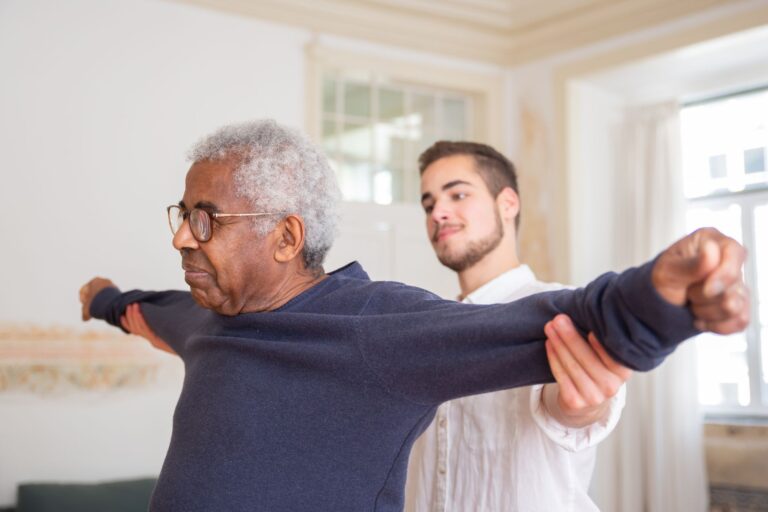
For older adults, WHO recommends varied activity emphasizing functional balance and strength on at least three days each week. The stated goals are better functional capacity and fall prevention. A practical approach is to:.
- Combine balance work with aerobic, strength, and flexibility activities.
- Use stable support or individualized instruction when an exercise feels unsafe.
- Judge balance training by mobility and functional goals, not an assumed reduction in dementia risk.
- Be cautious of programs promising dementia prevention from one exercise type.
What if someone already has MCI or dementia?
Balance training should not be presented as a treatment for cognitive impairment. In the PrAISED trial, a tailored strength-and-balance program for people with early dementia or mild cognitive impairment did not improve cognition, daily function, quality of life, or falls compared with usual care, according to the BMJ trial report.
Exercise goals can still be individualized around movement, daily activities, and personal preferences. Anyone with substantial unsteadiness should use appropriate support and seek guidance before attempting exercises that could cause a fall.