Reviewed by the Help Dementia Editorial Team — our editors review every article for accuracy against guidance from the National Institute on Aging, the Alzheimer’s Association, and peer-reviewed sources.
Yes, airports can overwhelm people with cognitive decline, and the research clearly demonstrates this risk. A study examining 48 people living with dementia and 176 travel companions found high levels of anxiety and frustration at airports, revealing that the airport environment itself poses distinct challenges beyond typical travel stress. For someone experiencing dementia, the combination of sensory overload, complex wayfinding, and unfamiliar routines can trigger confusion, distress, and behavioral changes that make air travel significantly more difficult than other transportation modes.
The challenge isn’t just about memory loss. Nearly 15% of people aged 70 and older have dementia, and these individuals often experience simultaneous vision and hearing impairments. Research shows that sensory impairments in older adults occur together more frequently than would be expected by chance, which means someone navigating an airport may be struggling not only with cognitive changes but also with declining ability to see signs clearly, hear announcements, or process complex visual information—all at the same time.
Table of Contents
- What Makes Airport Environments Particularly Challenging for Cognitive Decline?
- The Compounding Effect of Age-Related Sensory and Cognitive Changes
- Specific Airport Triggers That Overwhelm Cognitive Function
- Real-World Challenges Families Face When Flying With Someone With Dementia
- Why Current Airport Design Doesn’t Work for Cognitive Decline
- Emerging Solutions: What Some Airports Are Doing
- What the Future May Hold for Dementia-Friendly Air Travel
- Conclusion
What Makes Airport Environments Particularly Challenging for Cognitive Decline?
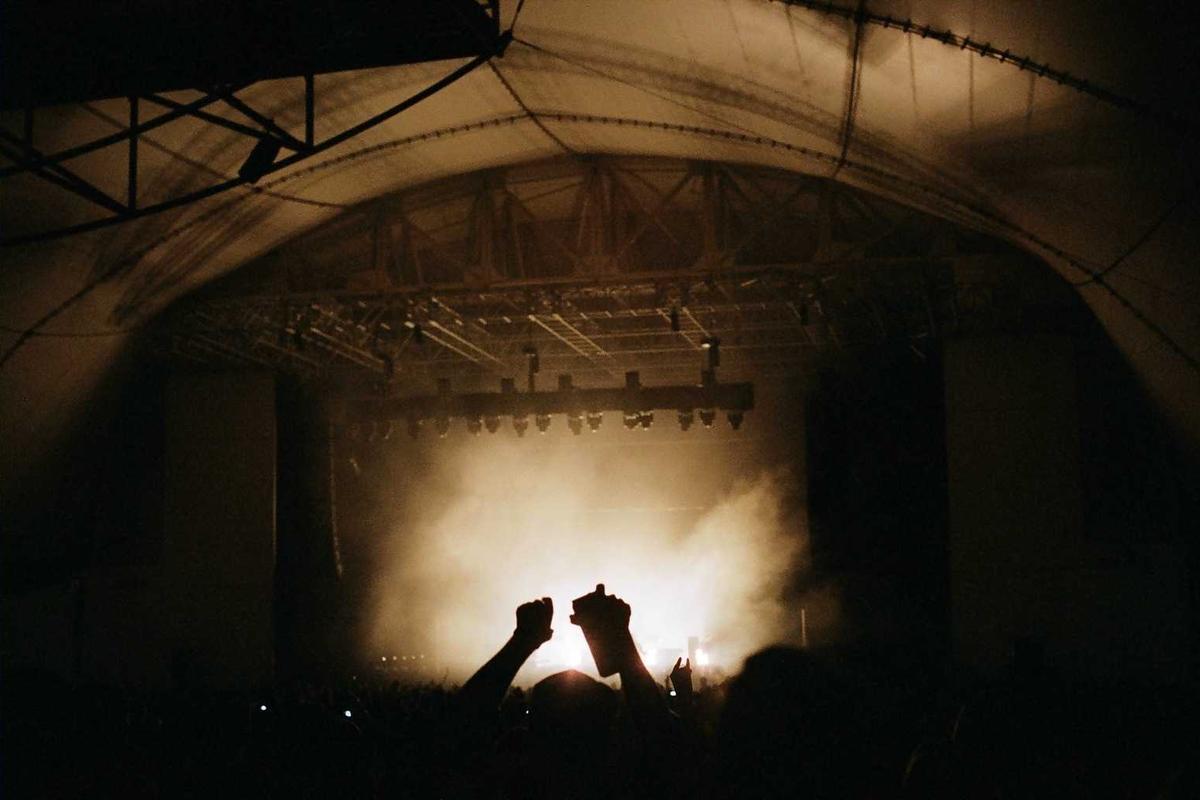
Airports are fundamentally overwhelming sensory environments. Crowds of hundreds or thousands of people, constant noise from announcements and aircraft, bright fluorescent or LED lighting, constantly changing information on digital screens, and the physical complexity of terminals create what experts call “sensory overload.” For someone with cognitive decline, these stimuli don’t get filtered or prioritized by the brain the way they do for others. Instead, everything competes equally for attention, creating confusion and anxiety.
The challenge compounds because airports demand multiple simultaneous cognitive tasks: finding the right terminal, locating the gate, understanding security procedures, managing luggage, reading and responding to changing information, and maintaining awareness of time. Someone with early-stage Alzheimer’s disease or another form of dementia might manage one or two of these independently but quickly becomes overwhelmed when required to do them all together in a chaotic environment. There’s no quiet space to pause and reset, no option to slow down the pace of information delivery.
The Compounding Effect of Age-Related Sensory and Cognitive Changes
What makes the airport particularly dangerous for people with cognitive decline is that their sensory and cognitive challenges don’t exist separately—they reinforce each other. Research from the National Institute on Aging demonstrates that vision, hearing, and cognitive impairments occur together in older adults more often than random chance would predict. This means a person with dementia who has mild hearing loss can’t rely on verbal announcements; someone with reduced visual processing can’t quickly scan signs; and someone with cognitive decline can’t compensate for sensory losses by thinking through what information they’re missing. A critical limitation of this reality: airports are designed around the assumption that travelers can integrate information across multiple sensory channels and make quick decisions.
The bright screens that display gate changes assume people can read and process the information. The verbal announcements assume people hear them. The printed signage assumes people can visually track directions while moving through space. Remove any of these sensory channels, or slow cognitive processing, and the entire system becomes inaccessible. For someone with dementia experiencing multiple sensory changes, airports aren’t just difficult—they can feel impossible to navigate safely.
Specific Airport Triggers That Overwhelm Cognitive Function
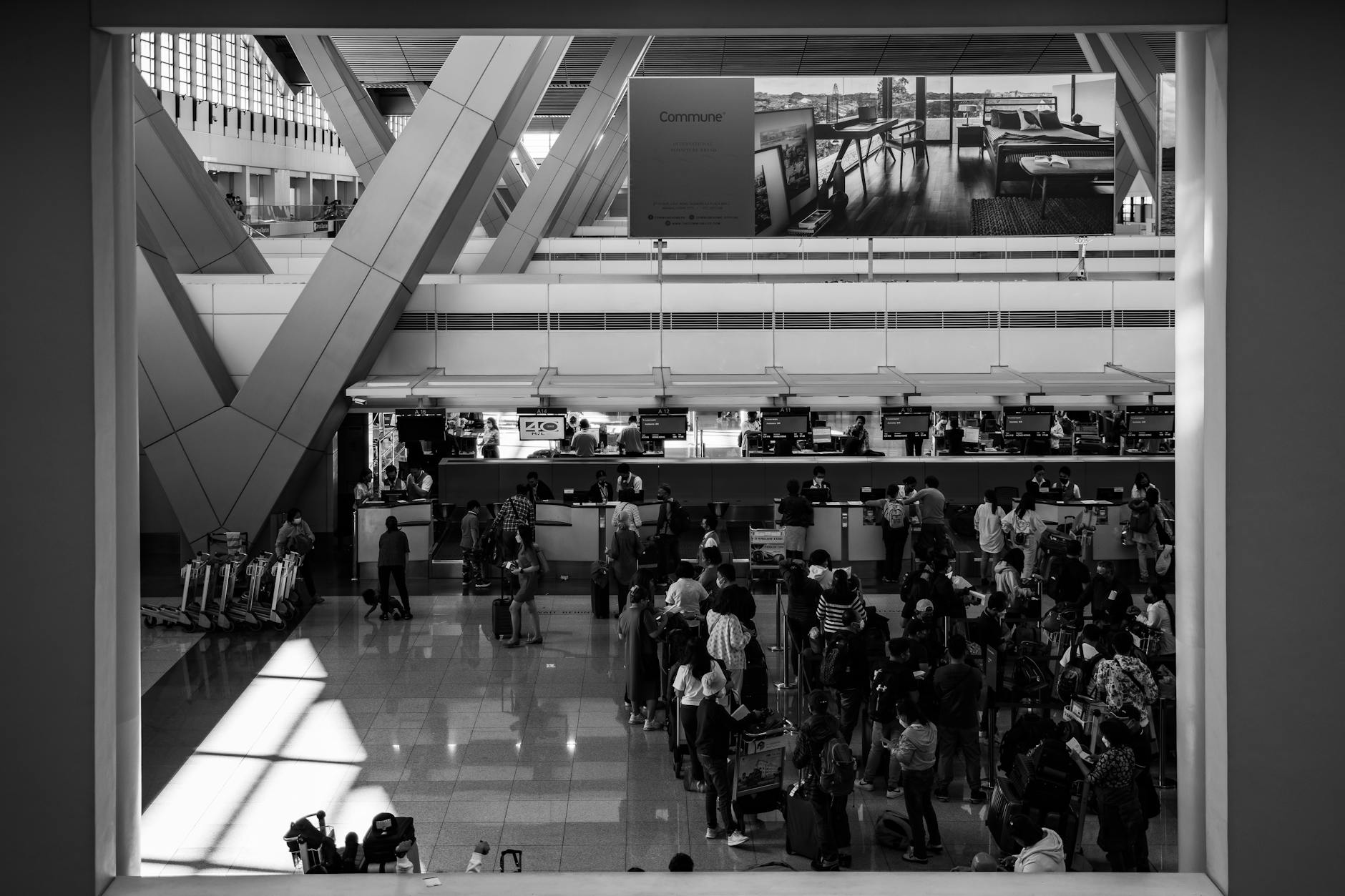
The specific sensory elements that trigger overwhelming reactions are well-documented. Crowds moving unpredictably create spatial disorientation. Noise levels (often 80-90 decibels in busy terminals) make it difficult to concentrate or hear instructions. Flashing screens with constantly updating information, particularly those showing flight delays or gate changes, create a sense of urgent confusion.
Bright overhead lighting and reflective surfaces can cause visual distress. The constant movement of luggage, people, and service vehicles creates a background of chaos that the brain must somehow filter. A person with dementia standing in a crowded security line might experience not just a long wait, but a cascade of sensory and cognitive failures: they can’t track which line is moving forward, they become confused about what they need to remove from their luggage, the noise prevents them from hearing the security officer’s instructions, and the visual complexity of the conveyor belts and scanning equipment triggers anxiety. Each element alone might be manageable; together, they create an environment where cognitive decline becomes acutely visible and distressing.
Real-World Challenges Families Face When Flying With Someone With Dementia
The research study of people with dementia and their travel companions revealed specific patterns of difficulty. Family members reported high levels of frustration, often because they couldn’t predict which aspects of the airport would trigger anxiety or confusion. Arrival times needed to be extremely early to account for slower processing and unexpected behavioral responses. Multiple family members sometimes had to accompany the person with dementia to manage wayfinding and behavioral support.
Comparison to other travel modes is instructive: taking a car trip or train allows for pauses, changing routes if confused, and avoiding sensory overwhelming periods. Airports offer almost none of these options. Once in the terminal, the person is committed to a specific pathway, timeline, and sensory environment. There’s no pulling over to rest, no quieter alternative route, no ability to avoid the crowds if gate assignments change. This inflexibility, combined with the intensity of the sensory environment, explains why families report that air travel with dementia is exponentially more stressful than driving the same distance.
Why Current Airport Design Doesn’t Work for Cognitive Decline
Standard airport design actively works against people with cognitive decline. Signage assumes rapid reading and visual processing. Announcements assume hearing and language comprehension. Security procedures assume the person understands abstract instructions and can follow multi-step processes without repetition. Gate information assumes people check screens regularly and understand that gate numbers might change. None of these assumptions hold for someone experiencing significant cognitive decline.
A major limitation of the current system is that there are no universal accommodations for cognitive decline at most airports. Vision loss has some accommodations (printed materials, assistance). Hearing loss has some (visual alerts, written instructions). Mobility challenges have clear accommodations (wheelchair assistance, accessible pathways). But cognitive decline—confusion about directions, difficulty understanding procedures, disorientation in space—remains largely unaddressed. Airlines and airports generally focus on physical accessibility rather than cognitive accessibility, leaving families to manage behavioral support and reassurance without institutional support.

Emerging Solutions: What Some Airports Are Doing
Recognizing these challenges, some airports are beginning to adapt. Phoenix and Seattle airports have created dementia-friendly quiet rooms, offering a low-sensory refuge where travelers can decompress before boarding. These aren’t medical spaces; they’re simply rooms designed with reduced lighting, minimal visual stimulation, quieter acoustics, and comfortable seating. Early feedback suggests that access to even 15 minutes in a quiet space significantly reduces anxiety and behavioral distress.
A growing tool for supporting people with cognitive decline in public spaces is the Hidden Disabilities Lanyard program, now used at major international airports including London Heathrow and Sydney. The lanyard is a discreet symbol worn by passengers that alerts staff members that the person may need additional time, patience, and clear communication. This simple visual cue changes how staff interact with passengers, shifting from assuming everyone can function at normal airport speed to recognizing that some travelers need slower, more deliberate support. While still uncommon in most U.S. airports, this model shows how small design changes can meaningfully improve accessibility.
What the Future May Hold for Dementia-Friendly Air Travel
As the population ages and dementia rates rise, airports are beginning to recognize that dementia-friendly design is a business issue as well as a humanitarian one. Universities like the University of Michigan Transportation Institute are studying how to make airports more accessible for people with cognitive decline, examining everything from wayfinding design to staffing approaches. This research suggests that future airports may see more significant changes: color-coded pathways rather than numbers, simplified security procedures for people with cognitive impairment, dedicated staff trained in dementia care, and normalized quiet spaces throughout terminals rather than isolated accommodation spaces.
The shift is likely to be gradual, driven by regulatory changes and lawsuits as much as by voluntary adoption. But the direction is clear: airports are recognizing that sensory-cognitive accessibility is a legitimate need, not a special request. This forward movement reflects the reality that air travel will increasingly include people with cognitive changes, and that inclusive design benefits everyone—not just those with dementia, but also travelers with sensory loss, anxiety, autism, or other conditions affected by sensory overwhelm.
Conclusion
Airports can and do overwhelm people with cognitive decline because the sensory environment, wayfinding complexity, and pace of airport procedures directly conflict with how dementia affects perception, memory, and processing speed. The research is clear: families report high anxiety and frustration, and people with cognitive decline struggle significantly with the simultaneous demands of navigating a chaotic space while managing sensory impairment and cognitive changes. If you’re considering air travel with someone experiencing cognitive decline, arriving extremely early, enlisting multiple family members for support, and pre-planning your route are practical starting points.
Beyond personal strategies, advocate for your airport to adopt dementia-friendly practices—quiet rooms, staff training, Hidden Disabilities Lanyard programs, and simplified signage. As airports recognize this need and begin making changes, the experience of air travel for people with dementia will gradually improve. Until then, understanding the specific triggers and planning meticulously remains essential.