Reviewed by the Help Dementia Editorial Team — our editors review every article for accuracy against guidance from the National Institute on Aging, the Alzheimer’s Association, and peer-reviewed sources.
Yes, AI tools can meaningfully support caregivers—but only when they stay in their lane. The core distinction is this: AI excels at the administrative, repetitive, and surveillance work that currently overwhelms family caregivers, while human doctors remain essential for diagnosis, treatment decisions, and the clinical judgment that changes course when something unexpected happens. An example: an AI-powered medication dispenser can remind your mother to take her blood pressure medication at 9 a.m. and alert you if she skips it, but it cannot evaluate what that blood pressure reading means in the context of her specific medical history, kidney function, and current symptoms. The tool supports the caregiver’s vigilance; it does not replace the doctor’s expertise. The evidence supporting this balanced role is growing.
Eighty-five percent of health system leaders now view AI as the most exciting emerging technology in healthcare, and physicians themselves are increasingly using AI for documentation, care plan generation, and medical research summaries. But the professional consensus is clear: “AI is aimed to complement, rather than replace, doctors and healthcare providers.” The FDA, AARP, and National Institute on Aging have all endorsed AI-powered health monitoring and companion tools as safe supplementary supports for older adults—not as substitutes for clinical care. The reason this distinction matters is simple: 53 million Americans are currently providing unpaid care to an adult family member, with 43 million of them performing complex medical tasks like wound care, medication management, and symptom monitoring. Most are women between 45 and 65, often juggling caregiving alongside work and their own health concerns. These are not trained nurses. They are stretched thin. AI tools designed to reduce their cognitive and physical load—while keeping doctors in the loop—can be genuinely transformative.
Table of Contents
- What AI Tools Actually Do for Caregivers
- The Real Limitations—What AI Cannot Do
- How AI Complements (Not Replaces) Medical Care
- Practical AI Tools That Help Today
- Privacy, Accuracy, and Trust Issues
- Supporting the Caregiver Burden
- The Future of AI in Dementia and Brain Health Care
- Conclusion
What AI Tools Actually Do for Caregivers
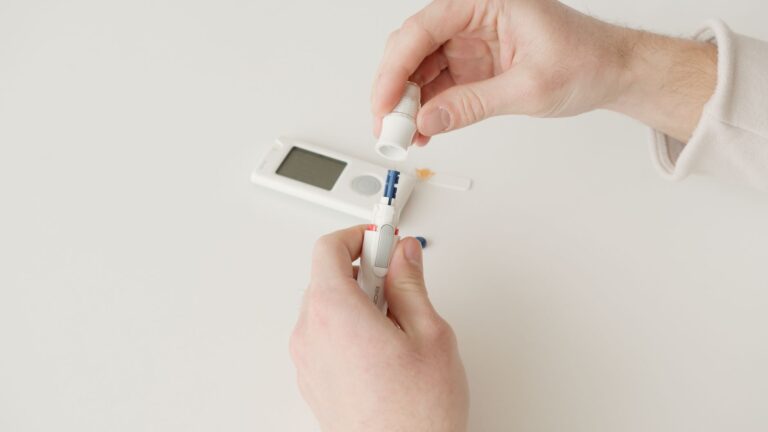
The first thing to understand is that AI is already in the caregiver’s life, though you may not call it AI. When your father’s Apple Watch alerts you that his heart rate has jumped to 110 bpm while he’s sitting, that’s AI pattern recognition at work. When a pharmacy sends a text reminder that a prescription is ready, that’s automation. When a wearable device tracks sleep, glucose, or blood pressure trends over weeks and presents them visually, that’s AI synthesizing raw data into insight—something a tired caregiver might miss. The current landscape includes real-world tools already in use: AI-enabled medication dispensers that remind seniors about prescriptions and notify caregivers of missed doses; real-time vital sign monitoring from wearables (Apple Watch, Fitbit, Omron HeartGuide) that alert both family members and healthcare providers if something is abnormal; medical translation tools supporting 30+ languages during doctor consultations, breaking down a major barrier for multilingual families; and predictive analytics that flag which care gaps or future healthcare needs require attention.
None of these replace a doctor. They all amplify what a caregiver can see and act on. The scale of this support matters. A single caregiver managing medication schedules for a parent with dementia and hypertension and diabetes is making dozens of micro-decisions daily. Which symptoms are normal aging, which are medication side effects, which signal a real problem? An AI system that monitors daily patterns can highlight the anomalies—the three consecutive nights of disrupted sleep, the unexpected weight gain, the irregular heartbeat—and present them to the caregiver with the context: “This is different from her baseline.” That is not diagnosis. That is data curation in service of better conversations with doctors.

The Real Limitations—What AI Cannot Do
Here is where most marketing material goes silent: AI has hard boundaries. An AI tool cannot tell the difference between a urinary tract infection and early dementia progression (both can cause sudden confusion in older adults). It cannot weigh the tradeoff between a medication that helps cognition but harms heart function. It cannot pick up on the subtle change in a person’s speech that suggests a subtle stroke. It cannot know whether a patient’s decline in appetite reflects depression, medication interaction, or gastroenterological disease. These are judgment calls that require medical training, experience, and often direct physical examination. The second limitation is data quality and context.
AI systems trained on broad populations may perform poorly for specific subgroups. A heart rate algorithm trained mostly on younger adults may misinterpret the normal rhythm variations in an 85-year-old. A dementia-risk predictor trained on affluent, English-speaking populations may have poor accuracy for immigrant communities with different health literacy, genetic backgrounds, and healthcare access. Caregivers who over-rely on AI alerts without understanding these limitations can miss genuine problems by dismissing them as “the algorithm being overly sensitive again,” or conversely, can panic at false alarms. Third, AI systems lack accountability. If a medication reminder fails and your parent misses a critical dose, who is responsible? If a wearable device malfunctions undetected and reports a false normal, then a real problem goes unnoticed—who bears the liability? The legal and ethical landscape around AI in healthcare is still being written. Caregivers using these tools need to understand that they are complementing, not replacing, human oversight. The AI is a witness and a prompt, not a guarantor.
How AI Complements (Not Replaces) Medical Care
The partnership model looks like this: AI handles information gathering and pattern flagging; doctors handle interpretation and decision-making. A patient’s wearable detects an irregular heartbeat pattern over several weeks. The AI alert goes to the caregiver and to the patient’s cardiologist simultaneously. The caregiver brings printouts and context to the next appointment: “This happened mostly at night, and seemed worse on days she didn’t sleep well.” The cardiologist reviews the data, performs an EKG, considers the patient’s medications and comorbidities, and decides: is this a new arrhythmia requiring treatment, or a normal variant? That decision is irreducibly human and clinical. The AI accelerated the detection and brought the best evidence to the table. The doctor made the call. This is different from replacing care with surveillance.
A common fear among dementia care advocates is that technology will be used to monitor people into isolation, or to cut corners on human interaction. That is a real risk if AI is deployed thoughtlessly. But when AI is used specifically to extend a caregiver’s capacity to notice problems and communicate with doctors, it actually enables more human engagement, not less. A caregiver who is constantly worried about whether her mother took her medications, or whether that rash is getting worse, or whether her blood pressure is dangerously high, is stressed and exhausted. An AI system that removes some of that mental load can free that caregiver to actually sit with her mother, to have conversations, to notice the non-medical things—how her mood is, whether she is lonely, whether she is in pain. The professional guidance reinforces this. The American Medical Association explicitly states: “AI should complement, not replace, human caregiving relationships.” This is not idealistic language; it is a recognition that the therapeutic relationship—between patient and caregiver, and between caregiver and healthcare provider—is itself a form of treatment. AI tools that strengthen that relationship, by making caregivers more informed and less overwhelmed, are doing their job correctly.

Practical AI Tools That Help Today
Several categories of AI tools are already proven to reduce caregiver burden. Start with monitoring: wearable devices that track vital signs and sync with apps that caregivers can access create a kind of passive surveillance that alerts you to problems without requiring daily check-ins. You do not have to call your father every morning to ask how he slept or what his blood pressure was. The device tells you, and you only follow up if something is out of range. For dementia care specifically, this is valuable because many people with cognitive decline struggle to self-report symptoms accurately. Medication adherence is another area where AI clearly helps.
A smart medication dispenser houses medications for each dose, locks between doses, and sends alerts if the wrong button is pressed or if a dose is missed. For a caregiver managing someone on five or six medications, this eliminates a major source of anxiety and error. Studies show that medication nonadherence in older adults with dementia leads to preventable hospitalizations—so this is not a small matter. Then there is the administrative labor: appointment reminders, prescription refill tracking, medical record organization, and translation services during virtual visits. These are tasks that take time and cognitive energy, especially for caregivers who are not native English speakers or who are managing care from a distance. An AI assistant that handles these details is not glamorous, but it is concrete relief. A caregiver in Los Angeles managing her mother’s care in rural Texas, coordinating with a doctor who speaks only English, can use translation AI to participate meaningfully in medical conversations rather than relying on imperfect secondhand reports.
Privacy, Accuracy, and Trust Issues
The moment you bring data into any system, privacy becomes a concern. Wearable devices send health information to company servers. Medication dispensers connect to apps. AI-powered monitoring systems collect daily behavioral data. Caregivers need to ask hard questions: Where does this data live? Who can access it? Is it encrypted? What happens if the company is acquired or goes bankrupt? These are not paranoid questions; they are necessary due diligence. A patient’s health data is among the most sensitive information that exists—it can be used for discrimination, it can be sold, it can be hacked. The accuracy question is equally important. Not all AI tools are built equally, and not all are validated in clinical settings before reaching consumers.
A blood pressure monitor that is off by 5 or 10 mmHg might not matter for routine monitoring, but it could matter if someone’s doctor is making decisions about medication based on the readings. Caregivers should look for tools that have been tested and validated, ideally in peer-reviewed studies, and they should understand the margin of error. If the app says “Your mother’s heart rate is abnormal,” but the actual error rate is 20%, then you cannot make clinical decisions based on that alert alone. There is also the risk of alert fatigue. If an AI system sends 15 notifications a day, most of them false alarms or low-risk variations, caregivers will start ignoring them—the boy-who-cried-wolf problem. A good AI tool is designed to reduce the signal-to-noise ratio, not increase it. Caregivers should be skeptical of tools that bombard them with data. The goal is clarity and insight, not more information.
Supporting the Caregiver Burden
The caregiver population itself is aging and fraught. Sixty to 70 percent of family caregivers are women, and the average age is 45 to 65—meaning many are simultaneously caring for aging parents and dealing with their own health issues. Caregiver burnout is linked to depression, weakened immunity, cognitive decline, and early mortality. This is not metaphorical; this is measured in studies. AI tools that reduce a caregiver’s mental and physical load are not luxuries; they are interventions in a public health crisis.
Consider a real scenario: a woman in her 50s working full-time is also managing her mother’s dementia, her father’s heart disease, and her own hypertension. She monitors her mother’s daily activities (Has she eaten? Did she take her medication? Is she agitated or calm?), coordinates appointments, communicates with her father’s cardiologist, fills prescriptions, tracks symptoms, and tries to work eight hours a day. An AI system that automates medication reminders, syncs appointment calendars, flags when vital signs are abnormal, and provides summaries of health trends can reclaim hours of mental energy per week. That is the caregiver getting sleep, having time for her own health, being present when she visits instead of anxious. That is the value of the right AI tool, in the right way.
The Future of AI in Dementia and Brain Health Care
The frontier is predictive analytics: AI systems that learn from thousands of dementia cases to flag early warning signs before cognitive decline becomes obvious. Early detection matters because interventions—lifestyle changes, cognitive training, medication—have better outcomes when started early. An AI system that can say, “Based on this person’s pattern of memory lapses, sleep disruption, and mood changes, there is a 70% likelihood of mild cognitive impairment within two years” could prompt earlier evaluation by a neurologist and earlier treatment consideration. But again, the AI is a screener, not a diagnosis.
Looking ahead, the integration of AI into clinical workflows will deepen. Doctors will review AI-synthesized summaries of a patient’s home data before each visit, making appointments more efficient and decisions more informed. Caregivers will have AI assistants that learn their family member’s baseline and alert them to truly anomalous changes, not noise. But this only works if the tools are designed with caregivers and patients in mind, if privacy is protected, and if the line between supporting care and replacing human judgment remains clear. The technology itself is neutral; how we deploy it will determine whether it reduces caregiver burden or creates a new form of surveillance and dependence.
Conclusion
AI tools can meaningfully support caregivers without replacing doctors if they are deployed intentionally. They excel at the data-gathering, reminder, and pattern-flagging work that currently exhausts family caregivers. They are worst at clinical judgment, context-specific decision-making, and accountability.
The key is to use them as extensions of the caregiver’s capacity to monitor and communicate, not as substitutes for medical expertise or human connection. For caregivers considering AI tools, the practical questions are straightforward: Does this tool reduce my workload without requiring me to trust it completely? Does it make me more informed for conversations with doctors, or does it create the illusion of medical knowledge I do not have? Is my family member’s data protected? Is the tool validated and accurate enough that I can act on its alerts? These are the questions that separate genuinely helpful tools from ones that are more risk than benefit. When the answer is yes, AI support can be transformative.