Yes, blood tests can now detect Alzheimer’s disease years before symptoms appear, and this represents one of the most significant shifts in dementia medicine in decades. The most promising of these tests measure amyloid beta and tau proteins in the bloodstream — the same biological markers that accumulate in the brain long before memory loss begins. For example, a person in their mid-50s with no cognitive complaints can now receive a blood test at a specialty clinic that indicates whether amyloid plaques are likely building up in their brain, giving them and their physicians a meaningful window for intervention.
This article covers how these tests work, which ones are available, what the results actually mean, and what you should do if you are considering getting tested. The arrival of blood-based biomarker tests does not mean Alzheimer’s detection is as simple as checking cholesterol. The science is advancing rapidly, but there are important caveats around accuracy, access, cost, and the emotional weight of what these results can reveal. Understanding both the promise and the limits of these tests is essential before pursuing one.
Table of Contents
- How Does a Blood Test Detect Alzheimer’s Disease Early?
- Which Blood Tests for Alzheimer’s Are Currently Available?
- What Role Does the APOE4 Gene Play Alongside Blood Tests?
- What Should You Do If You Are Considering an Alzheimer’s Blood Test?
- How Accurate Are Blood Tests for Alzheimer’s — and What Are the Limits?
- How Do Blood Tests Compare to PET Scans and Spinal Fluid Tests?
- Where Is Blood-Based Alzheimer’s Detection Headed?
- Conclusion
- Frequently Asked Questions
How Does a Blood Test Detect Alzheimer’s Disease Early?
Alzheimer’s disease begins with the accumulation of two proteins in the brain: amyloid beta, which clumps into plaques, and tau, which forms tangles inside neurons. For most of the past century, detecting these changes required either an expensive pet brain scan or a lumbar puncture — neither of which is practical for widespread screening. The breakthrough that enabled blood-based detection is the ability to measure fragments of these proteins that leak into the bloodstream, even in tiny concentrations, using a technology called immunoprecipitation mass spectrometry or highly sensitive immunoassay platforms. The most clinically validated blood test to date measures the ratio of two forms of amyloid beta protein: Abeta42 and Abeta40. When amyloid is accumulating in the brain, less Abeta42 circulates in the blood, changing this ratio in a measurable way.
A second key marker is phosphorylated tau, specifically p-tau217, which has shown strong correlation with Alzheimer’s pathology in multiple large studies. In a 2023 study published in JAMA, the p-tau217 blood test identified Alzheimer’s pathology with accuracy exceeding 90 percent, comparable to PET scan results. By comparison, standard cognitive assessments like the mmse catch problems only after significant neurological damage has already occurred. These tests are most useful in the preclinical or prodromal stages — meaning before or just at the onset of mild cognitive impairment. That is precisely where intervention has the most potential to slow disease progression, particularly now that FDA-approved anti-amyloid therapies like lecanemab and donanemab have entered clinical use.
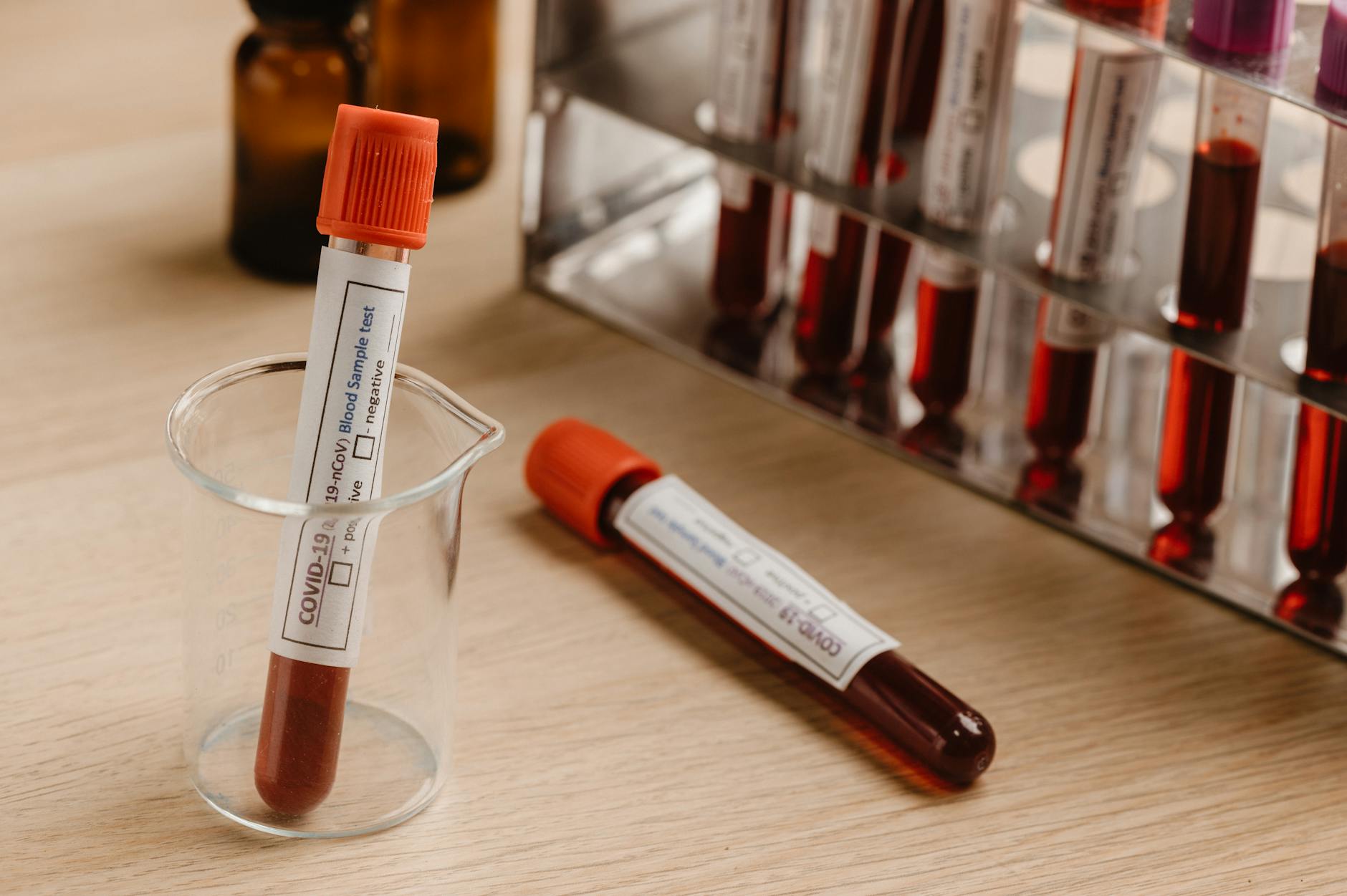
Which Blood Tests for Alzheimer’s Are Currently Available?
Several blood tests have moved beyond research settings and are now available through specialty clinics and, in some cases, primary care physicians. The most widely discussed include the Precivity AD test from C2N Diagnostics, which measures the Abeta42/40 ratio and has been available since 2020. ALZpath and Quanterix offer p-tau217 and p-tau181 assays respectively, and Quest Diagnostics launched its own Alzheimer’s blood panel in 2023. The specific tests available to you will depend on your location, your physician’s familiarity with the landscape, and your insurance coverage. However, availability is not the same as clinical readiness for all situations. These tests perform best when ordered in the right clinical context — meaning a physician who is actively evaluating a patient for cognitive decline or confirming eligibility for anti-amyloid therapy.
Using a blood biomarker test in a completely asymptomatic person outside of a clinical trial or specialty memory care setting is a more complicated proposition. The tests were largely validated in populations already undergoing evaluation, and their positive predictive value drops in general population screening, where the baseline rate of Alzheimer’s pathology is lower. A positive result in a 45-year-old with no symptoms and no family history does not carry the same meaning as a positive result in a 72-year-old with mild memory complaints. Direct-to-consumer versions are beginning to emerge as well. Some companies are marketing these panels without physician involvement. This is where caution is warranted — receiving a result that suggests elevated amyloid without genetic counseling, specialist context, or a clear follow-up plan can cause significant psychological harm without clinical benefit.
What Role Does the APOE4 Gene Play Alongside Blood Tests?
Blood-based biomarker tests are increasingly being interpreted alongside genetic testing, particularly for the APOE4 allele, which is the most common known genetic risk factor for late-onset Alzheimer’s disease. Carrying one copy of APOE4 roughly triples the lifetime risk of Alzheimer’s; carrying two copies raises it by eight to twelve times. When a blood biomarker test and APOE4 status are evaluated together, clinicians get a much more complete picture of both current pathology and future trajectory. For example, a patient in their early 60s presenting to a memory clinic with subjective cognitive complaints might receive both a p-tau217 blood test and an APOE4 genotype test.
If both come back positive — elevated p-tau217 and two APOE4 copies — that patient would likely be referred for a confirmatory PET scan or CSF analysis before initiating any anti-amyloid therapy, because treatment eligibility currently requires confirmed amyloid pathology, not just a blood signal. The combination also helps frame the urgency of lifestyle interventions, advance planning conversations, and clinical trial enrollment. It is worth noting that APOE4 testing carries its own emotional complexity. Many people choose not to know their APOE4 status even when undergoing biomarker testing, and that is a legitimate choice. Genetic counseling is recommended before any APOE4 testing, and some clinicians extend that recommendation to comprehensive Alzheimer’s blood panels as well, particularly for younger patients or those with strong family histories.

What Should You Do If You Are Considering an Alzheimer’s Blood Test?
The starting point should be a conversation with a physician who specializes in memory disorders, not a general screening ordered through a direct-to-consumer service. A neurologist, geriatrician, or geriatric psychiatrist can assess whether the test is appropriate given your age, symptoms, family history, and personal risk tolerance. They can also interpret the results within a clinical framework rather than leaving you to decode a probability score on your own. If you are asymptomatic and simply curious about your long-term risk, the value proposition is different than if you are experiencing early memory concerns. For the former group, the most evidence-based path currently is enrollment in a clinical trial or longitudinal cohort study, such as those conducted through the Alzheimer’s Prevention Registry or the A4 Study.
These studies offer blood biomarker testing with built-in medical oversight, counseling, and follow-up. Going outside that structure means accepting that a positive result may prompt anxiety without offering any actionable treatment pathway, since approved therapies are currently only available for people who already meet clinical criteria for mild cognitive impairment or early Alzheimer’s dementia. The cost and insurance tradeoff matters here as well. Most commercial Alzheimer’s blood tests range from a few hundred to over a thousand dollars. Medicare covers some biomarker tests when ordered in the context of diagnosing a patient with cognitive symptoms, but coverage is not universal, and the landscape is shifting as CMS works through coverage decisions related to the new anti-amyloid drugs. Out-of-pocket costs for a full workup including blood test, PET scan, and specialist consultations can easily exceed several thousand dollars.
How Accurate Are Blood Tests for Alzheimer’s — and What Are the Limits?
Accuracy varies significantly depending on the specific test, the laboratory performing it, and the patient population being tested. In research settings using highly controlled conditions, p-tau217 tests have reached sensitivity and specificity above 90 percent. In real-world clinical settings, those numbers moderate somewhat. Importantly, no blood test result alone is currently sufficient to diagnose Alzheimer’s disease or to qualify a patient for anti-amyloid immunotherapy — confirmatory PET or CSF testing is still required for treatment decisions. A critical limitation involves confounding conditions. Kidney disease can affect tau protein clearance, elevating blood tau levels independent of Alzheimer’s pathology.
Traumatic brain injury, other neurodegenerative diseases like frontotemporal dementia, and even some cardiovascular conditions can alter the biomarker landscape in ways that complicate interpretation. This is why context matters enormously — a blood test result should be one data point in a clinical evaluation, not a standalone verdict. There is also the question of what early detection actually enables right now. As of early 2026, the approved anti-amyloid therapies — lecanemab (Leqembi) and donanemab (Kisunla) — slow disease progression modestly in early-stage patients but do not reverse or stop the disease. They also carry risks of brain swelling and bleeding, particularly in APOE4 carriers. This means a positive blood test followed by confirmed pathology does not automatically lead to treatment. For many patients, the most actionable response remains cardiovascular risk reduction, sleep optimization, cognitive engagement, and planning — not a prescription.

How Do Blood Tests Compare to PET Scans and Spinal Fluid Tests?
PET amyloid scans remain the gold standard for detecting amyloid pathology in the brain, offering high resolution and direct visualization of plaque burden. Cerebrospinal fluid analysis via lumbar puncture provides highly accurate biomarker data and can measure multiple markers simultaneously. Both methods have been used in research and clinical trials for years. The key advantages of blood tests are cost, accessibility, and tolerability — a blood draw is vastly easier to obtain than a spinal tap or a specialized PET scan that is only available at major medical centers.
The tradeoff is signal fidelity. Blood biomarkers reflect brain pathology indirectly, with more biological noise introduced by peripheral metabolism, kidney and liver function, and other variables. This is why the field is increasingly moving toward a tiered approach: use a blood test as a first-line filter to identify who is likely to have significant amyloid pathology, then confirm with PET or CSF in those who test positive before making treatment decisions. This approach could dramatically reduce the number of expensive confirmatory tests needed and democratize early detection beyond the academic medical center.
Where Is Blood-Based Alzheimer’s Detection Headed?
The field is moving fast. In 2025 and into 2026, multiple large-scale studies are reporting on the performance of next-generation blood panels that simultaneously measure amyloid, tau, neurodegeneration, and neuroinflammation markers — sometimes called the ATN framework applied to blood. Researchers are also working on plasma GFAP (glial fibrillary acidic protein) as a marker of neuroinflammation and neuron damage that adds independent prognostic value.
The longer-term vision is a routine blood test for Alzheimer’s risk that could be administered alongside standard wellness panels in people over 50, similar to how lipid panels are used today for cardiovascular risk. This would require significant improvements in standardization across laboratories, clearer clinical guidelines for what to do with positive results in asymptomatic individuals, and broader insurance coverage. Several professional societies including the Alzheimer’s Association and the American Academy of Neurology are actively developing those guidelines, and primary care physicians are beginning to receive training on interpreting these tests. The infrastructure for population-level early detection is being built, even if it is not fully in place yet.
Conclusion
Blood tests can now detect the biological signatures of Alzheimer’s disease years before symptoms appear, and the most validated tests — particularly those measuring p-tau217 and the amyloid beta 42/40 ratio — achieve accuracy comparable to PET scanning in the right clinical populations. These tools are most valuable when ordered by specialists evaluating patients with cognitive concerns or assessing eligibility for anti-amyloid therapies, and they work best as part of a broader clinical picture that includes genetic testing, medical history, and sometimes confirmatory imaging. The promise is real, but so are the limits: results need expert interpretation, treatment options remain modest for now, and the psychological weight of early detection deserves serious consideration.
If you or someone you care for is experiencing memory changes, the most important step is a formal evaluation at a memory clinic or with a neurologist who is current on the biomarker landscape. If you are asymptomatic and motivated primarily by family history or general concern, enrolling in a clinical trial or prevention registry is often the most constructive path. Blood-based Alzheimer’s detection is no longer science fiction — but navigating it well still requires the guidance of a clinician who understands both the biology and the person sitting across from them.
Frequently Asked Questions
Can I get an Alzheimer’s blood test from my regular doctor?
Some primary care physicians can now order these tests, but your doctor needs to be familiar with which tests are validated, how to interpret the results, and what follow-up is needed. Many internists are not yet trained in this area, so asking for a referral to a memory specialist or neurologist is often more appropriate, especially if you have no symptoms.
Are Alzheimer’s blood tests covered by insurance?
Medicare covers some biomarker tests when ordered in the context of evaluating a patient with cognitive symptoms, but coverage decisions are still evolving. Private insurance coverage varies widely. Direct-to-consumer tests ordered without a physician are generally not covered. Call your insurer before ordering to understand your out-of-pocket exposure.
How early can a blood test detect Alzheimer’s?
Some studies have shown that amyloid biomarkers in blood become abnormal 15 to 20 years before dementia symptoms appear. Tau markers tend to rise somewhat later in the preclinical phase. This early window is the primary reason researchers are so interested in these tests — it represents the period where prevention-oriented interventions may have the most impact.
Does a positive blood test mean I will definitely get Alzheimer’s?
No. A positive amyloid or tau blood test indicates that Alzheimer’s-related pathology is likely present in the brain, but not everyone with amyloid plaques develops clinical dementia. Some people carry significant amyloid burden for years without cognitive decline. The test increases the probability estimate; it does not deliver a certain diagnosis or prognosis.
What should I do to prepare emotionally for this kind of test?
Speak with a genetic counselor, neuropsychologist, or social worker before testing if you have concerns about how you would handle a positive result. Consider what you would do differently with the information — and whether those actions require knowing your status. Some people find that clarity motivates lifestyle changes and planning; others find the uncertainty more manageable than a concrete answer.
Are these tests available outside the United States?
Research-grade versions of these tests are available in major medical centers in Europe, Australia, Canada, and other countries. Commercial availability varies significantly by country and is often more limited than in the US. Clinical guidelines around their use in routine care are similarly varied and are being developed by regional Alzheimer’s associations and neurology societies.