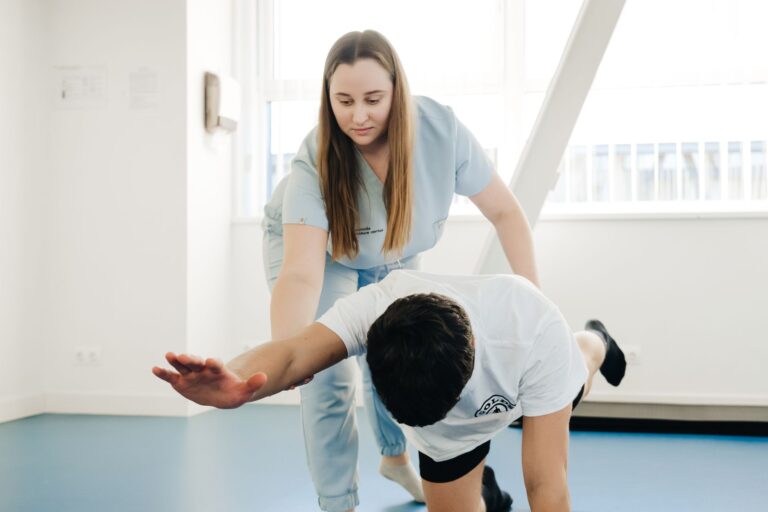
The answer is straightforward: skip the sit-ups. Instead, focus on anti-rotation movements, hanging leg raises, planks with dynamic variations, and functional standing exercises that strengthen your core through multiple planes of motion while protecting your spine. For someone concerned about maintaining strength and independence as they age—particularly relevant in dementia care settings where falls and loss of stability are critical health risks—this shift away from traditional crunches isn’t just about building muscle.
It’s about building a core that actually supports you in daily life: standing from a chair, walking without losing balance, bathing without straining your lower back, and maintaining the postural stability that protects your brain and body as you move through your environment. Research over the past several years has made it clear that sit-ups and traditional crunches rank among the least effective exercises for genuine core strength. They’re also among the most damaging to your spine. This article explores why physical therapists and trainers are moving away from these outdated methods, what science shows works better, and how you can build lasting strength that supports both your physical independence and long-term health.
Table of Contents
- Why Sit-Ups Damage Your Spine Rather Than Strengthen It
- The Science Behind Multi-Planar Core Training
- Functional Exercises That Translate to Daily Independence
- Recommended Training Frequency and Strategic Programming
- Common Mistakes When Switching from Traditional Methods
- Brain Health, Balance, and Core Strength Connection
- The Expert Consensus Shift and Long-Term Strength Development
- Conclusion
Why Sit-Ups Damage Your Spine Rather Than Strengthen It
Sit-ups push a curved spine against the floor while engaging your hip flexors—a combination that places significant stress on your lower back and lumbar vertebrae. Every time you perform a full sit-up, you’re repeatedly flexing your spine in the same direction, the exact movement pattern that research shows contributes to disc degeneration and back injuries over time. Think of it like bending a paperclip back and forth in the same spot; eventually, it weakens and breaks. Your spine works the same way. Electromyography (EMG) studies—which measure the electrical activity of muscles during exercise—have ranked crunches among the worst core exercises for muscle activation.
Meanwhile, modern alternatives like ab wheel rollouts, hanging leg raises, and anti-rotation movements produce significantly greater muscle engagement. For someone concerned about maintaining strength to prevent falls or support independence in aging, this distinction matters enormously. A weak core from ineffective exercise leaves you vulnerable; a properly trained core protects your spine, maintains your balance, and gives you the stability you need for daily activities. The limitation here is important: some people have already developed lower back issues from years of sit-ups. If you have existing disc problems or chronic lower back pain, you’ll need to be even more cautious about exercise selection and should work with a physical therapist before starting any new routine. The good news is that the proper core exercises can actually help rehabilitate a damaged back by building stability without the harmful repeated flexion.

The Science Behind Multi-Planar Core Training
Your core doesn’t work in just one direction. When you reach for something on a high shelf, you’re extending. When you pick up a bag to carry it, you’re rotating. When you stand on uneven ground, you’re stabilizing sideways. Traditional crunches work in only one plane of motion—flexion—which means they build strength in a direction that rarely challenges you in real life. Modern core training emphasizes multi-planar movements: anti-rotation exercises (like the Pallof press, where you resist rotational forces), side planks (which build lateral strength), and dynamic movements that engage your core from multiple angles.
recent EMG studies from 2024-2025 show that planks, hanging leg raises, ab wheel rollouts, and anti-rotation movements provide superior muscle activation compared to sit-ups. The bird dog exercise—where you extend opposite arm and leg while on hands and knees—has produced the greatest increase in muscle thickness according to 2024 muscle analysis studies. These exercises build strength in patterns that actually match how your body moves, which is why they’re so effective for functional capacity and injury prevention. However, if you’re weak or deconditioned, you can’t start with hanging leg raises or advanced ab wheel rollouts. The progression matters just as much as the exercise selection. Starting with basic planks, bird dogs, and standing core exercises allows you to build the foundational strength needed for more advanced variations. This is particularly important in older adults or those with cognitive concerns, where falling is a significant health risk; building core stability gradually and properly can meaningfully reduce that risk.
Functional Exercises That Translate to Daily Independence
Stand up from a chair without using your arms, and your core is doing the work. Walk down the stairs and maintain balance when you misstep slightly, and your core is doing the work. Get out of bed in the morning—core. Bathe yourself—core. The problem with sit-ups is that they build zero real-world strength for these activities. Standing core exercises—like farmer carries (holding heavy weights at your sides while standing and walking), bird dogs, and anti-rotation movements—directly mimic the stability demands of everyday life. The bird dog exercise exemplifies this principle. Starting on your hands and knees, you extend one arm forward and the opposite leg back, then return to center.
This movement challenges your ability to maintain stability through your core while moving your limbs—exactly what your body needs to do when walking, reaching, or recovering from a stumble. For someone in dementia care, where maintaining independence and preventing falls is paramount, this functional approach to core training is far more valuable than aesthetic sit-ups. Side planks build lateral stability crucial for standing upright and resisting falls to either side. Mountain climbers work your abdominals while also engaging your back, shoulders, and glutes—building integrated strength rather than isolated muscle. One specific example: an older adult who trains their core functionally through bird dogs, side planks, and standing carries is far more likely to catch themselves and recover from a stumble than someone who only does sit-ups. That’s the real value of proper core training. The limitation is that functional exercises require more attention to form and progression; they can’t be mindlessly repeated like crunches. You’ll need to focus on quality movement and gradual increases in difficulty.

Recommended Training Frequency and Strategic Programming
The research suggests that core training is most effective at 3-5 sessions per week, though this varies based on your fitness level and recovery capacity. The key insight many people miss is that core training doesn’t always need to be its own dedicated workout. Trainers and physical therapists increasingly use core work as “filler” between compound leg movements (like squats) or as high-intensity finishers at the end of a strength session. This approach makes training more efficient while still providing the stimulus needed for adaptation. Consider two approaches: concentrated core training (30 minutes, 3 days per week focused entirely on core work) versus distributed training (5-10 minutes of core exercises added to the end of other workouts, 5 days per week).
The distributed approach often produces better results because it maintains more consistent stimulus across the week and fits more easily into a sustainable routine. For someone managing dementia care or supporting an aging parent, the distributed model typically works better—it doesn’t require carving out large blocks of time, and consistency is easier to maintain when it’s integrated into existing routines. The tradeoff is that distributed training requires better planning. You need to know which core exercises to prioritize and in what order, otherwise you’ll spend 5 minutes doing ineffective work. Concentrated training is simpler to program but harder to sustain. Most people find success with a hybrid approach: 2-3 dedicated core sessions weekly with progressive difficulty, plus 5 minutes of maintenance work 1-2 other days per week.
Common Mistakes When Switching from Traditional Methods
The most common mistake people make when abandoning sit-ups is rushing into advanced exercises. They jump from crunches straight to ab wheel rollouts or hanging leg raises without building foundational strength, then either get injured or become discouraged when they can’t complete the exercises. Progressive overload—gradually increasing difficulty—is just as important for core work as for any other strength training. Start with basic planks, bird dogs, and supported movements. Only after you can hold a plank for 60 seconds with perfect form should you consider more advanced variations. A second major mistake is ignoring form.
A poorly executed plank is nearly worthless; if your hips sag or pike upward, you’re not engaging your core effectively. A bird dog done with a rounded spine instead of a stable one teaches poor movement patterns. The exercises that require more skill demand more attention. This is especially relevant in dementia care settings, where supervision and cuing during exercise can significantly improve outcomes and safety. Never prioritize volume over quality in core training. The warning here is important: improper progression can lead to injury or reinforce poor movement patterns that actually worsen stability. If you’re over 60, have existing back issues, or are supporting someone with cognitive changes, consider at least one session with a physical therapist to ensure you’re doing these exercises correctly before starting a self-directed program.

Brain Health, Balance, and Core Strength Connection
While this might seem tangential, the connection between core strength and brain health is real and relevant. A strong core improves balance and proprioception—your body’s sense of where it is in space. This is controlled by your cerebellum and proprioceptive nervous system, both of which benefit from the neural challenges of balance training. Anti-rotation and standing core exercises that challenge stability force your brain to work harder to maintain balance, which in turn strengthens the neural networks involved in coordination and spatial awareness. For someone managing cognitive decline, this dual benefit—simultaneous physical and cognitive challenge—is invaluable.
Additionally, balance training and core stability work directly reduce fall risk. Falls are one of the leading causes of injury and disability in older adults and those with dementia. A strong, functionally trained core reduces the likelihood of falling and improves recovery if you do stumble. That protective effect has a direct impact on overall health outcomes, independence, and quality of life. The neural plasticity that comes from practicing balance and stability work also provides cognitive benefits through the demand for motor control and attention.
The Expert Consensus Shift and Long-Term Strength Development
Physical therapists and trainers have broadly shifted away from classic sit-ups and static, long-duration planks over 2025-2026, favoring dynamic and anti-rotation movements for both safety and effectiveness. This isn’t a fad; it reflects the accumulation of research and clinical experience showing what actually works. The trend is toward functional, multi-planar training that builds real-world strength. In dementia care and aging populations specifically, the emphasis is increasingly on exercises that build balance, stability, and integrated strength—exactly what modern core training provides.
Looking forward, the future of core training for lasting strength lies in movement variability and progressive challenge. Rather than doing the same plank hold for months, you vary the position (elevated, side, with arm movements), increase difficulty, and add novel challenges that force continued adaptation. This approach not only builds more robust strength but also maintains cognitive engagement with the exercise routine itself. For anyone concerned about maintaining independence and quality of life as they age, this science-based approach to core training is far more valuable than the outdated sit-up routine that dominated gyms a decade ago.
Conclusion
Building lasting strength without traditional ab exercises means shifting from spinal flexion (sit-ups and crunches) to multi-planar, functional movements that actually support how your body needs to work in daily life. The science is clear: bird dogs, side planks, anti-rotation exercises, standing movements, and progressive variations build superior muscle activation, reduce injury risk, and translate directly to real-world strength for activities like standing from a chair, maintaining balance while walking, and recovering from stumbles. Train your core 3-5 times per week, prioritize quality movement over quantity, and choose exercises that challenge your stability and balance.
If you’re managing your own strength as you age, supporting someone with dementia, or simply recognizing that sit-ups never worked well for you, this shift toward functional core training offers a proven, evidence-based path forward. Start with basic exercises, focus on perfect form, and progress gradually. The result won’t just be a stronger core—it’ll be the kind of practical strength that keeps you independent and reduces the risk of the injuries that most threaten quality of life in aging.