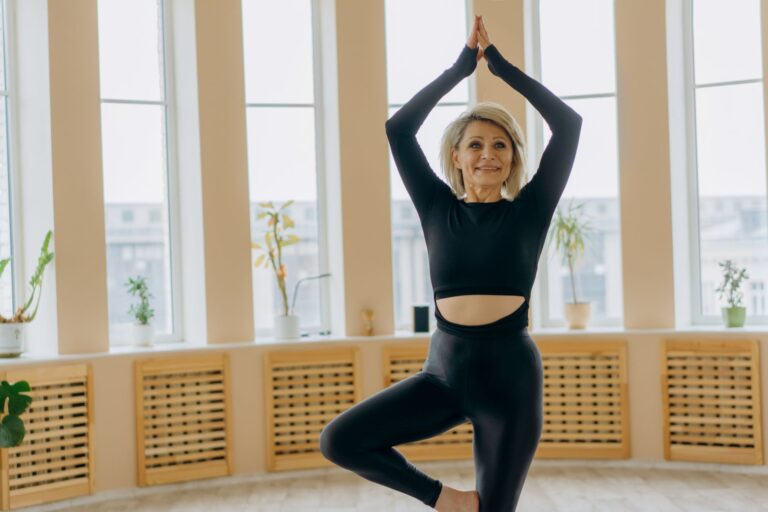
Balance training alone has not been shown to prevent Alzheimer's disease. Its clearest benefits are better physical function and fewer falls, especially when combined with aerobic and strength exercise. Balance training means activity that challenges a person's ability to stay steady while standing or moving. The National Institute on Aging says no intervention is known with certainty to prevent dementia, although healthy behaviors may reduce risk.
Medical information disclaimer: This article is for general educational purposes only and does not provide medical advice, diagnosis, or treatment. Always consult a physician or other qualified health professional about symptoms, medications, tests, or treatment decisions.
Table of Contents
- What does the prevention research show?
- What benefits can balance training provide?
- Does balance work help after an Alzheimer's diagnosis?
- Why multidomain programs are more promising
- How to use balance training sensibly
What does the prevention research show?
The EXERT randomized trial followed 296 sedentary older adults with amnestic mild cognitive impairment, or MCI. This condition involves noticeable memory problems without the level of impairment required for a dementia diagnosis. Participants received either aerobic exercise or low-intensity stretching, balance, and range-of-motion exercise for 18 months.
According to the 2025 EXERT report in Alzheimer's & Dementia, the groups did not differ significantly in their 12-month cognitive trajectories. Both groups maintained cognition during 12 supervised months and had high attendance: 81% in the aerobic group and 87% in the stretching-and-balance group. However, researchers found no between-group differences in specified brain volumes, blood flow, or Alzheimer's biomarkers. The study therefore cannot show that balance training prevents Alzheimer's or works better than aerobic exercise.
What benefits can balance training provide?
balance work can still be valuable even without proof of Alzheimer's prevention. Its primary purpose for older adults is to support physical function and reduce falls, according to CDC guidance. Smaller studies point in the same functional direction. A six-month program that included postural-balance retraining improved maximum walking speed in 50 older adults with amnestic MCI.
It did not significantly improve their tested reaction times while they performed cognitive and balance tasks together. This distinction matters. Walking faster, moving more steadily, and lowering fall risk can improve daily safety without changing the biological processes that cause Alzheimer's. A useful physical benefit should not be presented as evidence of disease prevention.
Does balance work help after an Alzheimer's diagnosis?
For someone already living with Alzheimer's, the goal shifts from prevention to maintaining safe movement and everyday function. Balance exercises may contribute, but the available evidence examined them as part of a broader exercise program. In one controlled six-month study, 15.1% of participants in a multimodal exercise program fell, compared with 42.1% in the comparison group.
The program also improved gait and balance, as reported in the International Journal of Environmental Research and Public Health. These results support a safety and mobility benefit, not a claim that exercise stops or reverses Alzheimer's. They also do not isolate balance training from the program's other exercise components.
Why multidomain programs are more promising
The strongest current evidence favors addressing several risk-related areas together. The U.S. POINTER trial enrolled 2,111 people and compared self-guidance with a structured program combining physical activity, diet, cognitive and social challenge, and health monitoring.
Over two years, the structured program improved global cognition more than self-guidance, according to the 2025 JAMA trial report. The advantage appeared across sex, ethnicity, APOE4 genetic-risk, and cardiovascular-risk groups. Global cognition reflects performance across several thinking abilities; it is not the same as avoiding dementia. The trial's ongoing extension is needed to determine whether the cognitive advantage eventually translates into fewer dementia diagnoses.
How to use balance training sensibly
Treat balance work as one part of a broader brain-health and mobility plan, not as a stand-alone Alzheimer's prevention treatment. A practical framework is: When comparing programs, ask whether they combine activity types, address other health behaviors, and describe their outcome accurately. "Improved balance" and "reduced falls" are meaningful results, but neither means "prevented Alzheimer's.".
- Include balance activity to support steadiness, physical function, and fall prevention.
- Add aerobic and muscle-strengthening exercise rather than replacing them with balance work.
- Consider the broader POINTER model: physical activity, diet, cognitive and social challenge, and health monitoring.
- Choose an approach that can be followed consistently; EXERT's supervised groups maintained high attendance.
- For a person with Alzheimer's, focus on safe function and fall reduction rather than promises of slowing the disease.