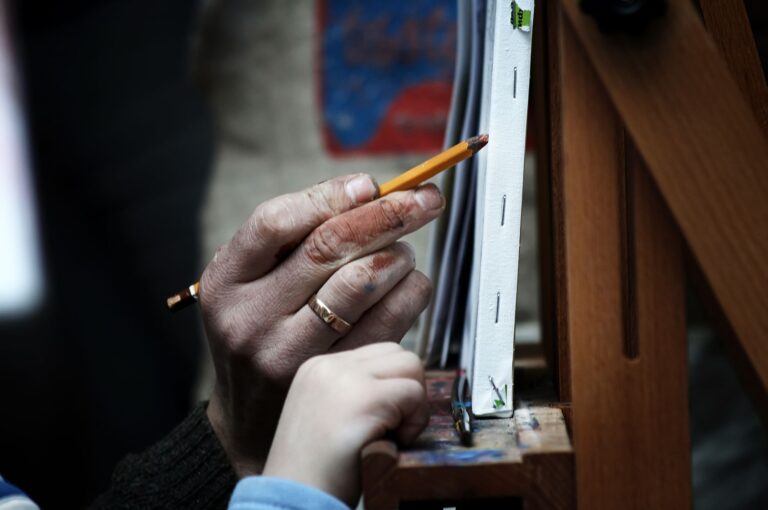
Art therapy at home and art therapy in memory care are not competing treatments — they are the same fragile evidence base delivered under different staffing, cost and regulatory conditions. The honest answer for families is that no study shows art therapy is a reason to move someone into memory care, or a reason to keep them home; the deciding factors are supervision needs, caregiver capacity and money.
That said, the setting does change what a person actually receives. A federally certified nursing facility must run a structured activities program directed by a qualified professional. A living room has no such guarantee, and no such cost.
Medical information disclaimer: This article is for general educational purposes only and does not provide medical advice, diagnosis, or treatment. Always consult a physician or other qualified health professional about symptoms, medications, tests, or treatment decisions.
Table of Contents
- What the research actually supports
- What memory care guarantees that home does not
- The cost comparison, in hours
- What Medicare pays for, and what it does not
- Running art therapy at home, realistically
- Signs the decision has stopped being about activities
- Frequently Asked Questions
What the research actually supports
Art therapy means guided creative work — drawing, painting, collage — led with therapeutic intent, as opposed to a craft handed out to fill an afternoon. The clinical evidence for it in dementia is thin. Cochrane's systematic review of art therapy for dementia found only two randomized trials eligible, with 60 analysed participants out of 88 randomised, and called the findings on cognition, mood and behaviour inconclusive. The reasons are structural, not a sign that researchers were careless. The multi-centre Rusted, Sheppard and Waller trial, published through Goldsmiths, University of London in 2006, compared art therapy groups with non-expressive activity groups in care settings and finished with complete data for only 21 patients.
The rest were lost to death, illness or a change of care placement. Studying an advancing illness in a moving population is hard, and small numbers mean small effects stay invisible. Where creative work has shown measurable cognitive benefit, it has been specific. A 2023 network meta-analysis of 39 randomized trials and 2,801 people with dementia found calligraphy therapy (mean difference 4.39) and reminiscence therapy (2.53) significantly improved cognitive scores against usual care, while other creative-arts modalities did not separate from controls. Both winners share a trait: repeated, structured, personally meaningful practice — not open-ended art-making.
What memory care guarantees that home does not
The one hard difference between settings is staffing law, and it applies narrowly. Federal rule 42 CFR 483.24(c) requires a Medicare- or Medicaid-certified nursing facility to run an ongoing activities program built from each resident's own assessment and preferences, directed by a qualified recreation therapist or activities professional. That requirement does not extend to assisted-living memory care units, which are regulated state by state.
Most of what families tour and call "memory care" falls in this second group. A glossy activities calendar in a brochure is a marketing document, not a staffing guarantee. So the question to ask on a tour is specific: who holds the credential, how many hours a week do they work, and how many residents do they cover? A facility with a licensed therapist three mornings a week for forty residents is offering something different from one with a full-time professional and small groups.
The cost comparison, in hours
Memory care is now priced where most families cannot absorb it without selling something. A Place for Mom's 2026 Cost of Long-Term Care report, released in February 2026, put the national median at $6,690 a month — $80,280 a year — up from $6,450, based on what residents who moved in during 2025 actually paid in base rent and care fees.
The same report priced in-home care at a median $34 an hour, up 3% over 2025. That converts into a useful yardstick: Forty-five hours a week is a working week, not round-the-clock supervision. Families who need overnight presence hit the crossover fast.
- Roughly 197 paid home-care hours a month, about 45 hours a week, before home costs reach the memory care median.
- Below that threshold, home is usually cheaper on paper.
- Above it, memory care often costs less than equivalent paid coverage at home — and covers nights.
- Neither figure includes the mortgage, utilities, food or home modifications a household keeps paying.
What Medicare pays for, and what it does not
This is where expectations most often break. Medicare.gov lists long-term custodial care — help with dressing, bathing and toileting — as not covered, and pays for nursing home stays only up to 100 days of skilled care following a qualifying hospitalization. Memory care is custodial by definition, so families pay privately or qualify for their state's Medicaid program. One federal program does fund relief directly.
Under the CMS GUIDE dementia model, a beneficiary with moderate-to-severe dementia and a caregiver can receive respite care with no cost sharing, capped at $2,500 per beneficiary per year. The respite can be delivered at home, at an adult day center, or in a 24-hour facility — which means it can buy a trial run of a residential setting before anyone commits. Against a $6,690 monthly median, $2,500 a year is not a funding plan. It is enough to cover a caregiver's surgery recovery, a funeral out of state, or two weeks of rest.
Running art therapy at home, realistically
The home version of this works best when it borrows the design features of the interventions that actually measured well: regular, structured and built on the person's own history. Reminiscence work in particular needs no credential — it needs the family photographs, and someone who knows the names in them. A workable home approach: Scale matters here.
Alzheimer's Association 2026 state fact sheets count more than 12 million unpaid U.S. dementia caregivers and project $409 billion in total 2026 dementia care costs. Home activity programs are substituting for paid staff time on an enormous scale, and a program that exhausts the caregiver stops within weeks.
- Pick a fixed time of day when the person is at their most alert, usually mid-morning.
- Keep sessions to 20 to 30 minutes, and stop before frustration rather than after it.
- Anchor the material in the person's life: their town, their trade, their wedding, their garden.
- Choose materials that forgive tremor and poor grip — chunky brushes, thick paper, oil pastels over pencils.
- Never test or correct. A session that becomes a quiz about what something is called has turned into an assessment.
Signs the decision has stopped being about activities
Activity quality is a reasonable thing to weigh between two acceptable options. It stops being the deciding variable once safety or caregiver health is the live issue, and families sometimes keep comparing art programs long after that point has passed.
Treat these as signals that the comparison has moved on: wandering outside the home, cooking or smoking unsupervised, falls at night, aggression the caregiver cannot de-escalate, or a caregiver whose own medical appointments have gone unattended for months. None of those is answered by a better painting group. If a move is likely within the year, use the GUIDE respite benefit to try a facility for a short stay while the choice is still yours to make — and during that stay, ask to watch an activity session rather than read the calendar.
Frequently Asked Questions
Does art therapy slow the progression of dementia?
No study in the current evidence base shows that. The Cochrane review found the effects on cognition, mood and behaviour inconclusive, and the 2023 meta-analysis found cognitive-score gains only for calligraphy and reminiscence therapy, not for creative arts generally.
Do I need a credentialed art therapist?
For a home program, no. The credential matters when you are paying a facility for one, because that is what distinguishes a therapeutic program from a scheduled craft hour — and only certified nursing facilities are federally required to have one.
Will Medicaid cover memory care if we run out of money?
State Medicaid programs are the main public route once private funds are gone, since Medicare covers only up to 100 days of skilled nursing care after a qualifying hospital stay. Eligibility rules and waiting lists are set by each state, so apply before the money is exhausted, not after.