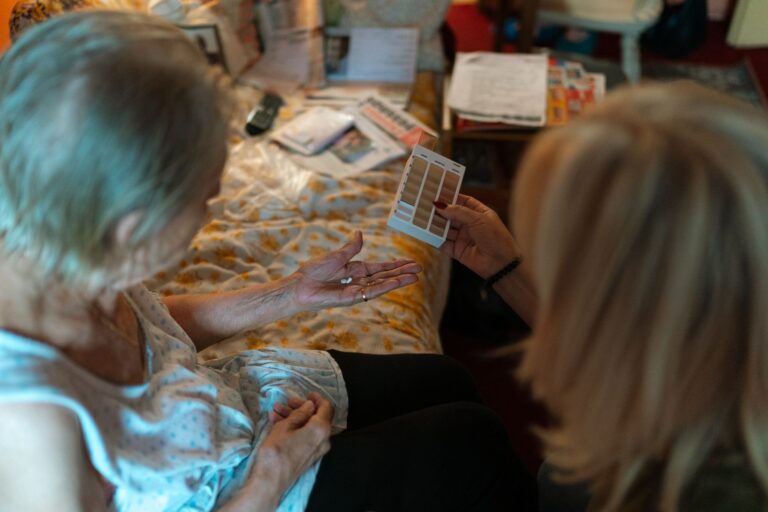
Ambiguous loss in dementia is the unique form of grief that occurs when a loved one is physically present but progressively less emotionally or mentally available due to cognitive decline. Unlike a death, which provides closure and a clear endpoint, ambiguous loss creates an open-ended sorrow—you’re mourning someone who is still alive, still in the room, but increasingly absent from the person you knew. This creates a psychological paradox where normal grieving feels inappropriate, yet the loss is unmistakably real and ongoing.
The grief of ambiguous loss is compounded because there’s often no socially sanctioned space to process it. Friends might say “at least they’re still here” or “look on the bright side,” which dismisses the genuine anguish of watching your spouse forget your name or your parent become someone you no longer recognize. A daughter may sit beside her father during an afternoon visit and experience profound loneliness despite his physical presence—he’s there, but the conversations that once connected them are gone, replaced by repetition, confusion, or indifference.
Table of Contents
- What Distinguishes Ambiguous Loss From Conventional Grief?
- Why Ambiguous Loss Remains Unrecognized and Unresolved
- Mapping the Stages of Loss Through Dementia’s Progression
- Identifying Ambiguous Loss in Your Own Experience
- The Hidden Toll of Prolonged Ambiguous Loss
- Finding Support for Ambiguous Loss
- Reframing Your Relationship During the Dementia Journey
- Frequently Asked Questions
What Distinguishes Ambiguous Loss From Conventional Grief?
Conventional grief follows a known trajectory: loss occurs, mourning happens, and over time, acceptance and integration take place. There are established rituals, social recognition, and a clear marker that the relationship has ended. Ambiguous loss lacks these frameworks. The relationship is still present but fundamentally altered, and it may continue to change for years. A person with early-stage dementia might still recognize family members but lose the ability to engage in meaningful conversation.
By mid-stage, they may no longer remember who these people are, though they might still respond to touch or tone of voice. This means the loss isn’t static—it resurfaces repeatedly as new cognitive abilities fade. The term “ambiguous loss” was developed by psychologist Pauline Boss to describe situations where someone is psychologically present but physically absent (such as a missing person) or physically present but psychologically absent (as in dementia, traumatic brain injury, or addiction). In dementia, the second type creates a peculiar grief because you’re simultaneously a caregiver and a mourner, often without permission to fully grieve because the person is still living. A spouse may feel guilty for grieving the loss of intimacy and partnership while also feeling responsible for the daily care of the person who caused that loss.
Why Ambiguous Loss Remains Unrecognized and Unresolved
One of the most damaging aspects of ambiguous loss is that it’s often invisible to others and even to the person experiencing it. Because the person with dementia hasn’t died, family members may not feel entitled to seek grief counseling or support. Workplace colleagues may not understand why a caregiver needs time off—”Your mother is still alive, isn’t she?” This social invisibility means many people suffering from ambiguous loss never name what’s happening to them, instead internalizing the grief as depression, guilt, or a personal failing. Ambiguous loss is particularly difficult to resolve because there’s no finality.
With death, grief moves through stages and eventually transforms. With dementia, caregivers may face years of progressive decline, each stage bringing new losses that reopen old wounds. A person who has adjusted to their parent’s memory loss may be blindsided when that parent no longer recognizes their spouse of 50 years, or stops eating, or becomes verbally aggressive. The anticipatory grieving never quite ends, because the ending is always receding into the future. This unresolved nature means that ambiguous loss can lead to complicated grief, depression, and caregiver burnout that persists long after the person with dementia has died.
Mapping the Stages of Loss Through Dementia’s Progression
Early-stage dementia often brings the first shock of ambiguous loss: when a loved one forgets appointments, repeats conversations, or loses their way in familiar places, but is still largely themselves. This stage can feel deceptive because the person looks healthy and can still communicate. A daughter might notice her mother losing interest in gardening—an activity she’d loved for forty years—without immediately understanding that memory loss is erasing the purpose and joy from that activity. The loss here is subtle but real: the gradual disappearance of shared interests, inside jokes, and the mental companionship that defined the relationship. Middle-stage dementia brings more dramatic losses. The person may no longer recognize family members, may confuse past and present, and may exhibit personality changes that shock loved ones. A gentle father becomes combative. A warm mother becomes withdrawn.
A husband asks his wife, “Who are you?” every morning. These aren’t the physical losses of aging—they’re losses of identity and relationship that fundamentally alter how caregivers understand their role. One husband described the loss this way: “I lost her before she died. She’s still breathing, still eating when I feed her, but the woman I married is gone. I’m caring for a stranger who has my wife’s face.” Late-stage dementia often brings a different kind of loss—the loss of the possibility of reconnection. Early on, caregivers hope for good days, moments of lucidity, or a possibility that the disease will slow. By late stage, there’s often no hope left, only the ongoing work of providing comfort and dignity to a person who may no longer show any response to their presence. Some caregivers describe this stage as a paradoxical relief—the ambiguity finally resolves into clearer acceptance—but it comes only after years of unresolved grief.
Identifying Ambiguous Loss in Your Own Experience
The signs of ambiguous loss are often emotional rather than behavioral, which makes them easy to dismiss or pathologize. You might feel a crushing sadness at moments that seem trivial—when your parent asks you the same question they’ve asked you five times today, or when they call you by the wrong name, or when you realize they’re no longer interested in topics that once consumed their mind. You might feel relief at that sadness, which creates guilt. You might find yourself grieving the future you’ll never have—the grandchildren your parent will never know, the conversations you’ll never finish, the plans you made together that now seem meaningless. Other signs include a persistent sense of loneliness despite frequent contact with the person, exhaustion that sleep doesn’t resolve, or a feeling of being stuck in time—moving through daily tasks while part of you is still waiting for something to change or resolve. Some caregivers experience what might be called “selective remembering,” where they unconsciously focus on the person’s positive qualities before the disease, avoiding the reality of who they are now.
Others swing to the opposite extreme, focusing exclusively on the decline and forgetting moments of connection or humor that still happen. The practical difference between anticipated grief and ambiguous loss matters for how you seek support. Anticipated grief—the sadness you feel knowing someone will die—has an endpoint and a direction. You can plan, you can say goodbye, you can prepare for the end. Ambiguous loss doesn’t have these anchors. You’re not preparing for death; you’re learning to live with an ongoing, open-ended loss while still providing care. A caregiver in this situation doesn’t need to “accept” that their loved one will die; they need to grieve the person who’s already gone while caring for the person who remains.
The Hidden Toll of Prolonged Ambiguous Loss
Ambiguous loss creates a particular vulnerability to caregiver burnout and depression because the loss never concludes and the care never ends until death occurs. Research shows that dementia caregivers experience depression at rates significantly higher than the general population, and a substantial portion of that depression is driven by unrecognized ambiguous loss. A caregiver may not seek help for depression because they don’t think they’re “depressed”—they think they’re simply sad, which seems like a reasonable response. Over time, this unrecognized grief can calcify into something harder: resentment, emotional numbness, or a disconnection from the person they’re caring for.
One significant warning: the impact of ambiguous loss often appears long after the person with dementia dies. Family members sometimes experience a second wave of grief when the person finally passes, not because they didn’t expect it, but because ambiguous loss leaves unresolved emotional business. All the things that couldn’t be said or resolved during the dementia journey may suddenly surge to the surface. Some bereaved caregivers experience this as relief—the suffering is finally over—but others feel blindsided by the intensity of their grief after expecting it to be “easier” because they’d already been grieving.
Finding Support for Ambiguous Loss
Standard grief counseling and bereavement groups often don’t address ambiguous loss effectively because they’re designed around the assumption of finality—the person has died, and grief has a recognized path. Caregivers dealing with ambiguous loss need different support: spaces where it’s acceptable to grieve someone who’s still alive, to express anger or resentment toward someone who is not responsible for their condition, and to discuss the everyday challenges of caring for someone you’re simultaneously mourning.
Some caregivers find support through dementia-specific caregiver groups rather than general grief groups, because these groups validate the unique experience of watching someone gradually disappear. Others benefit from therapy with a counselor who understands ambiguous loss—someone who won’t suggest “fixing” the situation or moving on, because the situation won’t be fixed and moving on isn’t possible. Support groups specifically for ambiguous loss, though still rare, provide the most direct validation: a space where saying “I’m mourning my husband who is still here” is not only acceptable but expected.
Reframing Your Relationship During the Dementia Journey
One practical shift that some caregivers find helpful is reframing the relationship away from who the person was and toward who they are now, difficult as that sounds. This isn’t about acceptance in the sense of moving on—it’s about finding a way to remain present with the person in front of you rather than constantly comparing them to the person who’s gone. A wife caring for her husband with late-stage Alzheimer’s might find moments of connection not through conversation (which is no longer possible) but through sitting together, through touch, through a familiar song or a food he enjoys. These moments are different from the relationship they had, but they’re not meaningless.
Another practical reality: ambiguous loss doesn’t end when the person with dementia dies. Caregivers often find that they’ve adapted so thoroughly to their mourning role that they don’t know who they are outside of caregiving once it’s over. The grief that was happening quietly alongside daily care suddenly has no container. Some former caregivers describe feeling lost or unmoored, even when they’re relieved the suffering is over. This suggests that the work of ambiguous loss is not just about accepting the decline of your loved one—it’s about acknowledging that you, too, have been changed by this long, invisible grieving, and that your own identity may need rebuilding after the caregiving ends.
- —
Frequently Asked Questions
Is ambiguous loss the same as anticipatory grief?
No. Anticipatory grief is sadness about an expected future loss, with a clear endpoint. Ambiguous loss is grief for a loss that’s already happening but never fully ends—the person is still there, but increasingly absent.
Should I feel guilty for grieving when my loved one is still alive?
Guilt is common, but it’s not warranted. Ambiguous loss is a real loss, and grieving it is a healthy response. You’re mourning the relationship and the person you knew, not wishing the person away.
Can ambiguous loss ever fully resolve?
Ambiguous loss doesn’t resolve in the way death-related grief does. Instead, many caregivers find they can integrate it—learning to grieve while also remaining present, and eventually finding moments of peace or even small joys alongside the sorrow.
Is therapy helpful for ambiguous loss?
Yes, particularly therapy with someone who understands ambiguous loss specifically, or support groups designed for dementia caregivers. Standard grief counseling may miss what makes this loss unique.
What happens to ambiguous loss grief after the person dies?
Some caregivers experience a second wave of grief because the ambiguous loss was never fully resolved. Others find that the finality of death brings a kind of closure that wasn’t possible during the dementia journey.
Can I experience ambiguous loss for other conditions besides dementia?
Yes. Ambiguous loss can occur with traumatic brain injury, severe mental illness, addiction, or conditions that cause long-term personality changes or cognitive decline—any situation where someone is present but psychologically unavailable. —