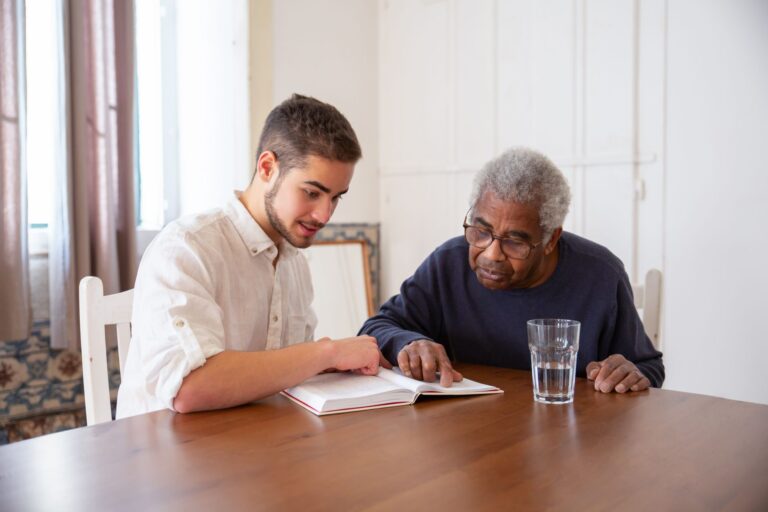
Alzheimer’s support groups are located through three main channels: the Alzheimer’s Association (alz.org or 1-800-272-3900), local hospitals and memory care clinics, and community centers. When you call the Alzheimer’s Association, they can connect you with weekly or monthly meetings in your specific city or county—some meet in person at libraries or senior centers, others online via Zoom. For example, if you live in Denver, calling the Colorado Chapter of the Alzheimer’s Association will connect you to groups meeting at Littleton Hospital on Tuesday afternoons or a caregiver-only group in Boulder on Thursday evenings.
Support groups exist because Alzheimer’s and dementia are isolating diagnoses. Caregivers often face guilt, burnout, and practical questions that doctors don’t have time to answer. Patients in early stages may struggle with identity and fear. A support group gives you people who understand—not sympathy from well-meaning neighbors, but real experience managing the same disease.
Table of Contents
- WHERE TO FIND ALZHEIMER’S SUPPORT GROUPS AND START SEARCHING
- WHAT SUPPORT GROUP MEETINGS ACTUALLY LOOK LIKE AND THEIR LIMITATIONS
- DIFFERENT TYPES OF SUPPORT GROUPS—CAREGIVER VS. PATIENT VS. SPECIALIZED GROUPS
- HOW TO CHOOSE A SUPPORT GROUP THAT ACTUALLY FITS YOUR SITUATION
- COMMON PITFALLS AND CHALLENGES IN SUPPORT GROUP PARTICIPATION
- ONLINE SUPPORT GROUPS AND VIRTUAL ALZHEIMER’S RESOURCES
- WORKING WITH YOUR HEALTHCARE TEAM TO IDENTIFY THE RIGHT SUPPORT RESOURCES
- Frequently Asked Questions
WHERE TO FIND ALZHEIMER’S SUPPORT GROUPS AND START SEARCHING
The most reliable source is the Alzheimer’s Association, which maintains an updated directory of meetings by state and county. Their 24-hour helpline (1-800-272-3900) is staffed by counselors who know local resources and can recommend groups by type—caregiver support, early-stage patient support, or groups for adult children caring for a parent. Beyond the national organization, many regional Alzheimer’s chapters maintain their own websites with searchable lists of meetings, including time, location, and whether they welcome both patients and caregivers or are restricted to one group. Local hospitals with neurology or geriatric departments often host support groups in their conference rooms or patient education centers.
A memory care unit at a hospital may run a group exclusively for families of patients in their facility, which can be valuable because the staff running it understands the specific environment where your loved one receives care. Community senior centers frequently offer Alzheimer’s caregiver groups as part of their programming, and these are often free or very low-cost. County Area Agencies on Aging can also point you to groups, even if they don’t run them directly. Some groups are sponsored by long-term care facilities or assisted living communities, and these may be open to the public even if you’re not a resident there. For instance, a skilled nursing facility might host a grief support group for families who have lost a loved one to Alzheimer’s, and this provides continuity for people already connected to that facility.
WHAT SUPPORT GROUP MEETINGS ACTUALLY LOOK LIKE AND THEIR LIMITATIONS
A typical in-person meeting runs 60 to 90 minutes and begins with a facilitator (sometimes a social worker, sometimes a trained peer facilitator) introducing the topic and ground rules: confidentiality, no judgment, and that people can pass if they don’t want to share. Members then take turns talking about their week—a caregiver might describe a behavioral crisis at home, another might ask how to handle a parent who refuses to bathe, a third might share that their loved one had a good day. The facilitator may offer coping strategies, but much of the value is simply hearing others say “I feel the same way.” One important limitation is that support groups are not therapy or medical advice. If you’re in crisis—your loved one is showing new aggression, you’re having thoughts of harming yourself, or the person with Alzheimer’s is in acute medical danger—a support group cannot help in that moment. You need emergency services or a mental health crisis line.
Support groups also work best when you can commit to attending regularly; dropping in once to a group and expecting to feel better afterward often leads to disappointment. Another limitation is that group dynamics vary significantly. A group that’s too large (20+ people) can feel impersonal, and quieter members may not get a chance to speak. A group that’s too small (3-4 people) might fold if a few members drop out. Some facilitators are skilled and train members in specific coping techniques; others rely entirely on members sharing experiences without structured guidance. Geographical variation matters too—a rural county might have only one Alzheimer’s group within 45 minutes’ drive, while an urban area might have 5-10 within the same radius, making it harder to find the right fit but easier to try different groups until you find one that resonates.
DIFFERENT TYPES OF SUPPORT GROUPS—CAREGIVER VS. PATIENT VS. SPECIALIZED GROUPS
Caregiver support groups are the most common and focus on the people providing daily care—adult children, spouses, or paid caregivers. These groups allow caregivers to vent about the emotional burden and practical challenges of managing someone with Alzheimer’s without worrying that they’ll upset the patient. For example, a spouse in a caregiver-only group can describe her frustration that her husband no longer recognizes her, something she might be reluctant to say if he were in the room. Patient support groups, also called early-stage groups, are designed for people in the early or middle stages of Alzheimer’s who can still communicate and process their diagnosis.
These groups are much less common than caregiver groups, partly because Alzheimer’s progresses and eventually people cannot participate meaningfully, but also because many people are uncomfortable admitting they have the disease. Early-stage groups often focus on maintaining independence, planning for the future (advance directives, financial planning), and processing grief about the changes they’re experiencing. Specialized groups exist for specific situations: groups for adult children caring for a parent with Alzheimer’s (different stressors than spousal caregivers), grief groups for people who have already lost someone to Alzheimer’s, groups for paid caregivers (nurses and home health aides), and groups specifically for spouses. Some hospitals run groups for people recently diagnosed, focusing on next steps and what to expect. The specific type of group matters because the needs and daily realities of an adult child caregiver differ from those of a spouse or a professional caregiver.
HOW TO CHOOSE A SUPPORT GROUP THAT ACTUALLY FITS YOUR SITUATION
Start by identifying what you most need: emotional support, practical tips, social connection, or information. If you’re newly diagnosed with Alzheimer’s and want to plan your future, an early-stage patient group focused on life planning might be ideal. If you’re a spouse experiencing caregiver burnout and sleep deprivation, a caregiver support group will directly address your reality. If you’re a professional home health aide, a group for paid caregivers will understand workplace stress and professional boundaries in ways a family-caregiver group might not. Next, consider logistics: distance, time of day, and whether the group meets in person or online. An in-person group requires travel and a set schedule, but many people find the face-to-face connection more supportive than a video call. An online group requires only internet access and can work around your schedule more flexibly, but some people find screens isolating.
If you work full-time, an evening or weekend group may be your only option. If you’re homebound as a primary caregiver, an online group may be more practical than one requiring 30 minutes of travel. Try a group for at least three sessions before deciding it’s not for you. Your first meeting often feels awkward and you may be grieving or overwhelmed, making it hard to absorb the full experience. A second or third visit usually feels more comfortable, and by then you’ve heard the facilitator’s style and the kinds of topics covered. If after three visits you find the group focuses too much on financial or legal issues when you need emotional support, or vice versa, try a different group. There’s no penalty for group-shopping, and finding the right fit is worth the effort.
COMMON PITFALLS AND CHALLENGES IN SUPPORT GROUP PARTICIPATION
One frequent problem is that some groups are dominated by one or two very vocal members, leaving others unable to share. If this happens consistently, raise it with the facilitator privately after a meeting. A good facilitator will gently redirect the conversation to invite quieter members to speak. If the facilitator doesn’t address it, that’s a sign the group may not be well-run and you might benefit from trying another option. Another pitfall is conflict or judgment within the group.
Support groups are supposed to be judgment-free, but occasionally members contradict each other’s parenting or caregiving choices, or one person’s situation (early-stage Alzheimer’s in a spouse) feels so different from another’s (late-stage in a parent) that the group divides. Additionally, some people join support groups expecting to make close friendships, then feel hurt when relationships don’t develop outside the meeting. Friendships sometimes do form, but the primary purpose of a support group is mutual support around a shared challenge, not to build a social circle. Attendance can also flag quickly for people because attending a support group means confronting the reality of your situation in a room full of other people experiencing the same crisis. Some people find this clarifying and comforting; others find it depressing and stop attending. The initial vulnerability required to speak in a group, especially if you’re newly grieving or in crisis, can feel overwhelming.
ONLINE SUPPORT GROUPS AND VIRTUAL ALZHEIMER’S RESOURCES
Online support groups run through platforms like Zoom or specialized apps and range from highly structured (a professional facilitator, specific topic each week) to informal (members drop in anytime to chat in a forum). The Alzheimer’s Association offers several online groups, and many private groups meet only virtually. Online groups have the advantage of geographic flexibility—you might attend a group run by facilitators in New York even if you live in Texas, so you have access to a wider variety of group types and meeting times.
Virtual groups also present challenges, particularly video fatigue and the lack of physical proximity that some people find comforting. Internet connectivity problems can be frustrating, and screens don’t convey the full nonverbal communication of in-person meetings. Some research suggests that people are less likely to share vulnerable details on video than in person, so emotional connection sometimes takes longer to build in an online group.
WORKING WITH YOUR HEALTHCARE TEAM TO IDENTIFY THE RIGHT SUPPORT RESOURCES
When your loved one receives an Alzheimer’s diagnosis, ask the neurologist or primary care doctor if they have handouts or referrals for local support groups. Many practices have a social worker on staff who specializes in dementia care and can give you a pre-vetted list of groups rather than requiring you to search from scratch. Some doctors’ offices even have flyers posted in the waiting room.
If you’re caring for someone in a memory care facility, ask the facility’s social worker or care coordinator about groups they recommend—they often have relationships with local organizations and may even host group meetings on-site or offer discounted access to specific programs. Home health agencies that provide in-home caregiving sometimes run support groups for the families of their clients. The social determinants matter: a care coordinator at a memory care unit in a wealthy suburb will have different resources than one in a rural area or under-resourced urban community, but asking directly often uncovers options that aren’t immediately visible online.
Frequently Asked Questions
How much do Alzheimer’s support groups cost?
Most groups run by the Alzheimer’s Association or community organizations are free or very low-cost (under $10 per meeting). Some specialized groups or therapy-based programs may charge a fee. Always ask when you first contact a group.
Can I attend a support group if I’m not sure I’m ready to talk?
Yes. Most groups allow you to listen without sharing, and many facilitators explicitly say “feel free to pass” when it’s time to speak. You can sit quietly for several meetings until you feel comfortable.
Do support groups replace therapy or counseling?
No. If you’re experiencing depression, anxiety, or thoughts of self-harm, support groups are a helpful supplement to individual mental health care, not a replacement. Talk to your doctor about therapy in addition to attending a group.
What if the support group I try doesn’t feel right?
Try a different group. Facilitators, meeting times, focus topics, and group dynamics all differ. You may need to sample 2-3 groups before finding one that fits your needs.
Are there support groups specifically for early-stage Alzheimer’s patients?
Yes, though they’re less common than caregiver groups. Ask the Alzheimer’s Association directly about early-stage or patient-focused groups in your area.
How often should I attend support group meetings?
Consistency matters more than frequency. Monthly attendance builds relationships and routine. Some people prefer weekly meetings if they’re available and helpful; others find that monthly is enough.