Reviewed by the Help Dementia Editorial Team — our editors review every article for accuracy against guidance from the National Institute on Aging, the Alzheimer’s Association, and peer-reviewed sources.
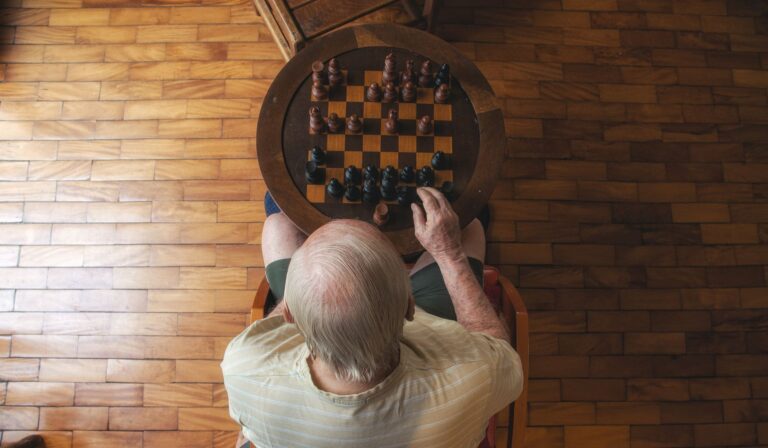
Yes, adding chess to your routine could help protect against dementia, according to substantial research. A major study of over 10,000 participants followed over a decade found that chess players had a 9-11% decreased likelihood of developing dementia compared to non-players. While this reduction isn’t dramatic, it’s meaningful at the population level—comparable to the protective effect of regular physical exercise on cardiovascular disease.
Consider Margaret, a 72-year-old from Chicago who started playing chess at the library twice weekly after her husband’s dementia diagnosis frightened her into action; two years later, her cognitive screening scores have remained stable while many of her same-age peers have shown decline. The evidence is particularly striking when you look at regular board game players broadly: individuals who engage with games like chess consistently are over 35% less likely to develop dementia than those who play rarely or not at all. This protective effect appears to persist across different populations and decades of research, suggesting chess isn’t a miracle cure, but rather a legitimate cognitive intervention worth considering as part of a dementia-prevention strategy.
Table of Contents
- What Research Actually Shows About Chess and Dementia Risk
- How Chess Stimulates Multiple Brain Systems Simultaneously
- How Chess Compares to Other Brain-Protective Activities
- Building Chess Into Your Daily or Weekly Routine
- Important Limitations and What the Research Really Shows
- Starting Chess as an Older Adult: You’re Not Too Late
- Emerging Research and the Future of Chess in Cognitive Health
- Conclusion
What Research Actually Shows About Chess and Dementia Risk
The strongest evidence comes from a 10-year study published in the Journal of the American Medical Association examining 10,318 participants with a median age of 73.8 years. Researchers tracked chess players and non-players from 2010 to 2020 and found the 9-11% reduction in dementia risk among regular players—a finding that held up even after accounting for age, education, and other health factors. A separate 20-year French study reported similar results, showing elderly people who played board games regularly had a 15% lower risk of developing dementia. These aren’t small pilot studies; they’re large, long-term investigations with thousands of participants.
More recent research adds another dimension. The COGniChESs study, released in 2026 and published in SAGE Journals, specifically examined cognitive and social interventions using chess and Go for early and subjective cognitive decline in older adults. This newer research suggests chess may be particularly valuable for people in the earliest stages of cognitive decline, before a dementia diagnosis is made. However, it’s important to note that all this research shows correlation, not absolute causation—chess players tend to have higher baseline cognitive function and often have healthier overall lifestyles, which complicates the picture of what chess alone contributes.

How Chess Stimulates Multiple Brain Systems Simultaneously
Chess works as a cognitive protector because it uniquely engages multiple brain systems at once. The game demands episodic memory (remembering previous positions and strategies), visuospatial skills (visualizing pieces on the board), calculation (evaluating move sequences), executive function (planning ahead and inhibiting impulsive moves), attention (maintaining focus), and concentration (resisting distractions). Unlike some cognitive activities that exercise one skill in isolation, chess requires your brain to orchestrate all these domains together—exactly the kind of complex, integrated thinking that appears to be most protective against cognitive decline.
This simultaneous engagement is important because dementia researchers increasingly recognize that healthy brain aging depends on maintaining these interconnections between brain regions, not just keeping individual abilities sharp. When you play chess, you’re not just exercising memory or calculation separately; you’re reinforcing the neural pathways that connect these systems. The limitation worth acknowledging: playing chess casually—moving pieces without real thought—provides minimal cognitive benefit. The protective effect appears strongest in people who play with genuine engagement, trying to improve and thinking several moves ahead.
How Chess Compares to Other Brain-Protective Activities
Chess occupies a unique position in the cognitive protection toolkit. Physical exercise like walking or swimming provides significant dementia protection—studies show 30% risk reductions in some populations—but works through different mechanisms, primarily preserving brain blood flow and reducing inflammation. Social engagement, reading, and learning new skills like languages all show protective effects, typically in the 15-30% risk reduction range.
Chess is distinctive because it combines several protective elements: it’s mentally demanding (check), inherently social when played in clubs or cafes (check), provides achievement and learning opportunities (check), and creates a structured routine that many older adults lack. The comparison reveals an important point: if you hate chess, you shouldn’t force yourself to play it for protection. Someone who reads voraciously, plays bridge weekly with friends, and takes art classes is probably getting more cognitive benefit from genuine enjoyment than someone grimly playing chess for 30 minutes to “prevent dementia.” The real advantage of chess is for people who find it genuinely engaging—it provides a high-intensity cognitive workout wrapped in an activity they actually want to do, making consistency and long-term participation more likely.

Building Chess Into Your Daily or Weekly Routine
Adding chess to your life doesn’t require joining a competitive tournament or finding opponents of equal skill. Many older adults start by playing online on free platforms like Chess.com or Lichess, where you can play against people at your exact level and learn from your mistakes with instant feedback. A practical starting point is one game during your morning coffee two or three times per week—that’s 15-30 minutes of focused cognitive engagement, enough to access the protective benefits without overwhelming your schedule. If you’re more social, chess clubs in senior centers, libraries, and coffee shops exist in most communities; playing face-to-face adds the social engagement component that magnifies dementia protection.
The key is consistency rather than intensity. Playing three 20-minute games weekly appears more protective than one four-hour tournament monthly, probably because the regular engagement maintains cognitive networks better than occasional intense activity. If you’re 65 and just learning, don’t worry about taking years to become skilled—the cognitive benefit of learning the game itself is substantial, as your brain forms new neural pathways mastering strategy. Set realistic expectations: aim for a sustainable habit you can maintain for decades, not a intensity-focused program you’ll quit after three months.
Important Limitations and What the Research Really Shows
Here’s the critical caveat that often gets overlooked in popular coverage: chess players have different baseline characteristics than non-players. People who choose to play chess tend to already have higher cognitive function, higher education, better health habits, and access to social networks that provide protection. When researchers control for these factors statistically, the protective effect remains, but it’s difficult to completely separate what’s protective about chess itself versus the healthy, cognitively-engaged lifestyle that chess players tend to live.
It’s a bit like asking whether golf protects against dementia—golfers are wealthier, more social, and get regular walking, making it hard to isolate golf’s specific contribution. Additionally, the research shows correlation over decades, not the kind of controlled experiments possible with medications. It’s theoretically possible that people on the early stages of cognitive decline simply withdraw from chess because they find it harder, creating an apparent protective effect when they’re actually just dropping out of the studied group. This doesn’t invalidate the research, but it means chess should be considered one component of a dementia-prevention strategy alongside cardiovascular exercise, Mediterranean diet patterns, cognitive stimulation through reading or learning, and strong social connections—not as a standalone solution.

Starting Chess as an Older Adult: You’re Not Too Late
A common misconception is that learning chess at 65, 75, or 85 is pointless because you won’t “catch up” to players who learned in childhood. This misses the protective mechanism entirely. The cognitive benefit comes from the learning process and continued engagement, not from reaching grandmaster status. Older adults who start chess often improve rapidly at first because they bring life experience to strategy and patience that younger players lack, even if their manual speed is slower.
Many chess coaches report that their most dedicated and joyful students are retirees discovering the game for the first time. The social aspect shouldn’t be underestimated. Many people who join chess clubs report that it reshaped their social life—suddenly they had weekly friends, conversations beyond weather and grandchildren, and a structured commitment that gave their week meaning. This social engagement itself is protective against cognitive decline and depression, sometimes as much as the chess itself. If you’re worried about the difficulty, try an online platform first where you can play at a comfortable pace against computer opponents, learning the rules through practice rather than pressure.
Emerging Research and the Future of Chess in Cognitive Health
The recent COGniChESs study examining chess as a formal cognitive intervention for early cognitive decline represents a shift toward viewing chess not just as a beneficial hobby but as a measurable therapeutic tool. Future research may clarify exactly who benefits most—whether chess is particularly protective for people with genetic risk factors, whether certain cognitive profiles show larger benefits, and whether chess combined with other interventions (like chess lessons plus aerobic exercise) produces greater protection than either alone.
There’s also emerging interest in online chess platforms as delivery mechanisms, making the intervention more accessible than requiring people to join clubs or find opponents. What seems clear from the current evidence is that chess isn’t being overstated as dementia prevention—it’s genuinely protective, though modestly so, and combines cognitive, social, and achievement-motivation benefits that extend beyond the game itself. As our population ages and dementia prevention becomes increasingly urgent, simple, accessible interventions that people can sustain for decades may prove more valuable than waiting for pharmaceutical solutions.
Conclusion
Adding chess to your routine could meaningfully reduce your dementia risk, based on research showing 9-11% decreased likelihood among regular players and 35% lower risk among those who engage consistently. The mechanism isn’t mysterious: chess exercises multiple cognitive systems simultaneously while providing social engagement and structured mental challenge—exactly the factors that support healthy brain aging. Even if you’re learning chess for the first time in your 70s or 80s, the cognitive benefits begin immediately, and the social and emotional benefits often matter as much as the brain protection.
Your next step doesn’t require finding a tournament or becoming “good” at chess. Find one online platform or local chess club, commit to playing 15-30 minutes twice a week, and give it three months. Pay attention not just to whether you’re improving at the game, but to how it fits your life—whether it brings enjoyment, social connection, or mental engagement that you’re missing elsewhere. That consistency and genuine enjoyment is what transforms chess from an interesting hobby into a dementia-prevention strategy.