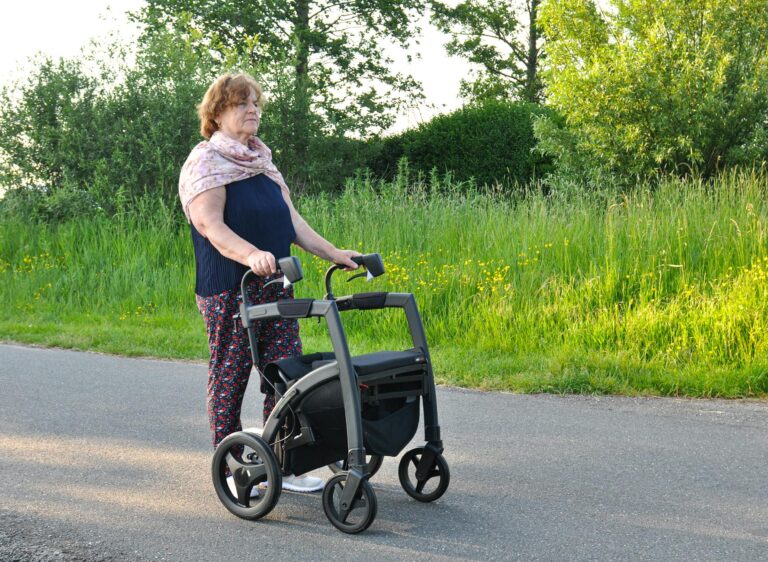
Asking for help after a Parkinson’s diagnosis isn’t a sign of weakness””it’s one of the most important survival skills you can develop. The disease progresses differently for everyone, but the people who fare best over time share a common trait: they build support systems before they desperately need them. Consider Robert, a 67-year-old retired engineer who spent the first two years after his diagnosis insisting he could manage everything alone. By the time his tremors made cooking dangerous and his balance issues led to two falls, he had no established network to lean on. His neighbor Margaret, diagnosed the same year, had already connected with a support group, arranged for a weekly cleaning service, and talked honestly with her adult children about what she might need. When her symptoms progressed, the infrastructure was already in place.
This reluctance to accept assistance is particularly common among people who have spent their lives being capable and independent. Parkinson’s disease strips away that independence gradually, which can make the psychological adjustment as challenging as the physical symptoms. Many patients describe feeling like they’re losing their identity alongside their motor function. But learning to ask for help””and to accept it gracefully””often marks a turning point not just in disease management, but in quality of life. This article explores why asking for help is so difficult for many Parkinson’s patients, how caregivers can offer support without overstepping, and practical strategies for building a sustainable care network. We’ll also examine when professional intervention becomes necessary and how to have those difficult conversations with family members who may be in denial about their own limitations.
Table of Contents
- Why Is Asking for Help So Difficult After a Parkinson’s Diagnosis?
- The Emotional Journey of Accepting Support with Parkinson’s Disease
- How Family Members Can Offer Help Without Overstepping
- Building a Sustainable Support Network for Long-Term Care
- Common Mistakes When Asking for or Accepting Help
- When Professional Care Becomes Necessary
- The Role of Support Groups in the Help-Seeking Journey
- Looking Forward: How Attitudes About Help Are Changing
- Conclusion
Why Is Asking for Help So Difficult After a Parkinson’s Diagnosis?
The barriers to seeking assistance run deeper than simple pride, though pride certainly plays a role. Parkinson’s disease typically strikes people in their sixties or seventies””a generation often raised with strong values around self-sufficiency and not being a burden. Many patients report feeling shame about needing help with tasks they’ve performed independently for decades. There’s also a protective instinct at play: parents don’t want to worry their children, spouses don’t want to add stress to their partner’s life, and former professionals don’t want colleagues to remember them as diminished. Cognitive changes associated with Parkinson’s can compound the problem. The disease doesn’t just affect movement; it can impair executive function, making it harder to plan ahead or recognize when a situation has become dangerous.
A patient might genuinely believe they’re managing fine even as family members watch them struggle. This isn’t stubbornness””it’s sometimes a neurological symptom called anosognosia, a reduced awareness of one’s own deficits. Understanding this distinction matters because it changes how families should approach the conversation about accepting help. There’s also a very practical fear: that accepting help now means losing all independence forever. Patients worry that if they let someone start doing the laundry, soon that person will be making all their decisions. This fear isn’t entirely irrational””some well-meaning family members do take over too quickly. The key is establishing boundaries early and viewing help as a tool for preserving independence rather than a step toward losing it.
The Emotional Journey of Accepting Support with Parkinson’s Disease
Grief arrives long before death in Parkinson’s disease. Patients mourn the loss of abilities they once took for granted””buttoning a shirt, signing their name legibly, walking without thinking about each step. This ongoing grief often manifests as resistance to help because accepting assistance makes the losses feel more real. When someone else cuts your food at dinner, you can no longer pretend the tremors aren’t that bad. However, if a patient becomes completely isolated in their denial, the consequences can be severe. Depression rates in Parkinson’s patients hover around 40-50%, and social withdrawal accelerates both cognitive and physical decline.
Research from the Parkinson’s Foundation suggests that patients with strong social support networks experience slower symptom progression and report higher quality of life, even when their objective disease severity is similar to more isolated patients. The breakthrough often comes from an unexpected source. Many patients find it easier to accept help from strangers””paid caregivers or support group members””than from family. There’s less history, less complicated emotion, less feeling of role reversal. Others find that helping fellow patients becomes a bridge to accepting help themselves. When you’ve encouraged someone else to use a mobility aid or accept meal delivery, it becomes harder to refuse those same accommodations for yourself.
How Family Members Can Offer Help Without Overstepping
The instinct to rush in and fix everything is powerful, especially for adult children watching a parent struggle. But taking over too quickly can accelerate dependence and damage the relationship. The goal should be collaborative problem-solving, not rescue. Instead of announcing “I’ve hired someone to drive you from now on,” try “I’ve noticed the car has some new dents. Can we talk about what’s making driving harder lately?” Specific, limited offers work better than open-ended ones. “Let me know if you need anything” puts the burden on the patient to identify needs and make requests””both difficult tasks for someone who may be cognitively compromised or in denial.
“I’m going to the pharmacy on Thursday; can I pick up your prescriptions?” is concrete and easy to accept. “I’d like to come over Saturday morning and help organize the garage so you’re less likely to trip” addresses a real concern without implying incompetence. Timing matters enormously. Bringing up the need for help during a moment of crisis””right after a fall, during a medication wearing-off period, when guests are present””almost guarantees defensiveness. Choose a calm moment, ideally when the patient has just demonstrated some competence and isn’t feeling vulnerable. And be prepared for the conversation to happen over weeks or months rather than in a single discussion. Each small acceptance builds toward larger ones.

Building a Sustainable Support Network for Long-Term Care
The most resilient support systems distribute responsibility across multiple people and resources rather than relying on a single caregiver. This matters because Parkinson’s is a marathon, not a sprint””the disease typically progresses over ten to twenty years. A devoted spouse who takes on all caregiving duties alone will burn out, often developing health problems of their own. One study found that Parkinson’s caregivers have mortality rates 63% higher than non-caregivers of the same age. Consider creating concentric circles of support. The inner circle might include immediate family members who help with daily tasks and medical appointments. The next ring could involve friends, neighbors, and community members who provide social engagement, occasional meals, or transportation.
The outer ring encompasses professional services: physical therapists, occupational therapists, home health aides, and Parkinson’s-specialized neurologists. Each ring has its own role, and problems arise when the inner circle tries to handle everything. The tradeoff between informal and professional care involves more than money. Family caregivers provide continuity, emotional intimacy, and personalized knowledge of the patient’s preferences. Professional caregivers bring training, physical stamina, and emotional boundaries that protect both parties. Most families find that some combination works best, though the exact mix shifts as the disease progresses. Early stages might require only family support with occasional respite care; later stages often demand professional involvement for tasks like transfers and medication management that require specific skills.
Common Mistakes When Asking for or Accepting Help
One frequent error is waiting for a crisis before building the support network. Falls, hospitalizations, and caregiver collapse tend to happen without warning, and establishing services takes time. Home health agencies have waitlists. Support groups meet only monthly. Adult day programs require assessments. Starting these processes while things are still manageable means the resources are available when they’re suddenly needed. Another mistake is failing to accept help with the “invisible” symptoms of Parkinson’s. Tremors and gait problems are obvious, but patients also struggle with sleep disruption, constipation, depression, and cognitive fog.
These symptoms don’t prompt offers of assistance the way visible disability does, so patients must advocate for themselves. A patient might accept help with yard work while suffering alone with insomnia that’s destroying their quality of life. Comprehensive care addresses all symptoms, not just the ones other people can see. There’s also a warning for well-intentioned helpers: offering help that the patient didn’t request can backfire. Showing up with a shower chair announces “I think you’re incapable of bathing safely,” even if that’s accurate. A better approach is asking what’s become difficult lately and letting the patient identify the need. Sometimes the answer will be surprising””perhaps they’re managing bathing fine but are anxious about choking while eating alone. Meeting actual needs rather than assumed ones builds trust and makes future help easier to accept.
When Professional Care Becomes Necessary
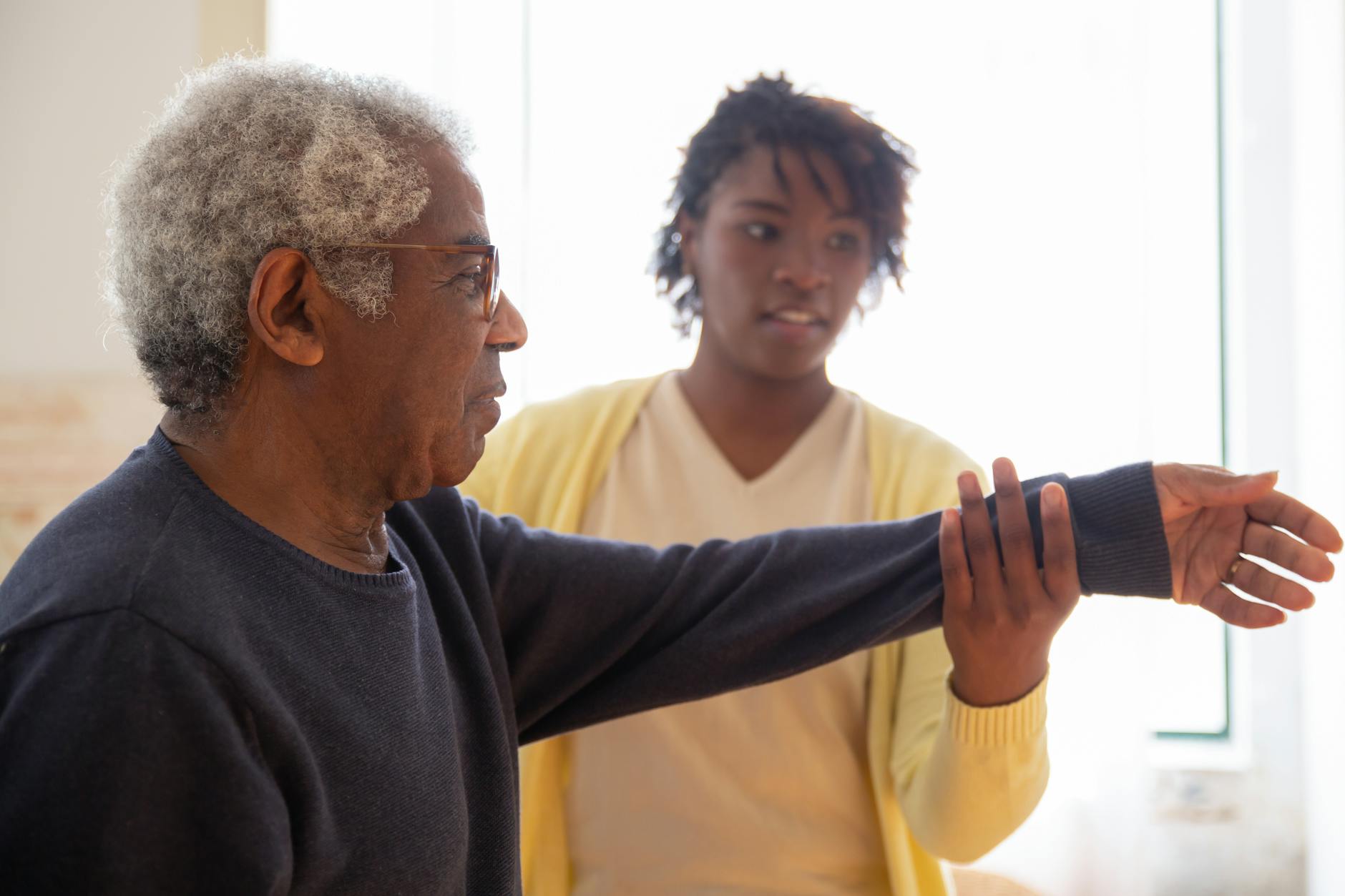
Certain milestones typically signal the need for professional involvement beyond what family can provide. Repeated falls””especially those involving head injury””suggest that supervision levels have become inadequate. Medication regimens that require precise timing throughout the day and night may exceed what a sleeping spouse can manage. When the patient can no longer be safely left alone for any period, the primary caregiver cannot run basic errands without arranging coverage. Cognitive changes often accelerate the timeline. Parkinson’s dementia affects roughly 50% of patients eventually, though the timeframe varies widely. Once hallucinations, paranoia, or significant confusion enter the picture, safety concerns multiply.
A patient who believes their spouse is an imposter or that intruders are in the house may become agitated or aggressive. These situations require trained intervention and often lead to consideration of memory care facilities. The decision to move a loved one to residential care is among the most agonizing a family faces. There’s no universal right answer””it depends on the patient’s needs, the family’s resources, and the available facilities. What’s important is making the decision proactively rather than in an emergency room at 2 AM. Touring facilities, understanding costs, and getting on waitlists doesn’t mean committing to placement. It means having options when the time comes.
The Role of Support Groups in the Help-Seeking Journey
Support groups offer something that neither family nor professionals can provide: the perspective of people walking the same path. Hearing another patient describe their initial resistance to using a walker, followed by the freedom it provided, carries more weight than a doctor’s recommendation. Support groups normalize the experience of needing help and provide practical strategies for accepting it gracefully.
For example, one Parkinson’s support group in Minnesota developed a “favor bank” system where members help each other with specific tasks. Someone with steadier hands might help another member with buttons and zippers; someone with better balance might accompany a more unsteady member to the grocery store. This reciprocity reframes help as mutual rather than one-directional, making it easier for proud people to participate.
Looking Forward: How Attitudes About Help Are Changing
The generation currently entering their Parkinson’s years””baby boomers””approaches help-seeking somewhat differently than their predecessors. They’ve seen their own parents struggle with the same issues and often have explicit intentions to handle things differently. They’re more likely to have long-term care insurance, to have discussed their wishes with their children, and to view professional caregivers as reasonable rather than shameful. Technology is also changing the landscape.
Voice-activated home systems can call for help without requiring the patient to find and dial a phone. Medication management apps send reminders and alert family members to missed doses. Telehealth appointments reduce the exhausting logistics of traveling to specialists. These tools don’t replace human help, but they can extend independence and make the help that is needed less intrusive. The future may bring even more sophisticated monitoring and assistance, though nothing will replace the fundamental human skill of asking for what you need and accepting it with grace.
Conclusion
Learning to ask for help after a Parkinson’s diagnosis represents a profound shift in identity for many patients, but it’s a shift that enables better outcomes and higher quality of life. The research is clear: patients with strong support networks fare better than those who insist on going it alone. Building that network takes time, humility, and ongoing adjustment as the disease progresses. For those supporting a loved one with Parkinson’s, the goal is collaborative partnership rather than rescue.
Offer specific, limited help. Respect the patient’s need for autonomy. Build the outer rings of the support network so the inner rings don’t collapse under the weight. And remember that the ability to give and receive help gracefully is a skill that takes practice””for everyone involved.