A simple strength routine for dementia caregivers starts with a five-minute walk, followed by chair-supported squats, wall push-ups, and toe stands. Perform each movement slowly, use stable support, and divide the routine into shorter sessions when one workout is impractical. Caregivers can exercise alone or alongside a person living with dementia who needs help. Physical activity is not a dementia treatment, although the National Institute on Aging says it may support some cognition and well-being in people with dementia.
Medical information disclaimer: This article is for general educational purposes only and does not provide medical advice, diagnosis, or treatment. Always consult a physician or other qualified health professional about symptoms, medications, tests, or treatment decisions.
Table of Contents
- Decide who will exercise
- Warm up with a five-minute walk
- Perform three simple exercises
- Choose repetitions and a weekly schedule
- Add balance work and watch for warning signs
Decide who will exercise
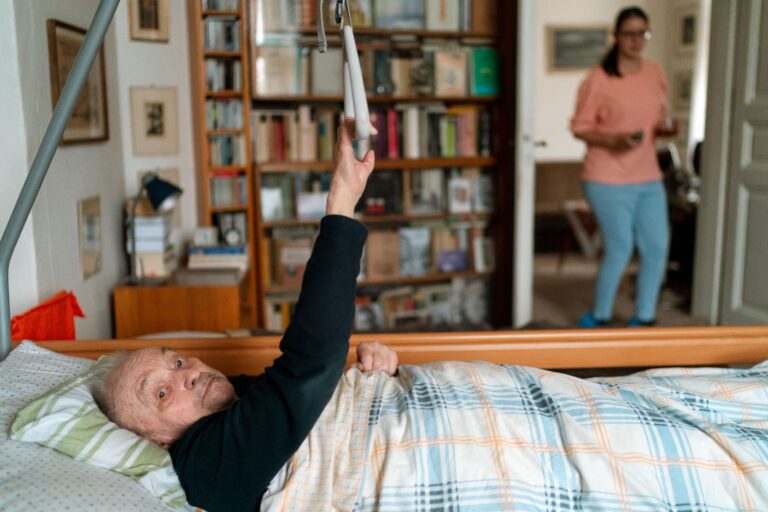
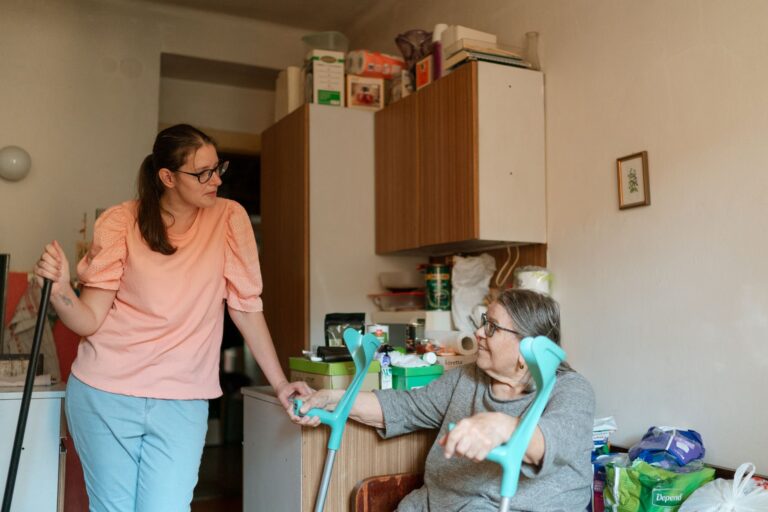
This routine can serve the caregiver, the person receiving care, or both. A person living with dementia may need supervision, adapted movements, or help following each step. Choose the exercises according to the individual rather than expecting both people to move identically.
The National Institute on Aging recommends discussing an individual activity plan with a doctor. Short sessions count when caregiving duties or limited tolerance make a longer routine impractical. For example, complete the walk and squats first, then do the remaining exercises later.
Warm up with a five-minute walk
Walk for five minutes before starting the strength exercises. The Tufts University and CDC guide Growing Stronger explains that walking warms the muscles and prepares the body for strength work.
The walk can also provide a simple transition into the routine. If exercising together, keep instructions brief and demonstrate the activity as needed.
Perform three simple exercises
Use a sturdy chair, a counter, and a clear wall as supports. No weights are required.
For someone who becomes confused, demonstrate one repetition before asking them to follow. A caregiver can also perform the movement alongside the person instead of relying on a long verbal explanation.
- Chair-supported squat: Stand in front of a sturdy chair. Lower slowly toward the seat while keeping the knees over the ankles, then rise slowly. The Tufts University and CDC guide specifies 10 repetitions, a rest, and another set.
- Wall push-up: Stand slightly more than arm's length from a clear wall. Place both hands on it, bend the elbows to lower the body, then push back without locking the elbows. This movement works the arms, shoulders, and chest.
- Toe stand: Hold a sturdy chair or counter only for balance. Rise onto the balls of the feet, pause briefly, and lower slowly. The guide uses two sets of 10 to strengthen the calves and ankles.
Choose repetitions and a weekly schedule
For adults age 65 or older, the CDC recommends muscle-strengthening activity at least two days each week. Strength work should cover the legs, hips, back, chest, abdomen, shoulders, and arms. The CDC's general target is 8–12 repetitions for one set, progressing to two or three sets.
A practical starting routine is one manageable set of each exercise, with more sets added when appropriate. These three movements do not cover every recommended muscle group. Treat them as a simple starting routine rather than a complete strength program.
Add balance work and watch for warning signs
Strength and balance work serve different purposes, so include both. The CDC advises leg-strengthening and balance exercises because multicomponent activity improves physical function and reduces falls or fall injuries.
Stop exercising and seek medical advice if the caregiver or care recipient develops pain, swelling, chest symptoms, or shortness of breath. Individual exercise choices should also be reviewed with a doctor.