Hand massage for dementia caregivers is a short, gentle routine that soothes restlessness and supports connection. You ask permission, offer lotion, and use slow strokes for about five minutes.
Agitation here means restlessness, pacing, or loud, repeated speech. Use it as a calming ritual before rest, after meals, or during sundowning. The steps below show words, touch, and safety checks.
Medical information disclaimer: This article is for general educational purposes only and does not provide medical advice, diagnosis, or treatment. Always consult a physician or other qualified health professional about symptoms, medications, tests, or treatment decisions.
Table of Contents
- How do you start with consent?
- What are the five-minute steps?
- What can it do for agitation?
- When should you pause or stop?
How do you start with consent?
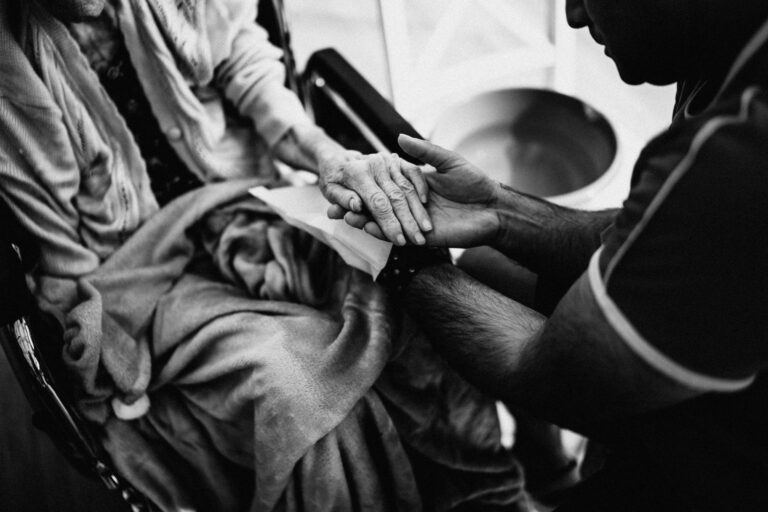
Offer to put lotion on the person's hands. Hold one hand briefly to build connection and help focus. That pause lets you read comfort or tension.
Sit at eye level in a quiet place. Wash hands before and after. Watch for withdrawal or resistance as refusal.
What are the five-minute steps?
The American Massage Therapy Association outlines a simple routine that takes about five minutes in its Massage Therapy Journal guide. Warm hypoallergenic lotion between your hands first.
Keep pressure light and pace slow. Repeat on the other hand if the person stays relaxed.
- Give each finger gentle squeezes from base to fingertip, with pauses for soft circular strokes
- Turn the hand over and use thumbs for tiny circular motions on fleshy palm areas
- Lightly stroke between the long bones on the back of the hand
What can it do for agitation?
In a 2002 Nursing Research trial, 10 minutes of hand massage, calming music, or both reduced verbal agitation in nursing-home residents. Benefit lasted up to one hour, as summarized by Pedagogy Education in its Compassionate Touch program article. A 2018 Swiss hospital pilot gave 40 agitated patients seven 16-20 minute massages over three weeks.
Agitation fell more than with usual care, but the difference was not statistically significant, according to the PubMed abstract. A Cochrane review found only small studies with very low-certainty evidence. It draws no firm conclusion on lasting benefit, as stated in the 2019 Cochrane review.
When should you pause or stop?
Massage has few serious risks when a trained practitioner gives it. Use only gentle pressure at home. Skip wounds, fractures, clots, inflamed skin, and swollen areas. Avoid vigorous massage with bleeding disorders or blood thinners, as the U.S.
National Center for Complementary and Integrative Health advises in its massage therapy safety page. Stop if pain, fear, or aggression occurs. Treat pulling away as refusal. Wash hands again and note what helped for next time.