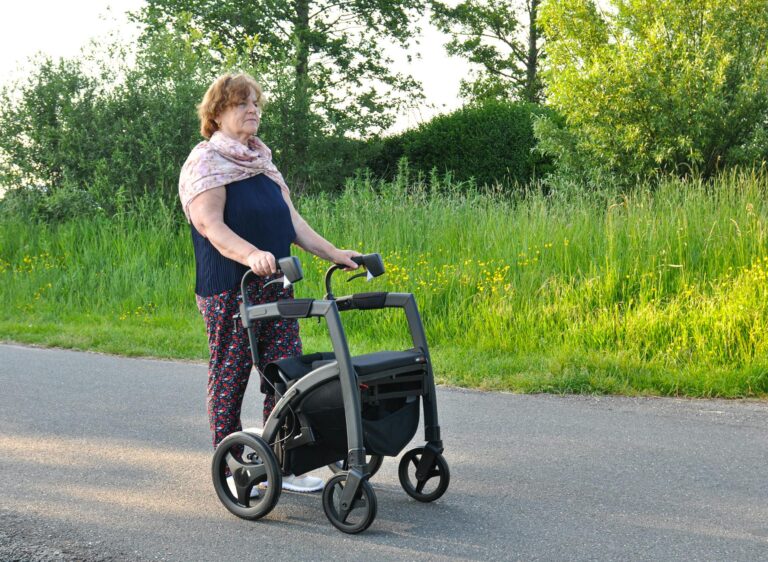
Living with Parkinson’s disease means learning to revise what you expect from your body, your relationships, and your future””sometimes daily. The core truth that emerges from countless personal accounts is that adjustment is not a one-time event but an ongoing process of recalibration. People who navigate Parkinson’s most successfully tend to be those who release rigid expectations while still holding onto meaningful goals, shifting from “I must do this exactly as before” to “I will find a new way to do what matters to me.” Consider someone diagnosed in their early fifties who spent decades as a recreational tennis player. The first adjustment might be switching from singles to doubles. Then perhaps moving to pickleball.
Eventually, the adjustment might mean sitting courtside and coaching grandchildren instead. Each shift represents a loss, but also a choice about where to place value. Research shows that disruptions in personal environment and self-concept are what determine subjective experience and quality of life””not the disease progression alone. This article explores how expectations evolve across the Parkinson’s journey, from the initial shock of diagnosis through the years of adaptation that follow. We will examine why early emotional responses like anger or relief are both normal, how nearly 90,000 Americans face this recalibration each year, and what practical strategies help people maintain quality of life as the disease progresses.
Table of Contents
- Why Do Expectations Need to Change After a Parkinson’s Diagnosis?
- The Emotional Arc of Coming to Terms with Progressive Disease
- How Family Expectations Shift Alongside the Patient
- Practical Strategies for Adjusting Goals and Activities
- When Adjustments Become Harder: Cognitive Changes and Advanced Stages
- The Role of Community and Shared Stories
- Looking Ahead: Expectations in a Changing Landscape
- Conclusion
Why Do Expectations Need to Change After a Parkinson’s Diagnosis?
parkinson‘s disease is not static. Unlike a broken bone that heals or a condition that stabilizes with treatment, Parkinson’s is progressive and unpredictable in its pace. This fundamental characteristic makes fixed expectations a setup for repeated disappointment. The disease affects nearly 1 million people in the United States and 11.77 million worldwide as of 2021, and each person experiences a unique trajectory that defies standardized timelines. The initial diagnosis often triggers what many describe as an identity crisis. A person who defined themselves by physical competence””a surgeon, a carpenter, a dancer””must begin separating their sense of self from their physical capabilities.
This is not pessimism; it is pragmatism. The Parkinson’s Foundation emphasizes setting realistic expectations from the start, noting that journaling or telling one’s story may help process these shifts. Common emotional responses include shock, anger, and sometimes relief at finally naming symptoms that may have been mysterious for years. What makes expectation adjustment particularly challenging with Parkinson’s is the day-to-day variability. Medication timing, sleep quality, stress levels, and even weather can affect symptoms. Someone might garden for two hours one Tuesday and struggle to hold a trowel the following Tuesday. Learning to expect this variability””rather than treating good days as the new normal and bad days as failures””is itself a major psychological adjustment.

The Emotional Arc of Coming to Terms with Progressive Disease
The emotional journey of Parkinson’s rarely follows a neat sequence. While some people move through something resembling grief stages, many experience emotions in waves that return unexpectedly. A person might feel they have accepted their diagnosis, only to experience fresh grief when a new symptom appears or when they must give up driving. Each loss requires its own adjustment period. However, if someone remains stuck in denial or anger for extended periods, this can interfere with practical adaptation. Refusing to use a walking aid because it “looks weak” increases fall risk.
Hiding symptoms from family prevents the development of support systems. The goal is not to reach some permanent state of acceptance but to move fluidly enough through emotions that they do not block necessary adaptations. Mental health support, whether through therapy, support groups, or both, can be valuable here””though access varies significantly depending on location and insurance coverage. One limitation of emotional adjustment advice is that it often assumes a certain baseline of psychological resources. People who enter a Parkinson’s diagnosis with pre-existing depression, anxiety, or trauma may face compounded challenges. Additionally, Parkinson’s itself can cause mood changes independent of the psychological reaction to diagnosis, including depression and apathy that are directly tied to neurological changes. Distinguishing between reactive emotions and disease-caused mood symptoms sometimes requires professional assessment.
How Family Expectations Shift Alongside the Patient
Parkinson’s does not happen to one person; it happens to a family system. Spouses, children, and close friends must also adjust their expectations, often without the same information or support available to the diagnosed person. The economic burden of Parkinson’s in the United States is estimated at $61.5 billion per year as of 2025, and much of this reflects caregiving costs””both paid services and unpaid family labor. A specific pattern emerges in many households: the diagnosed person adjusts expectations downward for themselves but maintains or even increases expectations of others to compensate. Meanwhile, family members may either overprotect (doing too much) or underestimate (assuming the person can do more than they can).
Neither extreme serves anyone well. Open communication about what help is actually needed, rather than assumed, becomes essential. For example, a wife might take over all driving because her husband was diagnosed with Parkinson’s, even though he remains a safe driver for years after diagnosis. This premature adjustment can accelerate his sense of dependence and loss of identity. Conversely, adult children might assume a parent is managing fine because they seem okay during short visits, missing the exhaustion or struggles that occur between those interactions. Regular, honest conversations about current realities””not worst-case futures””help calibrate family expectations appropriately.

Practical Strategies for Adjusting Goals and Activities
Adjusting expectations does not mean abandoning goals; it means reformulating them. Occupational therapists often work with Parkinson’s patients on this distinction, helping them identify what underlying need an activity meets and finding alternative ways to meet it. If gardening provided outdoor time, physical activity, and a sense of accomplishment, each of those needs can be addressed through adapted gardening techniques or, if necessary, through different activities altogether. The tradeoff between independence and safety becomes increasingly central as Parkinson’s progresses. Accepting help with certain tasks preserves energy for activities that matter more. Using voice-to-text technology instead of struggling with handwriting allows someone to continue writing.
Choosing clothes with magnetic closures rather than small buttons reduces morning frustration and fatigue. Each adaptation involves weighing the cost of change against the benefit of continued function. Timing matters in these adjustments. Moving to adaptive strategies too early can feel like giving up prematurely. Waiting too long creates unnecessary struggle, risk, and exhaustion. There is no universal right moment. Some people benefit from a “try it and see” approach””experimenting with an adaptation while still capable of the original activity, so the transition is gradual rather than forced by crisis.
When Adjustments Become Harder: Cognitive Changes and Advanced Stages
One of the more difficult aspects of Parkinson’s is that the very abilities needed to adjust””cognitive flexibility, planning, emotional regulation””can themselves be affected by the disease. While not everyone with Parkinson’s develops significant cognitive impairment, it is common enough that families should be aware of this possibility. Adjusting expectations about cognitive function is often harder than adjusting to physical limitations, both for the person affected and for family members. A warning for caregivers: assuming cognitive decline when it has not occurred is harmful, but so is ignoring early signs. Changes in executive function””planning, organizing, multitasking””often appear before obvious memory problems.
Someone might still remember events perfectly but struggle to sequence the steps of a familiar recipe. These subtle shifts can be frustrating and confusing for everyone involved. When cognitive changes do occur, they shift who is doing the expectation-adjusting. Earlier in the disease, the diagnosed person is the primary agent of their own adaptation. With cognitive decline, family members and care partners increasingly carry this responsibility, which fundamentally changes the dynamic. Advance planning””discussing values, preferences, and goals while the person can still articulate them””provides guidance for these later decisions.

The Role of Community and Shared Stories
Isolation is one of the most significant risks for people living with Parkinson’s and their caregivers. Support groups, whether in-person or online, offer something that medical appointments and family support cannot: the perspective of others walking a similar path. Hearing how others have adjusted their expectations can provide both practical ideas and emotional validation.
For instance, a retired engineer in a support group might share how he transitioned from building furniture in his workshop to designing pieces that his son-in-law now constructs””maintaining his creative involvement while adapting to tremor and fatigue. These specific examples of successful adaptation are often more powerful than general advice. With projections suggesting Parkinson’s cases will reach 25.2 million worldwide by 2050″”a 112 percent increase from 2021″”the need for these communities will only grow.
Looking Ahead: Expectations in a Changing Landscape
The future of Parkinson’s disease is being shaped by research, advocacy, and demographic shifts. Population aging accounts for roughly 89 percent of the projected increase in Parkinson’s cases by 2050, with population growth contributing another 20 percent. East Asia is projected to have the highest number of cases at 10.9 million, followed by South Asia at 6.8 million. These numbers underscore that Parkinson’s is becoming a global public health priority.
For individuals living with Parkinson’s today, these statistics may feel abstract. What matters more immediately is that research continues, treatments improve, and awareness grows. Setting expectations includes leaving room for positive developments””new medications, better symptom management, potential breakthroughs””while not banking on them. The most sustainable mindset combines acceptance of current realities with openness to future possibilities, neither resigned nor unrealistically hopeful.
Conclusion
Adjusting expectations with Parkinson’s disease is not a single moment of acceptance but a continuous practice that evolves as the disease progresses. The key principles remain consistent: separate your identity from your abilities, communicate openly with family about current needs, adapt activities rather than abandoning underlying goals, and connect with others who understand the journey. These approaches do not eliminate the grief of progressive disease, but they make it possible to live meaningfully within its constraints.
For the nearly 90,000 Americans diagnosed each year and the millions already living with Parkinson’s worldwide, the path forward involves countless small adjustments. Each one represents a choice about what matters most and a refusal to let the disease define every aspect of life. The stories that emerge from this process””of creativity, resilience, and redefined purpose””offer guidance for those who follow and remind us that adjustment, however difficult, remains possible at every stage.