Brain scanning sits at the center of this dementia and brain health question.
Brain scanning technology for Alzheimer’s disease has become significantly more accessible over the past year, particularly through the introduction of blood-based biomarker tests that can now be performed in primary care settings. In October 2025, the FDA cleared the Elecsys pTau181 plasma test developed by Roche—the first blood-based biomarker test approved specifically to rule out amyloid pathology in Alzheimer’s disease in primary care environments. This breakthrough means that patients no longer need to travel to specialized medical centers or undergo expensive imaging procedures to begin the diagnostic process. Instead of waiting weeks for a PET scan appointment or undergoing invasive spinal fluid tests, a person concerned about memory loss can now get a simple blood test at their local doctor’s office, with results that are substantially cheaper, more accessible, and more acceptable to patients compared to traditional brain imaging methods.
This shift represents a fundamental change in how Alzheimer’s diagnosis begins. For decades, confirming Alzheimer’s required either expensive positron emission tomography (PET) scans costing around $3,000 per scan or painful lumbar punctures to extract cerebrospinal fluid. The Alzheimer’s Association released updated clinical practice guidelines in 2025 explicitly recognizing blood-based biomarkers as “typically less costly, more accessible and more acceptable to patients” than these traditional methods. This article explores how these new technologies work, what they mean for patients and families, the various scanning options now available, cost and insurance considerations, and what to expect as these tools become more widely adopted in clinical practice.
Table of Contents
- What Makes Blood Tests the Breakthrough in Brain Scanning Accessibility?
- How Blood Biomarkers Compare to Traditional Brain Imaging Technologies
- Emerging Light-Based and Electrical Signal Technologies for Brain Scanning
- How to Navigate Scanning Options and Insurance Coverage
- When Blood Tests May Not Be Enough and What to Do
- Blood Spot Testing and Home-Based Monitoring Possibilities
- The Future of Accessible Alzheimer’s Diagnosis and What’s Coming Next
- Conclusion
What Makes Blood Tests the Breakthrough in Brain Scanning Accessibility?
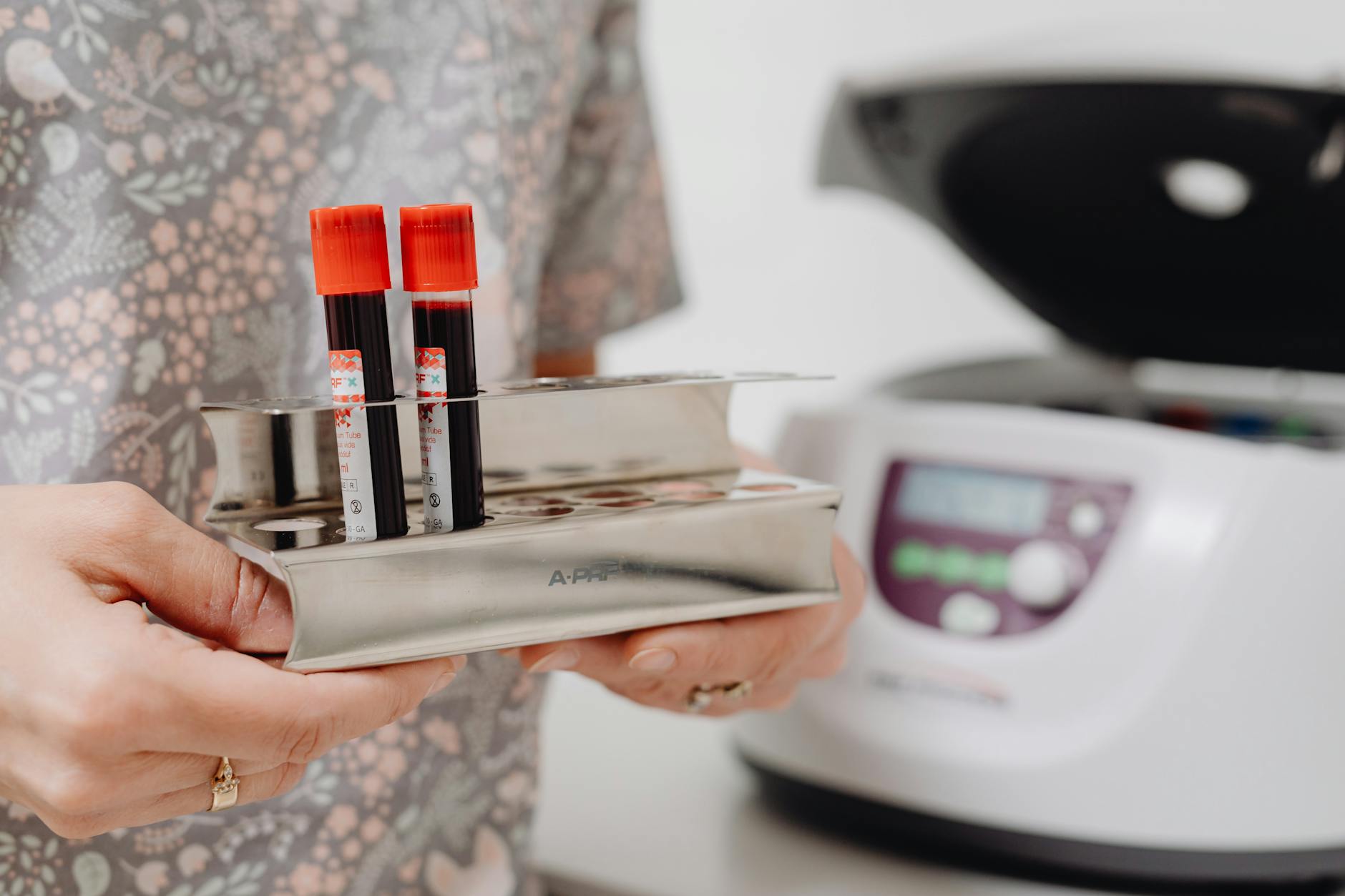
Blood-based biomarker tests represent the major accessibility breakthrough in Alzheimer’s diagnosis because they eliminate multiple barriers that previously prevented early detection. A simple blood draw at a routine doctor’s visit can now detect phosphorylated tau (pTau181) and other markers that indicate whether amyloid pathology—the protein buildup characteristic of Alzheimer’s disease—is present in the brain, often years before memory problems appear. This is transformative for accessibility because most Americans have regular contact with their primary care physician, whereas specialized neurology centers and imaging facilities are concentrated in urban areas. A patient in a rural community can now get tested without a two-hour drive to the nearest hospital, and the test can be completed in the time it takes to draw blood for routine blood work.
The cost difference alone makes a dramatic impact. While a single PET scan costs approximately $3,000, blood tests are a fraction of that expense. Medicare covers the costs for eligible patients, typically covering 80% of approved imaging costs after the patient meets their deductible, but the lower baseline cost of blood tests means out-of-pocket expenses are minimal even for uninsured or underinsured patients. Beyond traditional blood draws, researchers have demonstrated that dried blood spot tests—where a patient pricks their finger and places drops of blood on a special card—can be used to detect Alzheimer’s biomarkers. This capillary blood approach has potential for use in resource-limited settings, nursing homes, and home-based monitoring, expanding access to populations that might otherwise never receive biomarker testing.
How Blood Biomarkers Compare to Traditional Brain Imaging Technologies
While blood tests represent the accessibility breakthrough, they exist alongside other scanning technologies, each with specific advantages and limitations. Traditional PET imaging can visualize amyloid and tau proteins directly in the brain, providing detailed spatial information about where and how much pathology is present. However, PET scans require specialized equipment, trained technicians, and appointments at major medical centers. In recent years, however, Medicare expanded its coverage policies for multiple amyloid PET scans beyond the previous one-scan-per-lifetime limit, recognizing that serial imaging can help track disease progression and monitor response to treatment. This expansion makes PET imaging more accessible than before, though it remains more expensive and inconvenient than blood tests for initial screening. Brain MRI technology is also undergoing significant advances.
Researchers have developed an algorithm that can accurately diagnose Alzheimer’s disease from a single MRI brain scan, even distinguishing early-stage from advanced-stage disease more accurately than existing diagnostic tools. The advantage of MRI is that it’s widely available and doesn’t expose patients to radiation like PET scans do. However, MRI scanning still requires specialized equipment and can be challenging for patients with implanted devices like pacemakers or for those with claustrophobia. One important limitation: while blood tests can indicate whether amyloid is present, they don’t show where the brain damage is occurring or how advanced it may be. Therefore, the practical approach often involves blood testing first to identify at-risk patients, followed by advanced imaging like MRI or PET scanning only when the blood test suggests Alzheimer’s pathology is present. This sequential approach is both more efficient and more cost-effective than screening everyone with expensive imaging.
Emerging Light-Based and Electrical Signal Technologies for Brain Scanning
Beyond traditional imaging and blood tests, innovative scanning technologies are being developed that could further expand diagnostic options. researchers at the Veterans Affairs Department have developed an inexpensive light-based technique that can capture chemical and structural information about brain tissue, with potential for widespread use in clinical settings. This technology, based on optical scanning principles, offers the possibility of quick, non-invasive assessment without radiation exposure and at a fraction of the cost of PET or MRI. While still in research phases and not yet widely available in clinical practice, it represents the direction of future diagnostic innovation—simpler, cheaper, and faster ways to assess brain health.
Another promising development comes from Brown University researchers, who identified a brain-based biomarker using electrical signals from neurons that can predict whether someone with mild cognitive impairment will progress to Alzheimer’s disease within 2.5 years. This electrical signal biomarker, measured using specialized EEG or other electrophysiological techniques, offers a window into brain function beyond what structural imaging or blood tests reveal. The advantage is that electrical signals reflect how the brain is actually functioning, not just whether proteins are accumulating. However, this technology is still primarily a research tool, and establishing its clinical utility will require larger patient studies and integration into standard diagnostic protocols. For now, these emerging technologies underscore that the field is rapidly evolving, and what seems cutting-edge in 2026 may become routine by 2030.

How to Navigate Scanning Options and Insurance Coverage
For patients and families facing a potential Alzheimer’s diagnosis, understanding which scanning approach to pursue can feel overwhelming. The practical starting point is always a conversation with your primary care physician about memory concerns. If your doctor suspects cognitive impairment might be Alzheimer’s-related, a blood test is now the recommended first step—it’s minimally invasive, affordable, and can rule in or rule out amyloid pathology. The Alzheimer’s Association and Society of Nuclear Medicine released updated appropriate use criteria to help clinicians determine the optimal timing and use of different scanning methods, ensuring that expensive imaging is reserved for situations where it will actually change treatment decisions. Insurance coverage has improved significantly with the FDA clearance of blood-based tests and Medicare’s expanded PET coverage.
However, coverage varies by insurance plan and geographical region. Some private insurers may not yet cover blood biomarker tests, so it’s worth checking with your insurance company before testing. Medicare and many major insurance plans cover PET imaging for Alzheimer’s when a qualified physician orders it, typically with the patient responsible for 20% of the approved amount after meeting their deductible. For patients without insurance, some academic medical centers and research institutions offer free or reduced-cost diagnostic testing through clinical trials or community health programs. The key is not to let cost concerns prevent evaluation—many options exist, and a conversation with your doctor’s office about financial assistance can often identify affordable pathways to diagnosis.
When Blood Tests May Not Be Enough and What to Do
Blood biomarker tests are powerful screening tools, but they have important limitations. A positive blood test indicating amyloid pathology doesn’t automatically mean someone will develop Alzheimer’s disease—some people live with amyloid in their brains for years without symptoms. Conversely, a negative blood test doesn’t completely rule out other forms of dementia or neurological conditions that can cause cognitive symptoms. If a patient has symptoms consistent with dementia but blood tests are inconclusive or negative, or if the cognitive decline is progressing rapidly, advanced brain imaging becomes necessary.
MRI can reveal other causes of cognitive impairment such as small strokes, brain tumors, or significant brain atrophy unrelated to Alzheimer’s pathology, information that blood tests alone cannot provide. Another limitation to be aware of: blood biomarkers are increasingly useful for asymptomatic screening—identifying cognitively normal people who have amyloid pathology and higher future risk of Alzheimer’s. However, the clinical and ethical implications of finding asymptomatic amyloid positivity are still being worked out. Some patients may experience anxiety learning they have Alzheimer’s-related pathology without symptoms, and there’s no guarantee that having pathology detected will lead to disease progression within their lifetime. This is why discussions with a healthcare provider about what testing reveals, what it means, and what follow-up is appropriate should happen before blood work is drawn, not after surprising results arrive.

Blood Spot Testing and Home-Based Monitoring Possibilities
A particularly exciting development for accessibility is the validation of dried blood spot testing—the approach where a patient or healthcare worker places small drops of blood on special filter paper cards. These samples can detect Alzheimer’s biomarkers just as effectively as traditional blood draws while being stable at room temperature and requiring minimal equipment. This approach has immediate practical applications in nursing homes, assisted living facilities, and home health settings where patients may have limited mobility or access to phlebotomy services. A nurse or caregiver could collect the sample, mail it to a laboratory, and have results available within days.
The implications for resource-limited settings are profound. In rural areas, developing countries, and underserved communities where access to specialized medical centers is extremely limited, dried blood spot technology could eventually enable biomarker screening with minimal infrastructure. While widespread adoption of home-based biomarker testing isn’t yet standard clinical practice in the United States, the research demonstrates it’s feasible, and the trend is moving toward making testing as convenient and accessible as possible. For families considering Alzheimer’s evaluation, it’s worth asking your physician whether dried blood spot testing is available as an option.
The Future of Accessible Alzheimer’s Diagnosis and What’s Coming Next
The trajectory of diagnostic innovation is clearly moving toward greater accessibility, earlier detection, and less invasive testing. The breakthroughs of 2025 and early 2026—blood-based biomarkers cleared by the FDA, expanded Medicare imaging coverage, and new MRI algorithms—represent the first major shift in Alzheimer’s diagnosis in decades. The next phase will likely involve integrating these tools into routine preventive care, where cognitively normal people at higher risk for Alzheimer’s can be screened with blood tests during regular health visits, potentially decades before symptoms emerge.
This is already happening in some leading medical centers and research programs, with the goal of identifying at-risk individuals early enough to potentially benefit from emerging preventive therapies. Looking forward, the combination of accessible blood testing, advanced AI-powered imaging analysis, and emerging technologies like light-based scanning and electrical signal biomarkers suggests that Alzheimer’s diagnosis in 2030 will look dramatically different from how it was in 2020. Instead of expensive, delayed diagnosis in specialized centers, screening and initial diagnosis will happen in primary care, with advanced imaging reserved for cases that truly need it. The fundamental change is that accessibility is no longer an afterthought or a barrier—it’s becoming central to how diagnostic tools are designed and approved.
Conclusion
Brain scanning technology for Alzheimer’s disease has genuinely become more accessible, primarily through the introduction of blood-based biomarker testing that brings diagnosis out of specialized centers and into primary care clinics. The FDA clearance of the Elecsys pTau181 plasma test in October 2025 and the Alzheimer’s Association’s updated clinical guidelines recognizing blood biomarkers as less costly and more accessible than traditional imaging mark a pivotal moment. These blood tests can indicate whether someone has Alzheimer’s-related brain changes, often years before memory problems appear, and they do so with a simple needle stick at your local doctor’s office rather than a $3,000 PET scan appointment.
If you or a family member is experiencing memory concerns or cognitive changes, the first step should be talking with your primary care physician about having a blood biomarker test. This accessible entry point to diagnosis can provide clear answers, inform treatment decisions, and help with planning for the future. Combined with advances in MRI algorithms, expanding insurance coverage for PET imaging, and emerging technologies on the horizon, the landscape of Alzheimer’s diagnosis is fundamentally changing for the better—becoming faster, less expensive, and available to more people.
You Might Also Like
- Mechanisms of Toxic Protein Spread Mapped in Alzheimer’s Brain
- Medication Shown to Protect Brain Structure in Alzheimer’s Patients
- Protein Death Complex Mechanism Identified in Alzheimer’s Brain Tissue
For more, see NIH MedlinePlus — dementia.