Nasal biopsy sits at the center of this dementia and brain health question.
Researchers have discovered that a simple nasal biopsy can reveal Alzheimer’s disease progression markers with approximately 81% accuracy, potentially identifying the disease years before symptoms ever appear. The procedure—performed by guided nasal brush sampling in the olfactory cleft, where smell-detecting nerve cells reside—takes just minutes and requires only a numbing spray.
This breakthrough suggests a minimally invasive pathway to detecting both preclinical and clinical Alzheimer’s disease, addressing a long-standing clinical challenge: how to identify individuals at risk while interventions might still help. This article explores what makes nasal biopsy analysis significant for dementia care, how the procedure works, what biomarkers researchers detected, the current limitations of early-stage research, and what this approach means for the future of Alzheimer’s diagnosis and monitoring. The findings, published in Nature Communications in 2026, represent an important proof-of-concept even as larger clinical studies remain necessary before widespread adoption.
Table of Contents
- What Biomarkers Reveal About Alzheimer’s in Olfactory Tissue
- How the Procedure Works and Why It Matters for Early Detection
- Comparing Preclinical and Clinical Alzheimer’s Detection
- Current Evidence and Realistic Clinical Status
- Repeated Sampling to Track Treatment Response
- Why Location Matters—The Olfactory System Connection
- Path to Clinical Translation and Future Implementation
- Conclusion
What Biomarkers Reveal About Alzheimer’s in Olfactory Tissue
Nasal biopsies reveal a distinct biological signature in people with preclinical and clinical Alzheimer’s disease. researchers identified activated CD8 memory T cells and inflammatory myeloid programs—immune signaling patterns that suggest the brain’s protective systems are shifting in response to neurodegeneration. In clinical Alzheimer’s patients, these inflammatory markers tend to appear at greater magnitude than in cognitively intact individuals, suggesting they correlate with disease severity.
Equally important, olfactory sensory neurons from individuals with both preclinical and clinical Alzheimer’s display stress-related transcriptional signatures that mirror those found in postmortem AD brain tissue. This is striking because it means the biological stress occurring in the nasal tissue actually matches the damage observed in diseased brain samples—suggesting the olfactory system reflects what is happening deeper in the nervous system. This connection validates the theoretical basis for using nasal biopsies as a window into neurodegeneration.
How the Procedure Works and Why It Matters for Early Detection
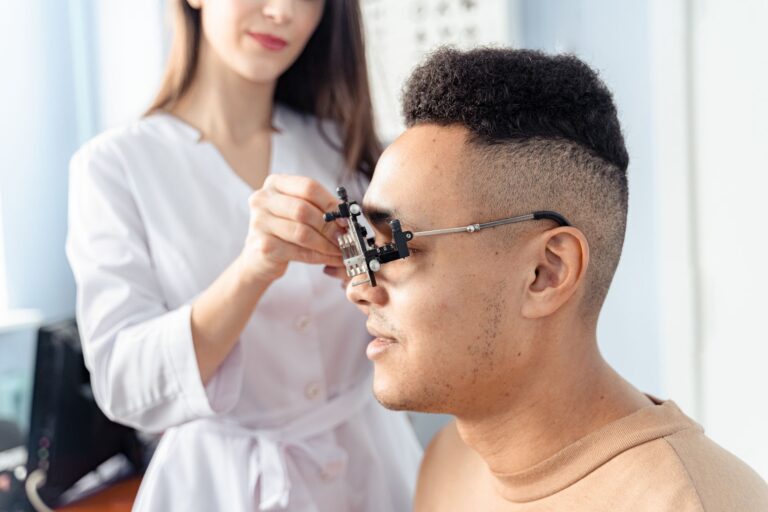
The nasal brush biopsy is straightforward in practice. A topical numbing spray is applied, then a small brush is carefully guided into the olfactory cleft—the narrow upper region of the nasal cavity where specialized sensory neurons detect odors. The procedure takes only a few minutes, poses minimal discomfort, and requires no anesthesia. Tissue samples are then analyzed for the gene-expression patterns and immune markers that correlate with Alzheimer’s disease.
What makes this approach valuable is that it detects Alzheimer’s disease years before cognitive symptoms would prompt a medical evaluation. By the time someone notices memory loss or confusion, substantial neurodegeneration has already occurred. A test that identifies preclinical disease in cognitively unimpaired individuals opens a window for earlier intervention—whether through lifestyle modifications, clinical trial enrollment, or emerging disease-modifying treatments. However, the current research, based on 22 participants, is early feasibility work rather than a validated diagnostic tool ready for clinical implementation.
Comparing Preclinical and Clinical Alzheimer’s Detection
The research distinguished three groups: healthy controls, cognitively normal individuals with preclinical Alzheimer’s markers, and people with clinical Alzheimer’s disease. The nasal biopsy gene-expression score achieved approximately 81% accuracy in differentiating these groups. This ability to detect preclinical disease is particularly significant because most people with preclinical markers will not progress to symptomatic disease within their lifetime—yet those who do may benefit from early intervention.
The stress-related transcriptional signatures observed in olfactory neurons parallel what researchers find in brain tissue from Alzheimer’s patients examined after death. This biological correspondence strengthens the case that nasal biopsies are not merely coincidentally associated with Alzheimer’s, but rather reflect the same underlying neurodegeneration process. Importantly, the study revealed that clinical AD patients often showed stronger biomarker signals than preclinical individuals, suggesting these markers may also track disease progression—not just presence or absence.
Current Evidence and Realistic Clinical Status
The research findings come from a study of 22 participants, which is sufficient to establish proof-of-concept but insufficient to validate any test for routine clinical use. This distinction matters because preliminary positive results do not automatically translate to reliable diagnostic performance across diverse populations. Larger studies must verify that the findings hold in different age groups, genetic backgrounds, and geographic regions before nasal biopsies become standard practice.
Researchers and clinicians emphasize that nasal brush biopsy remains a research tool, not ready for routine clinical care. The 81% accuracy, while encouraging, means roughly one in five individuals would receive an incorrect classification—an error rate too high for clinical decision-making without additional validation. Standardizing the procedure, training clinicians to perform it consistently, and establishing clear thresholds for test interpretation are all necessary steps. The timeline for clinical adoption likely spans several years and depends on funding, enrollment in larger trials, and regulatory review.
Repeated Sampling to Track Treatment Response
One potential advantage of the nasal biopsy approach is its repeatability. Because the procedure is minimally invasive and quick, researchers could potentially perform sequential biopsies over months or years to track whether biomarkers change in response to treatment. This opens possibilities for monitoring whether disease-modifying therapies are actually altering the biology of Alzheimer’s at the cellular level, not just slowing cognitive decline.
Repeated sampling could be particularly valuable in clinical trials of emerging Alzheimer’s treatments. Rather than waiting years to see if cognitive decline slows, researchers might measure whether inflammatory markers decrease, immune profiles normalize, or neuronal stress signatures improve. This could accelerate the pace of drug development and help identify which individuals are responding to therapy. However, this future use case remains theoretical until researchers establish normal ranges for biomarkers and understand how much variation occurs naturally over time without treatment.
Why Location Matters—The Olfactory System Connection
The olfactory system occupies a unique position in neurology. Olfactory neurons are among the few neurons in the human body that are continuously replaced throughout life, yet they also have direct connections to the brain’s limbic system and areas crucial for memory and emotion. In Alzheimer’s disease, olfactory dysfunction—difficulty smelling—often appears early, sometimes years before memory loss. This neurobiological connection makes olfactory tissue a plausible source of Alzheimer’s-related biomarkers.
The nasal location also makes clinical practicality feasible in ways that direct brain sampling cannot. A cerebrospinal fluid analysis requires a lumbar puncture (spinal tap), which is invasive and carries small risks. Brain PET or MRI imaging is expensive and requires specialized equipment. The nasal brush, by contrast, can be performed in an office setting with minimal equipment, reducing cost and barriers to testing. This accessibility could make early screening more feasible if clinical validation supports it.
Path to Clinical Translation and Future Implementation
The research team, publishing in Nature Communications in 2026, outlined the foundation for moving nasal biopsy analysis toward clinical utility. The next phases involve larger studies enrolling hundreds of participants, validation in independent cohorts, and development of standardized operating procedures that clinical laboratories can implement reliably. These steps typically require 3-5 years of research work.
If clinical validation succeeds, nasal biopsy could eventually become part of cognitive aging assessment—potentially offered to people over a certain age with family history of dementia, those experiencing mild cognitive complaints, or those enrolled in Alzheimer’s disease prevention trials. The ability to identify preclinical disease noninvasively could reshape how neurologists and primary care physicians approach dementia risk, shifting from waiting for symptoms to proactive biological screening. For now, the research signals a promising direction, but realistic timelines and continued funding remain essential.
Conclusion
Nasal biopsy analysis for Alzheimer’s progression markers represents a significant research breakthrough, offering an 81% accurate, minimally invasive method to detect the disease years before symptoms appear. The discovery of distinct immune and neuronal stress signatures in olfactory tissue that mirror brain pathology validates the approach and suggests real biological meaning rather than statistical artifact.
The path from research promise to clinical reality requires larger studies, standardization, and regulatory approval—work that will span several years. For individuals concerned about cognitive aging or family history of dementia, this research offers hope that better, easier early detection methods are in development. For healthcare providers, it signals that the era of diagnosing Alzheimer’s only after substantial neurodegeneration has occurred may be ending.
You Might Also Like
- Nasal Tissue Samples Reveal Alzheimer’s Biomarkers Before Symptoms Appear
- Alzheimer’s Signals Found in Nasal Swabs in New Study
- Updates on Blarcamesine and Lecanemab From AD/PD 2026 Conference
For more, see Alzheimer’s Association — caregiving.