Between March 17 and March 23, 2026, three separate meteors lit up skies across the United States, creating a remarkable week of astronomical activity. The meteors struck on March 17 in Ohio and Pennsylvania, March 21 in Houston, Texas, and March 23 across California, Nevada, and Arizona. Despite their clustering within a single week, NASA has confirmed these are completely unrelated events coming from different directions—not part of any ongoing meteor shower or celestial event.
The simultaneous timing simply represents a coincidence that has captured public attention and raised questions about what’s happening in Earth’s atmosphere. This article examines the three specific meteor events, explores why we’re seeing more visible fireballs despite no actual increase in meteor activity, and explains what these events reveal about our improved ability to detect and track celestial objects. Understanding these events provides insight into how scientists monitor our atmosphere and why certain natural phenomena appear to cluster even when they’re independent occurrences.
Table of Contents
- What Three Meteors Crossed American Skies in a Single Week
- Why We’re Seeing More Meteors Now—Or Are We?
- How Scientists Measure and Track These Events
- Understanding Meteor Origins and Composition
- Safety Concerns and Impact Assessment
- How Modern Detection Systems Work
- What These Events Tell Us About Future Meteor Monitoring
- Conclusion
What Three Meteors Crossed American Skies in a Single Week
The first and most dramatic event occurred on March 17 when a meteor approximately 6 feet in diameter streaked across the sky above Ohio and Pennsylvania. nasa confirmed the object weighed about 7 tons and traveled at 45,000 miles per hour, producing a sonic boom loud enough to be heard in Cleveland. This significant size and speed generated the kind of visible brightness and sound that makes fireballs memorable—many people in the region reported seeing the flash and hearing the boom, making it impossible to dismiss as imagination. Three days later on March 21, residents of Houston, Texas witnessed a bright fireball at 4:40 p.m. moving southeast across the sky at 35,000 miles per hour.
This meteor was smaller than the Ohio event, measuring about 3 feet in diameter and weighing approximately 1 ton. The object broke apart roughly 29 miles above the Houston area, still high enough to create an audible sonic boom despite its reduced size compared to the previous week’s visitor. The week culminated with perhaps the most widely observed event on March 23 when over 200 eyewitnesses across California, Nevada, and Arizona reported seeing a spectacular fireball. This meteor was first spotted 49 miles above Chowchilla, California, traveling south at 35,000 miles per hour. It traveled an unusually long distance—58 miles—before disintegrating at approximately 29 miles altitude above Colfax. The sheer number of witnesses suggests this was an exceptionally visible event, though the preliminary data indicates it was not significantly larger than the Texas meteor.
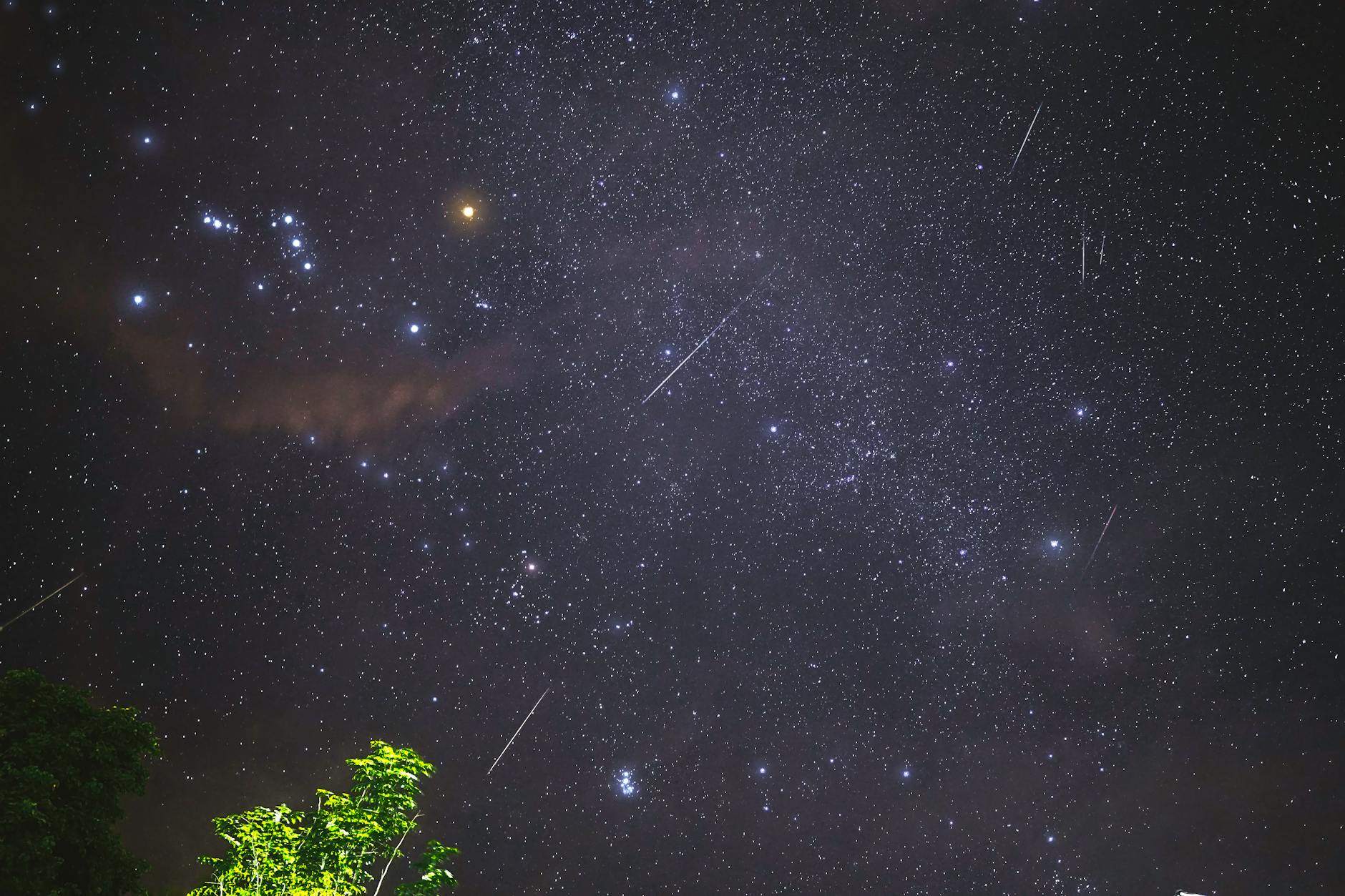
Why We’re Seeing More Meteors Now—Or Are We?
The natural instinct when three dramatic fireballs appear within one week is to assume meteor activity has increased dramatically. However, NASA researchers caution against this conclusion. The agency clarifies that these three events are unrelated and there is no ongoing meteor shower occurring at present. The clustering appears coincidental rather than systematic, a reminder that our perception of frequency can mislead us.
Instead of a spike in actual meteor activity, NASA attributes the apparent increase in visible fireballs to improved detection systems and cameras deployed across the country. Better technology means we’re catching more meteors that were always entering Earth’s atmosphere—we simply didn’t see them before. This distinction matters significantly: the universe hasn’t become more active, but our ability to observe it has improved. However, if you’re hoping to see more meteors in the coming weeks based on this past week’s activity, NASA’s assessment suggests you should temper those expectations. These three events don’t represent a trend but rather a fortunate convergence of observation opportunities.
How Scientists Measure and Track These Events
Each of the three March 2026 meteors was tracked and analyzed using different data sources, demonstrating the sophisticated methods modern astronomy employs. Scientists determine meteor size by calculating brightness, trajectory data from eyewitness accounts and recordings, and the energy released during atmospheric entry. The estimates of 6 feet for the Ohio meteor, 3 feet for the Texas meteor, and comparable dimensions for the California event represent careful analysis rather than rough guesses. Weight estimates are calculated from size and density assumptions about the meteor’s composition—whether it’s rocky, metallic, or a mixture. The Ohio meteor’s estimated 7-ton weight and the Texas meteor’s 1-ton weight reflect these calculations.
Speed measurements come from tracking data and eyewitness reports of how quickly the objects moved across the sky, with consistent readings of 35,000 to 45,000 miles per hour suggesting rapid atmospheric entry—a characteristic of genuine meteorites rather than space debris or man-made objects. The altitude at which meteors break apart reveals important information about their composition and trajectory. Both the Texas and California events broke apart around 29 miles altitude, suggesting they encountered sufficient atmospheric pressure to fragment. These technical measurements allow scientists to distinguish between different types of celestial events and assess the actual risk posed by incoming objects. Without this detailed tracking, all bright lights in the sky would appear equally mysterious.

Understanding Meteor Origins and Composition
Meteors entering Earth’s atmosphere come from various sources throughout the solar system, though most originate from cometary debris or asteroid collisions that create streams of particles orbiting the sun. When Earth’s orbit intersects these streams during its annual journey, we experience meteor showers—but most individual fireballs, like the three observed in March 2026, are sporadic meteors arriving from random directions at random times. This explains why NASA could definitively state these three events came from different directions despite occurring in the same week. The composition of meteors varies considerably, affecting how they interact with Earth’s atmosphere. Some meteors are primarily stony material similar to common rocks, while others are metallic or contain a mixture of both.
The brightness they produce depends on composition, speed, and size working together. A small fast-moving metallic meteor might appear as bright as a larger rocky one, which is why scientists must consider multiple factors when analyzing any given fireball event. Understanding meteor composition helps scientists assess potential hazards. The Texas meteor’s 1-ton weight and the Ohio meteor’s 7-ton weight represent objects capable of causing local damage if they reached the ground intact, but both fragmented well above populated areas. This height of disintegration suggests the objects were not particularly strong—possibly carbonaceous chondrites or similar composition that breaks apart relatively easily rather than remaining cohesive until ground impact.
Safety Concerns and Impact Assessment
A natural concern when meteors streak across populated American skies is whether they pose danger to people on the ground. All three March 2026 meteors broke apart at altitudes high enough—29 miles or higher—that no fragments reached the surface, or if they did, they would have lost significant velocity and energy. The sonic booms people heard in Cleveland and Houston and felt across California, Nevada, and Arizona were concerning to some residents, but sonic booms from high-altitude meteor entry represent no physical danger despite their startling nature. However, not all meteors follow this benign trajectory.
A meteor arriving at a steeper angle or possessing greater structural integrity could survive to lower altitudes before fragmenting. Additionally, if a significantly larger object entered the atmosphere—not merely 3 to 6 feet but tens of meters across—the impact scenario changes entirely. This is why NASA and other space agencies maintain monitoring systems specifically designed to identify potentially hazardous objects before they reach Earth. The three March 2026 events, while visually dramatic, posed essentially no threat once their trajectories and altitudes became clear.

How Modern Detection Systems Work
The improved detection systems NASA cited as the reason for increased meteor visibility include ground-based cameras, satellite observations, and data from automated monitoring networks maintained by universities and research institutions across the country. Many meteor events are now detected by devices originally designed for other purposes—traffic cameras, security systems, and astronomical equipment—that capture footage of fireballs passing overhead. This distributed network creates redundancy and multiple viewpoints, allowing scientists to triangulate positions and verify measurements.
The 200 eyewitnesses who reported the California meteor on March 23 represented an important data source for scientists. Social media and official reporting channels allow the public to contribute observations, which researchers cross-reference with instrumental data to build a more complete picture. Without this combination of technology and public reporting, many meteors would go unanalyzed and uncatalogued.
What These Events Tell Us About Future Meteor Monitoring
The successful tracking and analysis of three separate meteors within one week demonstrates how well-equipped modern society has become to monitor atmospheric events. However, gaps remain. Many meteors still go undetected, particularly smaller objects or those entering over oceans and remote areas where eyewitnesses and cameras are scarce.
The March 2026 events fell fortunately within or near populated regions, ensuring robust observation data. Looking forward, continued investment in automated detection systems and global coordination of meteor monitoring will provide better understanding of how many objects actually enter Earth’s atmosphere and how frequently potentially dangerous ones approach populated areas. The apparent clustering of March 2026’s three events serves as a reminder that our perception of astronomical frequency is heavily influenced by detection capability and geographical distribution of observers and instruments rather than the actual rate of celestial events.
Conclusion
Three unrelated meteors streaking across American skies within a single week captured public imagination and raised legitimate questions about atmospheric activity. The March 17 Ohio event, March 21 Texas event, and March 23 California event were completely independent occurrences from different directions, with no connection to any ongoing meteor shower. Rather than indicating increased meteor activity, their visibility reflects improved detection systems and favorable observation geometry—these objects were always entering Earth’s atmosphere, we’re simply better equipped to detect them now.
These events underscore both the dynamic nature of our planet’s environment and our growing capability to monitor it. While none of the three March 2026 meteors posed actual danger—all fragmented safely at high altitude—they remind us why continued monitoring matters. As technology improves and detection networks expand globally, we develop better ability to distinguish between random celestial visitors and any potentially hazardous objects that warrant attention.
You Might Also Like
- Why Are Nine Illinois Democrats Refusing to Comment on Their Vote That Freed an Alleged Killer?
- Why Are Gold Medalists Rising Up Against the Olympic Board Over the Execution of an Iranian Wrestler?
- Why Is Reality TV Collapsing with a Third Fewer Shows Than Just 4 Years Ago?
For more, see Alzheimer’s Association — caregiving.