Human hand sits at the center of this dementia and brain health question.
Joro spiders—a species native to East Asia—are spreading throughout the United States far faster than most people realize. These spiders earned their attention not because they’re dangerous to humans, but because they are genuinely large: their leg span can reach 4 inches (10 centimeters) when fully extended, making them roughly the size of a human hand. The spiders likely arrived in the U.S.
around 2013–2014 in shipping containers that docked in Georgia, and from that single entry point, they have now established themselves across at least 10 states including Tennessee, North Carolina, South Carolina, Maryland, Pennsylvania, West Virginia, Alabama, Oklahoma, and California. This article explores how these spiders got here, why they’re spreading so effectively, whether they pose any real threat to people, and what scientists expect to happen as their range continues to expand. The speed of their expansion has caught the attention of researchers at universities like Clemson, who have concluded that Joro spiders are “here to stay” and spreading rapidly. Understanding what these spiders actually are—and what they are not—matters more than the sensational headlines suggest, particularly because the fear around them far exceeds the actual risk.
Table of Contents
- What Exactly Are Joro Spiders and How Big Are They Really?
- How Did Joro Spiders Arrive in the United States and Where Are They Now?
- Are Joro Spiders Actually Dangerous to Humans?
- How Are These Spiders Spreading So Quickly Across the Country?
- What Are the Real Ecological Concerns About Joro Spiders?
- How to Identify Joro Spiders and Reduce Encounters
- Where Will Joro Spiders Be in the Coming Years?
- Conclusion
What Exactly Are Joro Spiders and How Big Are They Really?
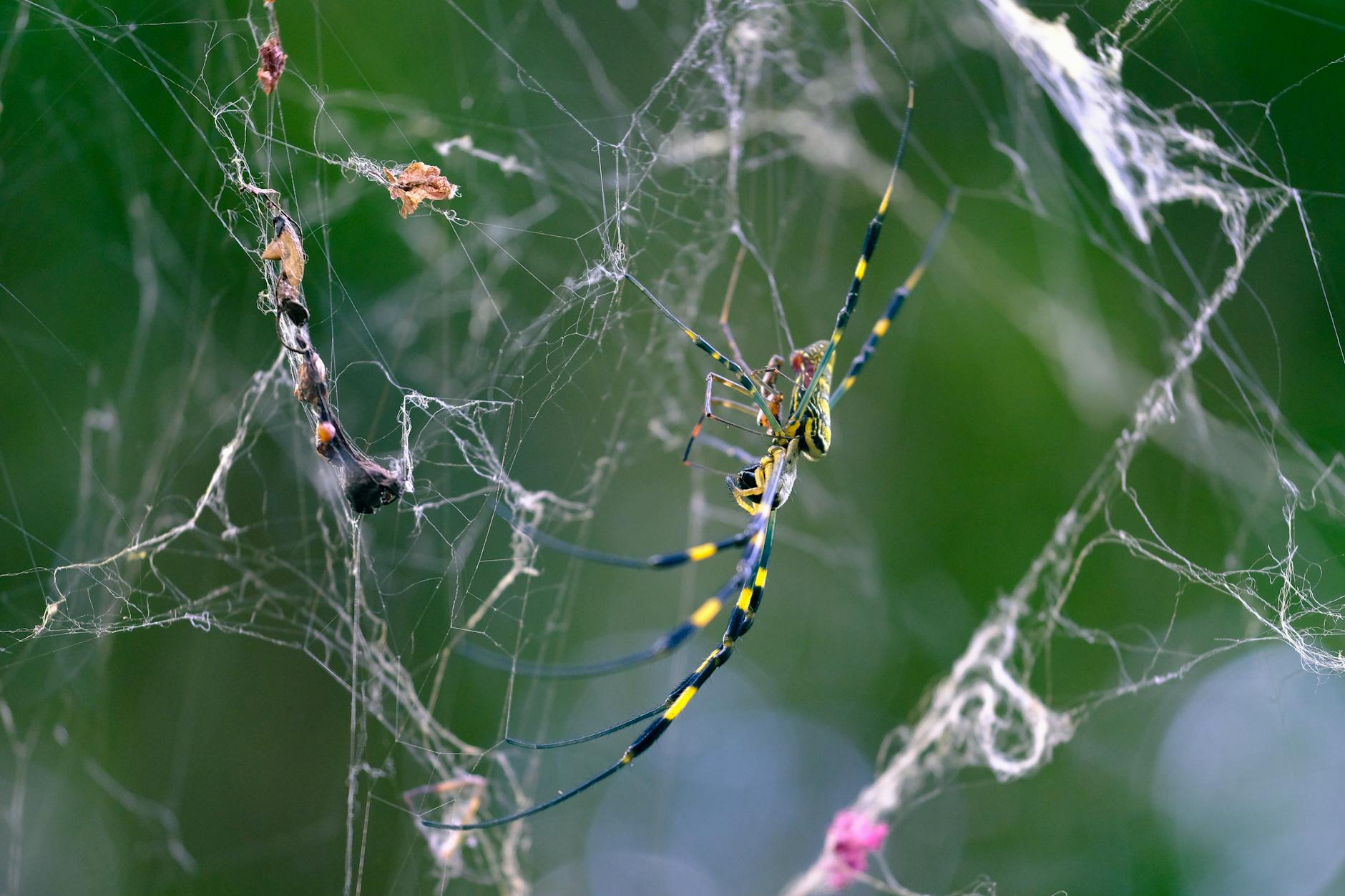
Joro spiders are orb-weaver spiders that originated in East Asia, most likely Japan, before arriving in North America. The females are noticeably larger than the males: a female’s body measures approximately 2.5 centimeters (1 inch) in length, and her legs can extend to 10 centimeters (4 inches). This leg span is what makes them immediately recognizable and, to many people, startling—they genuinely do look roughly the size of an open human hand. The males, by contrast, are less than a quarter the size of females, a difference called sexual dimorphism that is common in many spider species but extreme in Joro spiders.
This size difference matters for several practical reasons. When people report seeing a “giant spider,” they are almost always seeing a female. Male Joro spiders are much less conspicuous and often go unnoticed, even when living in the same area. The visual shock of encountering a full-grown female for the first time has contributed to their reputation far more than their actual behavior or danger level.

How Did Joro Spiders Arrive in the United States and Where Are They Now?
The most likely origin story begins with international shipping. Researchers believe a population of Joro spiders arrived in Georgia—specifically in the Port of Savannah area or nearby—sometime between 2013 and 2014, transported unknowingly in shipping containers from Asia. From that single point of entry, they began to spread. By 2024, established populations had been documented in Georgia, Tennessee, North Carolina, South Carolina, Maryland, Pennsylvania, West Virginia, and Alabama. More recent sightings in Oklahoma and California suggest the spiders have either been accidentally transported by humans through vehicles and luggage or have found their way across the country through other means.
The spiders’ ability to disperse so widely relies on a remarkable behavior called ballooning. Young Joro spiders produce silk threads and use wind currents—and, according to recent research, even electromagnetic gradients in the atmosphere—to essentially parachute themselves to new locations, sometimes traveling tens or even hundreds of miles in a single journey. This mechanism allows them to colonize new areas far faster than if they had to crawl across the landscape on their own. Once a female establishes herself in a new location, she can lay eggs, and within a year or two, a new population can form. However, human activity has clearly accelerated their spread beyond what natural ballooning alone would accomplish; people moving between states have likely brought hitchhiking spiders along in their luggage and vehicles.
Are Joro Spiders Actually Dangerous to Humans?
This is the question most people want answered immediately, and the honest answer is no—not in any meaningful way. Joro spiders are venomous, but their venom is medically important to insects, not to humans. The spiders have fangs, but those fangs are too small to reliably pierce human skin, and even if they could, their venom poses no significant health threat to people. According to Penn State Extension, a Joro spider bite is comparable in severity to a weak bee sting. To date, no reported deaths or serious medical emergencies have resulted from Joro spider bites anywhere in the United States or, as far as published literature shows, anywhere else.
The spiders’ behavior makes actual bites even less likely than their anatomy suggests. Joro spiders are naturally shy and actively avoid humans. They spend most of their time in their webs, hunting insects, and they have no evolutionary reason to bite people—they do not defend their webs aggressively the way some aggressive spider species do. A person would have to deliberately handle a Joro spider, squeeze it, or place it against their skin to provoke a bite. In the years since Joro spiders arrived in Georgia, no epidemic of bites has occurred, no ER visits spike during peak spider season, and pest control services report them as a curiosity rather than a genuine public health concern.
How Are These Spiders Spreading So Quickly Across the Country?
The rapid spread of Joro spiders is driven by two distinct mechanisms working in tandem: natural dispersal and accidental human transport. The natural dispersal method—ballooning—is where young spiders, often in late summer and early fall, climb to elevated positions, release silk draglines, and use wind currents to carry them long distances. A single spider can travel many miles in this way, and during mass ballooning events, thousands or even millions of young spiders may disperse at once, dramatically increasing the odds that some will land in hospitable new territory. Ballooning explains how Joro spiders have expanded their range northward and inland from Georgia without direct human help.
The accidental human transport mechanism has likely played an even larger role in their explosive range expansion. When someone drives from Georgia to Tennessee or Florida to California, they may unknowingly carry spider eggs or young spiders in their vehicle, luggage, or goods. The documented appearance of Joro spiders in Oklahoma and California—locations that are not in the natural northeastward expansion pattern from Georgia—suggests that human movement has leapfrogged the spiders far beyond where they would have traveled on their own. Once established in a new location with abundant insects and suitable climate, a female Joro spider can produce hundreds or thousands of offspring annually, establishing a self-sustaining population within months.
What Are the Real Ecological Concerns About Joro Spiders?
Scientists classify Joro spiders as an invasive species, and that designation carries real weight. Unlike native spider species that evolved in balance with local ecosystems, Joro spiders are newcomers without natural predators in North America. An unchecked population of large, voracious web-building spiders can potentially disrupt the delicate relationships between insects, plants, and animals that depend on those insects for food. Researchers at Clemson University have raised legitimate concerns about Joro spiders’ potential to damage crops, strip insects from trees, and outcompete native spider species for food and habitat. However, it is important to note that we do not yet fully understand the extent of their ecological impact.
The spiders have only been established in the U.S. for about a decade, and the vast majority of ecological studies on invasive species take longer than that to reveal their true consequences. Some research suggests that Joro spiders may occupy an ecological niche that native spiders do not fully exploit, meaning they may coexist rather than entirely displace native species. Additionally, their establishment may eventually be limited by weather extremes, the availability of sufficient prey, or natural population cycles. The current scientific consensus is that Joro spiders are here to stay and will likely expand their range significantly, but their eventual impact on North American ecosystems remains an open question that researchers are actively studying.

How to Identify Joro Spiders and Reduce Encounters
Identifying a Joro spider is relatively straightforward once you know what to look for. The females are distinctively large with bright yellow, black, and red coloring on their abdomens (bellies). Their webs are noticeably sturdy and often golden-yellow in color, quite different from the typical orb webs of many native North American spiders. If you see a web that looks unusually robust and golden, and it is anchored between structures such as trees, eaves, or utility boxes, there is a reasonable chance a Joro spider wove it.
The webs are large and three-dimensional, often spanning between 2 and 3 feet across or more. To minimize encounters with Joro spiders if you live in an affected area, take practical steps: keep outdoor spaces clear of debris that might harbor insects (which attract spiders), trim vegetation away from your home’s exterior, use outdoor lighting sparingly at night (bright lights attract insects, which attract spiders), and inspect vegetation before handling it. If you find a Joro spider indoors—which is rare, since they prefer to stay outside—simply use a cup and piece of paper to capture and release it outside, just as you would with any other spider. There is no need for aggressive removal or pesticide use; the spiders are far more bothered by human contact than humans should be bothered by them.
Where Will Joro Spiders Be in the Coming Years?
Research models developed by scientists indicate that Joro spiders could eventually establish themselves across most of the eastern United States and potentially expand beyond the Canadian border. The northern limit of their range will likely be determined by their tolerance for cold winters; Clemson researchers suggest they may eventually spread as far north as New England and as far west as the Rocky Mountains, depending on climate patterns and available prey. If that prediction comes to pass, within the next 5 to 10 years, Joro spider sightings could become routine in many parts of the country where they are currently rare or absent.
The spiders’ ability to survive shipping and travel means that isolated populations in far-flung locations like California could potentially become jumping-off points for further expansion. Rather than a single wave of northeastward spread from Georgia, we may see multiple fronts of expansion occurring simultaneously. Scientists monitoring this species emphasize that understanding and tracking their spread now—through citizen science programs and targeted research—will help us better predict and, if necessary, manage their impact in the years ahead.
Conclusion
Joro spiders represent a genuine ecological shift in North America, but they do not represent a health crisis for humans. Yes, they are large, and yes, they are spreading faster than many invasive species do. But they are also shy, their venom is harmless to people, and serious bites are extraordinarily rare.
The real story is not about danger to humans; it is about how quickly a species can establish itself in a new continent through a combination of accident and biological advantage. What matters now is staying informed, watching for their spread in your area, and understanding that seeing a Joro spider is far more likely to be a matter of curiosity than concern. If you live in or travel to an affected area, learn what they look like, recognize their distinctive golden webs, and simply coexist with them as you do with all the other wildlife sharing your environment. The spiders will be here whether we approve or not; the question is not how to stop them, but how to adapt to their presence.
You Might Also Like
- Why Are Sri Lankans Only Allowed to Buy Gas on Certain Days of the Week?
- Why Are Software Stocks Crashing After Amazon Announced New AI Tools?
- Why Are Settler Attacks on Palestinians Averaging 10 a Day Since the War Started?
For more, see Alzheimer’s Association — medical tests.