Stabilization exercises sits at the center of this dementia and brain health question.
Stabilization exercises protect the spine long term by strengthening the deep muscles that support vertebral alignment and reduce harmful movement patterns. Unlike dynamic exercises that target large, visible muscles, stabilization work focuses on the smaller muscles that hold your spine in proper position throughout daily activities—when you’re reaching for groceries, sleeping, or even sitting at a desk. These exercises gradually condition your neuromuscular system to maintain spinal stability automatically, which means your spine experiences less compression, fewer micro-injuries, and reduced degeneration over time.
For someone with early cognitive decline, this matters even more. Falls and spine injuries are common causes of rapid health deterioration in older adults with dementia because the combination of balance loss and weakened core stability creates a perfect storm for trauma. This article explores how stabilization exercises work at the physiological level, which types are most effective, how they fit into a safe routine, and why consistency matters more than intensity.
Table of Contents
- Why Do Stabilization Exercises Reduce Spinal Degeneration Over Time?
- The Physiological Mechanism: How Muscle Memory Prevents Spine Stress
- Different Types of Stabilization Exercises and Their Specific Benefits
- How to Safely Incorporate Stabilization into Your Routine
- Common Mistakes That Undermine Stabilization Effectiveness
- The Role of Stabilization in Fall Prevention and Cognitive Health
- Long-Term Sustainability: Keeping Stabilization Habits for Decades
- Conclusion
- Frequently Asked Questions
Why Do Stabilization Exercises Reduce Spinal Degeneration Over Time?
Your spine is supported by multiple layers of muscle: the large outer muscles that create movement, and deeper muscles called stabilizers that prevent unwanted shifting between vertebrae. When stabilizers are weak, the larger muscles compensate by working harder and in unnatural patterns. This constant strain creates inflammation, accelerates disc wear, and triggers the body to develop arthritis-like changes as a protective mechanism. Over 10 or 20 years, this cumulative damage becomes visible on imaging as disc degeneration, facet joint arthritis, and potentially herniation. Stabilization exercises train your nervous system to activate these deep muscles first, before you move.
Research shows that people with chronic back pain have measurable delays in the timing of their stabilizer muscles—they activate too late or insufficiently, leaving the spine vulnerable. A simple example: when you reach forward, your transverse abdominis (deep core muscle) should engage a fraction of a second before your arm moves. If it doesn’t, your spine extends and rotates in ways that stress the discs. Repeated over thousands of daily movements, this damage accumulates. Stabilization training corrects this timing, so your spine stays protected automatically.

The Physiological Mechanism: How Muscle Memory Prevents Spine Stress
Stabilization exercises work by building what scientists call “motor control”—the ability of your nervous system to recruit and coordinate muscles without conscious thought. When you first learn a stabilization exercise, you must concentrate hard. Over weeks, that conscious effort becomes automatic. Your brain literally changes the neural pathways controlling those muscles, so stabilizing your spine becomes as automatic as breathing. However, if you stop exercising, this improvement reverses.
Studies show that motor control improvements begin to decline within 2-4 weeks of inactivity, and most gains are lost within 8-12 weeks. This is why stabilization work requires consistency, not just occasional effort. A person who does stabilization exercises three times a week will maintain and continue improving their spinal stability indefinitely. Someone who does them sporadically will plateau and lose ground. The good news is that once your nervous system has learned the pattern, retraining is faster than the initial training—like relearning a language you once spoke.
Different Types of Stabilization Exercises and Their Specific Benefits
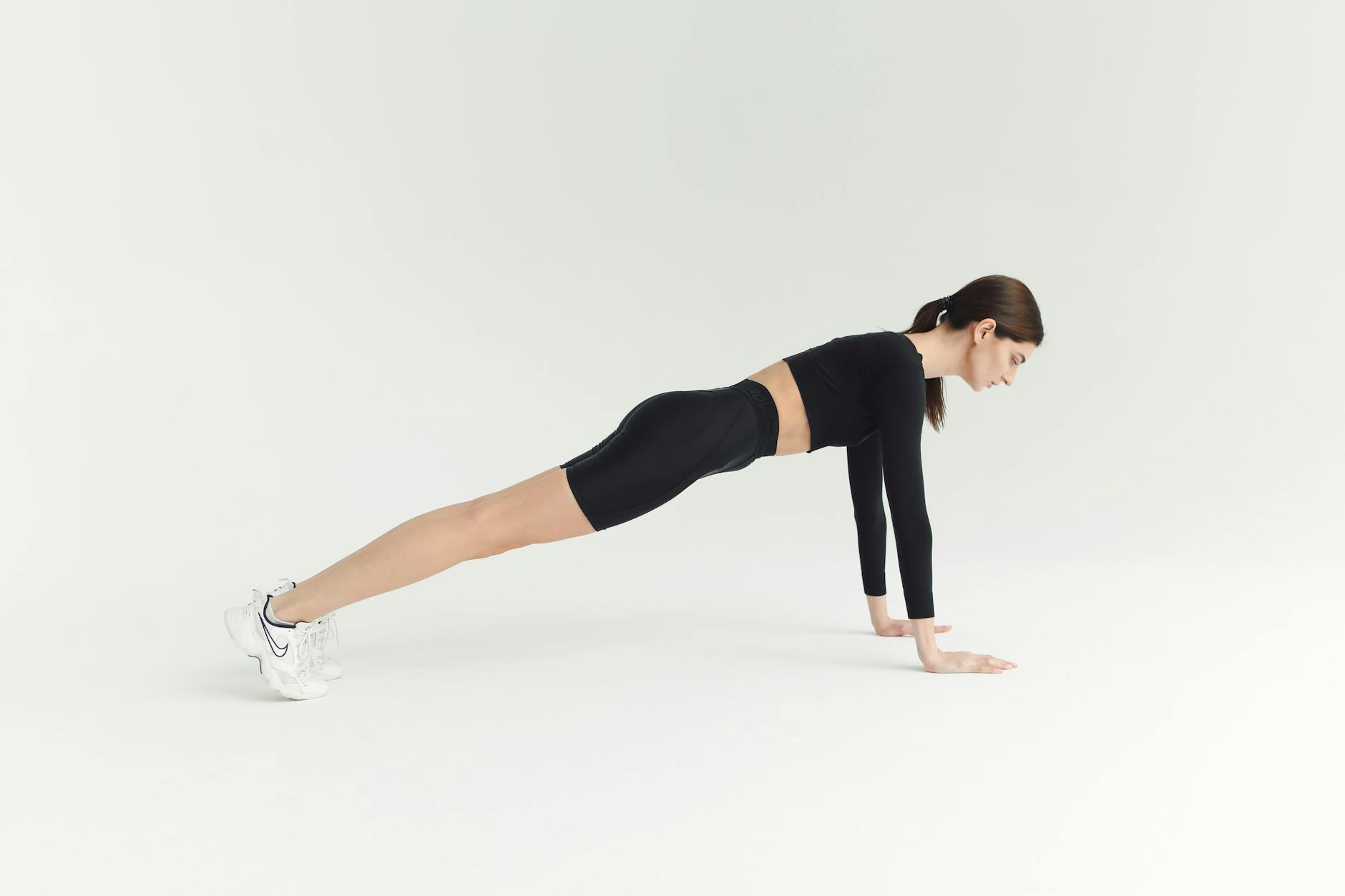
Stabilization exercises fall into several categories, each protecting the spine in slightly different ways. Isometric stabilization (holding a position without movement) teaches muscles to maintain tension against gravity and load. Examples include plank holds, bird dogs, and dead bugs. These are particularly valuable for older adults because they require minimal joint movement and train muscles in functional positions—the positions your body actually uses during daily life. Dynamic stabilization exercises add controlled movement while maintaining core tension.
Examples include quadruped arm raises, single-leg stands, or gentle rotational work. These train your stabilizers to work while you’re moving, which is when most real-world spine stress occurs. A third category, balance-based stabilization, challenges your body’s ability to maintain spinal alignment when your base of support is unstable—like standing on one leg or on a foam pad. For someone with early dementia, balance-based exercises are particularly valuable because they simultaneously improve fall prevention and spinal protection. However, balance exercises carry a higher fall risk and should only be done near a stable surface or with a spotter.
How to Safely Incorporate Stabilization into Your Routine
The foundation of safe stabilization training is learning proper form before progressing intensity. This means starting with the easiest variations of an exercise, understanding exactly what “correct” feels like, and only progressing when the movement becomes truly easy. For a plank, this might mean starting with a wall plank (hands on a wall, body straight), advancing to an incline plank (hands on a countertop), and only later progressing to floor planks. A practical starting routine might include: wall plank (30-60 seconds), dead bugs (10-15 per side), and bird dogs (10-15 per side), performed 2-3 times weekly with at least one rest day between sessions.
This takes about 10-15 minutes and covers the major muscle groups that stabilize the spine. The key is that fatigue should never be your limiting factor—correct form should be. If a muscle is shaking and trembling, you’ve typically gone too long. Stop before that point. Quality, tension-focused work for short durations is far more effective for motor control training than sloppy, fatigued repetitions.
Common Mistakes That Undermine Stabilization Effectiveness
The most common mistake is prioritizing quantity over quality. People perform 50 repetitions of a stabilization exercise with poor form, thinking more is better. In reality, each repetition with poor form teaches your nervous system to stabilize incorrectly, actually worsening your spine’s long-term stability. One perfectly executed plank teaches far more than 20 sloppy ones. If you can’t maintain perfect form for the full duration, you need an easier variation.
A second mistake is treating stabilization as optional conditioning rather than essential spine protection. Some people view it as a “nice to have” exercise to do occasionally when they remember. However, stabilization exercises should be foundational—the baseline that you always do—because your spine depends on that muscular support every single day. A third pitfall specific to older adults is trying to progress too quickly. The nervous system learns motor control very gradually. Advancing to a harder variation before the current one feels truly easy (not just doable) can lead to compensatory movement patterns that undermine the entire benefit.

The Role of Stabilization in Fall Prevention and Cognitive Health
For someone with early cognitive decline, spinal stabilization becomes a fall prevention tool as much as a spine protection tool. A strong, stable core means your body can recover from trips, slips, and missteps much more effectively. The proprioceptive feedback from stabilization exercises—the sense of where your spine is in space—also engages and strengthens neural pathways that support balance and spatial awareness.
This can modestly slow the progression of balance problems that often accompany cognitive decline. Additionally, any form of physical exercise, including stabilization work, stimulates neuroplasticity and cognitive function. Regular exercise has been shown to increase brain-derived neurotrophic factor (BDNF), which supports the survival of existing brain cells and encourages growth of new neurons. While stabilization exercises alone won’t prevent or reverse dementia, they’re part of a comprehensive approach to slowing cognitive decline while protecting physical safety.
Long-Term Sustainability: Keeping Stabilization Habits for Decades
The most common reason people stop stabilization exercises isn’t injury or difficulty—it’s loss of motivation. Unlike dynamic exercises, where you feel your heart rate rise or muscles burn, stabilization exercises are subtle. You might do a perfect bird dog and feel almost nothing, making it easy to doubt whether it’s working. Sustaining the habit requires understanding that the absence of sensation is actually the point. You’re training neurological control, not cardiovascular fitness. One practical approach is integrating stabilization into your existing routine.
If you shower every morning, stabilize before showering. If you have coffee at the same time daily, do your exercises then. Pairing the habit with an existing routine dramatically improves consistency. Another approach is making it social—doing stabilization exercises with a partner or group, or having someone check your form occasionally, creates accountability. Finally, tracking progress in a simple way (marking off days on a calendar) provides motivation. Even small consistency yields remarkable long-term results.
Conclusion
Stabilization exercises protect the spine long term by retraining your nervous system to maintain proper spinal alignment automatically, reducing accumulated damage from countless daily movements. The key advantage is that this benefit grows over time—years of consistent stabilization work create spinal stability that persists for decades. For older adults and those with cognitive decline, stabilization exercises offer a dual benefit: they protect spinal health while simultaneously improving balance and fall prevention.
The next step is choosing 2-3 stabilization exercises appropriate for your current fitness level and doing them consistently 2-3 times weekly. Consider working with a physical therapist or trainer initially to ensure correct form, as proper motor control depends on accurate movement patterns. This modest investment of 15 minutes, two or three times a week, is one of the most powerful things you can do to protect your spine for the next 20 or 30 years.
Frequently Asked Questions
How long before I notice results from stabilization exercises?
Motor control improvements are subtle and not typically felt. However, most people notice reduced back pain or improved posture within 4-6 weeks of consistent practice. Long-term structural changes in spinal stability develop over months and years.
Can I do stabilization exercises if I already have a herniated disc?
Sometimes, yes, but only with proper clearance from a healthcare provider. The exercises must be modified to avoid positions that stress the injury. Generally, early, gentle stabilization actually helps herniated discs by improving segmental support. Never push through sharp pain.
Do I need special equipment?
No. Foundational stabilization exercises require only your body weight. A yoga mat and foam roller can be helpful but aren’t necessary. Avoid expensive equipment in favor of fundamental, proven exercises.
Is stabilization exercise appropriate for someone with early dementia?
Yes, absolutely. The movements are simple and repetitive, which can actually be beneficial for someone with cognitive decline. Clear, consistent routines are easier to remember and perform. Balance-based stabilization should be done with supervision or near support.
What’s the difference between stabilization and core training?
Core training often emphasizes visible six-pack muscles and dynamic movement. Stabilization training focuses on deep muscles, isometric holds, and motor control. They’re complementary, but stabilization is more important for long-term spine protection.
How do I know if I’m doing an exercise correctly?
Correct stabilization work feels like mild tension, not strain. Muscles may feel tight or slightly engaged, but not burning or shaking. If you can’t hold perfect form, the exercise is too advanced. Video yourself or ask a therapist to check your form.
You Might Also Like
- 7 Exercises Doctors Recommend for Long Term Spine Health
- 9 Core Strength Exercises Doctors Recommend for Spine Protection
- 8 Physical Therapy Exercises That Strengthen the Lumbar Spine
For more, see CDC — Alzheimer’s and Dementia.