Tax protest sits at the center of this dementia and brain health question.
Tax protesters are facing significantly increased scrutiny from federal authorities in 2026, driven by a surge in resistance activity, expanded political backing, and aggressive IRS enforcement. The Internal Revenue Service is actively pursuing nonpayment cases, federal courts have consistently ruled against protesters, and criminal penalties can reach up to five years in prison and $250,000 in fines. This scrutiny reflects both the movement’s growth and authorities’ determination to enforce tax compliance, making the consequences for participation more serious than ever.
The movement has shifted dramatically over the past two years. What began as traditional war tax resistance—withholding taxes to protest military spending—has evolved into a broader political movement. This article examines why scrutiny is intensifying, how authorities are responding, what protesters actually face in courts and from the IRS, and why the risks have become substantially higher for those considering participation.
Table of Contents
- Why Is Tax Protest Activity Drawing Increased Government Attention?
- The Growing Tax Resistance Movement in 2026
- How The IRS Enforces Tax Compliance Against Protesters
- Understanding Penalties and Long-Term Financial Consequences
- Why Courts Consistently Reject Tax Protester Arguments
- The Political Expansion of Tax Resistance
- What The Future Holds for Tax Protesters and Authorities
- Conclusion
Why Is Tax Protest Activity Drawing Increased Government Attention?
The level of government scrutiny targeting tax protesters has grown because the movement itself is expanding rapidly. The National War Tax Resistance Coordinating Committee’s website received approximately 40,000 unique visitors annually until 2023. In January 2026 alone, the site attracted more than 110,000 visitors—nearly triple the annual average—signaling a dramatic surge in public interest. This spike coincides with two primary motivations driving current protest activity: opposition to U.S.
immigration detention through ICE facilities and opposition to military strikes on Iran conducted without congressional approval. What makes this surge particularly significant to authorities is its evolution beyond traditional war tax resistance. In late 2025, Representative Marjorie Taylor Greene publicly backed a broader “tax revolt” among President Trump supporters, fundamentally transforming the movement from a fringe anti-war position into mainstream political activism. This political legitimization has made tax resistance visible to millions of Americans who would never have encountered the concept otherwise, effectively expanding the pool of potential protesters while simultaneously bringing increased federal attention to the movement.
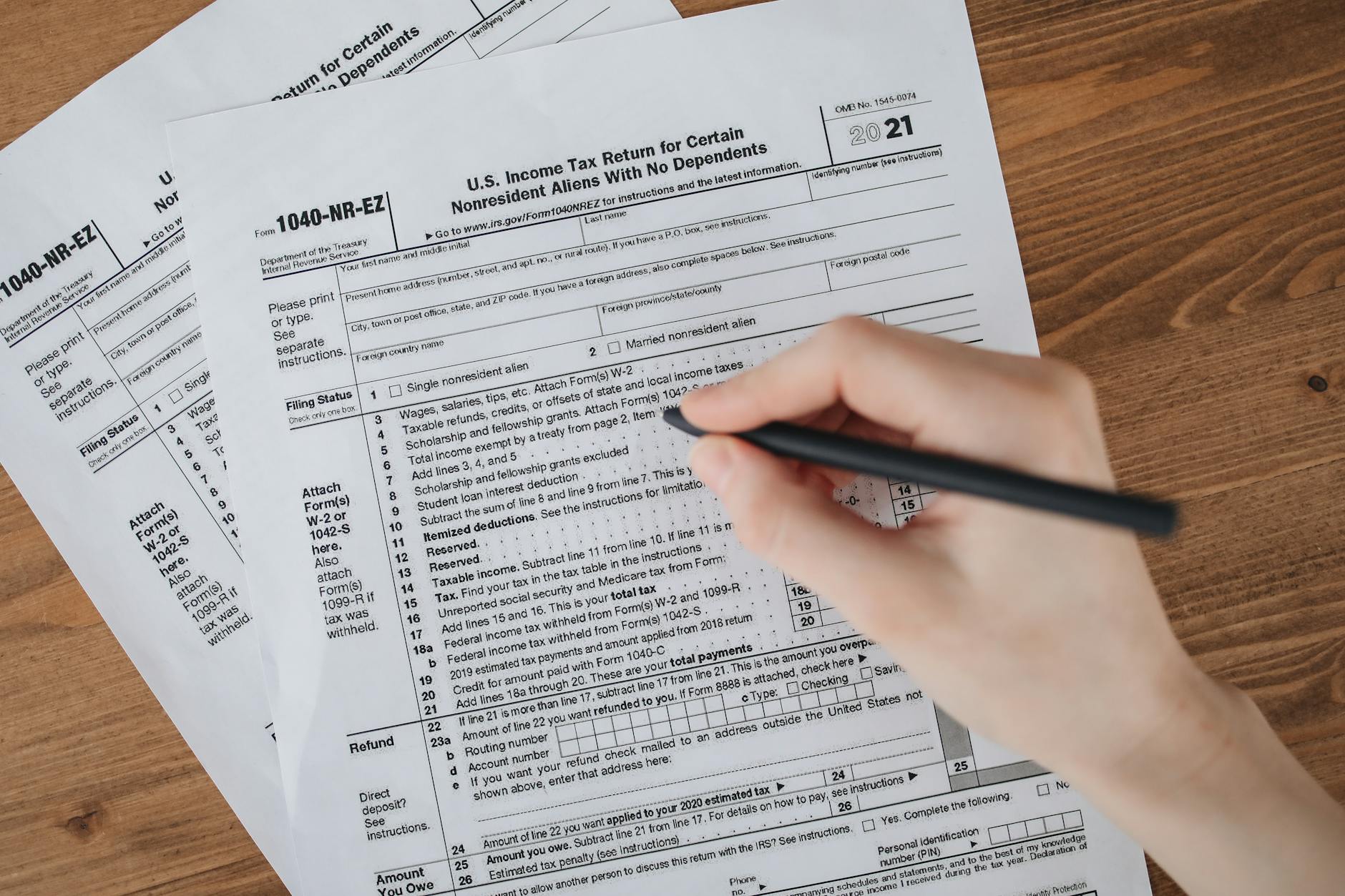
The Growing Tax Resistance Movement in 2026
The current tax resistance movement is unprecedented in its scale and political coverage. Previous waves of tax protest were largely confined to pacifist communities and anti-war activists. Today’s movement spans ideological lines—drawing both traditional war tax resisters and conservative Trump supporters—which paradoxically makes it harder for authorities to dismiss as a fringe phenomenon. The movement now encompasses protests over foreign policy (Iran strikes, ICE detention) and broader political grievances, giving it greater rhetorical power and media attention.
However, this growth creates an important risk for participants: visibility means the IRS can more easily identify and target protesters. When a movement operates in obscurity, enforcement becomes difficult. When millions of Americans are reading about tax resistance online and discussing it publicly, tax officials can use that same media coverage and web traffic data to understand where the movement is concentrated and who is participating. The expansion of the movement from hundreds to thousands of potential protesters actually increases individual risk, because each protester becomes part of a more obvious and documented group.
How The IRS Enforces Tax Compliance Against Protesters
The Internal Revenue Service doesn’t treat tax protests as a matter of political principle—it treats them as tax fraud. The agency has established clear enforcement procedures starting with standard penalties. For taxpayers who fail to file or pay on time, the irs assesses a 5% monthly penalty on unpaid taxes, along with a separate 0.5% monthly failure-to-pay penalty. These penalties compound monthly, meaning a protester who refuses to pay for even one year faces substantial accumulated debt before criminal prosecution ever begins.
If the IRS determines that nonpayment is willful—which it will do when someone explicitly states they are protesting taxes—the case escalates from civil enforcement to criminal investigation. Criminal tax evasion charges can result in fines up to $250,000 and up to five years in federal prison. The IRS can also pursue additional civil penalties for using “frivolous” arguments (such as claiming the 16th Amendment is unconstitutional or that income taxes are voluntary). Collection actions include wage garnishment directly from employers, federal tax liens against property, and seizure of bank accounts. These enforcement mechanisms have decades of legal precedent supporting them.

Understanding Penalties and Long-Term Financial Consequences
Most tax protesters underestimate the cumulative financial impact of their decision. A protester who withholds $15,000 in taxes in one year faces immediate penalties of approximately $900 in the first month, growing exponentially. After 12 months of nonpayment, the debt has often doubled through penalties and interest. When the IRS finally pursues collection—which can occur years after the initial nonpayment—the protester now owes double the original amount or more. This creates a scenario where someone who refused to pay $15,000 in taxes now faces a demand for $30,000 or $35,000.
The long-term consequences extend beyond the direct financial penalty. A federal tax lien appears on credit reports, making it nearly impossible to obtain mortgages, refinance student loans, or secure business credit. Wage garnishment continues indefinitely until the debt is paid, with the IRS taking a percentage directly from every paycheck. Some protesters have faced property seizure when they owned homes or vehicles free and clear. The IRS sometimes pursues collection actions for years or even decades after the initial nonpayment, meaning a protester’s tax debt doesn’t simply disappear—it becomes a permanent financial liability they must manage for the rest of their lives.
Why Courts Consistently Reject Tax Protester Arguments
Every major tax protester argument has been litigated in federal court, and every single argument has been ruled frivolous. According to the U.S. Government Accountability Office, the tax protester movement has never prevailed in a court of law on any of their legal theories. Courts have rejected claims that the 16th Amendment is unconstitutional, that income taxes are voluntary, that the Federal Reserve is illegal, that the IRS lacks authority, and dozens of other creative legal arguments. Federal judges have been remarkably consistent in dismissing these cases quickly and often assessing additional attorney fees and penalties against protesters who bring such lawsuits.
This consistent legal failure is important because it means protesters cannot rely on novel legal arguments or hope for a sympathetic judge. The law is settled. The courts have decided. Any protester who enters litigation expecting to win based on a “new” argument that the courts have somehow missed will almost certainly lose. This creates a situation where protesters face not only tax penalties and potential criminal prosecution, but also legal fees from fighting cases they cannot win. Some protesters have spent more on attorneys trying to defend frivolous tax arguments than they would have paid in the original taxes they were protesting.

The Political Expansion of Tax Resistance
The recent political legitimization of tax resistance by mainstream Republican figures represents a significant shift in the movement’s character. When Representative Greene promoted the “tax revolt” concept to her political base in late 2025, she effectively brought tax resistance into partisan political discourse. This expansion has made the movement more visible and potentially more appealing to people who would never have considered themselves anti-war protesters. It has also created a situation where the movement now encompasses genuinely conflicting motivations—some participants are protesting war spending, others are protesting government overreach, and still others are simply expressing political opposition to the administration.
This political expansion, however, does not change the legal reality. Whether someone withholds taxes for traditional anti-war reasons or for partisan political reasons, the IRS treats nonpayment identically. The legal arguments available to someone protesting immigration policy are the same frivolous arguments that courts have already rejected dozens of times. Political legitimacy and media coverage do nothing to alter the legal or financial consequences of tax nonpayment.
What The Future Holds for Tax Protesters and Authorities
The trajectory of this movement suggests that federal enforcement will intensify. The IRS has visible evidence of the movement’s growth through website traffic data and media coverage. The agency is already aware of where the movement is concentrated geographically and politically. As enforcement actions against high-profile protesters proceed, the cautionary tale will become more public—protesters will face wage garnishment, property liens, and criminal prosecutions that will be documented and reported.
This creates a self-limiting cycle where the movement’s growing visibility actually increases the costs of participation. At the same time, the political expansion of tax resistance means that it’s unlikely to simply disappear. Some protesters will continue regardless of consequences, viewing the penalties as a form of political sacrifice. Others will be deterred by the harsh realities of enforcement. The most likely outcome is that a core group of committed protesters will persist while the broader movement of casual participants drawn by political messaging will decline as the actual costs become apparent.
Conclusion
Tax protesters face unprecedented scrutiny in 2026 because the movement has grown to visible levels and attracted mainstream political attention, making enforcement easier and more aggressive. The IRS has clear enforcement mechanisms, courts have consistently sided with the government, and the financial and legal consequences are severe—including potential criminal prosecution, substantial monetary penalties, and permanent impacts on credit and assets. The expansion of the movement from anti-war activists to broader political groups does nothing to reduce these consequences; it simply makes more people aware of a path that leads to financial ruin and possible imprisonment.
For anyone considering tax resistance, the key understanding is that authorities view this as tax fraud, not political protest. The decision to withhold taxes is treated identically by the IRS and courts regardless of the political motivation. The financial consequences compound rapidly, the legal arguments have all been rejected by courts, and the enforcement is consistent and relentless. The increased scrutiny facing the movement today reflects not weakness in the government’s position, but strength—and a determination to enforce tax compliance against an increasingly visible resistance effort.
You Might Also Like
- Tax Protest Movement Could Lead to Severe Financial Consequences
- Tax Resistance Movement Grows Online Despite Legal Warnings
- Tax Resistance Trend Gains Momentum Despite Legal Risks
For more, see Alzheimer’s Association.