Breaking overnight sits at the center of this dementia and brain health question.
Overnight strikes targeting critical infrastructure are triggering widespread power failures across major world capitals, with immediate and serious implications for vulnerable populations including people with dementia. In March 2026 alone, Cuba experienced its second nationwide blackout in one week, Iran reported major outages during military strikes on Tehran, and Ukraine continues to face cascading power cuts affecting hundreds of thousands of residents. For families caring for loved ones with dementia, these large-scale power disruptions present urgent challenges—loss of cooling or heating, inability to refrigerate medications, disabled medical equipment, and the confusion and safety risks that come when electricity suddenly disappears. The scope of these events is unprecedented.
Ukraine has endured repeated strikes destroying power generation facilities, leaving 80 percent of the country facing emergency power cuts in January 2026 and leaving 1,170 apartment buildings without heating in early February. Germany experienced a four-day outage affecting over 40,000 households from a single power grid sabotage. These aren’t localized blackouts that resolve in hours—they’re systemic failures that can persist for days, stranding elderly and cognitively impaired individuals without the infrastructure they depend on. This article examines what’s driving these power failures, how they specifically threaten dementia patients, and what practical steps caregivers can take to prepare.
Table of Contents
- What Triggers Mass Power Failures Across Capital Cities?
- Why Dementia Patients Face Heightened Risk During Power Outages
- Real-World Examples From Recent Global Events
- Practical Preparation Steps for Dementia Caregivers
- Medical Equipment and Power Dependency Concerns
- How to Create a Dementia-Specific Power-Outage Emergency Kit
- Looking Forward—Resilience in an Uncertain Grid
- Conclusion
What Triggers Mass Power Failures Across Capital Cities?
Power infrastructure has become a direct target in modern conflicts and sabotage. In Ukraine, Russian strikes have systematically damaged electrical generation facilities, transforming the question from “when will power return?” to “which facilities can be rebuilt?” The January 2026 strikes alone involved 300 drones, 18 ballistic missiles, and 7 cruise missiles—a coordinated assault designed to cripple energy production. Similarly, a deliberate arson attack on Berlin’s power grid in January 2026 destroyed a cable bridge in Lichterfelde, cutting power to 40,000 households and 2,000 businesses for four days straight. Whether the cause is military strikes, infrastructure sabotage, or civil unrest escalating into violence, the common thread is that modern critical infrastructure is fragile and increasingly vulnerable. The speed of these failures is what makes them particularly dangerous.
Power doesn’t gradually dim—it simply stops. On March 22, 2026, eastern Kyiv lost power “after facility damaged by Russian strikes,” and on the same date, Tehran reported power outages and explosions during military action, with smoke visible across the city center. Cuba’s blackouts came with virtually no warning, leaving streets “pitch black” with residents navigating by phone light. For a person with dementia in a care facility or at home, sudden darkness combined with loss of air conditioning, heating, or medication refrigeration can trigger immediate crises. Unlike planned maintenance outages where facilities prepare, strike-induced failures leave no time for preparation.
Why Dementia Patients Face Heightened Risk During Power Outages
People with dementia depend on stable environmental conditions in ways that healthy populations often don’t. Loss of lighting disorients them more severely than it affects others, and sudden darkness can trigger acute confusion and anxiety. If a person with advanced dementia relies on medication stored in a refrigerator—including certain insulin formulations or other temperature-sensitive drugs—a multi-hour or multi-day outage risks medication degradation. Oxygen concentrators, hospital beds with electronic controls, cooling blankets for fever management, and feeding pump systems all require electricity. However, the psychological and behavioral impact may be just as serious: disruption to routines, inability to use familiar appliances, and the cascading stress in caregiving households all worsen cognitive symptoms in dementia patients.
The challenge is compounded by the unpredictability of modern strikes. When Cuba experienced its second nationwide blackout in March 2026, there was no graduated restoration where hospitals got power first and neighborhoods gradually came online. Instead, entire regions went dark simultaneously, meaning care facilities couldn’t use emergency generators to prioritize critical patients and had to ration power across dozens of residents. In multi-story care facilities during the February 2026 Ukraine heating crisis, where 1,170 apartment buildings lost heat during winter, residents with dementia faced not just the discomfort of cold but the cognitive stress of environmental instability. Families in these buildings had to make emergency decisions—whether to relocate relatives, how to keep medications viable, whether power-dependent medical equipment could be temporarily bypassed.
Real-World Examples From Recent Global Events
Ukraine provides the clearest warning because the strikes are ongoing and well-documented. In early February 2026, a single overnight Russian strike left 1,170 apartment buildings in Kyiv without heating—meaning thousands of residents, including many elderly people with dementia, faced winter conditions without adequate temperature control. By January, the pattern was even more catastrophic: 80 percent of Ukraine faced emergency power cuts after coordinated strikes on generation facilities. Families with elderly relatives in Kyiv, Brovary, and other affected districts had hours to figure out backup heating, medication storage, and safety lighting. The outages weren’t one-hour events; they cascaded through winter as facilities were repaired and re-attacked. Cuba’s March 2026 blackouts offer a different warning: the speed and scale of domestic infrastructure collapse. The second nationwide blackout in a single week affected an island nation of 11 million people, with residents navigating pitch-black streets and using phone flashlights at night.
For dementia patients in Cuban care facilities, there was no backup infrastructure to fall back on—the entire power grid went down. The third outage in March showed this wasn’t a one-time failure but a pattern of system instability. Iran’s March 22 outages during military conflict similarly demonstrated how geopolitical tensions directly translate into lost power for civilians, including vulnerable elderly populations. Germany’s January 2026 sabotage attack on the Berlin power grid is instructive because it was a single point of failure: one arson attack on a cable bridge disabled power to over 40,000 households and 2,000 businesses for four days. None of those families had warning. Elderly residents dependent on power for medical equipment, food refrigeration, or heating suddenly lost access. The four-day duration—not four hours, but four days—shows how fragile the perception of reliable electricity really is, even in highly developed nations.

Practical Preparation Steps for Dementia Caregivers
Preparation begins with three core systems: backup power, medication storage, and environmental control. For backup power, battery-powered options exist on a spectrum. A basic uninterruptible power supply (UPS) system designed for medical equipment can keep a feeding pump, oxygen concentrator, or medical alert device running for 4-8 hours. A portable power station (1500-3000 watt capacity) can run multiple devices for a full day but requires pre-charging. A home generator (5000+ watts) provides the most autonomy but requires fuel storage, maintenance, and safety precautions in enclosed spaces. The tradeoff: generators are most reliable but most expensive and require technical knowledge; portable power stations offer reasonable coverage with less skill required; UPS systems are affordable and simple but cover only hours, not days. For medication, identify which drugs are temperature-sensitive. Most medications tolerate brief room-temperature exposure, but insulin, some biologics, and certain antibiotics degrade if unrefrigerated.
A backup cooler with ice packs can maintain medication viability for 24-48 hours if pre-prepared. For dementia patients on multiple medications, maintain a written list (not just in a phone app) of current prescriptions, dosages, and pharmacy contact information—if power fails and phone networks become overloaded, this physical list becomes your only reference. Additionally, stockpile non-perishable comfort items: familiar snacks, reading materials, battery-powered lights, and items that help orient a confused person to time and place (calendars, printed schedules). Environmental control during extended outages requires advance thinking. If you live in a cold climate and rely on electric heating, identify a backup heat source: a wood stove, portable propane heater (used safely with ventilation), or thick blankets and layering. Dementia patients often can’t communicate that they’re cold, so environmental temperature management is a caregiver responsibility, not something the patient will self-regulate. In hot climates, loss of air conditioning poses serious heat-stroke risk for elderly people. Identifying a community cooling center or planning to relocate temporarily to a hotel or family member’s home with power should be part of your contingency plan. The comparison: generators provide complete independence but require resources and upkeep; community resources (cooling centers, temporary shelter with family) cost nothing but require pre-negotiation and may not be available during simultaneous outages across entire regions.
Medical Equipment and Power Dependency Concerns
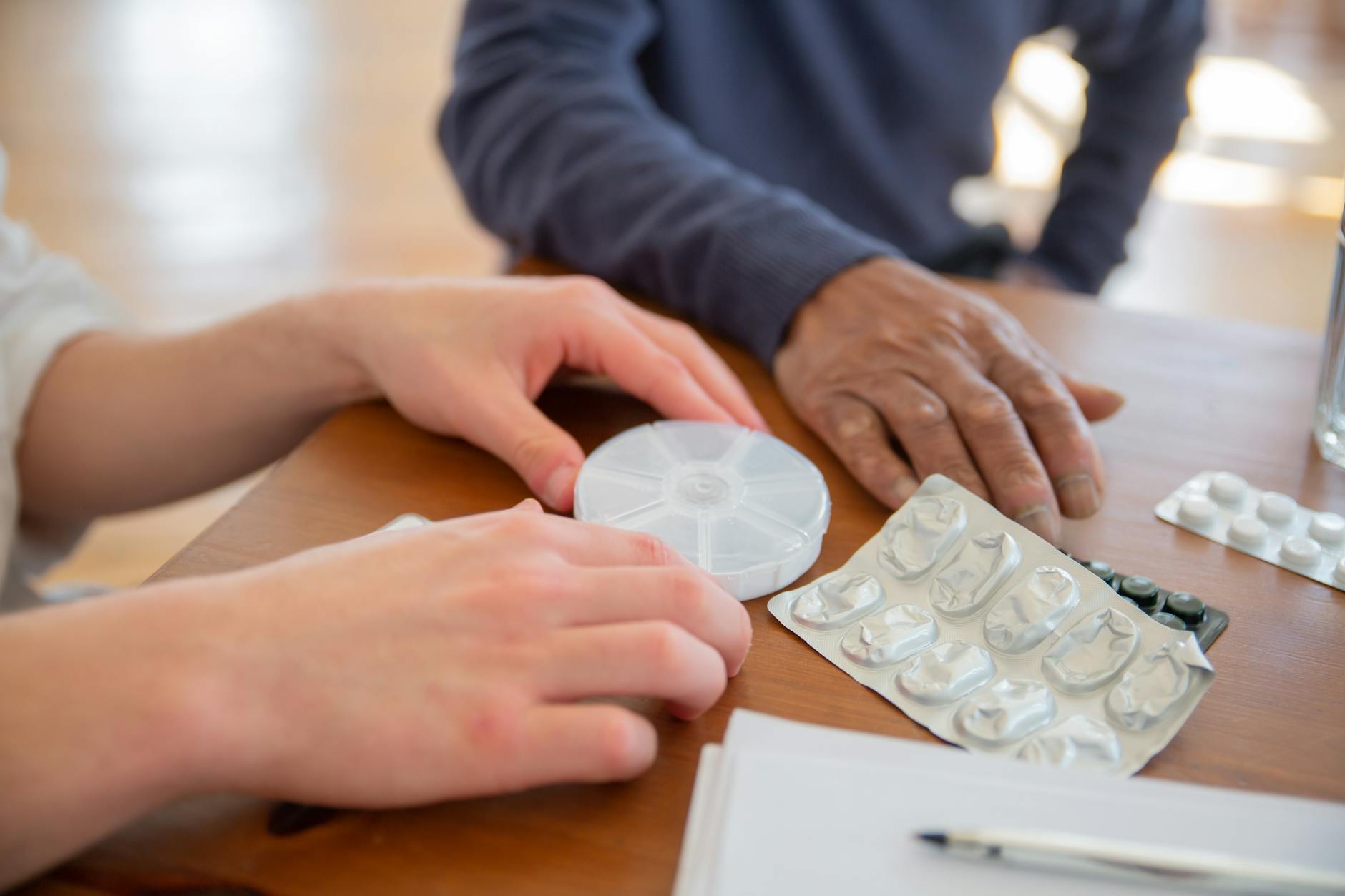
The hidden vulnerability in dementia care is the degree to which modern medical management depends on electricity. Oxygen concentrators, electric hospital beds, temperature-controlled mattresses for bedsore prevention, nebulizers for respiratory patients, and feeding pumps all require continuous power. Dialysis equipment, CPAP machines for sleep apnea, and electronic medication dispensers all fail immediately when power stops. However, not all of these are equally critical: a CPAP machine is necessary for safe sleep in some patients but not life-sustaining in the way an oxygen concentrator is for someone with severe pulmonary disease. A hospital bed is convenient but a regular bed with careful positioning works in emergencies. A feeding pump is critical for patients who can’t swallow safely, but in acute situations, some patients can manage pureed food by spoon. The key is understanding your specific patient’s equipment dependencies before crisis strikes. Contact each equipment supplier and ask directly: how long can this device operate on batteries? What happens if power cuts mid-cycle? For example, a feeding pump may have a backup battery lasting 4-6 hours, but if your patient receives 8-hour feeding cycles, a power outage lasting 12 hours creates a missed dose crisis.
Document this information—”oxygen concentrator has 4-hour battery backup, feeding pump has 2-hour battery, hospital bed has no battery”—and share it with your patient’s doctor and with backup caregivers. When strikes and outages occur in other regions, you’ll have clear knowledge of which equipment is at risk and how many hours of buffer you have to solve the problem. One often-overlooked concern: medication administration. If your dementia patient uses an electronic pill dispenser or if caregiving relies on electronic reminders and schedules, power loss disrupts medication routines. Some patients living alone with early dementia rely on automated reminders to take medications; power loss means those reminders stop, and the patient may miss doses or double-dose from confusion. If your care plan depends on any automated system—reminder apps, electronic locks on medication cabinets, smart home safety devices—have a low-tech backup ready. Print out medication schedules. Keep a manual backup of access keys. These seemingly small preparations prevent medication errors during the confusion of an outage.
How to Create a Dementia-Specific Power-Outage Emergency Kit
A basic emergency kit for any household might include flashlights, bottled water, and canned food. A dementia-specific kit requires additional thought. Start with lighting: flashlights work, but for a confused person, they’re confusing—a headlamp or hands-free light source is more practical. Include multiple light sources in different rooms so a wandering patient doesn’t panic in darkness. Battery-powered nightlights orient people familiar with seeing them at night. Add comfort items with emotional weight: photographs, a favorite stuffed animal, or a music player loaded with familiar songs.
These aren’t luxuries; they’re tools that reduce behavioral distress in confused people during stressful events. Document critical information physically: a laminated card in the patient’s pocket with their name, address, emergency contacts, key medical conditions, current medications, and primary caregiver information. During a power outage, if the patient becomes separated from you or confused about where they are, this card is a lifeline. Also include information about how to contact their doctor if needed. Include comfort instructions for the primary caregiver: names and numbers of respite care services, nearby family or friends who can provide a brief break, and mental health support contacts. Power outages are stressful for caregivers too, and burning out during an extended outage helps no one.
Looking Forward—Resilience in an Uncertain Grid
The pattern of recent years suggests that critical infrastructure will face increasing stress from both geopolitical conflict and climate-related strain. Ukraine will likely continue experiencing strike-induced outages for as long as conflict continues. Cuba and Venezuela face potential recurring blackouts from aging infrastructure and fuel constraints. Even stable nations like Germany have learned they’re not immune to deliberate sabotage.
For families managing dementia care, the implication is clear: assuming stable electricity is no longer safe. Building resilience—backup power, medication planning, equipment redundancy, and community connections—moves from being a “nice to have” to being essential. This doesn’t mean paranoia or excessive spending. It means honest assessment: Does my care plan depend entirely on electricity working? If yes, what’s my backup if it doesn’t? Can I afford a portable power station or a basic generator, or should I prioritize identifying community resources? Do I have neighbors, family, or a local care agency I can call on? Building resilience is practical, not dramatic. It’s the difference between a power outage being manageable versus becoming a caregiving crisis.
Conclusion
Overnight strikes targeting power infrastructure have triggered major blackouts in Ukraine, Cuba, Iran, Venezuela, and Germany in recent months, with implications extending far beyond inconvenience. For families caring for people with dementia, these outages represent a direct threat to medication storage, medical equipment operation, environmental control, and cognitive stability. The people most dependent on stable conditions—the elderly, those with chronic illness, and people with cognitive impairment—are often the least equipped to handle sudden loss of power. The path forward requires both practical preparation and honest assessment of dependencies.
Identify your patient’s specific equipment needs and power-dependent care routines. Build a layered backup system: battery backup for critical devices, an emergency kit with comfort and identification items, and a network of people you can call on. Keep medication and equipment information documented and accessible. These steps won’t prevent power outages, but they transform an outage from a caregiving emergency into a manageable challenge. Given the recent global pattern of infrastructure disruption, building this resilience now—before the next strike or sabotage affects your region—is pragmatic risk management, not alarmism.
You Might Also Like
- Power Outages Hit Tehran After Israel Launches Major Airstrikes
- Why Disc Injuries Often Improve With Conservative Care
- Sarah Paine Says the Next American Generation – Gen Z and Alpha Gen Will be Impoverished
For more, see Alzheimer’s Association — medical tests.