Back rehabilitation exercises work because they address the root cause of most back pain: muscular weakness and poor spinal stability rather than structural damage alone. Unlike rest, which can actually weaken muscles further, these targeted movements improve blood flow to injured tissues, retrain your nervous system to use stabilizer muscles properly, and reduce the pressure on painful spinal segments. If you’ve experienced acute back pain followed by lingering stiffness, your muscles have likely lost their reflexive ability to brace and protect your spine—and these exercises restore that protection.
Table of Contents
- What Makes These Seven Exercises Essential for Back Recovery?
- Foundational Movements—Pelvic Tilts and Dead Bugs
- Building Strength and Endurance—Bridges and Wall Slides
- Intermediate Progression—Bird Dog and McKenzie Exercises
- Flexibility and Mobility Work—Child’s Pose and Gentle Stretching
- Restoring Functional Movement Through Integration
- Long-Term Maintenance and Prevention After Rehabilitation
- Conclusion
- Frequently Asked Questions
What Makes These Seven Exercises Essential for Back Recovery?
Back rehabilitation exercises fall into three categories: stabilization movements that engage deep core muscles, mobility exercises that restore movement, and strengthening work that builds endurance. The seven exercises doctors recommend hit all three categories because they address how your spine actually functions in daily life. Pelvic tilts and dead bugs, for example, teach your deep abdominal muscles (your transverse abdominis) to activate before you move—this prevents jerky, uncontrolled spinal movement that aggravates injuries.
Bridges and wall slides add load-bearing strength so your muscles can handle standing, walking, and eventually lifting without pain. However, if you have acute disc herniation with nerve involvement, some of these exercises may initially worsen symptoms—this is why progression timing matters more than which exercises you do. Research shows that patients who perform these specific seven exercises recover faster than those who rely solely on passive treatments like massage or traction. A 2023 review found that structured exercise programs reduced recovery time by an average of three weeks compared to pain management alone.

Foundational Movements—Pelvic Tilts and Dead Bugs
Pelvic tilts are the starting point for almost every back rehabilitation program because they teach your pelvis to move independently from your spine—a skill many people have lost due to chronic sitting. To perform a pelvic tilt, lie on your back with knees bent and feet flat. Gently flatten your lower back against the floor by engaging your abdominal muscles, hold for three seconds, then release. The movement is small and subtle; if you’re moving your entire torso, you’re not doing it correctly.
Most people see noticeable improvement in lower back pain within three to five days of doing pelvic tilts twice daily. Dead bugs progress from pelvic tilts by adding limb movement while maintaining that same spinal stability. Lying on your back with arms extended toward the ceiling and knees bent at 90 degrees, you slowly lower one arm overhead while straightening the opposite leg—the “dead bug” position—then return and alternate. The challenge is keeping your lower back flat against the floor throughout; if your back arches, your core isn’t strong enough yet and you should return to pelvic tilts. However, if you have significant core weakness or recent surgery, even dead bugs may be too aggressive initially—in these cases, pelvic tilts alone for 2-3 weeks is the safer approach.
Building Strength and Endurance—Bridges and Wall Slides
Bridges are where rehabilitation transitions from stabilization to strength-building. Lying on your back with knees bent, you push through your heels to lift your hips until your body forms a straight line from knees to shoulders, then lower down. This movement activates your glutes, lower back muscles, and core simultaneously, making it far more functional than isolated abdominal work. A 45-year-old office worker recovering from a herniated disc might perform bridges for two sets of 10 repetitions three times per week, noticing that everyday activities like getting out of a car become noticeably easier within two weeks.
Wall slides target a different vulnerability: loss of upper back mobility and shoulder stability that often accompanies lower back pain. Stand with your back against a wall, arms bent at 90 degrees with elbows and wrists touching the wall. Slowly slide your arms upward as far as they’ll go without your lower back arching, then slide back down. This movement restores extension through your thoracic spine while teaching your shoulders to work properly—critical for preventing the forward-hunched posture that aggravates lower back strain. The main limitation with wall slides is that they require good flexibility; if your shoulders are internally rotated from years of desk work, you may not achieve the full range initially and will see improvements only with consistent practice over 4-6 weeks.
Intermediate Progression—Bird Dog and McKenzie Exercises
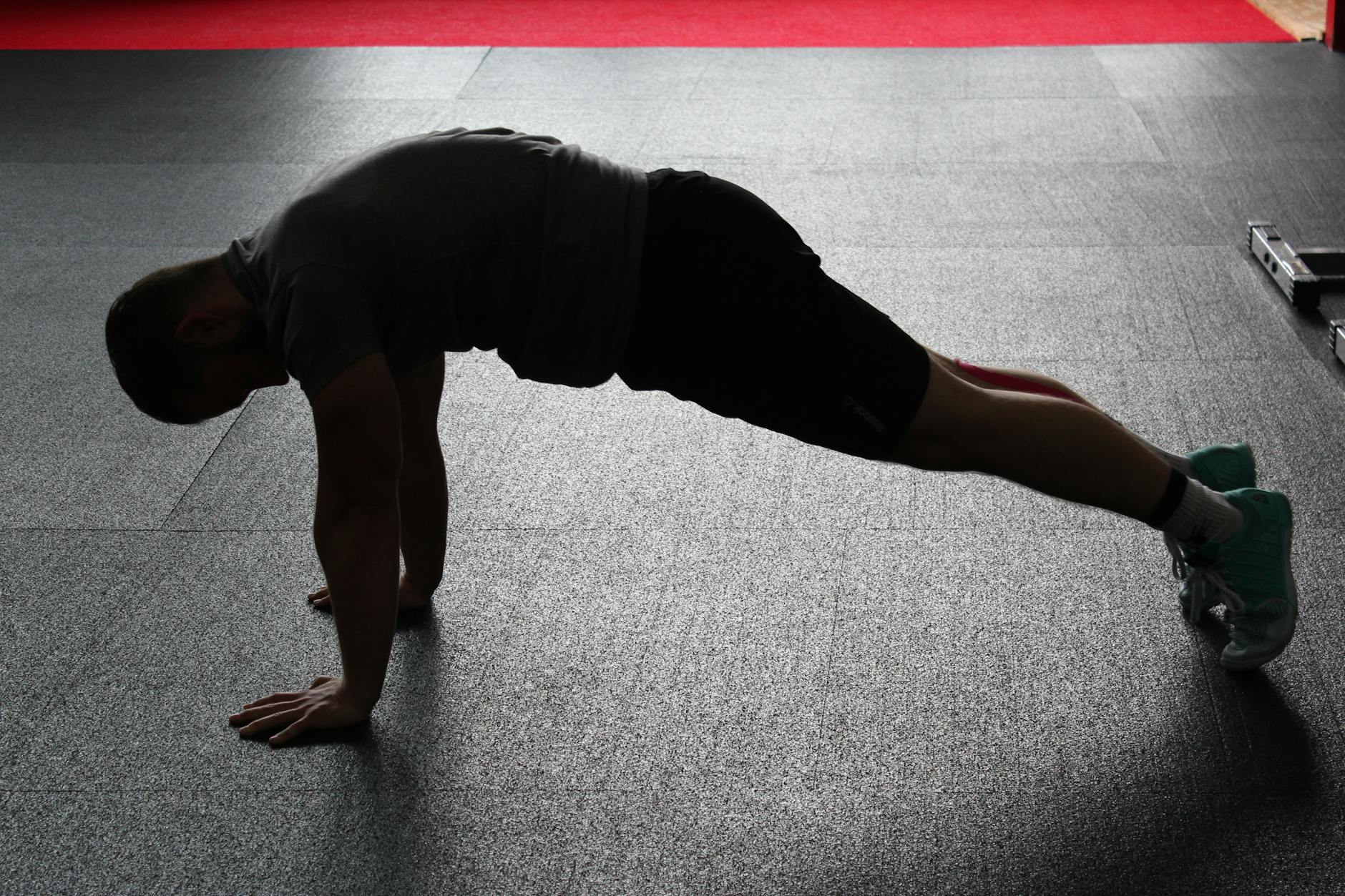
The bird dog exercise combines the stability demands of dead bugs with the strength demands of bridges. Starting on hands and knees, you extend your right arm forward while straightening your left leg backward, creating a straight line, hold briefly, then return. The exercise challenges your balance and forces your core to prevent spinal rotation—something dead bugs don’t demand. Someone progressing through rehabilitation might perform bird dogs for three sets of 12 repetitions per side, finding that their tolerance for standing improves because their core can now actively prevent the swaying motion that stressed their lower back before.
McKenzie exercises, named after the physical therapist who developed them, use repeated spinal extension movements to “centralize” disc material that has shifted toward a nerve root, reducing radiating pain. The basic McKenzie exercise is lying face-down and propping yourself up on your elbows, gently extending your back. This feels counterintuitive when you have lower back pain, and many people avoid extension-based movements—but for disc-related pain specifically, repeated gentle extension often works better than flexion-based stretching. However, if your pain stems from facet joint arthritis rather than disc herniation, McKenzie exercises may worsen symptoms, which is why proper diagnosis before starting rehabilitation is essential.
Flexibility and Mobility Work—Child’s Pose and Gentle Stretching
Child’s pose is a gentle stretch that lengthens your lower back and releases tension in your erector spinae muscles. From hands and knees, you sink your hips back toward your heels while extending your arms forward, creating a full-body stretch. The critical point is that this should feel like a gentle stretch, not a strain—if you feel sharp pain, you’re stretching too aggressively.
For someone whose back pain has caused them to limit movement for weeks, child’s pose often provides immediate relief and helps restore confidence that movement won’t cause re-injury. The main limitation with stretching in rehabilitation is that flexibility alone doesn’t fix back pain if your stability and strength are still deficient. A patient might become more flexible through stretching but continue experiencing pain because their muscles can’t control movement. This is why the seven recommended exercises balance stretching with strengthening rather than relying on stretching alone.

Restoring Functional Movement Through Integration
Once you’ve progressed through the foundational exercises, physical therapists introduce movements that mimic daily activities. Sit-to-stand repetitions, walking with proper posture, and loaded carries (holding light weight while walking) teach your rehabilitated muscles to function in real life.
A 60-year-old returning to gardening, for example, would progress from bridges to more complex movements like step-ups and reaching exercises that prepare their back for the twisting and bending required. The timeline for this integration phase varies significantly based on injury severity. A minor muscle strain might need only two weeks of foundational exercises before integration training, while a disc herniation may require six to eight weeks of progressive strengthening before your therapist clears you for complex movements.
Long-Term Maintenance and Prevention After Rehabilitation
Back rehabilitation isn’t a program with a finish line—the exercises you learn should become a permanent part of your fitness routine. Research shows that people who continue performing these exercises just three times per week after formal rehabilitation ends have significantly lower rates of pain recurrence compared to those who stop exercising once symptoms resolve. The brain-body connection is particularly important here; older adults show the greatest benefit from maintaining rehabilitation exercises because consistent movement helps preserve the neural pathways that allow proper muscle activation and posture.
Conclusion
The seven exercises doctors recommend for back rehabilitation—pelvic tilts, dead bugs, bridges, wall slides, bird dog movements, McKenzie extensions, and child’s pose stretches—work because they address the actual source of most back pain: loss of muscular support and stability rather than structural damage alone. These exercises should be performed in a progressive sequence, starting with foundational stabilization work and advancing only when your muscles show readiness, typically over 4-8 weeks depending on injury severity.
Your next step is scheduling an evaluation with a physical therapist or qualified healthcare provider before starting any rehabilitation program. They’ll determine the specific cause of your pain, identify which of these seven exercises are appropriate for your situation, and establish the right progression timeline. Once you’ve been cleared to begin, consistency matters far more than intensity—performing these exercises three times weekly for six months will produce better long-term results than doing them daily for three weeks then stopping.
Frequently Asked Questions
How long should I hold each exercise position?
For stabilization exercises like pelvic tilts and dead bugs, hold for 3-5 seconds. For strengthening exercises like bridges, hold the top position for 1-2 seconds, then lower. Stretches like child’s pose should be held for 20-30 seconds. Start conservatively and increase duration as your strength improves.
Can I do these exercises if I’m experiencing acute pain right now?
Not all of them. Acute pain usually requires 1-2 days of rest followed by gentle movements like pelvic tilts and child’s pose. Strengthening exercises like bridges should wait until your pain subsides significantly. Your physical therapist will determine when you’re ready to progress.
How quickly will I notice improvement?
Stabilization exercises often provide relief within 3-5 days because they reduce spinal stress and improve muscle activation patterns. Strength-based improvements typically take 3-4 weeks to become noticeable during daily activities. Complete rehabilitation usually takes 8-12 weeks for disc-related injuries.
Should I perform these exercises if I have arthritis in my spine?
Yes, but with modifications. Extension-based exercises like McKenzie movements may aggravate facet joint arthritis, while flexion-based exercises like child’s pose usually help. Work with a physical therapist to identify which exercises are appropriate for your specific type of arthritis.
Can I combine these exercises with other treatments like physical therapy or massage?
Absolutely. These exercises work best as part of a comprehensive approach that may include physical therapy, massage, anti-inflammatory medication when appropriate, and ergonomic modifications. Don’t use exercises as a replacement for professional evaluation of serious back pain.
What’s the difference between rehabilitation exercises and general core strengthening?
Rehabilitation exercises focus on restoring stability and teaching your muscles how to properly protect your spine following injury. General core work builds strength but doesn’t necessarily teach your nervous system to activate muscles protectively. Rehabilitation is more specific to your injury; general strengthening is preventive maintenance after recovery.