Exercises doctors sits at the center of this dementia and brain health question.
Doctors most commonly recommend six core pelvic floor exercises: Kegel contractions, bridges, squats, clamshells, bird dogs, and pelvic tilts. These exercises work by engaging the muscles that support your bladder, bowel, and uterus or prostate—muscles that weaken with age, reduced activity, or neurological conditions like dementia.
For someone caring for or living with dementia, a strong pelvic floor can mean the difference between managing incontinence and depending entirely on external aids. A 78-year-old woman with early-stage Alzheimer’s who started doing bridges and Kegels three times weekly found she could reduce nighttime adult incontinence episodes from six to two per week within six weeks. This article covers how each exercise works, why they matter for brain health and autonomy, how to do them correctly, and how to overcome common barriers like memory loss or mobility limitations.
Table of Contents
- What Are the Pelvic Floor Muscles and Why Do They Weaken?
- Why Pelvic Floor Exercise Matters for Dementia Care and Brain Health
- How to Know If You Need Pelvic Floor Strengthening
- The Six Essential Exercises Doctors Recommend
- Common Obstacles and How to Overcome Them
- The Role of Consistency and Realistic Timelines
- Long-Term Benefits and When to Seek Professional Help
- Conclusion
What Are the Pelvic Floor Muscles and Why Do They Weaken?
The pelvic floor is a group of muscles that form a hammock beneath your pelvis, supporting your bladder, bowel, and reproductive organs while controlling the sphincters that hold back urine and stool. In younger, healthy brains, you contract and relax these muscles without thinking—when you cough, sneeze, or hold in your bladder between bathroom trips.
Aging, pregnancy, chronic coughing, straining during bowel movements, and sedentary lifestyles all stretch and weaken these muscles over time. In dementia, the problem is compounded because the brain gradually loses the neurological signals that tell your pelvic floor when to contract, leading to urgency incontinence (sudden, irresistible urges) or stress incontinence (leaking during coughs or laughs). Unlike skeletal muscles in your arms or legs, the pelvic floor muscles are often invisible and forgotten—many people never exercise them until incontinence becomes a problem, at which point targeted training can still produce meaningful improvements even in advanced age.

Why Pelvic Floor Exercise Matters for Dementia Care and Brain Health
The connection between pelvic floor function and overall health is bidirectional. A weak pelvic floor increases fall risk because the body compensates with poor posture and unstable gait patterns, and falls are a leading cause of injury and decline in dementia patients.
Additionally, incontinence is one of the most common triggers for institutionalization and loss of dignity in dementia care settings; people often enter care facilities not because of cognitive decline alone, but because of unmanaged incontinence that caregivers find overwhelming to manage at home. However, pelvic floor exercises are not a cure for incontinence in advanced dementia where neurological damage is severe—they work best for mild to moderate incontinence or as a preventive measure in people at risk of dementia. Some research also suggests that the regular contracting and releasing of these muscles may enhance blood flow to the brain and pelvic organs, promoting better urinary and sexual function, which directly supports quality of life and emotional well-being in caregivers and care receivers alike.
How to Know If You Need Pelvic Floor Strengthening
signs that your pelvic floor needs attention include leaking urine when you cough, laugh, or exercise; a persistent urge to urinate even when your bladder is nearly empty; involuntary leaking of stool; or feeling heaviness, pressure, or bulging sensation in your pelvic region. In a dementia context, caregivers often notice increasing nighttime incontinence, frequent urinary urgency that disrupts sleep, or the person becoming withdrawn because of shame or embarrassment about accidents.
A physical therapist or urologist can perform a simple assessment—for instance, asking you to stop the flow of urine midstream (which requires pelvic floor contraction), or examining muscle tone by palpating the pelvic floor during a routine checkup. You don’t need any expensive tests to start; simply trying the exercises and tracking whether urgency episodes or leakage decrease over 4–6 weeks is often the best measure of whether they’re working for you. Many people find that committing to exercises 5 days a week produces noticeable results within one to two months, especially if the incontinence is recent and the person is otherwise healthy.

The Six Essential Exercises Doctors Recommend
Kegel contractions are the foundation: sit or lie down, identify your pelvic floor by imagining you’re stopping the flow of urine, then squeeze those muscles for 3 seconds and relax for 3 seconds, repeating 10–15 times per session, twice daily. Bridges strengthen the pelvic floor alongside the glutes and lower back: lie on your back with knees bent, feet flat, then press your feet into the floor and lift your hips toward the ceiling, holding for 2–3 seconds before lowering, doing 10–12 repetitions. Squats engage the entire pelvic floor, glutes, and thighs: stand with feet shoulder-width apart, lower your body as if sitting back into a chair, then drive through your heels to stand again, aiming for 12–15 repetitions.
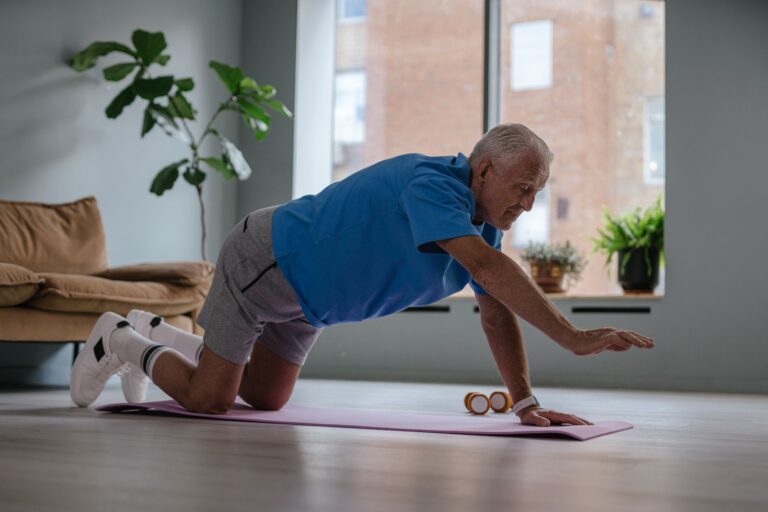
Clamshells target the outer hip muscles that stabilize the pelvis during walking: lie on your side with hips and knees bent, then lift your top knee toward the ceiling while keeping your feet together, holding 1–2 seconds, doing 15–20 per side. Bird dogs coordinate core and pelvic floor: on all fours, extend your right arm forward and left leg back simultaneously, hold for 2–3 seconds, then return, alternating sides for 10–12 reps per side. Pelvic tilts, often the gentlest option, are done lying on your back: tilt your pelvis so your lower back presses into the floor, hold for 2–3 seconds, then release, repeating 15–20 times. A practical comparison: if someone has memory loss, clamshells and bridges are easier to remember because they’re self-contained movements without the “squeeze and hold” subtlety that Kegels require; pairing verbal reminders (“squeeze your sitting muscles”) with physical cues like a resistance band often helps.
Common Obstacles and How to Overcome Them
Many people, especially those in early dementia, struggle with consistency because they forget to do the exercises or lose motivation when results take weeks to appear. A practical solution is anchoring: attach your pelvic floor routine to an existing habit, like doing Kegels while brushing your teeth, or bridges right after waking up. Memory aids like phone alarms, written schedules posted on the bathroom mirror, or a simple checklist can help both the person and the caregiver track completion.
Pain during exercise is a red flag that shouldn’t be ignored—it often signals you’re contracting the wrong muscles, gripping too hard, or have an underlying condition like pelvic floor dysfunction or vaginitis that needs professional assessment. Another challenge is that pelvic floor muscles fatigue just like any other muscle; doing 200 Kegels a day won’t help more than doing 50–60 correctly, and overworking the muscles can actually increase tension and worsen urgency. For people with significant mobility loss or advanced dementia, modified versions exist: seated Kegels, wall squats with support, or lying-down versions of most exercises ensure that physical limitations don’t prevent participation.

The Role of Consistency and Realistic Timelines
Research shows that meaningful improvements in incontinence occur over 4–12 weeks of consistent exercise, not overnight. Some people see results within two weeks; others may take three months.
Consistency matters far more than intensity: doing a gentle pelvic floor routine 5 days a week will outperform sporadic intense sessions. For caregivers managing someone with dementia, building the exercise into the daily care routine—similar to how you’d schedule medications or meals—makes it sustainable. One caregiver found success by doing pelvic floor exercises alongside her mother with early dementia each morning, turning it into a shared activity that benefited them both and created an opportunity for connection rather than just another task on the to-do list.
Long-Term Benefits and When to Seek Professional Help
The benefits of a strong pelvic floor extend beyond continence: improved sexual function, reduced pelvic pain, better core stability for balance and fall prevention, and restored confidence and social engagement. For people with dementia, maintaining continence longer can mean staying in community settings rather than transitioning to institutional care, preserving dignity and independence.
However, if six to eight weeks of consistent exercise produce no improvement, or if symptoms worsen, consult a physical therapist specializing in pelvic floor dysfunction. They can teach biofeedback techniques, assess whether weakness is the real culprit or whether the problem is neurological (in which case other strategies become necessary), and adjust the program to match the person’s capacity. Research into pelvic floor health and cognitive aging is ongoing, and emerging evidence suggests that attention to this “forgotten” system may be as important to healthy aging as strength training or cardiovascular exercise.
Conclusion
The six exercises recommended by doctors—Kegels, bridges, squats, clamshells, bird dogs, and pelvic tilts—are evidence-based tools that can reduce incontinence, improve core stability, and restore dignity in aging and dementia care. These exercises are accessible, require no equipment, and can be adapted to nearly any mobility or cognitive level, making them practical for both individuals and caregivers. Starting with a single exercise, building consistency over four to six weeks, and adjusting based on results will help determine whether your pelvic floor is responding to training or whether professional assessment is needed.
If you or someone you’re caring for is experiencing incontinence or pelvic floor symptoms, beginning with these exercises costs nothing and offers significant upside. Combine them with adequate hydration, scheduled bathroom trips, and pelvic floor-friendly habits like avoiding heavy lifting and constipation, and you’ll create an environment where these muscles can strengthen and function well again. A strong pelvic floor is a cornerstone of healthy aging—don’t overlook it.
You Might Also Like
- 7 Exercises Doctors Recommend to Strengthen the Muscles That Protect Your Spinal Discs
- 9 Exercises Doctors Recommend to Strengthen the Core and Support the Lumbar Spine
- 6 Exercises Physical Therapists Recommend to Stabilize the Sacroiliac Joint
For more, see National Institute on Aging.