Core strength exercises directly reduce pressure on injured discs by strengthening the muscles that stabilize your spine. When you have a herniated or damaged disc, your core muscles—including your abdominals, hip muscles, and deep back stabilizers—need to compensate by providing additional support. A 2025 systematic review published in Frontiers in Medicine found that exercise therapy for lumbar disc herniation significantly reduces pain and improves function compared to no treatment.
Think of your core muscles as a natural corset that wraps around your spine; when these muscles are strong, they reduce the burden on your damaged discs during everyday movements like lifting groceries, bending, or sitting for long periods. For someone with a herniated disc, the difference between weak and strong core muscles can mean the difference between chronic pain and functional recovery. Research shows that core stabilization exercises produce greater pain reduction compared to other exercise types, with participants experiencing an average pain reduction of 3.1 points on standard clinical scales, alongside improvements in range of motion and reduced disability scores. This article covers five core strength exercises that spine specialists recommend, explains how they reduce disc pressure, and guides you through implementing them safely into your recovery routine.
Table of Contents
- How Core Muscles Support an Injured Spine
- The Science Behind Reduced Disc Pressure
- Five Core Exercises Specialists Recommend
- Starting an Exercise Program Safely
- Movements to Avoid with Injured Discs
- When to Seek Professional Physical Therapy
- Long-Term Management and Recovery Outlook
- Conclusion
How Core Muscles Support an Injured Spine
Your core is much more than just your six-pack abdominal muscles. It includes your transverse abdominis (the deepest abdominal layer), your multifidus (deep back muscles), your obliques, your hip muscles, and even your pelvic floor. When these muscles work together, they create intraabdominal pressure that enhances spinal stability during movement. For someone with an injured disc, this stability is crucial because it reduces the compressive load directly applied to the damaged area. A herniated disc occurs when the gel-like center of a spinal disc bulges through the outer ring, sometimes pressing on nearby nerves. The vertebrae above and below the injured disc are then asked to bear more stress.
Weak core muscles mean your spine relies entirely on the structural integrity of the discs themselves—a dangerous situation when one is already compromised. Strong core muscles redistribute this load, allowing your legs, hips, and torso to share the burden rather than concentrating stress on the injured disc. This is why physical therapists prioritize core strengthening even before addressing the disc problem directly. It’s important to note that while core strength is essential, the type of core exercise matters significantly. A 2025 meta-analysis found that core stabilization exercises outperformed Pilates-based approaches in clinical trials, suggesting that targeted, controlled movements are more effective than flow-based routines. This distinction is meaningful for someone recovering from a disc injury because it means not all core work is equally beneficial.

The Science Behind Reduced Disc Pressure
The mechanism by which core strength reduces disc pressure is well-understood by spine specialists. When your deep core muscles contract, they increase pressure inside your abdomen—a phenomenon called intraabdominal pressure. This pressure acts like an inflatable cushion, reducing the shear forces and compressive loads on your lumbar spine. In practical terms, a stronger core means your spine experiences less stress during activities that would ordinarily aggravate a herniated disc. Research demonstrates that core muscles function as stabilizers rather than movers. Unlike your large back muscles that create motion, your deep core muscles create stiffness and support.
This distinction is important: you’re not trying to build muscle for strength or appearance, you’re building muscle for structural support. When these stabilizer muscles are weak, your spine compensates by relying on ligaments and disc structures to maintain stability—and ligaments cannot contract to reduce load the way muscles can. This is why people with weak cores often experience increased pain with movement. However, there’s an important limitation to understand: the research community has not yet established a consensus on the ideal intensity, frequency, and progression protocols for core exercises in herniated disc patients. This means that while the evidence strongly supports core strengthening, your specific exercise program should be tailored to your condition by a physical therapist rather than following a generic online routine. One person’s optimal exercise might aggravate another person’s injury because disc herniation severity, location, and individual anatomy vary considerably.
Five Core Exercises Specialists Recommend
The first exercise is **abdominal bracing**, the foundation of core strengthening. Lie flat on your back with knees bent and feet flat on the floor. Gently contract your abdominal muscles without holding your breath—imagine you’re bracing for a punch to your stomach—and hold this contraction for 5 to 10 seconds. Start with 10 repetitions, rest, and repeat for 2 or 3 sets. This simple exercise activates your transverse abdominis without creating spinal motion or excessive load. Many people skip this basic step to move toward “harder” exercises, but abdominal bracing is where spine specialists recommend everyone begin because it teaches you to engage your core without reinforcing poor movement patterns. The second exercise is the **bird dog**, widely recommended by spine specialists for building endurance in your deep stabilizer muscles. Begin on your hands and knees with your hands directly under your shoulders and knees under your hips. Slowly extend your right arm forward and left leg backward until they’re in line with your body, hold for 3 to 5 seconds without arching your back excessively, then return to start. Repeat 8 to 10 times, then switch sides. The bird dog is effective because it teaches your core to stabilize while your limbs move, mimicking real-world functional movements. Unlike exercises that isolate one muscle group, the bird dog requires coordination between your deep core muscles, hip stabilizers, and back muscles. The third exercise is a **modified plank**. Support yourself on your forearms and knees (not toes initially) with your elbows directly under your shoulders. Maintain a neutral spine—imagine a straight line from your head to your knees—and hold this position without sagging or raising your hips.
Start with 10 to 20 seconds and build gradually toward longer holds. The plank is valuable because it forces your entire core system to work together against gravity, but the modified version on knees reduces spinal load compared to a full plank. If even the modified version causes sharp pain in your disc area, you may need to start with plank holds against a wall instead. The fourth exercise is a **glute bridge**. Lie on your back with knees bent and feet flat, positioned hip-width apart. Push through your heels to lift your hips toward the ceiling, squeezing your glutes and maintaining a neutral spine. Hold for 1 to 2 seconds at the top, then lower. Perform 12 to 15 repetitions. The glute bridge is essential because weak glute muscles force your lower back to compensate, increasing pressure on your discs. Many people with herniated discs have underactive glutes, so this exercise serves double duty: it strengthens your hip extensors while reducing lower back demand. The fifth exercise is **dead bugs**, which teaches your core to stabilize while your limbs move in a complex pattern. Lie on your back with arms extended toward the ceiling and knees bent to 90 degrees (shins parallel to the floor). Slowly lower your right arm overhead while straightening your left leg, hovering both just above the floor without letting your lower back arch. Return to start and repeat on the opposite side. Perform 8 to 10 repetitions per side. Dead bugs are particularly valuable because they prevent the common mistake of using your lower back muscles to stabilize when your core should be doing the work.

Starting an Exercise Program Safely
Beginning a core strengthening program requires caution when you have a herniated disc. Spine specialists recommend starting conservatively with exercises that create minimal spinal motion, such as abdominal bracing and modified planks, before progressing to dynamic movements like bird dogs and dead bugs. A typical progression spans 4 to 6 weeks: weeks one and two focus on isometric holds and muscle activation, weeks three and four add simple dynamic movements, and weeks five and six introduce more challenging variations. Frequency and duration matter significantly. Research suggests that consistency—exercising 3 to 5 days per week—produces better outcomes than occasional intense sessions.
However, the current evidence does not provide specific guidance on optimal sets, reps, and rest periods for herniated disc patients, so working with a physical therapist is valuable for personalizing your routine. Start with 2 to 3 sets of 8 to 12 repetitions for dynamic exercises, or 2 to 3 sets of 10 to 30-second holds for isometric exercises. Importantly, perform these exercises before your pain threshold—you should feel your muscles working, not pain in your lower back or radiating down your leg. One critical distinction: most herniated discs respond best to physical therapy and do not require surgery, according to spine specialists. This means your core strengthening program is part of a conservative treatment approach that has strong evidence supporting it. However, if you experience severe pain, progressive neurological symptoms like weakness or numbness in your legs, or loss of bowel or bladder control, you should seek medical evaluation immediately rather than continuing self-directed exercise.
Movements to Avoid with Injured Discs
Certain movements increase disc pressure and aggravate herniated discs, and specialists recommend avoiding them during recovery. Flexion-based movements—forward bending, knee-to-chest stretches, sit-ups with feet anchored—all increase pressure on the herniated disc and push the disc material further outward. If you’ve been told to do traditional toe-touches or knee-to-chest stretches for flexibility, set those aside until your disc has healed. Instead, focus on extension-based movements and neutral-spine stabilization. Heavy deadlifts, Olympic lifts, and loaded spinal twists should also be avoided until you’ve built significant core strength and returned to pain-free function. The comparison is important: someone without a disc injury can perform heavy lifting because their disc structures are intact and their core muscles provide adequate support.
Someone with a herniated disc cannot yet rely on these mechanisms, so loading your spine heavily is counterproductive. This doesn’t mean you’re permanently limited—many people return to weightlifting after core rehabilitation—but it requires patience and progression. A common mistake is attempting to “work through” sharp pain, believing you’ll strengthen your way past the injury. This approach often backfires: pushing into pain while your disc is actively herniated can worsen the condition and extend recovery time. The distinction is that mild muscle soreness from exercise is tolerable, but sharp pain, radiating pain, or increased neurological symptoms are warning signs. Your nervous system is providing feedback about disc pressure; ignoring it is counterproductive.

When to Seek Professional Physical Therapy
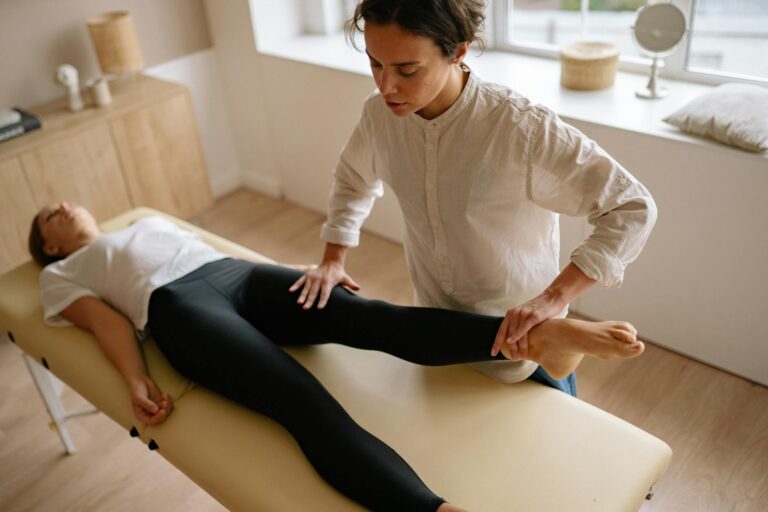
While self-directed core exercises are valuable, a physical therapist can assess your specific disc injury and tailor your program accordingly. Physical therapists evaluate spinal range of motion, identify movement patterns that aggravate your disc, and progress your exercises systematically. If you’ve experienced pain for more than a few weeks, have had imaging confirming a herniated disc, or feel uncertain about exercise selection, professional guidance is warranted.
A physical therapist will also address contributing factors that may have caused your disc injury: poor posture, muscle imbalances between sides of your body, reduced hip mobility, or movement habits that overload your spine. Addressing these factors prevents re-injury after your current disc heals. For example, someone with extremely tight hip flexors and weak glutes places excessive stress on their lumbar spine during everyday activities; physical therapy corrects this pattern permanently rather than simply treating the symptom.
Long-Term Management and Recovery Outlook
Core strength is not just about recovering from a herniated disc—it’s about preventing future injuries. Research shows that maintaining core strength throughout your life reduces your risk of developing back pain and future disc injuries. This means your core strengthening program isn’t temporary; it becomes a permanent part of your movement routine.
Think of it as maintenance, similar to brushing your teeth or exercising for cardiovascular health. As your disc heals and your core strength improves, most people gradually return to normal activities without restriction. The timeline varies considerably based on disc severity, but a year of consistent core work typically produces substantial improvements. Future research may provide more specific exercise protocols for herniated discs, but current evidence strongly supports the fundamental principle: strengthen your core, reduce disc pressure, and recover function.
Conclusion
Core strength exercises reduce pressure on injured discs by creating spinal stability, distributing load across your entire musculature system, and reducing reliance on the damaged disc structure itself. The five foundational exercises—abdominal bracing, bird dog, modified plank, glute bridge, and dead bugs—address different aspects of core function and should be implemented progressively under professional guidance. A 2025 systematic review confirmed that exercise therapy for disc herniation significantly reduces pain and improves function, making core strengthening an evidence-based recovery strategy.
Begin conservatively with your core program, progress gradually, and avoid flexion-based movements and heavy loading until your disc has healed. If your pain is severe, progressive, or accompanied by neurological symptoms, seek medical evaluation rather than self-treating. Most herniated discs respond well to physical therapy alone without requiring surgery, and consistent core strengthening offers the best path toward long-term spinal health and injury prevention.