Doctors say sits at the center of this dementia and brain health question.
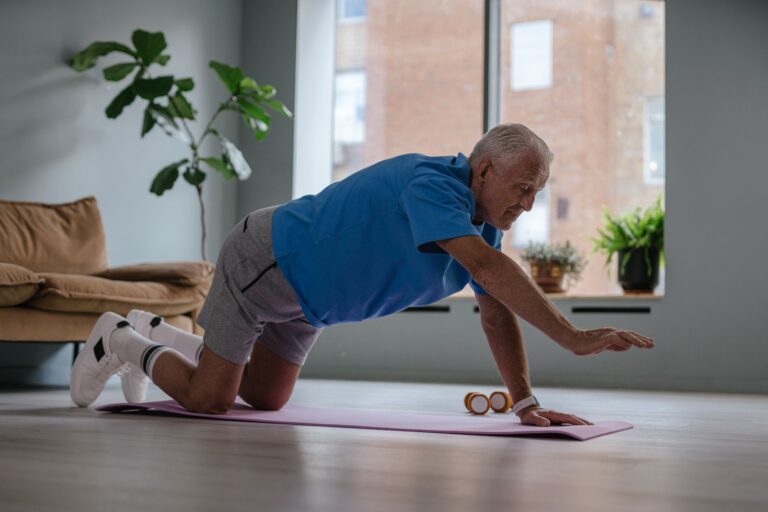
Doctors and spine specialists consistently recommend five core exercises that can significantly strengthen your spine and reduce injury risk: core strengthening exercises like bird-dogs and dead bugs, Superman exercises for the lower back, Pilates for deep stability, yoga for flexibility and alignment, and targeted hip and hamstring stretches. Research shows that exercise therapy is substantially more effective than passive approaches for protecting spinal health, with stabilization exercises demonstrating significant long-term benefits for both pain reduction and improved function.
For someone concerned about maintaining mobility and independence—especially important for cognitive health and overall wellness—these exercises offer a non-invasive, evidence-based way to build the muscular support your spine needs to withstand daily stress and prevent injury. This article explores each of these five exercise categories, explains the science behind why they protect your spine, and provides practical guidance on how to incorporate them safely into your routine. Whether you’re recovering from a previous injury, managing chronic back pain, or simply looking to prevent future problems, understanding these exercises and how to perform them correctly can make a meaningful difference in your long-term health outcomes.
Table of Contents
- What Are the Five Doctor-Recommended Exercises for Spine Protection?
- How Core Strengthening Creates a Protective Shield Around Your Spine
- Flexibility and Stretching: The Overlooked Half of Spine Protection
- Starting Safely: The Physical Therapist Advantage
- Avoiding Common Exercise Mistakes That Can Undermine Protection
- Dosage and Consistency: The Timeline for Seeing Results
- Beyond Pain Relief: Spine Health and Broader Functional Independence
- Conclusion
What Are the Five Doctor-Recommended Exercises for Spine Protection?
The five main exercises physicians recommend fall into distinct categories, each targeting different aspects of spine stability and support. Core strengthening exercises—including the bird-dog, dead bug, and hip bridge—activate the deep muscles that stabilize your spine from within, while planks build endurance in these crucial support muscles. Superman exercises specifically target the erector spinae muscles that run along your lower back, directly strengthening the muscles responsible for extending and supporting your spine. Beyond strength-building, Pilates offers a clinically proven approach to spinal stability, with research showing meaningful improvements in both pain reduction and overall disability compared to minimal intervention or standard care.
Finally, yoga and flexibility work—particularly hip flexor stretches and hamstring mobility exercises—address the tissue restrictions that can pull your spine out of alignment and create compensatory strain. What makes this combination powerful is that these exercises work synergistically. You might think of it this way: strength exercises build the muscular armor around your spine, while flexibility work ensures that armor doesn’t create tension elsewhere. Pilates bridges the gap by combining controlled movement with core activation in ways that directly translate to real-world spine protection. A physical therapist might recommend starting with the simplest versions of these exercises and progressing gradually, which is why professional guidance at the outset can prevent the common mistake of doing these exercises incorrectly and missing their benefits entirely.

How Core Strengthening Creates a Protective Shield Around Your Spine
Your spine is not designed to work alone—it depends on a network of muscles, particularly the deep core muscles that most people never consciously engage. These stabilization muscles act like a corset, dispersing pressure away from individual vertebrae and discs and distributing load evenly along your entire spine. When these muscles are weak, your spine becomes unstable, forcing individual joints and discs to bear disproportionate stress with each movement. This imbalance is often how injuries occur: not from one dramatic event, but from accumulated strain on inadequately supported structures. Core strengthening exercises directly address this vulnerability by activating and strengthening these deep support systems.
Research from multiple studies shows that stabilization exercises produce significant benefits for long-term pain reduction and disability improvement, often outperforming other interventions in controlled comparisons. However, here’s an important caveat: the benefits are not automatic. Studies showing effectiveness typically involved participants performing exercises for 30 to 50 minutes per session, three times per week, or alternatively one to two times daily, for a minimum of five to six weeks. Spot-checking or irregular practice won’t generate meaningful results. This is why many people try these exercises once or twice and feel disappointed—they haven’t yet reached the threshold where tissue adaptation and strength gains become noticeable. Consistency is not optional; it’s foundational to the mechanism by which these exercises work.
Flexibility and Stretching: The Overlooked Half of Spine Protection
While strength gets most of the attention, flexibility is equally important for spine health. Tight hip flexors—muscles that can become shortened from prolonged sitting—pull your pelvis forward and create excessive curve in your lower back, increasing compression on spinal discs. Tight hamstrings have a similar effect but in the opposite direction, tilting your pelvis backward and altering your spinal alignment. When either of these tissue restrictions exists, no amount of core strengthening alone will fully protect your spine, because your spine is being pulled into compromised positions by the restrictions upstream and downstream. This is why comprehensive spine health requires addressing flexibility alongside strength.
Yoga and dedicated stretching work address these restrictions while simultaneously building body awareness—an often-underestimated component of injury prevention. When you understand how your spine moves and where you tend to compensate or over-tighten, you become better at catching yourself before creating strain. Yoga also teaches you how to maintain neutral spine alignment during complex movement, which translates directly to better positioning during daily activities. One limitation to note: flexibility work alone, without concurrent strength training, provides modest benefits for pain reduction and function. The research is clear that when flexibility work is combined with stabilization exercises, results are significantly better than either approach used in isolation. This is why physicians recommend a combined program rather than suggesting you choose between strength and flexibility.

Starting Safely: The Physical Therapist Advantage
Before beginning any new exercise program, particularly if you have a history of back pain, recent injury, or haven’t exercised consistently in some time, consulting with a physical therapist is highly advisable. A qualified therapist can assess your current spinal alignment, identify which muscles are weak or tight, correct your exercise form from day one, and modify exercises appropriately for your specific situation. This professional guidance prevents the common scenario where someone performs exercises with poor form, gains minimal benefit, becomes discouraged, and stops. Proper form is not a minor detail—it’s central to whether these exercises actually strengthen the intended muscles or instead reinforce compensatory patterns that can worsen problems over time.
A physical therapist will typically start you with foundational versions of each exercise and progress you gradually as your strength and awareness improve. For example, you might begin with modified dead bugs performed slowly with careful attention to spinal positioning, then progress to the full version once you’ve demonstrated mastery of the basics. This progression means that what you do in week one might be quite different from what you do in week six, but each week builds appropriately on the previous work. Many people who “tried these exercises” but felt they weren’t working actually never reached the progressions necessary to trigger meaningful adaptation. Professional guidance removes this guesswork.
Avoiding Common Exercise Mistakes That Can Undermine Protection
Even well-intentioned people often perform these exercises incorrectly in ways that reduce their effectiveness or create unintended problems. A common mistake with planks is allowing your hips to sag, which shifts work away from your deep core muscles and places excessive stress on your lower back—the exact opposite of the protective effect you’re aiming for. With bird-dogs, many people move too quickly or jerkily, relying on momentum rather than controlled muscle activation. Superman exercises often involve excessive back extension, which is uncomfortable and can actually create compression in the lower back rather than the targeted strengthening of the erector spinae. These mistakes highlight why form matters more than volume in the early stages.
Performing five perfect repetitions of an exercise is far more valuable than performing twenty repetitions with poor form. As you progress and your neuromuscular control improves, you can increase volume and intensity more safely. Another warning: if an exercise causes sharp pain (as opposed to muscle fatigue or mild discomfort), stop immediately and either modify the exercise or skip it until you can work with a professional to understand what’s going wrong. Pushing through sharp pain is a pathway to new injury, not injury prevention. Spine health is a long-term project; there’s no value in aggravating yourself in the short term.

Dosage and Consistency: The Timeline for Seeing Results
The research on exercise effectiveness is unambiguous about one thing: duration and frequency matter significantly. The studies showing real benefits from stabilization exercises typically involved participants exercising for 30 to 50 minutes per session, at least three times per week, and sustained for five to six weeks minimum before meaningful improvements appeared. Some participants benefited from more frequent practice—one to two times daily—though these were often integrated into physical therapy programs rather than solo home routines. This timeline is important because many people start an exercise program with motivation but give up within two to three weeks, right before the point where their brain and spine would begin showing measurable adaptation.
What does this look like practically? If you’re doing three 45-minute sessions per week of comprehensive spinal exercises, you’re meeting the research thresholds for effectiveness. If you’re doing ten minutes daily, that’s 70 minutes per week—below the ideal threshold, though better than sporadic practice. The key insight is that you don’t need to do complex or elaborate exercises, but you do need consistency and adequate volume. Many people find that once they experience the first noticeable improvements in pain, flexibility, or strength around week five or six, maintaining the routine becomes easier because they’ve experienced the reality of the benefits.
Beyond Pain Relief: Spine Health and Broader Functional Independence
While pain reduction is often the initial motivation for spinal exercise, the deeper benefit is preserved functional capacity over time. A spine that is strong, flexible, and stable allows you to move through the world with greater ease and confidence—bending to pick things up, maintaining balance, performing daily activities without restriction. This functional independence is particularly valuable as you age, because the loss of mobility and strength accelerates if you become sedentary. Preventive exercise, performed consistently before you experience significant problems, can avoid this negative spiral entirely.
The benefits of a healthy spine extend beyond just back health. When your spine is well-supported and pain-free, you’re more likely to remain active in other ways, which benefits cardiovascular health, mental well-being, and cognitive function. You’re also less likely to develop compensatory movement patterns that can lead to problems in your hips, knees, or shoulders. In other words, spinal health is foundational to broader health and independence. This is why physicians recommend treating spine protection not as a response to injury, but as a proactive component of lifelong health maintenance.
Conclusion
The five exercises recommended by doctors—core strengthening, Superman exercises, Pilates, yoga, and dedicated flexibility work—are not quick fixes but components of a comprehensive approach to spine protection. Research demonstrates that when these exercises are performed consistently (30 to 50 minutes per session, three or more times per week) for sufficient duration (five to six weeks minimum), they produce significant improvements in pain, function, and long-term disability outcomes. The evidence is clear that exercise is a first-line treatment for back health, more effective than passive approaches and safer than many pharmaceutical interventions.
Starting this program with proper form—ideally with guidance from a physical therapist—sets you up for success by ensuring that your effort translates into the specific adaptations you’re aiming for. Consistency matters more than intensity, and gradual progression matters more than volume. By investing in spinal health now through targeted exercise, you’re building the foundation for a more mobile, independent, and pain-free future.
You Might Also Like
- 6 Exercises Often Used in Physical Therapy for Spine Stabilization
- 8 Symptoms of Lumbar Disc Degeneration That May Appear Gradually
- 10 Signs Your Lumbar Spine May Be Under Too Much Mechanical Stress
For more, see CDC — Alzheimer’s and Dementia.