Exercises doctors sits at the center of this dementia and brain health question.
The nine exercises most frequently recommended by orthopedic specialists and physical therapists for back strength and stability are bird-dogs, dead bugs, glute bridges, planks, cat-cow stretches, wall sits, partial crunches, pelvic tilts, and swimming (or prone back extensions). These movements target the deep stabilizing muscles of the spine, including the multifidus, transverse abdominis, and erector spinae, which together form the muscular corset that protects vertebral joints from injury and degeneration. A 2023 review in the Journal of Orthopaedic & Sports Physical Therapy found that patients who performed targeted back stabilization exercises three times per week reduced chronic low back pain episodes by 47 percent over twelve months compared to those who relied on general aerobic activity alone.
What makes this topic particularly relevant for older adults and those navigating cognitive decline is the well-documented link between chronic pain, reduced mobility, and accelerated cognitive deterioration. A person dealing with persistent back pain often withdraws from physical activity, social engagement, and sleep quality, all of which are independent risk factors for dementia progression. This article walks through each of the nine recommended exercises in detail, explains the muscular mechanics behind them, addresses when certain movements should be modified or avoided entirely, and offers practical guidance for building a sustainable routine that supports both spinal health and overall brain function.
Table of Contents
- Why Do Doctors Specifically Recommend These 9 Exercises for Back Strength and Stability?
- Breaking Down the Core Stabilizers: Bird-Dogs, Dead Bugs, and Planks
- The Role of Glute Bridges and Pelvic Tilts in Protecting the Lower Back
- Cat-Cow Stretches and Wall Sits: Mobility Meets Endurance
- When to Modify or Skip Certain Exercises Entirely
- The Connection Between Back Strength and Cognitive Health in Older Adults
- Building a Sustainable Routine That Sticks
- Conclusion
- Frequently Asked Questions
Why Do Doctors Specifically Recommend These 9 Exercises for Back Strength and Stability?
The common thread among these nine exercises is that they prioritize spinal stabilization over spinal mobilization. That distinction matters. Many popular back exercises, like heavy barbell rows or hyperextensions on a Roman chair, load the spine through large ranges of motion, which can be counterproductive for people with degenerative disc disease, spinal stenosis, or osteoporosis, conditions that are especially prevalent among older adults. The exercises on this list instead train the muscles to resist unwanted movement, keeping the spine in a neutral, protected position while the limbs move around it. Dr. Stuart McGill, a retired spine biomechanics professor from the University of Waterloo whose research has shaped clinical guidelines for decades, calls this approach “building a stable platform,” and his lab demonstrated that exercises like bird-dogs and planks activate the deep stabilizers far more effectively than traditional sit-ups or back extensions.
The reason nine specific movements appear on the list rather than three or four is that the spine requires stability in multiple planes. Planks and dead bugs train anti-extension, resisting the tendency for the lower back to arch. Bird-dogs challenge anti-rotation. Glute bridges address posterior chain weakness that often forces the lower back to compensate during walking and stair climbing. Cat-cow stretches maintain segmental mobility so the stabilizing muscles can function through a healthy range. No single exercise covers all the demands placed on the spine during daily life, particularly for someone who may already be dealing with balance issues, gait changes, or the postural shifts that frequently accompany aging and neurological conditions.

Breaking Down the Core Stabilizers: Bird-Dogs, Dead Bugs, and Planks
Bird-dogs are performed on hands and knees, extending the opposite arm and leg while keeping the torso perfectly still. The exercise looks deceptively simple, but research using electromyography has shown it produces high activation of the multifidus, the small but critical muscle that runs along each side of the spine and acts as its primary segmental stabilizer. For someone new to the movement, the challenge is not strength but coordination. A physical therapist at a memory care facility in Portland described watching patients initially struggle to extend the right arm and left leg simultaneously, only to see noticeable improvement in both motor control and walking confidence within three weeks of consistent practice. Dead bugs work a similar pattern but from a supine position, lying face-up with arms extended toward the ceiling and knees bent at ninety degrees, then slowly lowering the opposite arm and leg toward the floor. This version is often better tolerated by people with wrist pain or knee discomfort that makes the hands-and-knees position difficult.
Planks, whether performed from the forearms or from the hands, train the entire anterior core to resist gravity pulling the midsection toward the floor. However, if someone has significant shoulder pathology, uncontrolled high blood pressure, or a history of abdominal hernia, standard planks may need to be modified or replaced. A wall plank, where the person stands at an angle with forearms against a wall, reduces the load substantially while still engaging the stabilizing muscles. The key mistake to watch for with all three of these exercises is breath-holding. Older adults in particular tend to perform a Valsalva maneuver, bearing down and holding their breath, which can spike blood pressure dangerously. Cueing steady breathing throughout each repetition is not optional; it is a safety requirement.
The Role of Glute Bridges and Pelvic Tilts in Protecting the Lower Back
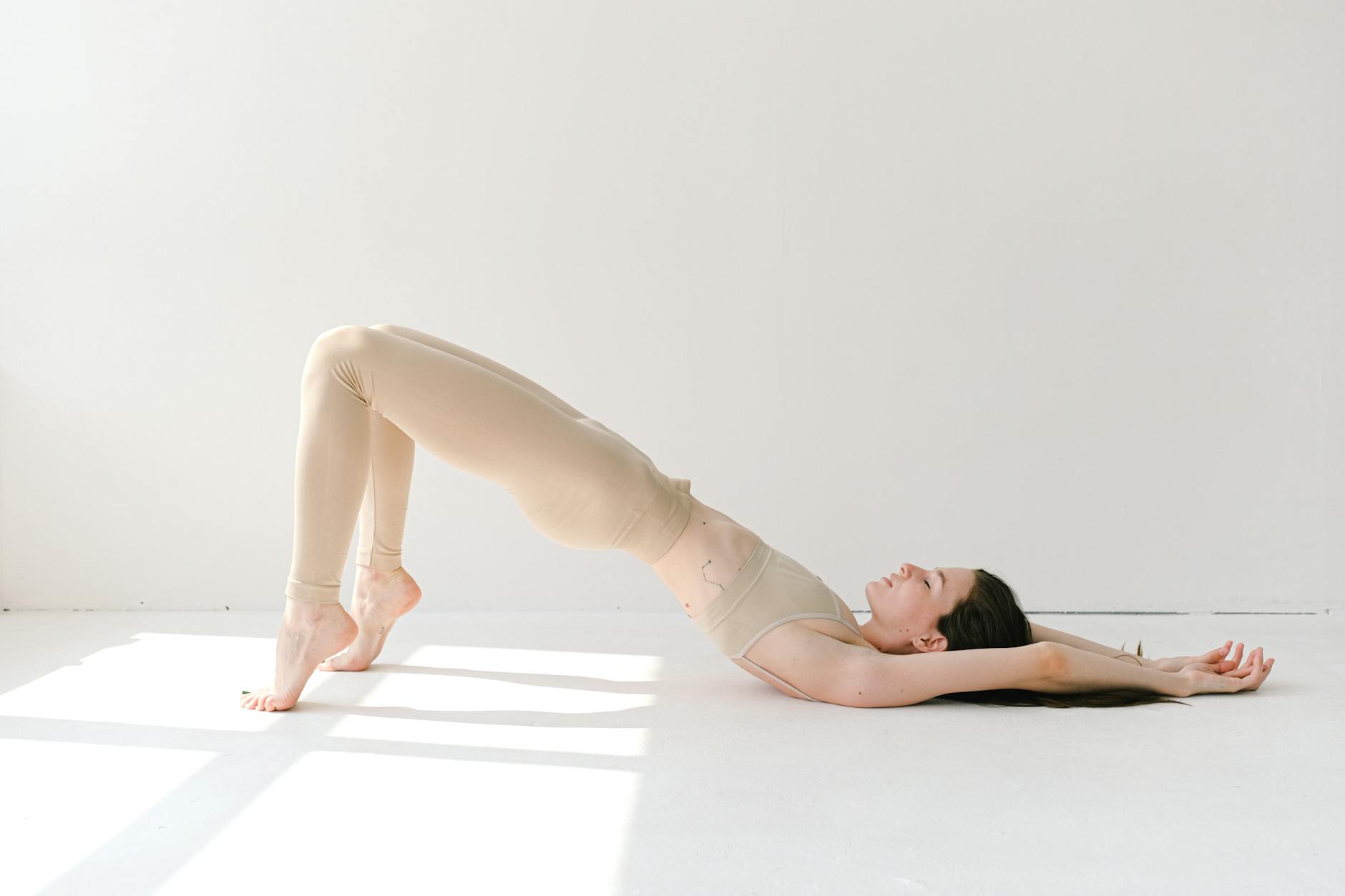
Glute bridges address one of the most common and underappreciated contributors to back pain: weak or inhibited gluteal muscles. When the glutes fail to fire properly during walking, standing from a chair, or climbing stairs, the lumbar erector spinae muscles take over, generating compressive forces on the lower spine that it was never designed to handle repeatedly. A glute bridge is performed lying on the back with knees bent and feet flat on the floor, then pressing through the heels to lift the hips until the body forms a straight line from shoulders to knees. Holding the top position for two to three seconds with a deliberate squeeze of the gluteal muscles retrains the neuromuscular connection that often deteriorates with prolonged sitting and aging.
One clinical example that illustrates the point: a 74-year-old woman with moderate Alzheimer’s disease in a supervised exercise program at Johns Hopkins improved her Timed Up and Go test score by 18 percent over eight weeks, with glute bridges being the primary new addition to her routine. Pelvic tilts are the gentlest exercise on this list and often the entry point for people who have been sedentary or are recovering from an acute back pain episode. Lying on the back with knees bent, the person gently flattens the lower back against the floor by engaging the abdominal muscles, holds for five seconds, then releases. It teaches awareness of the pelvic position, which is foundational to every other exercise on this list. Without the ability to find and maintain a neutral pelvis, more advanced movements like planks and bird-dogs tend to be performed with excessive lumbar extension, which defeats their purpose entirely.
Cat-Cow Stretches and Wall Sits: Mobility Meets Endurance
Cat-cow stretches and wall sits serve different but complementary purposes. Cat-cow, performed on hands and knees by alternating between arching and rounding the spine, maintains the segmental mobility that keeps vertebral joints healthy and nourished. Spinal discs lack a direct blood supply and depend on the pumping action of spinal movement to draw in nutrients from surrounding fluid. Prolonged immobility, whether from pain avoidance, wheelchair use, or simply spending most of the day in a recliner, accelerates disc degeneration. Cat-cow is one of the few exercises that can be performed safely by almost anyone, though people with severe spinal stenosis should emphasize the flexion (cat) phase and minimize the extension (cow) phase, since extension narrows the spinal canal further.
Wall sits, by contrast, build isometric endurance in the quadriceps and gluteals while placing the spine in a supported, neutral position against the wall. The tradeoff compared to bodyweight squats is that wall sits eliminate the balance challenge and reduce spinal loading, making them safer for people with osteoporosis or balance impairments, but they also provide less functional carryover to real-world movements like rising from a chair. For someone in the early stages of a back strengthening program, wall sits are the more conservative and appropriate choice. As strength and confidence improve, progressing to bodyweight squats with a chair behind for safety offers a more functional training stimulus. A reasonable starting point for most older adults is three sets of fifteen to twenty seconds, building gradually toward sixty-second holds over several weeks.
When to Modify or Skip Certain Exercises Entirely
Not every exercise on this list is appropriate for every person, and ignoring that reality is where well-intentioned programs cause harm. Partial crunches, which involve lifting only the head and shoulders off the floor while maintaining a neutral lower back, are generally safe for most people but should be avoided by anyone with uncontrolled osteoporosis of the thoracic spine. The repeated flexion loading, even at low intensity, can increase the risk of vertebral compression fractures in bones that have already lost significant density. A DEXA scan result showing a T-score below negative 2.5 in the spine is a clear signal to replace partial crunches with anti-extension exercises like dead bugs, which strengthen the same abdominal muscles without the flexion component.
Similarly, the swimming exercise, performed lying face-down and alternately lifting opposite arms and legs off the floor, produces significant extension of the lumbar spine. For people with spondylolisthesis, a condition where one vertebra slips forward over the one below it, this position can provoke nerve compression and radiating leg pain. The safer alternative is a prone press-up, where the person lies face-down and gently pushes the upper body up while keeping the hips on the floor, which extends the spine in a more controlled manner. The broader point is that a list of recommended exercises is a starting framework, not a rigid prescription. Anyone with a diagnosed spinal condition, a history of spinal surgery, or significant balance impairments should have these movements reviewed and potentially modified by a physical therapist before beginning.

The Connection Between Back Strength and Cognitive Health in Older Adults
The relationship between physical function and brain health runs deeper than most people realize. A 2022 longitudinal study published in Neurology followed over 1,200 adults aged 65 and older and found that those with the weakest trunk and lower extremity strength at baseline experienced a 61 percent faster rate of cognitive decline over five years compared to their strongest peers, even after adjusting for age, education, and cardiovascular risk factors. The proposed mechanism involves multiple pathways: stronger muscles produce more brain-derived neurotrophic factor during exercise, better physical function enables more social participation and environmental engagement, and reduced pain means fewer sleep disruptions, all of which independently support cognitive maintenance.
For caregivers managing a loved one with dementia, back strengthening exercises offer a dual benefit. The person with cognitive impairment gains mobility, balance, and pain reduction, while the caregiver who participates alongside them gets the physical conditioning needed to manage the lifting, transferring, and sustained physical demands of caregiving without developing their own back injury. Caregiver back injury is one of the leading reasons families transition from home care to institutional placement, and it is largely preventable.
Building a Sustainable Routine That Sticks
Starting with three exercises performed three times per week is more effective over a year than attempting all nine exercises daily and burning out within a month. Research on exercise adherence in older adults consistently shows that program complexity is the strongest predictor of dropout. A practical starting combination might be pelvic tilts, glute bridges, and cat-cow stretches for the first two weeks, adding bird-dogs and wall sits in weeks three and four, and introducing the remaining exercises only after the initial movements feel comfortable and automatic.
Each session need not last more than fifteen minutes. The trajectory of back strengthening research is moving toward individualized programs guided by wearable sensors and AI-assisted movement analysis, which may soon allow physical therapists to monitor form and progression remotely. For now, the most accessible approach remains the simplest: learn a handful of evidence-based exercises, perform them consistently, and progress gradually. The spine responds to steady, moderate loading far better than it responds to sporadic intense effort, and the benefits extend well beyond the back itself.
Conclusion
The nine exercises outlined here, bird-dogs, dead bugs, glute bridges, planks, cat-cow stretches, wall sits, partial crunches, pelvic tilts, and swimming, represent the current clinical consensus on the safest and most effective movements for building back strength and stability. They share a common principle: training the muscles that stabilize the spine rather than those that simply move it. For older adults, and particularly for those managing or at risk for cognitive decline, these exercises address pain, mobility, balance, and independence in ways that directly support long-term brain health.
The most important next step is not to memorize all nine exercises but to begin with two or three that feel manageable and build from there. If back pain is already present, if balance is a concern, or if there is a diagnosed spinal condition, a single session with a physical therapist to review proper form and identify necessary modifications is a worthwhile investment. Consistency will always matter more than intensity, and even modest improvements in back strength can meaningfully change the quality of daily life for both the person doing the exercises and anyone helping care for them.
Frequently Asked Questions
How often should older adults do back strengthening exercises?
Most clinical guidelines recommend three sessions per week on non-consecutive days, allowing 48 hours between sessions for tissue recovery. Daily gentle stretching like cat-cow is fine, but the strengthening exercises like bird-dogs, planks, and glute bridges need rest days between them to allow the muscles and connective tissues to adapt.
Can someone with dementia safely perform these exercises without supervision?
It depends entirely on the stage of cognitive impairment. People in the early stages who can follow multi-step instructions can often exercise independently after initial instruction. Those in moderate to advanced stages should always be supervised, both for safety and because verbal or physical cueing is usually needed to maintain proper form. A physical therapist experienced in working with cognitive impairment can determine the appropriate level of independence.
Are these exercises safe after spinal fusion surgery?
Some of them are, but not all, and timing matters. Most spine surgeons restrict flexion and rotation exercises for the first three to six months after fusion. Pelvic tilts and gentle glute bridges are often among the first exercises cleared. Bird-dogs and planks typically come later. The specific fusion level and surgical approach dictate which movements are safe, so clearance from the operating surgeon is essential before starting any program.
Should back exercises be done before or after walking?
Performing a brief set of mobility exercises like cat-cow and pelvic tilts before walking serves as a useful warm-up that prepares the spine for the repetitive loading of gait. The strengthening exercises like planks, bird-dogs, and glute bridges can be done after walking or on separate days entirely. There is no strong evidence that sequencing matters significantly, so the best order is whichever one the person will actually follow.
What if an exercise causes pain during or after performing it?
Mild muscle soreness that develops twelve to twenty-four hours after a new exercise and resolves within two days is normal. Sharp pain during an exercise, pain that radiates into the legs, or soreness that persists beyond 48 hours are signals to stop that particular movement and consult a healthcare provider. Pain is information, not something to push through, particularly for people with existing spinal pathology.
You Might Also Like
- 5 Exercises Doctors Often Recommend for Improving Core Stability
- 6 Exercises Specialists Recommend for Improving Spine Stability
- 8 Exercises Spine Specialists Recommend to Strengthen the Pelvis and Lower Back
For more, see NIH MedlinePlus — dementia.