Exercises physical sits at the center of this dementia and brain health question.
The five exercises physical therapists most commonly prescribe for spine rehabilitation are pelvic tilts, cat-cow stretches, bird-dog stabilization, chin tucks, and bridging. These movements target the core stabilizers, spinal extensors, and deep cervical flexors that tend to weaken after injury, surgery, or prolonged inactivity — and they share a common thread of being low-impact enough for older adults, including those managing cognitive decline alongside musculoskeletal problems. A 74-year-old patient recovering from a lumbar compression fracture, for instance, might begin with simple supine pelvic tilts in the first week of therapy before progressing to bird-dogs by week four, rebuilding the muscular scaffolding around the spine without placing excessive load on healing vertebrae.
What makes these particular exercises so widely used is their adaptability. A physical therapist can modify each one to accommodate limited mobility, balance concerns, or the shorter attention spans that sometimes accompany dementia and other neurological conditions. This article walks through each of the five exercises in detail, explains why therapists choose them over alternatives, discusses how spine rehabilitation intersects with brain health in older adults, and addresses the practical realities of sticking with a home program when memory or motivation are barriers.
Table of Contents
- Why Do Physical Therapists Choose These Five Exercises for Spine Rehabilitation?
- How Pelvic Tilts and Cat-Cow Stretches Rebuild Spinal Mobility
- Bird-Dog and Bridging Exercises for Core Stability in Older Adults
- Adapting Spine Rehabilitation Exercises for People with Dementia
- When Spine Rehabilitation Exercises Can Do More Harm Than Good
- The Connection Between Spinal Health and Cognitive Function
- What the Future of Spine Rehabilitation Looks Like for Aging Populations
- Conclusion
- Frequently Asked Questions
Why Do Physical Therapists Choose These Five Exercises for Spine Rehabilitation?
Physical therapists don’t select exercises at random. The five movements listed above appear so frequently in spine rehabilitation programs because each one targets a specific deficit that shows up across nearly every spinal condition — whether it’s a herniated disc, spinal stenosis, post-surgical recovery, or age-related degenerative changes. Pelvic tilts activate the transverse abdominis, the deepest abdominal muscle that acts like a natural back brace. Cat-cow stretches restore segmental mobility to stiff vertebral joints. Bird-dogs train the multifidus and erector spinae to co-contract with the abdominals, which is the foundation of dynamic spinal stability. Chin tucks correct forward head posture that worsens cervical pain. And bridging strengthens the gluteal muscles that, when weak, force the lumbar spine to absorb forces it was never designed to handle alone.
Compared to machine-based exercises or high-load resistance training, these bodyweight movements carry a substantially lower risk of exacerbating pain or causing re-injury. A 2019 systematic review in the Journal of Orthopaedic & Sports Physical Therapy found that motor control exercises — the category all five fall into — produced equivalent or superior outcomes to general exercise for chronic low back pain, with fewer adverse events. This matters enormously for older adults and people with dementia, where the consequences of a setback extend beyond pain into lost independence, increased fall risk, and accelerated cognitive decline from immobility. The practical advantage is equally important. None of these exercises require equipment. They can be performed in a living room, a care facility, or a hospital bed with minor modifications. For a population that may struggle to get to a gym or remember a complicated routine, simplicity isn’t a compromise — it’s a clinical strategy.

How Pelvic Tilts and Cat-Cow Stretches Rebuild Spinal Mobility
Pelvic tilts are often the very first exercise a physical therapist introduces after a spinal injury or surgery, and for good reason. Lying on the back with knees bent, the patient gently flattens the lower back against the floor by engaging the abdominal muscles, then releases. This seemingly small movement re-establishes the brain-to-muscle connection in the deep core that often goes dormant after pain sets in. It also provides the therapist with a diagnostic window: if a patient cannot perform a pelvic tilt without substituting with their hip flexors or holding their breath, it signals that more foundational work is needed before progressing. Cat-cow stretches build on that foundation by introducing controlled spinal flexion and extension through the full length of the spine.
On hands and knees, the patient rounds the back upward like a frightened cat, then drops the belly toward the floor while lifting the head. This rhythmic motion gently mobilizes each vertebral segment, improves circulation to the intervertebral discs — which rely on movement rather than blood supply for nutrition — and often provides immediate pain relief through a mechanism called centralization, where symptoms that had been radiating into the limbs begin to retreat toward the spine’s midline. However, cat-cow stretches are not appropriate for everyone. Patients with spondylolisthesis — where one vertebra has slipped forward on another — may find that the extension phase increases their symptoms. Similarly, individuals with severe osteoporosis should avoid the deep flexion component, as it can increase the risk of vertebral compression fractures. A competent physical therapist will screen for these contraindications before prescribing the exercise, and may substitute a modified version performed while seated or standing if the floor position is impractical for someone with significant balance or cognitive limitations.
Bird-Dog and Bridging Exercises for Core Stability in Older Adults
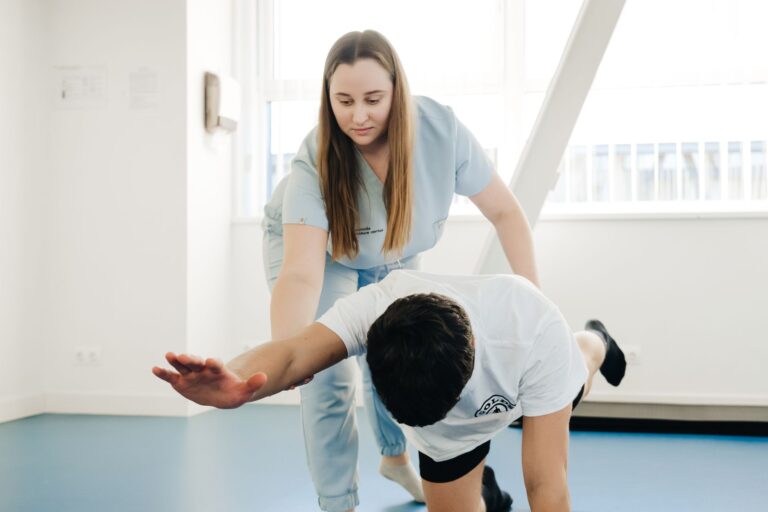
The bird-dog exercise is a staple of spine rehabilitation because it demands simultaneous stability and movement — a combination that mirrors real-world function far better than isolated strengthening. Starting on hands and knees, the patient extends one arm forward and the opposite leg backward while keeping the trunk perfectly still. The challenge isn’t in the limb movement itself but in preventing the spine from rotating, side-bending, or sagging under the shifting load. Research from Stuart McGill’s spine biomechanics laboratory at the University of Waterloo has consistently shown that the bird-dog produces high activation of the multifidus and erector spinae muscles with minimal compressive load on the lumbar discs, making it one of the safest ways to build the endurance these muscles need to protect the spine throughout the day. For older adults with dementia, the bird-dog presents both an opportunity and a challenge.
The coordination required — extending opposite limbs while maintaining balance — engages not just the musculoskeletal system but also the cerebellum, prefrontal cortex, and proprioceptive pathways. Some therapists have observed that patients with mild cognitive impairment actually show improved attentional focus during sessions that include this exercise, likely because the motor complexity demands present-moment concentration. A physical therapist working with a dementia patient at a memory care facility in Portland described starting with just the arm extension, then adding the leg lift only after the movement pattern became automatic over several sessions, reducing the cognitive load at each stage. Bridging complements the bird-dog by targeting the posterior chain — gluteal muscles, hamstrings, and spinal extensors — in a supine position that many older adults find more comfortable and less intimidating than being on all fours. The patient lies on their back with knees bent, then lifts the hips toward the ceiling while squeezing the glutes. This exercise is particularly valuable for individuals with spinal stenosis, a condition where the spinal canal narrows and produces leg pain with standing and walking, because it strengthens the muscles needed for upright function without requiring the patient to be upright during training.

Adapting Spine Rehabilitation Exercises for People with Dementia
Adapting a spine rehabilitation program for someone with dementia involves more than just simplifying the exercises. The therapist has to restructure the entire approach to learning and retention. Verbal cueing — “tighten your stomach like someone is about to tickle you” — often works better than anatomical instructions like “engage your transverse abdominis.” Visual demonstration needs to happen immediately before each repetition, not just at the beginning of a session. And the environment matters: a cluttered, noisy room will derail a session faster than any physical limitation. The tradeoff therapists face is between exercise complexity and therapeutic benefit. A bird-dog performed with sloppy form provides minimal spinal stabilization training and may actually reinforce compensatory movement patterns.
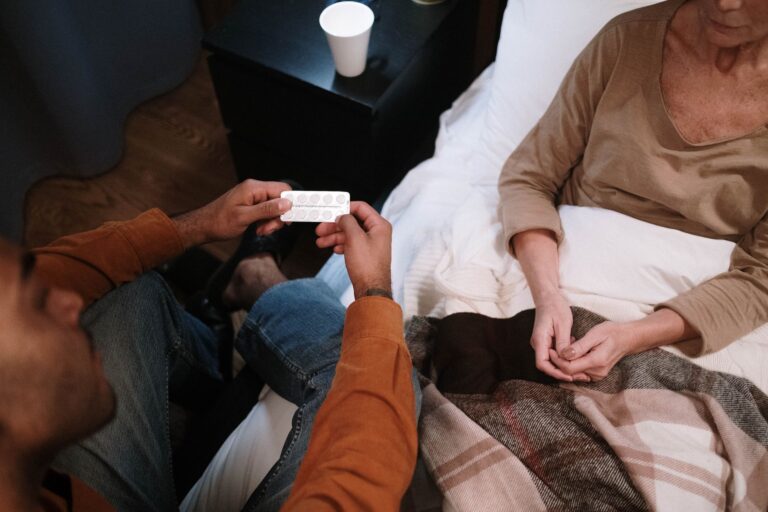
But demanding perfect form from a patient who cannot remember the instructions between repetitions creates frustration for everyone involved. The practical middle ground, according to guidelines from the American Physical Therapy Association’s geriatric section, is to prioritize exercises where acceptable form is relatively easy to achieve — pelvic tilts and bridges tend to score well here — and to use tactile cueing, such as placing a hand on the muscle that should be working, to supplement verbal instructions that may not be retained. Caregiver involvement changes the equation significantly. When a family member or care aide learns the exercises alongside the patient, they can provide the between-session reminders and gentle corrections that keep the program on track. Some therapists create simple visual cards with photographs of each exercise that can be posted in the patient’s room, serving as external memory aids. The goal isn’t independence with the program — it’s consistency, even if that consistency depends on another person’s support.
When Spine Rehabilitation Exercises Can Do More Harm Than Good
Not every spine condition responds well to exercise, and not every patient is a candidate for active rehabilitation at every point in their recovery. Acute disc herniations with progressive neurological deficits — such as worsening leg weakness or loss of bladder control — require urgent medical evaluation, not a home exercise program. Spinal fractures that haven’t been cleared for weight-bearing need to heal before bird-dogs or bridges enter the picture. And severe spinal cord compression, which can occur with advanced degenerative disease or tumor involvement, demands imaging and possibly surgical intervention before any physical therapy begins. Even when exercise is appropriate, the wrong exercise at the wrong time can set a patient back. A common mistake in self-directed rehabilitation is performing repeated lumbar flexion exercises — like sit-ups or toe touches — during the acute phase of a disc herniation, when the disc’s outer wall is still vulnerable.
The hydraulic pressure created by flexion can push disc material further into the spinal canal, worsening nerve compression. Physical therapists use specific clinical tests, such as the McKenzie repeated movement assessment, to determine which directions of movement help and which ones aggravate the condition before building the exercise program. For older adults with osteoporosis, the warning is particularly relevant. The National Osteoporosis Foundation specifically advises against exercises involving forward bending under load, twisting at the waist, and high-impact activities. A well-meaning but uninformed caregiver who encourages aggressive stretching could inadvertently cause the very compression fractures that the rehabilitation program was meant to prevent. This is why a professional assessment before beginning any spine exercise program isn’t just recommended — it’s essential.
The Connection Between Spinal Health and Cognitive Function
Emerging research has drawn a line between chronic pain, reduced physical activity, and accelerated cognitive decline that gives spine rehabilitation an unexpected relevance in dementia care. A 2021 study published in Pain Medicine followed over 10,000 older adults and found that those with chronic low back pain showed a 26 percent faster rate of cognitive decline over six years compared to pain-free peers, even after adjusting for age, education, and depression. The proposed mechanism isn’t complicated: pain disrupts sleep, reduces social engagement, limits physical activity, and commandeers attentional resources that would otherwise support memory and executive function.
By treating the spine effectively and restoring comfortable movement, physical therapy may indirectly protect cognitive function — not by acting on the brain directly, but by removing a barrier that keeps older adults sedentary, isolated, and sleep-deprived. A patient at a rehabilitation center in Minneapolis who had been largely bedbound due to lumbar stenosis pain began walking independently again after eight weeks of targeted spine exercises. Her occupational therapist noted that her scores on a brief cognitive screening improved by three points over the same period, a change her medical team attributed to the downstream effects of returning to physical and social activity.
What the Future of Spine Rehabilitation Looks Like for Aging Populations
The next decade of spine rehabilitation will likely be shaped by two converging trends: the growing population of older adults with both spinal conditions and cognitive impairment, and the increasing use of technology to extend the reach of physical therapy beyond the clinic. Telehealth platforms are already being used to supervise home exercise programs through video, and sensor-based wearable devices can now provide real-time feedback on movement quality during exercises like the bird-dog, alerting a patient or caregiver when form breaks down. These tools won’t replace hands-on physical therapy, but they may help bridge the gap between weekly clinic visits, which is where most rehabilitation programs lose momentum.
Research into exercise dosing — how much, how often, and at what intensity — is also becoming more nuanced for older adults with multimorbidity. The old model of prescribing three sets of ten repetitions for every patient is giving way to individualized programs based on tissue healing timelines, pain neuroscience, and the patient’s functional goals. For someone with dementia, the goal might not be returning to a golf course but being able to stand from a chair without pain or walk to the dining room without a walker. The exercises remain the same five foundational movements, but the context around them is becoming far more personalized and, ultimately, more effective.
Conclusion
Spine rehabilitation in older adults — particularly those managing dementia or other cognitive challenges — rests on a foundation of five proven exercises: pelvic tilts, cat-cow stretches, bird-dogs, chin tucks, and bridges. These movements are prescribed so widely because they are safe, adaptable, equipment-free, and effective at rebuilding the core stability and spinal mobility that chronic pain and inactivity erode. When appropriately modified and supported by caregivers or therapists, they can be successfully incorporated into the routines of patients across the cognitive spectrum.
The most important step is also the first one: getting a professional assessment before beginning any exercise program. A physical therapist can screen for contraindications, tailor the exercises to the patient’s specific spinal condition and cognitive capacity, and establish a progression plan that reduces the risk of setbacks. For families navigating both spine problems and dementia in a loved one, this dual approach — addressing the body and recognizing its connection to the brain — offers a path toward less pain, more independence, and a better quality of daily life.
Frequently Asked Questions
Can someone with moderate to severe dementia safely do spine exercises?
Yes, but with significant modifications and direct supervision. The exercises need to be simplified, cued visually and physically rather than verbally, and supervised by a caregiver or therapist throughout. Pelvic tilts and bridges tend to be the most feasible because they involve single-plane movements that are easier to guide.
How often should these spine rehabilitation exercises be performed?
Most physical therapists recommend daily practice, especially in the early phases of rehabilitation when the goal is motor relearning. Sessions don’t need to be long — 10 to 15 minutes of focused exercise is more productive than 45 minutes of poorly executed repetitions. Frequency matters more than volume.
Are these exercises effective for spinal stenosis specifically?
They are frequently used for spinal stenosis, particularly bridging and pelvic tilts, which strengthen the posterior chain and core without requiring the lumbar extension that often worsens stenosis symptoms. Flexion-based exercises tend to open the spinal canal slightly, providing temporary symptom relief alongside the longer-term strengthening benefits.
What if the patient refuses to do the exercises or forgets them between sessions?
This is common in dementia care and doesn’t mean the program has failed. Strategies include tying exercises to existing routines (like doing bridges before getting out of bed each morning), using visual cue cards, and having a caregiver gently initiate the movements. Resistance often decreases when the exercises become habitual rather than novel.
Should spine exercises be stopped if they cause pain?
Mild discomfort during or after exercise is normal during rehabilitation and usually resolves within 24 hours. However, sharp pain during a movement, pain that radiates into an arm or leg, or symptoms that are consistently worse after exercising are signals to stop and consult the prescribing therapist. Pain is information, not something to push through blindly.
You Might Also Like
- 5 Stabilization Exercises Physical Therapists Often Use to Improve SI Joint Stability
- 8 Physical Therapy Exercises Often Used to Strengthen the Lumbar Spine
- 6 Exercises Physical Therapists Recommend for SI Joint Rehabilitation Programs
For more, see National Institute on Aging.