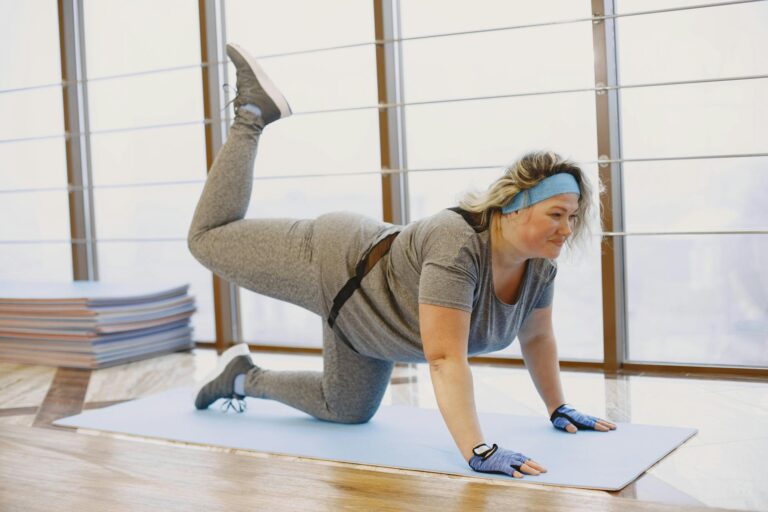
The nine exercises most commonly used in physical therapy to strengthen the core and lower back are the pelvic tilt, bird-dog, dead bug, bridge, partial curl-up, cat-cow, side plank (or modified side plank), clamshell, and prone back extension. These movements form the backbone of rehabilitation programs because they target the deep stabilizing muscles — the transverse abdominis, multifidus, erector spinae, and gluteal group — without placing excessive load on the spine. For someone recovering from a lumbar disc issue or dealing with the postural decline that often accompanies aging and cognitive conditions like dementia, these exercises can mean the difference between independent mobility and a dangerous fall. A physical therapist might start a 72-year-old patient recovering from a compression fracture on simple pelvic tilts and bridges before progressing to bird-dogs over the course of several weeks, adjusting difficulty based on pain response and stability.
This matters particularly in the context of brain health and dementia care. Research has consistently shown that physical activity — especially exercises that improve balance and postural control — can reduce fall risk in older adults with cognitive impairment, a population that already falls at roughly twice the rate of cognitively healthy peers. Core and lower back strength are not vanity metrics; they are functional necessities that determine whether a person can rise from a chair, walk to the bathroom at night, or catch themselves when they stumble. This article walks through each of the nine exercises, explains why physical therapists choose them, discusses modifications for older adults and those with cognitive challenges, and addresses common mistakes that can undermine the benefits or cause injury. Beyond the exercise descriptions themselves, we will cover how these movements connect to fall prevention in dementia care, what to watch for when exercising with a caregiver’s assistance, and when core strengthening may not be appropriate without medical clearance.
Table of Contents
- Why Are These 9 Core and Lower Back Exercises the Standard in Physical Therapy?
- Breaking Down the First Five Exercises — Pelvic Tilt Through Partial Curl-Up
- The Remaining Four Exercises — Cat-Cow Through Prone Back Extension
- How to Modify Core Exercises for Older Adults With Cognitive Decline
- Common Mistakes and When Core Strengthening May Not Be Appropriate
- The Connection Between Core Strength and Cognitive Health
- Building a Sustainable Routine — What Comes After the Initial Program
- Conclusion
- Frequently Asked Questions
Why Are These 9 Core and Lower Back Exercises the Standard in Physical Therapy?
Physical therapists do not choose exercises arbitrarily. The nine movements listed above have earned their place in clinical practice because they meet specific criteria: they can be scaled from very easy to moderably challenging, they activate the muscles most responsible for spinal stability, and they carry a low risk of injury when performed correctly. The pelvic tilt, for example, is often the first exercise prescribed after a back injury because it teaches a patient to engage the deep abdominal muscles while lying flat — a position that removes gravity from the equation. The bird-dog, by contrast, demands coordination between opposite-side limbs and challenges balance, making it a progression exercise for patients who have mastered the basics. What sets these exercises apart from general fitness movements like sit-ups or heavy deadlifts is their emphasis on motor control rather than brute strength. A traditional sit-up generates significant compressive force on the lumbar discs — something spine researcher Dr.
Stuart McGill has cautioned against for decades. The partial curl-up, one of the nine exercises on this list, achieves abdominal activation while keeping the lower back in a neutral position. Similarly, the cat-cow mobilizes the spine through flexion and extension in a controlled, rhythmic pattern that physical therapists use to reduce stiffness without provoking pain. For older adults, particularly those with osteoporosis or degenerative disc disease, this distinction between controlled stabilization and aggressive loading is not academic — it is the difference between rehabilitation and reinjury. It is also worth noting that these exercises are not a one-size-fits-all prescription. A physical therapist evaluates each patient’s movement patterns, pain presentation, and functional goals before selecting which of these nine to use and in what order. Someone with spinal stenosis, for instance, may tolerate the bridge and clamshell but find prone back extensions painful, while a patient with sacroiliac joint dysfunction might benefit most from the dead bug and side plank variations.
Breaking Down the First Five Exercises — Pelvic Tilt Through Partial Curl-Up
The pelvic tilt is deceptively simple: lying on your back with knees bent, you flatten your lower back into the floor by gently contracting your abdominal muscles. There is no visible movement to speak of. But this exercise teaches the foundational skill of engaging the transverse abdominis, the deepest layer of abdominal muscle that wraps around the torso like a corset. For patients who have lost proprioceptive awareness of their core — common after prolonged bed rest or in the later stages of neurodegenerative conditions — the pelvic tilt is the starting line. The bird-dog begins on hands and knees and involves extending one arm forward while extending the opposite leg behind you, holding briefly, and returning to start. It challenges anti-rotation stability, meaning the core must work to prevent the torso from twisting. The dead bug is its supine counterpart: lying face-up, you extend opposite arm and leg away from center while keeping the lower back pressed into the floor.
Both exercises are excellent for training coordination, which makes them particularly relevant for individuals in early to mid-stage dementia who may be experiencing declining motor planning ability. The bridge — lifting the hips off the floor while lying on your back — targets the gluteus maximus and erector spinae, muscles that are critical for standing up from a seated position. The partial curl-up, a controlled lift of the head and shoulders with the hands supporting the neck, strengthens the rectus abdominis and obliques without the spinal flexion extremes of a full sit-up. However, if a patient has significant kyphosis — the rounded upper back posture common in older adults — the partial curl-up may need modification or may be skipped entirely, as it can reinforce forward flexion. Similarly, the bird-dog requires enough wrist strength and shoulder stability to support body weight on all fours, which is not always present in frail elderly patients. A qualified therapist will substitute or modify accordingly. Attempting these exercises without professional guidance, particularly for someone with osteoporosis, can lead to vertebral fractures if form is compromised.
The Remaining Four Exercises — Cat-Cow Through Prone Back Extension
The cat-cow is a rhythmic spinal mobility exercise performed on hands and knees. You alternate between arching the back (cow) and rounding it (cat), moving slowly with the breath. Physical therapists value this exercise not only for its spinal mobilization effect but also because it serves as a low-stakes way to assess a patient’s body awareness and movement fluency. In dementia care settings, the cat-cow has been used effectively because its rhythmic, repetitive nature can be easier for cognitively impaired individuals to follow than exercises requiring complex sequencing. A caregiver or therapist can demonstrate alongside the patient, using verbal cues like “let your belly drop” and “push your back up like an angry cat” — concrete imagery tends to work better than anatomical instructions. The side plank, even in its modified form with knees bent and forearm on the ground, is one of the most effective exercises for the quadratus lumborum and obliques — muscles that stabilize the spine during side-to-side movements like reaching or turning. For older adults, the modified version held for 10 to 15 seconds may be more than sufficient.
The clamshell, performed lying on one side with knees bent and opening the top knee like a clamshell while keeping feet together, targets the gluteus medius. This muscle is a major player in pelvic stability during walking. Weakness in the gluteus medius is one of the most common findings in older adults who exhibit a Trendelenburg gait — the characteristic hip-drop pattern that precedes many falls. The prone back extension rounds out the list. Lying face down, the patient gently lifts the chest off the floor using the erector spinae muscles. This is one of the few exercises in the group that works the back extensors directly in a shortened position. For patients who spend most of their day seated or in a wheelchair, the prone extension counteracts the flexed posture that can lead to chronic lower back pain and breathing restriction. However, this exercise requires the ability to lie prone comfortably, which is not possible for everyone — patients with breathing difficulties, significant abdominal girth, or certain cardiac conditions may need an alternative such as a seated back extension against resistance.

How to Modify Core Exercises for Older Adults With Cognitive Decline
The challenge with prescribing core exercises to individuals experiencing dementia or other forms of cognitive decline is not primarily physical — it is communicative. A person in the moderate stages of Alzheimer’s disease may have adequate muscle strength to perform a bridge or pelvic tilt but may struggle to understand multi-step instructions, remember the sequence of a bird-dog, or maintain attention through a set of repetitions. Physical therapists who specialize in geriatric or neurological rehabilitation often rely on hand-over-hand guidance, mirror-based cueing (performing the exercise alongside the patient), and breaking each exercise into a single repeated motion rather than a sequence. The tradeoff with simplification is that some exercises lose their training effect when modified too aggressively. A bird-dog reduced to just lifting one arm while staying on all fours is significantly less demanding on the core than the full opposite-arm-opposite-leg version. But it may be the only version a patient can perform safely and consistently, and consistency matters more than intensity in this population.
Three months of daily modified exercises done correctly will produce better outcomes than a single session of advanced exercises done with poor form. Conversely, under-challenging a patient who is physically capable but assumed to be fragile due to their diagnosis can accelerate deconditioning. The clinical judgment of a physical therapist — ideally one experienced with dementia — is essential for finding the right level. Equipment modifications can also help. Using a firm pillow under the knees during supine exercises, performing standing versions of the bird-dog while holding onto a kitchen counter, or using a therapy ball against a wall for supported squats are all strategies that maintain the core-strengthening intent while accommodating balance concerns and joint limitations. Resistance bands can add challenge for patients who are ready to progress but for whom bodyweight movements have become too easy.
Common Mistakes and When Core Strengthening May Not Be Appropriate
The most frequent error in core exercise programs — whether supervised or unsupervised — is substituting movement for control. During a bridge, for instance, a patient may thrust the hips upward using momentum rather than engaging the glutes and holding the position. During the dead bug, allowing the lower back to arch off the floor defeats the purpose of the exercise and can actually strain the very structures it is meant to protect. Physical therapists watch for these compensatory patterns and correct them in real time, which is why a home exercise program should ideally be established under supervision before a patient works independently. There are also situations where core strengthening is not appropriate without medical clearance or modification.
Acute disc herniations, unstable spinal fractures, active inflammatory conditions of the spine (such as ankylosing spondylitis during a flare), and recent abdominal surgery are all contraindications for some or all of these exercises. In the dementia care context, a patient experiencing agitation, significant pain, or a sudden decline in functional status should be evaluated before continuing an exercise program. Pushing through resistance in a patient who cannot articulate their pain level is a real risk — caregivers should watch for nonverbal pain indicators like grimacing, guarding, refusing to lie down, or increased restlessness after exercise sessions. Another limitation worth acknowledging is that core exercises alone will not prevent falls. Balance training, lower extremity strengthening, gait training, environmental modifications (removing trip hazards, improving lighting), and medication review all play critical roles in a comprehensive fall prevention strategy. Core strengthening is one piece of a larger puzzle, and presenting it as a standalone solution overpromises and underdelivers.

The Connection Between Core Strength and Cognitive Health
Emerging research has explored whether exercise — including core and lower back strengthening — can influence cognitive outcomes in people with dementia. While no exercise program has been shown to reverse cognitive decline, several studies have reported that structured physical activity programs can slow the rate of functional decline in activities of daily living, improve mood and reduce behavioral symptoms, and modestly preserve cognitive function over periods of six months to a year. The mechanism likely involves improved cerebral blood flow, reduced inflammation, and the neuroprotective effects of exercise-induced brain-derived neurotrophic factor (BDNF).
A practical example: a memory care facility that implemented a daily 20-minute group exercise program including seated versions of several exercises on this list reported fewer fall-related injuries and a measurable improvement in residents’ ability to perform transfers (moving from bed to wheelchair, for instance) over a six-month period. The exercises themselves were simple — seated marches, seated pelvic tilts, supported standing calf raises — but the consistency and social element of the group format contributed to adherence. This is not a clinical trial result but rather the kind of real-world outcome that reinforces why physical therapy principles belong in dementia care planning.
Building a Sustainable Routine — What Comes After the Initial Program
The goal of any physical therapy-based core strengthening program is to transition the patient from supervised rehabilitation to an independent or caregiver-assisted maintenance routine. For cognitively healthy older adults, this might mean performing a 15-minute circuit of four or five of these exercises three times per week, progressing in hold times, repetitions, or difficulty as strength improves. For individuals with dementia, the “graduation” model may not apply — the program may need to remain supervised indefinitely, with the therapist periodically reassessing and adjusting.
Looking ahead, there is growing interest in technology-assisted exercise programs for older adults, including sensor-based feedback systems that can detect when form is breaking down and tablet-based visual guides that walk patients through exercises step by step. These tools are not yet widely deployed in dementia care settings, but they represent a promising direction for maintaining exercise quality when therapist visits are limited. In the meantime, the fundamentals remain unchanged: a small number of well-chosen exercises, performed consistently with good form, supervised by someone who understands both the physical and cognitive dimensions of the patient’s condition. That is the formula that works.
Conclusion
The nine exercises covered here — pelvic tilt, bird-dog, dead bug, bridge, partial curl-up, cat-cow, side plank, clamshell, and prone back extension — represent the core toolkit that physical therapists draw from when addressing lower back weakness and spinal instability. They are not glamorous, and none of them will appear in a viral workout video. But they are backed by decades of clinical use and a strong evidence base supporting their safety and effectiveness, particularly in populations that cannot afford the risk of injury that comes with more aggressive training approaches.
For caregivers and family members supporting someone with dementia, understanding these exercises is valuable not because you should prescribe them yourself, but because you should know what good physical therapy looks like when you see it. Ask your loved one’s therapist which of these exercises are in their program and why. Learn the modifications so you can assist between sessions. And recognize that maintaining core strength is not about fitness in the conventional sense — it is about preserving the physical foundation that allows a person to remain mobile, safe, and as independent as their condition permits.
Frequently Asked Questions
How often should these core exercises be performed?
Most physical therapists recommend three to five sessions per week, with each session lasting 15 to 30 minutes. Daily light sessions may be appropriate for some older adults, particularly if the exercises are at a low intensity. Rest days are important if any soreness develops, and the program should be adjusted if pain persists beyond normal muscle fatigue.
Can someone with moderate to advanced dementia still do these exercises?
In many cases, yes, with appropriate modification and hands-on guidance. The exercises may need to be simplified — for example, performing only the leg lift portion of a bird-dog while standing and holding a counter. The key is working with a physical therapist experienced in dementia care who can assess what the individual is capable of and tailor the program accordingly.
Are these exercises safe for someone with osteoporosis?
Several of these exercises are considered safe for individuals with osteoporosis, but some — particularly the partial curl-up and any movement involving significant spinal flexion — may need to be avoided or modified. A bone density scan and physician clearance should precede any exercise program for someone with known osteoporosis.
What equipment is needed?
Most of these exercises require nothing more than a firm, flat surface and a mat for comfort. A folded towel can substitute for a mat. As patients progress, a physical therapist may introduce resistance bands, a small stability ball, or ankle weights, but the bodyweight versions are fully effective for building foundational strength.
How long before results are noticeable?
Improvements in stability and ease of movement are often reported within four to six weeks of consistent practice. Measurable strength gains, as assessed by a physical therapist, typically appear within six to twelve weeks. However, for older adults or those with significant deconditioning, the timeline may be longer, and the focus should be on consistency rather than speed of progress.