Herniated disc pain stems from six well-documented causes: age-related disc degeneration, sudden injury or trauma, repetitive strain from physically demanding work, smoking, excess body weight, and genetic predisposition. Understanding which of these factors applies to your situation matters because the cause often shapes the most effective path to relief — and in many cases, that relief comes without surgery. Research published in StatPearls shows that 60 to 90 percent of symptomatic herniated discs resolve on their own with conservative treatment. Consider a 45-year-old warehouse worker who has spent two decades lifting heavy boxes. One morning, a slight twisting motion while picking up a carton sends shooting pain down his leg. His disc did not fail because of that single moment — years of repetitive strain, combined with the natural water loss that discs undergo after age 30, set the stage long before that final twist.
His story is not unusual. Herniated discs are most common in adults between 30 and 50, affect men more frequently than women, and carry a lifetime risk of roughly 30 percent for lumbar herniation, according to a 2024 study in the European Spine Journal. This article examines each of the six causes in detail, explains why some people are more vulnerable than others, and offers practical guidance on which risk factors you can actually control. For readers on a dementia care and brain health site, the connection may not be immediately obvious, but chronic pain conditions like herniated discs have real consequences for cognitive health. Persistent pain disrupts sleep, limits physical activity, and increases reliance on medications — all of which can accelerate cognitive decline in older adults. Understanding spinal health is part of understanding whole-body wellness.
Table of Contents
- What Causes Most Herniated Disc Pain, and Why Does Age Matter So Much?
- How Sudden Injuries and Trauma Lead to Disc Herniation
- Repetitive Strain and the Occupational Toll on Spinal Discs
- Smoking and Body Weight — The Two Modifiable Risk Factors You Can Control
- Genetic Predisposition — When Your DNA Stacks the Deck
- Why Herniated Discs Matter for Brain Health and Cognitive Function
- Outlook — Most Herniated Discs Resolve, but Prevention Beats Treatment
- Conclusion
- Frequently Asked Questions
What Causes Most Herniated Disc Pain, and Why Does Age Matter So Much?
The single most common cause of herniated disc pain is age-related disc degeneration, sometimes called degenerative disc disease. Spinal discs act as cushions between vertebrae, and they depend on water content to stay flexible and absorb shock. Starting in your late 20s, discs gradually lose hydration and elasticity. By the time you reach your 40s, the outer ring of the disc — the annulus fibrosus — has become brittle enough that even a minor strain or awkward twist can cause the soft inner material, the nucleus pulposus, to push through a tear. The Mayo Clinic identifies this wear-and-tear process as the primary driver behind most herniations. What makes age-related degeneration particularly frustrating is that it often produces no warning signs until something gives way. A person might bend down to tie a shoe and feel sudden, searing pain.
The disc was already compromised — the bending motion was just the final straw. This is different from an acute sports injury, where you can often point to a single dramatic event. With degeneration, the damage accumulates invisibly over years. Peak incidence falls in the 30 to 50 age group, according to both the American Association of Neurological Surgeons and StatPearls, which means many people experience their first herniation during their most productive working years. One important comparison: not all disc degeneration leads to herniation, and not all herniation causes pain. Imaging studies have found herniated discs in people who report zero symptoms. Pain occurs specifically when the displaced disc material compresses or irritates a nearby spinal nerve. So degeneration is a necessary precondition in most cases, but nerve involvement is what turns a structural problem into a pain problem.
How Sudden Injuries and Trauma Lead to Disc Herniation
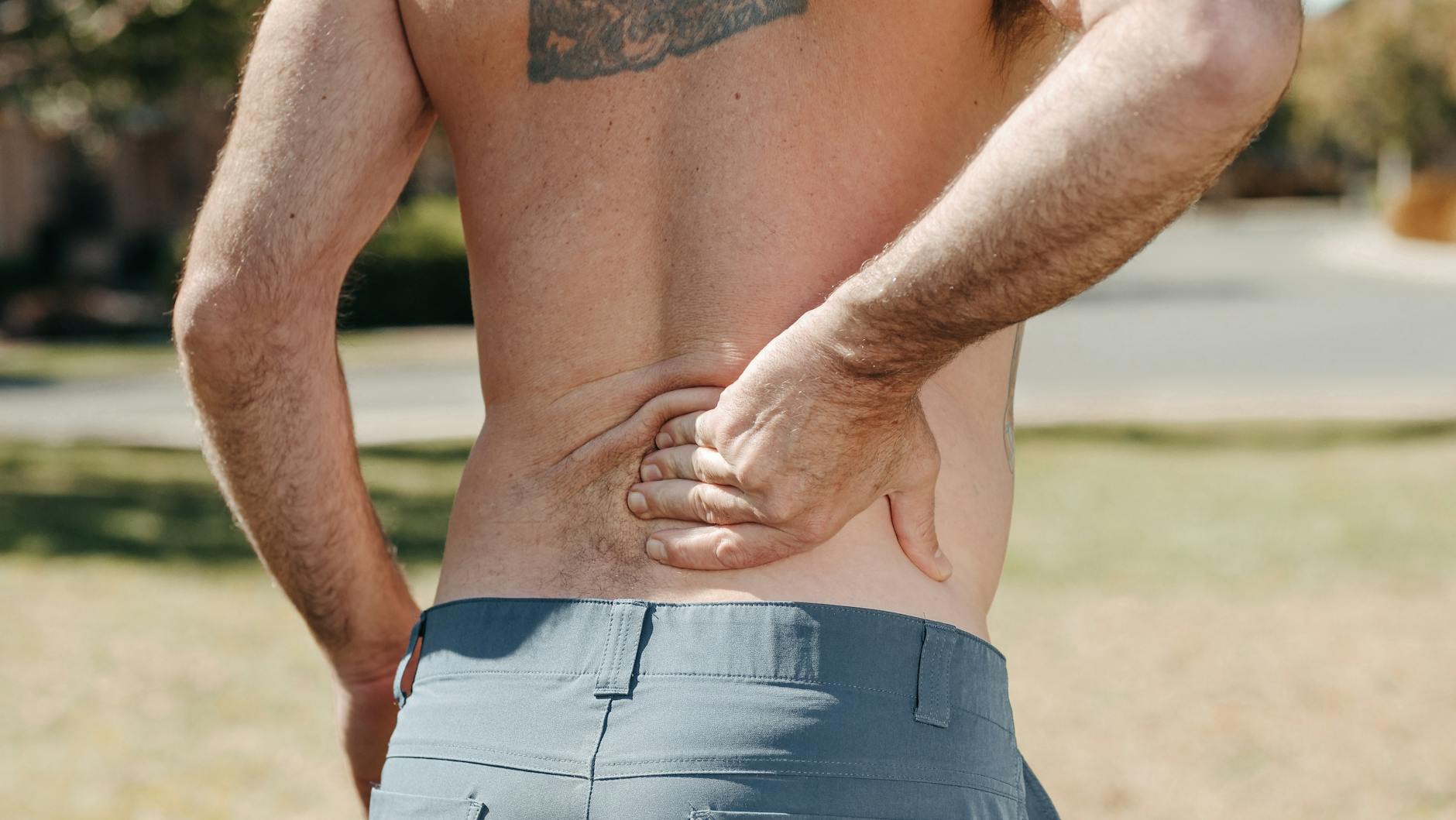
A single forceful event — a car accident, a hard fall on ice, a direct blow to the spine during contact sports — can rupture a disc that was otherwise healthy. In traumatic herniation, the force is severe enough to push the nucleus pulposus through the annulus fibrosus in one sudden motion, rather than through the slow breakdown seen in degenerative cases. The American Association of Neurological Surgeons notes that traumatic disc injuries can happen at any age, including in younger adults whose discs have not yet begun to degenerate. However, it is worth noting that purely traumatic herniations in otherwise healthy discs are less common than most people assume. In many cases, what feels like a sudden injury is actually the final event in a long degenerative process.
If you are 40 years old and herniate a disc while moving furniture, the trauma played a role, but the disc was likely already weakened by years of gradual water loss. This distinction matters medically because treatment and prognosis differ. A younger patient with a truly traumatic herniation and an otherwise healthy spine may recover more quickly and more completely than an older patient whose herniation sits atop widespread degeneration. If you experience sudden back pain after a fall or accident, particularly pain that radiates down a leg or causes numbness, weakness, or changes in bladder or bowel control, seek medical attention promptly. These symptoms suggest nerve compression that may require more than rest and anti-inflammatory medication.
Repetitive Strain and the Occupational Toll on Spinal Discs
Physically demanding jobs are one of the most well-established risk factors for herniated discs. Repeated lifting, pulling, pushing, bending sideways, and twisting place cumulative stress on the lumbar spine that accelerates disc breakdown far beyond what normal aging alone would produce. The Cleveland Clinic, the American Academy of Orthopaedic Surgeons, and research published in the European Spine Journal all identify occupational strain as a significant contributor. Consider two 50-year-olds: one has spent a career at a desk, the other has worked in construction. Both have experienced the same amount of age-related disc dehydration, but the construction worker’s discs have absorbed thousands of additional loading cycles.
Each individual lift may have been well within safe limits, but the sheer volume of repetition takes a toll that compounds over decades. Weight-bearing sports — weightlifting, hammer throw, and similar activities — carry a comparable risk, not because the athletes are doing anything wrong, but because the forces involved push discs closer to their mechanical limits. A specific example makes this concrete. Nurses, who routinely lift and reposition patients, have some of the highest rates of occupational back injury in any profession. A 2024 European Spine Journal analysis found that the combination of awkward postures, heavy loads, and shift-length fatigue creates conditions where disc herniation is almost an occupational hazard rather than bad luck. For anyone in a physically demanding role, proper lifting technique and workplace ergonomic interventions are not optional extras — they are essential protective measures.

Smoking and Body Weight — The Two Modifiable Risk Factors You Can Control
Among the six causes of herniated disc pain, smoking and excess body weight stand out because they are modifiable. You cannot reverse your age, rewrite your genetics, or always avoid injury, but you can stop smoking and manage your weight. Of the two, smoking is identified in the medical literature as the number one modifiable risk factor for disc herniation. Research compiled in StatPearls explains that smoking decreases the oxygen supply to spinal discs, starving them of nutrients and causing them to break down faster than they otherwise would. The numbers are striking. A 2025 meta-analysis published in SAGE Journals, drawing on data from over one million patients, found that smokers have an odds ratio of 1.39 for disc herniation compared to nonsmokers.
Even more concerning, the odds ratio for recurrent herniation — meaning a second herniation after initial treatment — jumps to 1.99 for smokers. In practical terms, a smoker who undergoes disc surgery is roughly twice as likely to need a second operation. For anyone weighing whether smoking cessation is worth the effort, spinal health offers one more compelling reason. Excess body weight works through a different mechanism but with a similar result. Extra pounds place additional mechanical load on the lumbar discs, particularly during bending, lifting, and even just standing. Research from PMC and the National Center for Biotechnology Information indicates that obese individuals face a 25 percent greater risk of lumbar disc degeneration compared to those at a normal weight. The tradeoff here is straightforward: weight loss reduces mechanical stress on the spine, but it requires sustained effort, and crash dieting or extreme exercise programs can themselves trigger disc problems if not approached carefully.
Genetic Predisposition — When Your DNA Stacks the Deck
Not all herniated disc cases can be explained by lifestyle or occupation. Some people inherit structural weaknesses in the composition of their spinal discs that make herniation more likely regardless of how carefully they live. The Mayo Clinic, the American Association of Neurological Surgeons, and studies in the European Spine Journal all acknowledge a hereditary component to disc disease. Genetic predisposition shows up in clinical practice as the patient who does everything right — maintains a healthy weight, does not smoke, works a desk job, exercises moderately — and still herniates a disc in their 30s.
Their disc collagen or proteoglycan composition may be subtly different from someone else’s, making the annulus fibrosus less resilient to normal mechanical stress. Family history of disc problems is a meaningful risk indicator, even if no single gene has been identified as the definitive cause. The limitation here is important to acknowledge: knowing you have a genetic predisposition does not mean herniation is inevitable, and it does not mean prevention efforts are pointless. It means you may need to be more vigilant about the factors you can control — weight, smoking, lifting technique, core strength — because your margin for error is narrower. Think of it as a lower threshold rather than a guaranteed outcome.
Why Herniated Discs Matter for Brain Health and Cognitive Function
Chronic spinal pain and brain health are more connected than most people realize. When a herniated disc causes persistent pain that lasts weeks or months, the downstream effects ripple into sleep quality, physical activity levels, mood, and medication use — all of which influence cognitive function. An older adult who cannot walk comfortably because of sciatica from a lumbar herniation loses one of the most protective activities against cognitive decline: regular aerobic exercise.
Pain-related sleep disruption is another pathway. Poor sleep is one of the strongest modifiable risk factors for dementia, and chronic back pain is one of the most common reasons older adults report fragmented or insufficient sleep. Additionally, opioid medications sometimes prescribed for severe disc pain carry their own cognitive risks, particularly in older populations. Managing spinal health is, in a real sense, managing brain health.
Outlook — Most Herniated Discs Resolve, but Prevention Beats Treatment
The most reassuring statistic in herniated disc research is also the most underappreciated: 60 to 90 percent of symptomatic herniations resolve without surgery. The body can reabsorb displaced disc material over time, and inflammation around compressed nerves often subsides with conservative care — physical therapy, anti-inflammatory medications, activity modification, and time. For the subset of patients who do require surgery, outcomes are generally good, but recurrence remains a real concern.
The pooled reoperation rate after disc surgery is 8.5 percent, according to a 2025 SAGE Journals systematic review, rising from 4 percent within the first year to 11.1 percent at one to five years. Key recurrence risk factors include smoking (odds ratio 1.99), disc protrusion type (odds ratio 1.79), diabetes (odds ratio 1.19), and large annular defect size (odds ratio 2.19). These numbers underscore why addressing modifiable risk factors before and after any procedure is not optional — it directly affects whether the problem comes back.
Conclusion
The six causes of herniated disc pain — age-related degeneration, sudden trauma, repetitive strain, smoking, excess body weight, and genetics — rarely act in isolation. Most herniations result from a combination of factors: a genetically predisposed disc, weakened by decades of aging and occupational stress, finally gives way during a seemingly routine movement. Understanding this interplay helps explain why the condition is so common (a 30 percent lifetime risk for lumbar herniation) and why it disproportionately affects people in their 30s through 50s who are balancing physically demanding lives with bodies that have already begun the slow process of disc degeneration. The practical takeaway is to focus on what you can change. Stop smoking — the data on recurrence risk alone makes this urgent for anyone with a history of disc problems.
Maintain a healthy weight to reduce mechanical load on the lumbar spine. Use proper lifting mechanics at work and during exercise. Strengthen your core muscles, which act as a natural brace for the spine. And if you are caring for someone with dementia or cognitive decline, recognize that unmanaged back pain may be quietly undermining their mobility, sleep, and overall cognitive trajectory. Addressing spinal health is not separate from brain health — it is part of the same picture.
Frequently Asked Questions
Can a herniated disc heal on its own without surgery?
Yes. Research from StatPearls indicates that 60 to 90 percent of symptomatic herniated discs resolve with conservative treatment, including physical therapy, anti-inflammatory medication, and time. Surgery is typically reserved for cases involving severe or progressive neurological deficits.
At what age are herniated discs most common?
Herniated discs are most frequently diagnosed in adults between 30 and 50 years old. This is when discs have lost enough water content to become vulnerable but people are still active enough to generate the forces that trigger herniation.
Does smoking really affect herniated disc risk?
Significantly. Smokers have a 1.39 times higher risk of disc herniation and a 1.99 times higher risk of recurrent herniation compared to nonsmokers, according to a 2025 meta-analysis of over one million patients published in SAGE Journals. Smoking reduces oxygen supply to the discs, accelerating their breakdown.
How does body weight contribute to herniated disc pain?
Excess weight increases the mechanical load on lumbar discs, particularly during bending and lifting. Research shows that obese individuals have a 25 percent greater risk of lumbar disc degeneration compared to those at a normal weight.
Are herniated discs hereditary?
Genetics do play a role. Some people inherit structural differences in disc composition that make them more susceptible to herniation, independent of lifestyle factors. A family history of disc problems is a relevant risk factor, though it does not guarantee you will develop one.
What is the reoperation rate after herniated disc surgery?
The pooled reoperation rate is approximately 8.5 percent overall, rising from 4 percent within the first year to 11.1 percent at one to five years post-surgery. Smoking, diabetes, and the type and size of the disc defect all influence recurrence risk.