A new injectable drug called rezpegaldesleukin has shown the ability to regrow hair in patients with severe-to-very-severe alopecia areata within months, offering a fundamentally different approach than anything currently on the market. In the Phase 2b REZOLVE-AA trial, whose topline results were announced on December 16, 2025, patients who self-injected the drug twice monthly saw mean hair loss scores improve by roughly 28 to 30 percent over 36 weeks — more than doubling the effect seen with placebo. Nearly half of patients on the higher dose achieved at least 30 percent hair regrowth from baseline, with most seeing visible results beginning around week 16 or later, including regrowth of eyebrows and eyelashes.
For the millions of people living with severe alopecia areata — an autoimmune condition in which the body’s own immune system attacks hair follicles — this development is significant because rezpegaldesleukin works through an entirely different mechanism than the three oral treatments already approved by the FDA. Rather than blocking JAK enzymes, it stimulates the body’s regulatory T-cells, which are the immune cells responsible for keeping autoimmune attacks in check. The FDA granted it Fast Track designation in July 2025, and Nektar Therapeutics plans to begin Phase 3 trials in 2026. This article covers what makes this injectable different from existing pills like Leqselvi, Litfulo, and Olumiant, what the clinical trial data actually showed (including the caveats), who might benefit from this new approach, and how the current treatment landscape for severe alopecia areata is evolving.
Table of Contents
- How Does the New Injectable for Severe Alopecia Areata Regrow Hair in Months?
- What the Phase 2b Trial Data Revealed — and Where It Fell Short
- How Rezpegaldesleukin Compares to Approved Alopecia Areata Treatments
- Who Might Be a Candidate for This New Injectable Treatment
- Limitations, Risks, and Unknowns That Patients Should Understand
- The Connection Between Autoimmune Conditions and Hair Loss
- What Comes Next for Alopecia Areata Treatment in 2026 and Beyond
- Conclusion
- Frequently Asked Questions
How Does the New Injectable for Severe Alopecia Areata Regrow Hair in Months?
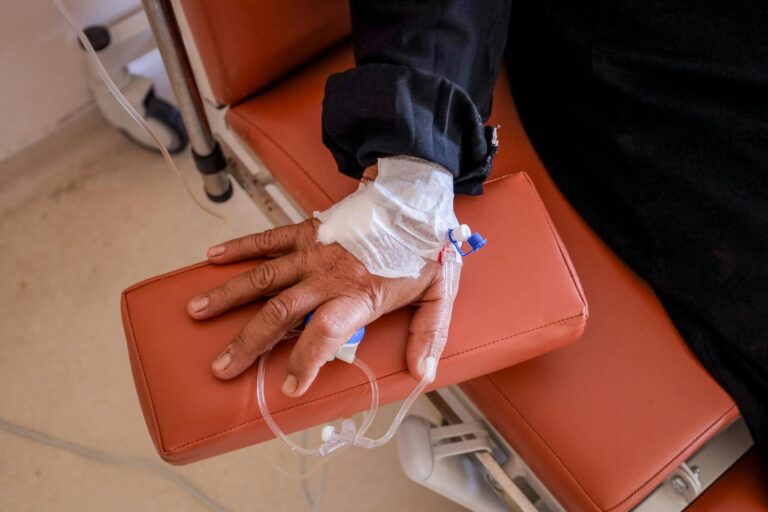
Rezpegaldesleukin is a first-in-class IL-2 pathway agonist, which means it activates a specific part of the immune system rather than suppressing it broadly. In alopecia areata, the immune system mistakenly treats hair follicles as threats and sends T-cells to attack them. What this drug does is stimulate the proliferation of regulatory T-cells — often called Tregs — which function as the immune system’s peacekeepers. By boosting Treg numbers and activity, the drug helps restore immune tolerance so the body stops destroying its own hair follicles. The practical application is straightforward for patients: it is a subcutaneous injection, self-administered at home twice per month.
That is a markedly different experience from taking a daily oral pill, which all three currently approved treatments require. In the REZOLVE-AA trial, 92 patients with severe-to-very-severe alopecia areata were enrolled and treated over 36 weeks. Patients receiving the 24 µg/kg dose saw a mean SALT score reduction of 28.2 percent, and those on the 18 µg/kg dose saw a 30.3 percent reduction, compared to just 11.2 percent for placebo. The majority of hair regrowth emerged at week 16 or later, which suggests the immune rebalancing takes time to translate into visible follicle recovery. What makes this mechanism noteworthy from a broader medical perspective is that regulatory T-cell dysfunction is implicated in numerous autoimmune conditions, not just alopecia areata. If rezpegaldesleukin proves successful in Phase 3 trials, its underlying approach — training the immune system to stand down rather than simply blocking its signals — could reshape how clinicians think about treating autoimmune hair loss and potentially other autoimmune diseases.
What the Phase 2b Trial Data Revealed — and Where It Fell Short
The headline numbers from the REZOLVE-AA trial are genuinely encouraging, but the full picture requires context. Among patients in the 24 µg/kg group, 48.9 percent achieved at least 30 percent SALT score reduction from baseline. In the 18 µg/kg group, that figure was 45.7 percent. Compare that to 19.1 percent of patients on placebo who hit the same threshold. These are meaningful differences that suggest the drug is doing real work beyond any placebo effect. However, there is a significant caveat that deserves honest discussion: the primary endpoint of the trial narrowly missed statistical significance in the modified intent-to-treat population.
In clinical research, this matters. A trial’s primary endpoint is what regulators look at first, and narrowly missing significance raises questions about whether the drug will clear the bar in a larger Phase 3 study. Nektar Therapeutics has pointed out that when four patients with major eligibility violations were excluded from the analysis, the placebo response rate dropped to just 5.7 percent, and both dose arms achieved statistically significant p-values. This kind of post-hoc analysis is standard practice, but it does not carry the same evidentiary weight as hitting the primary endpoint cleanly. What this means for patients watching this drug’s progress: the data is genuinely promising but not yet conclusive. Phase 3 trials, which Nektar plans to launch in 2026, will need to confirm these results in a larger patient population with a more definitive statistical outcome. Extension study data expected in early Q2 2026 should also provide clarity on whether the hair regrowth is durable or requires ongoing treatment.
How Rezpegaldesleukin Compares to Approved Alopecia Areata Treatments
The current FDA-approved landscape for severe alopecia areata consists of three oral medications, all of which are JAK inhibitors. Baricitinib, marketed as Olumiant, was the first to gain approval in June 2022 and represented a landmark moment for patients who previously had no systemic treatment options. Ritlecitinib, sold as Litfulo, followed in June 2023 and is the only FDA-approved once-daily pill available to patients as young as 12. Most recently, deuruxolitinib, branded as Leqselvi, was approved on July 26, 2024, and has shown strong efficacy — roughly 33 percent of patients achieved at least 80 percent scalp hair coverage at 24 weeks, with up to 25 percent achieving 90 percent coverage or more. To put rezpegaldesleukin’s results in perspective against these approved options, consider that Litfulo’s pivotal trial showed 23 percent of patients achieving at least 80 percent scalp hair coverage at 24 weeks compared to 1.6 percent on placebo.
Leqselvi’s results were stronger, with about a third of patients reaching that 80 percent coverage mark. The REZOLVE-AA trial measured outcomes differently — using SALT score percentage reduction rather than an absolute coverage threshold — which makes direct head-to-head comparisons difficult. What can be said is that the injectable’s mechanism is fundamentally distinct, and for patients who cannot tolerate JAK inhibitors or who have not responded to them, a Treg-boosting approach represents a genuinely new option rather than a variation on the same theme. One practical consideration patients should weigh: JAK inhibitors like Leqselvi and Litfulo carry side effect profiles that include headache, acne, and nasopharyngitis, along with the broader immunosuppressive risks that come with blocking JAK pathways. Rezpegaldesleukin’s safety profile in the Phase 2b trial was described as well tolerated and consistent with previously reported results, though the full safety picture will become clearer with the larger Phase 3 data set.

Who Might Be a Candidate for This New Injectable Treatment
The REZOLVE-AA trial specifically enrolled patients with severe-to-very-severe alopecia areata, meaning individuals who had lost a substantial proportion of their scalp hair. The FDA’s Fast Track designation, granted in July 2025, covers adults and pediatric patients aged 12 and older who weigh at least 40 kg — about 88 pounds. This age range mirrors the eligibility for Litfulo, the only other treatment available for adolescents, and signals that Nektar is targeting both adult and younger patients from the outset. For someone currently managing severe alopecia areata, the decision about whether to wait for this injectable or pursue one of the three approved oral options involves real tradeoffs. The approved JAK inhibitors are available now, have established efficacy data from large Phase 3 trials, and can be prescribed today by a dermatologist.
Rezpegaldesleukin is not yet approved, and even under an optimistic timeline, it will likely take until 2027 or later to complete Phase 3 trials and navigate the FDA approval process. Patients with rapidly progressing hair loss may not have the luxury of waiting for a treatment that is still years from the pharmacy shelf. On the other hand, patients who have tried a JAK inhibitor without adequate response — or who experienced side effects that made continued use impractical — have reason to watch this injectable closely. Because it operates through an entirely different biological pathway, there is no mechanistic reason to expect cross-resistance. A patient who did not respond to JAK inhibition might still respond to Treg stimulation, though this has not been proven in any clinical trial to date.
Limitations, Risks, and Unknowns That Patients Should Understand
The most significant unknown surrounding rezpegaldesleukin is durability. The REZOLVE-AA trial measured outcomes at 36 weeks, but alopecia areata is a chronic condition that tends to relapse. Whether the hair regrowth seen in the trial persists after treatment is stopped — or whether patients need indefinite twice-monthly injections — remains an open question. The extension study data expected in early Q2 2026 may begin to answer this, but definitive long-term data will take years to accumulate. Another limitation worth noting is the response rate itself. While nearly half of patients on the higher dose achieved at least 30 percent SALT reduction, that also means roughly half did not reach even that threshold.
A 30 percent reduction in hair loss is meaningful but may not constitute the level of cosmetic recovery that many patients are hoping for. By comparison, Leqselvi’s trials measured patients who achieved 80 or 90 percent scalp coverage — a much higher bar — and about a third of patients cleared it. These are different measurements on different scales, but patients should be cautious about equating the two sets of numbers. There is also the question of how this drug will fit into clinical practice if approved. Self-injected subcutaneous medications require patient education, cold chain storage, and a comfort level with needles that not everyone shares. For patients already managing other chronic conditions with injectable medications — such as biologic therapies for psoriasis or rheumatoid arthritis — this may be a familiar routine. For others, the convenience of a daily pill may ultimately win out, even if the injectable’s mechanism is theoretically more appealing.

The Connection Between Autoimmune Conditions and Hair Loss
Alopecia areata does not exist in isolation. It frequently co-occurs with other autoimmune conditions, including thyroid disease, vitiligo, and — relevant to this publication’s focus — conditions that share immune dysregulation pathways with neurological diseases. The regulatory T-cell dysfunction that rezpegaldesleukin targets in alopecia areata has also been studied in the context of neuroinflammatory conditions, including multiple sclerosis and, increasingly, Alzheimer’s disease research where immune system dysfunction plays a recognized role.
For caregivers and families navigating dementia or cognitive decline, a loved one’s experience with alopecia areata may seem like a secondary concern. But hair loss in older adults with autoimmune conditions can compound the psychological burden of cognitive decline, affecting self-image, social engagement, and willingness to participate in activities outside the home. Effective treatment for visible autoimmune symptoms, when available, can meaningfully improve quality of life even when it does not address the primary neurological condition.
What Comes Next for Alopecia Areata Treatment in 2026 and Beyond
The treatment landscape for severe alopecia areata has transformed dramatically in just a few years. Before baricitinib’s approval in June 2022, patients had no FDA-approved systemic treatments and relied on off-label options, topical steroids, or steroid injections with inconsistent results. Now there are three approved oral treatments, with a mechanistically novel injectable headed into Phase 3 trials. Nektar Therapeutics has stated it will advance rezpegaldesleukin into its Phase 3 program in 2026, and the extension study data expected in early Q2 2026 will be closely watched for evidence of sustained response.
If the Phase 3 program confirms the Phase 2b findings, rezpegaldesleukin could become the first injectable treatment and the first non-JAK inhibitor approved for severe alopecia areata — opening an entirely new treatment category. For clinicians, that would mean having two distinct classes of therapy to sequence or combine. For patients, it could mean genuine options when the first approach fails. The approval of deuruxolitinib in the UK by the MHRA also suggests that the global regulatory environment is becoming more receptive to alopecia areata treatments, which bodes well for international access to new therapies as they emerge.
Conclusion
Rezpegaldesleukin represents a genuinely different approach to treating severe alopecia areata. By stimulating regulatory T-cells rather than blocking JAK enzymes, it addresses the root immune dysfunction from the opposite direction — restoring tolerance rather than suppressing the attack. The Phase 2b data, while promising, came with the caveat of a narrowly missed primary endpoint, and the drug remains years away from potential FDA approval.
Patients who need treatment now have three viable oral options in Olumiant, Litfulo, and Leqselvi, each with established efficacy data and known side effect profiles. For patients and families tracking this space — including those managing intersecting autoimmune and neurological conditions — the key takeaway is that the pipeline is active and the science is advancing. The shift from having zero approved treatments before 2022 to having three approved pills and a novel injectable in late-stage development reflects a genuine acceleration in research. Conversations with a dermatologist about current options and clinical trial eligibility remain the most productive next step for anyone living with severe alopecia areata today.
Frequently Asked Questions
Is rezpegaldesleukin FDA-approved for alopecia areata?
No. As of early 2026, rezpegaldesleukin is not FDA-approved. It received FDA Fast Track designation in July 2025 and has completed a Phase 2b trial, but it still needs to go through Phase 3 trials and the full approval process. Nektar Therapeutics plans to begin Phase 3 in 2026.
How is the injectable different from the oral pills already approved for alopecia areata?
The three approved treatments — baricitinib (Olumiant), ritlecitinib (Litfulo), and deuruxolitinib (Leqselvi) — are all oral JAK inhibitors that work by blocking JAK enzymes involved in the immune attack on hair follicles. Rezpegaldesleukin is an IL-2 pathway agonist that boosts regulatory T-cells instead, essentially training the immune system to stop attacking rather than broadly suppressing immune signals.
How often would a patient need to take the injectable?
In the Phase 2b trial, rezpegaldesleukin was self-injected subcutaneously twice per month. This is a significantly less frequent dosing schedule compared to the daily oral pills currently approved.
What were the main side effects reported in the trial?
The drug was described as well tolerated with a safety profile consistent with previously reported results. Detailed side effect breakdowns from the Phase 2b trial have not been fully published yet, and the Phase 3 program will provide more comprehensive safety data.
Can children or teenagers use these treatments?
Litfulo (ritlecitinib) is the only currently approved treatment for patients as young as 12. Leqselvi (deuruxolitinib) and Olumiant (baricitinib) are approved for adults 18 and older. Rezpegaldesleukin’s Fast Track designation covers adults and pediatric patients aged 12 and older weighing at least 40 kg.
What is a SALT score?
SALT stands for Severity of Alopecia Tool. It measures the percentage of scalp hair loss, with higher scores indicating more hair loss. A SALT score reduction means a patient is regrowing hair. In the REZOLVE-AA trial, patients on the drug saw mean SALT reductions of 28 to 30 percent compared to about 11 percent on placebo.