New drug sits at the center of this dementia and brain health question.
A first-in-class migraine prevention drug targeting an entirely different brain pathway has shown statistically significant results in patients who had already failed up to four prior preventive treatments. Bocunebart, developed by Lundbeck, works by blocking PACAP — pituitary adenylate cyclase activating polypeptide — rather than the CGRP pathway that every other modern migraine preventive relies on. In the PROCEED Phase 2b trial, whose positive top-line results were announced on February 12, 2026, roughly 430 participants with one to four previous preventive treatment failures experienced a significant reduction in monthly migraine days over 12 weeks compared to placebo. For the estimated 20 to 30 percent of migraine sufferers who get no meaningful relief from CGRP inhibitors, this represents the most important mechanistic advance in migraine prevention in nearly a decade. But bocunebart is not the only development worth tracking.
Several existing drugs are now generating hard data specifically in treatment-resistant populations — patients whom clinicians have historically had few options left to help. Rimegepant, already approved as Nurtec ODT, has posted Phase 4 results showing benefit in people who failed multiple traditional preventives and in those unsuitable for triptans. Eptinezumab has real-world evidence of improvement even after patients failed other anti-CGRP antibodies. And an early study of the GLP-1 agonist liraglutide, a drug originally developed for diabetes and weight loss, hints at yet another novel pathway into migraine relief. This article walks through each of these advances, what they mean for treatment-resistant patients, and what limitations and safety concerns remain on the table.
Table of Contents
- What Makes Bocunebart a Breakthrough for Treatment-Resistant Migraine Prevention?
- How Rimegepant Is Proving Its Value in Patients Who Failed Prior Preventives
- Real-World Evidence for Eptinezumab After Multiple Treatment Failures
- Comparing the New Migraine Prevention Options for Resistant Patients
- GLP-1 Agonists and Other Unexpected Pathways Into Migraine Relief
- What the Pediatric Approval of Ajovy Signals About Expanding Access
- Where Migraine Prevention Research Goes From Here
- Conclusion
- Frequently Asked Questions
What Makes Bocunebart a Breakthrough for Treatment-Resistant Migraine Prevention?
The central problem in migraine prevention has been mechanical sameness. Since 2018, every new FDA-approved preventive has targeted the same molecule: calcitonin gene-related peptide, or CGRP. Aimovig, Ajovy, Emgality, and Qulipta all work by either blocking CGRP itself or its receptor. These drugs transformed care for many patients, but they left a substantial minority — roughly one in four to one in three — without adequate relief. Bocunebart matters because it targets PACAP, a neuropeptide that acts more broadly than CGRP, binding to receptors in the parasympathetic nervous system and potentially influencing migraine through mechanisms that CGRP drugs simply do not reach. The PROCEED trial was deliberately designed around the hardest-to-treat patients. Every participant had documented failure of one to four preventive treatments over the previous decade.
This was not a trial padded with treatment-naive patients who might respond to anything; it was a direct test of whether a new mechanism could succeed where existing drugs had not. The trial met its primary endpoint, showing a statistically significant reduction in monthly migraine days from weeks one through 12. Earlier Phase 2 data had already been published in the New England Journal of Medicine, lending additional peer-reviewed credibility to the PACAP hypothesis. One important caveat: the subcutaneous formulation of bocunebart was dropped after a prespecified interim futility analysis found it was not working well enough. The intravenous delivery route is the path forward. That means if bocunebart eventually reaches market, patients would likely need to visit an infusion center rather than self-injecting at home, a significant practical consideration that could affect adherence and access. Lundbeck plans to approach regulators to discuss Phase 3 trial design, so approval is still likely years away — but for patients who have exhausted every available option, the PACAP pathway offers something genuinely new.

How Rimegepant Is Proving Its Value in Patients Who Failed Prior Preventives
Rimegepant, marketed as Nurtec ODT, occupies an unusual position in the migraine landscape: it is both an acute treatment and a preventive, depending on how it is dosed. What is generating particular interest now is Phase 4 trial data specifically enrolling patients with documented inadequate response to two to four traditional oral preventive medication categories. These are not patients who casually tried one beta-blocker and stopped — they represent people who cycled through multiple drug classes without success. The results were meaningful. Among treatment-resistant participants, 20.1 percent more patients on rimegepant achieved at least a 50 percent reduction in monthly migraine days with moderate or severe pain compared to placebo, and that result was statistically significant with a p-value below 0.0001.
A separate Phase 4 trial focused on adults unsuitable for triptans — a large and underserved group — found that rimegepant produced pain relief at two hours in 55.9 percent of patients versus 32.7 percent on placebo, again highly significant. In that trial, 84.9 percent of participants had documented lack of efficacy to two or more triptans, and adverse event rates were comparable to placebo at 12.5 percent versus 12.1 percent. However, rimegepant is a gepant — a small-molecule CGRP receptor antagonist — which means it still operates within the CGRP pathway. For patients whose treatment resistance stems from the fundamental biology of CGRP not being their primary migraine driver, rimegepant may offer only incremental benefit over other CGRP-targeting drugs. It is most clearly useful for patients who failed older preventive classes like topiramate, beta-blockers, or antidepressants but have not yet tried CGRP-based therapies, or for those who responded partially to other CGRP drugs and might benefit from a different delivery mechanism within the same pathway.
Real-World Evidence for Eptinezumab After Multiple Treatment Failures
Clinical trial data is one thing. Real-world evidence in messy, complicated patients is another. The EMBRACE II study provides exactly that kind of data for eptinezumab, tracking outcomes over 24 weeks in patients who had failed more than three preventive treatments — including, critically, prior anti-CGRP monoclonal antibodies. this population had already tried and been failed by the very class of drugs that eptinezumab belongs to. Even in this deeply treatment-resistant group, researchers observed a 32.4 percent improvement in patients who had previously failed other anti-CGRP monoclonal antibodies. Among those escalated to the higher 300 mg dose, improvement reached 33.8 percent.
The study described eptinezumab as rapidly effective and well tolerated in this population. These numbers may seem modest in isolation, but context matters: these patients had burned through every major preventive option available. A one-third improvement on top of that history is clinically relevant. Eptinezumab is administered intravenously every three months, which distinguishes it from subcutaneous anti-CGRP antibodies like erenumab and fremanezumab. Some clinicians speculate that the IV route and its resulting pharmacokinetics may explain why certain patients respond to eptinezumab after failing other drugs in the same class. The rapid onset of action — often within the first week — also sets it apart from oral preventives that can take months to show benefit.

Comparing the New Migraine Prevention Options for Resistant Patients
For clinicians and patients navigating treatment-resistant migraine, the question is not simply whether new options exist, but how to sequence them. The landscape now includes drugs targeting distinct mechanisms (CGRP versus PACAP), different delivery routes (oral, subcutaneous, intravenous), and varying levels of evidence in treatment-resistant populations. Bocunebart stands alone as the only candidate targeting PACAP, making it the logical next step for patients who have genuinely failed all CGRP-based therapies — but it remains in Phase 2 and is not yet available. Rimegepant offers the convenience of an oral dissolving tablet and robust Phase 4 data in treatment-resistant patients, but it is still a CGRP pathway drug. Eptinezumab provides real-world evidence of benefit even after other anti-CGRP failures, possibly due to its IV delivery and pharmacokinetic profile, but requires infusion center visits every three months. Then there is the emerging option of combination therapy: a clinical trial is currently investigating eptinezumab or erenumab combined with atogepant alongside onabotulinumtoxinA (Botox) in chronic migraine patients resistant to front-line treatments for at least six weeks.
The logic is straightforward — if one mechanism is not enough, layering multiple may be. The tradeoffs are real. IV drugs like eptinezumab and eventually bocunebart require clinical visits, which limits access for patients in rural areas or those without reliable transportation. Oral options like rimegepant and atogepant are more convenient but may be less effective for the most resistant cases. And combination therapy, while promising in concept, introduces the complexity of multiple drug interactions and cumulative side effect risk. A 2025 safety signal from the FDA Adverse Event Reporting System flagged disproportionate reports of Raynaud phenomenon associated with CGRP agents including atogepant — a reminder that stacking drugs within the same pathway warrants careful monitoring.
GLP-1 Agonists and Other Unexpected Pathways Into Migraine Relief
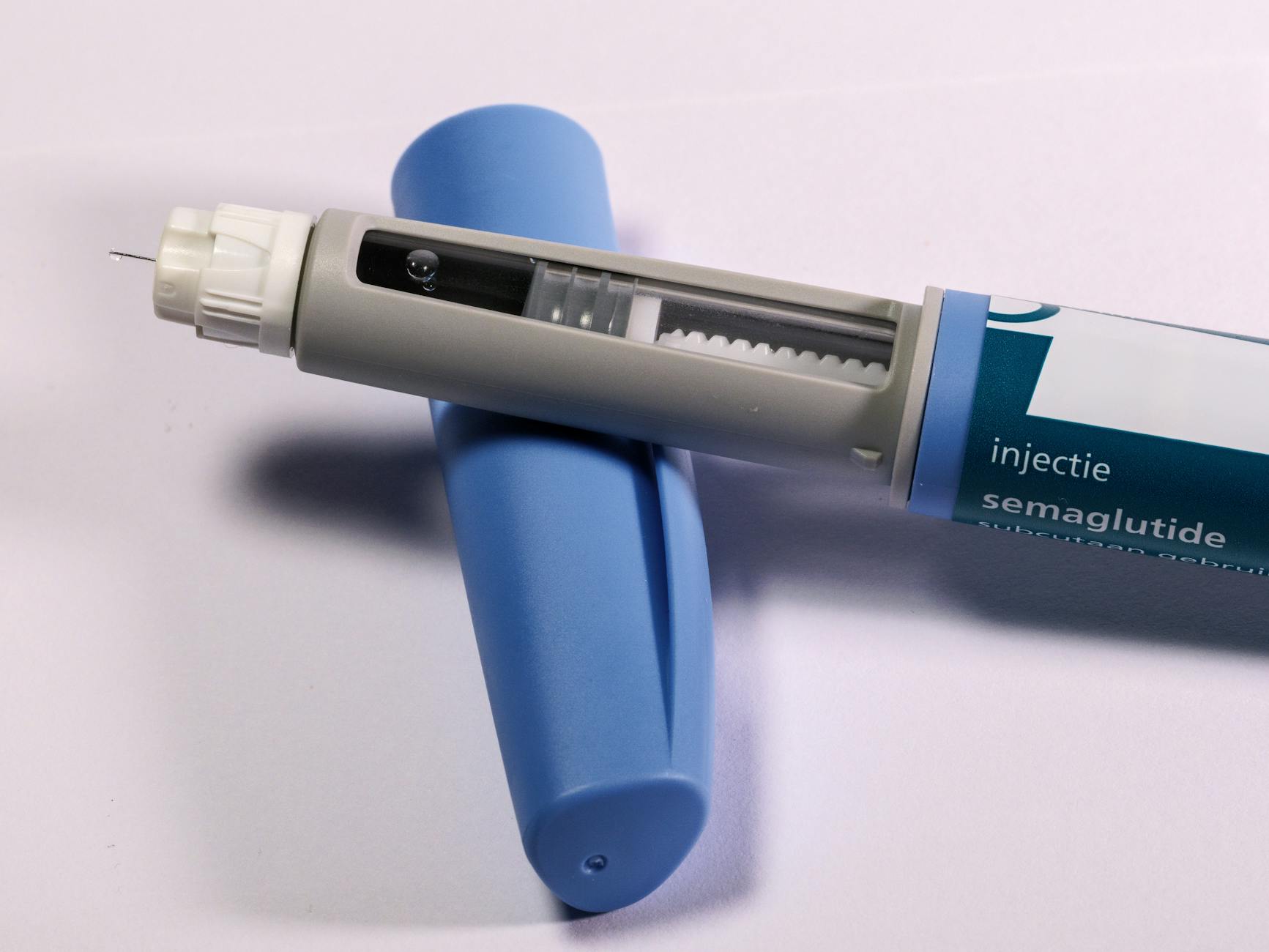
One of the more surprising developments in migraine research involves liraglutide, a GLP-1 receptor agonist originally approved for type 2 diabetes and obesity. An early-stage study tested liraglutide in 31 patients with a BMI of 30 or above and chronic or high-frequency migraine who were unresponsive to at least two preventive migraine treatments. The drug significantly reduced headache days, suggesting a novel pathway that operates entirely outside both the CGRP and PACAP systems. This is worth paying attention to, but with significant caveats. Thirty-one patients is a tiny sample. The study specifically enrolled patients with obesity, so it is unclear whether the benefit extends to migraine sufferers at lower body weights — the mechanism may involve metabolic or inflammatory pathways that are more active in people with higher BMI.
GLP-1 agonists also carry their own side effect profile, including nausea, gastrointestinal issues, and concerns about pancreatic effects with long-term use. For now, liraglutide represents an intriguing signal, not a proven migraine therapy. But it illustrates something important: the field is finally moving beyond a single molecular target, and drugs developed for entirely different conditions may hold answers for treatment-resistant migraine. The broader lesson here is that migraine pathophysiology is more complex than any single neuropeptide pathway can explain. The fact that CGRP drugs fail for 20 to 30 percent of patients is not a flaw in those drugs — it is evidence that migraine has multiple biological drivers. The field needed to diversify its targets, and that is finally happening.
What the Pediatric Approval of Ajovy Signals About Expanding Access
On August 5, 2025, the FDA approved fremanezumab (Ajovy) for pediatric episodic migraine in patients aged six and older weighing at least 45 kilograms, making it the first anti-CGRP preventive treatment approved for this age group. The approval was based on the Phase 3 SPACE study.
While this does not directly address adult treatment resistance, it signals a regulatory willingness to expand the migraine prevention toolkit into populations that have historically been underserved by the clinical trial pipeline. For families caring for children with debilitating migraine alongside elderly relatives with dementia — a scenario more common than many realize, given the hereditary component of migraine — the availability of targeted pediatric treatments changes the household calculus of care. And from a research standpoint, pediatric trials generate safety and efficacy data that can inform dosing and mechanism studies across age groups, potentially accelerating development timelines for drugs like bocunebart.
Where Migraine Prevention Research Goes From Here
The next 18 to 24 months will be pivotal. Lundbeck must negotiate Phase 3 trial design with regulators for bocunebart — decisions about dosing, endpoint selection, and the treatment-resistant population definition will determine whether the PACAP pathway delivers on its early promise. The combination therapy trial pairing anti-CGRP antibodies with Botox will generate data that could reshape how clinicians layer treatments for chronic migraine. And if GLP-1 agonists continue to show signal in larger migraine studies, we may see a true paradigm shift in how treatment resistance is defined and addressed.
For patients and caregivers tracking brain health broadly — including those managing the intersection of migraine and cognitive decline — these developments matter beyond headache relief alone. Chronic migraine is associated with increased cerebrovascular risk and has been linked in epidemiological studies to higher rates of cognitive impairment. Effective migraine prevention is, in a meaningful sense, brain health prevention. The emergence of multiple new mechanisms for the hardest-to-treat patients is not just good news for migraine — it is good news for the long-term neurological outlook of millions of people who had been running out of options.
Conclusion
The migraine prevention landscape is undergoing its most significant expansion since the CGRP drugs arrived in 2018. Bocunebart’s positive Phase 2b results in treatment-resistant patients validate PACAP as a viable therapeutic target and offer hope to the 20 to 30 percent of migraine sufferers failed by every existing preventive. Meanwhile, Phase 4 data for rimegepant, real-world evidence for eptinezumab, emerging findings on GLP-1 agonists, and ongoing combination therapy trials are collectively widening the options available to clinicians and patients who had been stuck in a cycle of failed treatments.
None of these advances erase the challenges that remain — years of regulatory process for bocunebart, unanswered questions about long-term safety signals like the Raynaud phenomenon flag, and the practical barriers of IV-only drug delivery. But for the first time, treatment-resistant migraine patients have a genuinely diversified pipeline of mechanistically distinct options working through clinical development. The message to patients and caregivers is to stay engaged with a headache specialist, ask specifically about clinical trial eligibility, and understand that a prior failure of CGRP drugs no longer means you have exhausted the science.
Frequently Asked Questions
What is PACP and how is it different from CGRP in migraine?
PACAP (pituitary adenylate cyclase activating polypeptide) is a neuropeptide that acts more broadly than CGRP, binding to receptors in the parasympathetic nervous system in addition to pain pathways. While all currently approved preventive migraine drugs target CGRP, bocunebart targets PACAP — making it the first drug to work through this alternative mechanism. This distinction matters because an estimated 20 to 30 percent of migraine patients do not respond to CGRP-based treatments.
Is bocunebart available now for treatment-resistant migraine?
No. Bocunebart completed a Phase 2b trial with positive results announced in February 2026, and Lundbeck plans to discuss Phase 3 trial design with regulators. It will likely be several years before the drug could reach the market, assuming Phase 3 trials succeed and regulatory approval follows. Patients interested in this drug should ask their neurologist about potential clinical trial enrollment.
Can rimegepant help if I have already failed other CGRP drugs?
Possibly, but with limitations. Rimegepant’s Phase 4 data showed benefit in patients who failed traditional oral preventives like beta-blockers and topiramate, not specifically in patients who failed other CGRP-targeting drugs. Since rimegepant is itself a CGRP receptor antagonist, patients whose resistance is rooted in CGRP pathway biology may see limited additional benefit. It is most clearly useful for patients who failed older drug classes but have not yet tried CGRP-based therapies.
What did the EMBRACE II study show about eptinezumab?
The EMBRACE II study was a 24-week real-world study in patients who had failed more than three preventive treatments, including prior anti-CGRP monoclonal antibodies. It showed a 32.4 percent improvement even in patients who had previously failed other anti-CGRP drugs, with 33.8 percent improvement in those escalated to the 300 mg dose. The drug was described as rapidly effective and well tolerated in this population.
Are there safety concerns with combining multiple migraine prevention drugs?
Yes. While combination therapy trials are underway pairing anti-CGRP drugs with Botox, a 2025 safety signal from the FDA Adverse Event Reporting System flagged disproportionate reports of Raynaud phenomenon associated with CGRP agents including atogepant. Stacking multiple drugs within the same pathway increases the need for careful monitoring of cardiovascular and peripheral vascular effects. Patients should discuss combination approaches only with a headache specialist familiar with their full medical history.
You Might Also Like
- This Old Blood Pressure Drug Is Getting New Life as a Cancer Treatment
- New Combination Pill for HIV Prevention Works Better Than PrEP Alone
- New Drug for Non-Alcoholic Steatohepatitis Crosses Major Trial Hurdle
For more, see Alzheimer’s Association — medical tests.