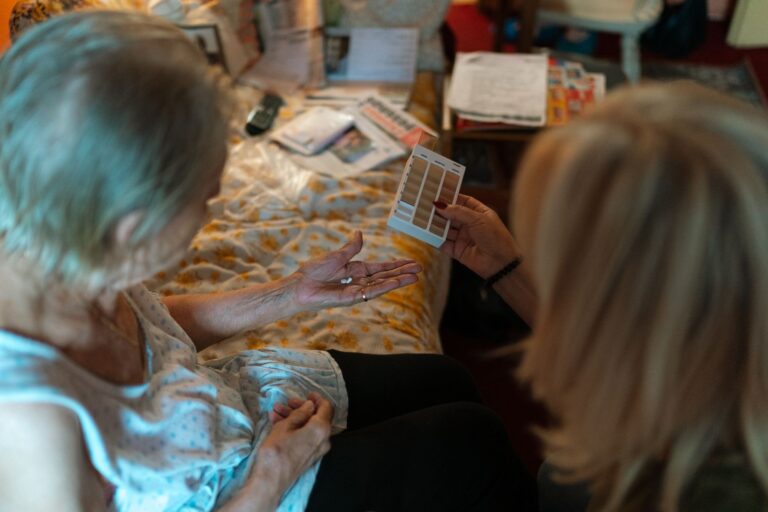
The short answer is that most expired medications are probably still safe to take, but “probably” is not the kind of word you want to lean on when managing medications for someone with dementia or any other serious health condition. The FDA officially advises against using expired medications, stating they can be “less effective or risky due to a change in chemical composition or a decrease in strength.” Yet the FDA’s own research tells a more nuanced story: in tests of over 100 prescription and over-the-counter drugs, approximately 90% were found to be safe and effective as long as 15 years past their original expiration date. That is not a typo. Fifteen years. So why the disconnect? The expiration date stamped on your medication bottle is a legal guarantee from the manufacturer, required under a 1979 federal law, that the drug will be fully potent and safe up to that date. It is not a cliff edge after which the pill turns toxic.
Think of it more like the “best by” date on a can of soup — the product does not suddenly become dangerous the next morning, but the manufacturer is no longer vouching for it. For caregivers managing complex medication regimens for a loved one with dementia, this distinction matters enormously. This article will walk through what the research actually shows, which specific medications you should never gamble with, how storage conditions change the equation, and what steps you can take to keep your medicine cabinet both safe and sensible. The stakes are real. A caregiver who discovers that a parent’s memantine or donepezil prescription lapsed two months ago faces a genuine dilemma: is it better to give the expired pill or skip the dose entirely? The answer depends on the drug, the storage conditions, and how far past the date you are. Let’s get into the details.
Table of Contents
- What Does an Expiration Date on Medication Actually Mean?
- Which Expired Medications Are Genuinely Dangerous?
- How Storage Conditions Affect Medication Shelf Life
- Managing Expired Medications in a Dementia Care Setting
- Why Expiration Dates Stay Short Despite the Evidence
- Recent FDA Actions on Shelf-Life Extensions
- Safe Disposal of Medications You Decide Not to Use
- Conclusion
- Frequently Asked Questions
What Does an Expiration Date on Medication Actually Mean?
A drug’s expiration date is the last day the manufacturer guarantees full potency and safety, based on stability testing the company conducted before the product went to market. Under FDA regulations, this testing typically covers a period of one to five years, depending on the drug formulation. Manufacturers are not required to test beyond that window, which means the expiration date tells you when the company stopped checking — not when the drug stopped working. This is an important distinction that most people, including many healthcare professionals, do not fully appreciate. The Shelf Life Extension Program, or SLEP, helps illustrate the gap between the stamped date and reality. Established in 1986 as a joint effort between the FDA and the Department of Defense, SLEP was designed to reduce pharmaceutical waste in military stockpiles.
The program tested 122 different drugs stored under ideal conditions and found that 88% could have their expiration dates extended by more than one year. The average extension was 66 months — that is five and a half years beyond the original expiration date. To qualify for a SLEP extension, a drug must retain at least 85% of its original potency, and the FDA typically extends by two to three years per testing cycle. One Army report showed that facilities following SLEP protocols saved $87 million annually in pharmaceutical waste alone. But here is the critical caveat: those SLEP results came from medications stored under controlled conditions — temperature-regulated, low humidity, original sealed packaging. The bottle of ibuprofen that has been sitting in your bathroom medicine cabinet next to a hot shower for three years is not living the same life as a drug in a military warehouse. For dementia caregivers who may be managing a dozen or more medications across multiple household locations, storage matters as much as the date on the label.

Which Expired Medications Are Genuinely Dangerous?
While most medications simply lose potency gradually over time, a handful of drugs carry real risks after expiration, and some of these are commonly found in the homes of older adults. Insulin is at the top of the list. Expired insulin may not lower blood sugar effectively, and for a person with diabetes — which frequently co-occurs with dementia — this can lead to diabetic ketoacidosis, a potentially fatal emergency. Nitroglycerin, prescribed for chest pain, loses potency quickly after expiration and may fail to stop a heart attack when seconds count. EpiPens, or epinephrine auto-injectors, present another serious concern: reduced effectiveness during anaphylaxis can be life-threatening, and many families keep these on hand for years without checking the dates. Liquid antibiotics are a less obvious risk. Once reconstituted with water, these suspensions have a shelf life of only seven to 14 days, even when refrigerated.
Eye drops carry the risk of bacterial contamination after expiration, which is particularly concerning for older adults who may already have compromised eye health. And as a general rule, any injectable medication should be discarded after its expiration date, because the sterility of the solution can no longer be assured. However, if your loved one with dementia accidentally took a standard oral medication — say, acetaminophen or a statin — that expired a few months ago, there is no need to panic or rush to the emergency room. The realistic risk with most expired oral tablets is reduced effectiveness, not toxicity. The one historical exception involves tetracycline antibiotics, which in the 1960s caused Fanconi syndrome, a rare form of kidney damage, due to a breakdown product called anhydro-4-epi-tetracycline. But modern formulations have eliminated this risk entirely, and there have been no recent documented cases of toxicity from expired oral tetracycline. The tetracycline scare, while real in its time, has become something of a medical myth that still circulates in outdated pharmacy training materials.
How Storage Conditions Affect Medication Shelf Life
The expiration date printed on a medication label assumes you have stored the drug according to the label instructions, which typically means in a cool, dry place away from light. In practice, many households fail this test spectacularly. The bathroom medicine cabinet — the most iconic storage spot in American homes — is one of the worst possible locations. Steam from showers creates repeated cycles of heat and humidity that accelerate chemical degradation. A car’s glove compartment is even worse, with summer temperatures routinely exceeding 120 degrees Fahrenheit in many parts of the country. For dementia caregivers, this is not an abstract concern.
Pill organizers left on kitchen counters near stoves, medications carried in purses during summer outings, or bottles stored on windowsills all face environmental stress that can meaningfully reduce shelf life. One practical example: a caregiver who pre-fills a weekly pill organizer every Sunday is removing those medications from their original packaging and exposing them to air, light, and ambient humidity for up to seven days. This is generally fine for a week’s supply, but if you find a pre-filled organizer from three weeks ago that was never used — during a hospital stay, perhaps — those medications have had a rougher life than the expiration date accounts for. The bottom line is that SLEP’s impressive extension data applies to medications stored under near-perfect conditions. Your results at home will vary, and they will almost always vary in the direction of faster degradation. If a medication has been stored properly in its original container in a bedroom closet, a few months past expiration is very unlikely to matter for most drugs. If it has been bouncing around a hot car for two summers, even a medication within its expiration date may have lost significant potency.
Managing Expired Medications in a Dementia Care Setting
Dementia caregiving introduces medication management challenges that most pharmacists do not think about when offering standard advice. A person with dementia may hide medications in unusual places — drawers, coat pockets, under mattresses — where they sit for months or years before being discovered. They may resist taking pills, leading to stockpiles of unused medication. Or a care transition from home to a facility and back again may leave behind half-used bottles with questionable storage histories. In all of these scenarios, the caregiver has to make a judgment call. The safest approach is also the simplest: when in doubt, replace it. For most common medications, a replacement prescription is a phone call to the doctor’s office and a trip to the pharmacy.
The cost of a new bottle of donepezil or memantine is trivial compared to the risk of giving an ineffective dose to someone whose cognitive function depends on consistent medication levels. That said, cost is not trivial for everyone. If a caregiver is managing expenses on a fixed income and finds a nearly full bottle of a brand-name medication that expired two months ago, the practical calculation changes. In that situation, it helps to know that the FDA’s own research suggests most solid oral medications retain the vast majority of their potency well beyond the printed date, as long as storage was reasonable. The tradeoff, then, is between the near-certainty that a freshly dispensed medication is fully potent and the strong probability that a recently expired one is fine. For critical medications — those managing seizures, blood pressure, heart conditions, or psychiatric symptoms that could lead to dangerous agitation — lean toward replacing. For a multivitamin or an over-the-counter pain reliever, the expired bottle is almost certainly fine.
Why Expiration Dates Stay Short Despite the Evidence
A reasonable person might wonder: if 90% of drugs are good for years past their expiration dates, why don’t manufacturers just print longer dates? The answer involves a tangle of regulatory requirements, liability concerns, and financial incentives. A 2024 study published in PMC highlighted the tension directly, noting that pharmaceutical companies have a financial incentive to keep expiration dates short. Shorter dates mean faster turnover, which means more sales. There is no regulatory requirement to test drugs beyond the minimum stability period, and no manufacturer is going to voluntarily spend money proving their product lasts longer if the result is that people buy less of it. This is not a conspiracy theory — it is a straightforward business reality. The FDA knows this, which is partly why SLEP exists.
The program has quietly demonstrated for decades that the dates on most medications are conservative. But SLEP data applies to military stockpiles, not retail pharmacies, and the FDA has not used these findings to require longer expiration dates for consumer products. The agency’s public-facing advice remains unchanged: do not use expired medications. For dementia caregivers, this means you are essentially navigating a gap between what the evidence shows and what official guidance says. It is worth having an honest conversation with your loved one’s pharmacist about specific medications. A good pharmacist will tell you, off the record if necessary, which drugs are known to be stable well past their dates and which ones you should never gamble with. That conversation is far more useful than a blanket rule in either direction.

Recent FDA Actions on Shelf-Life Extensions
The FDA’s approach to expiration dates is quietly evolving, driven partly by supply chain pressures and public health emergencies. On October 18, 2024, the FDA approved shelf-life extensions for JYNNEOS, the mpox vaccine, extending certain lots through August 31, 2026. In November 2024 and January 2025, the agency authorized extending the shelf life of Pemgarda (pemivibart) from 24 months to 30 months.
These decisions reflect a growing willingness to apply SLEP-style reasoning beyond the military context when the public health calculus demands it. The FDA’s 2022–2026 strategic plan also includes investment in advanced tools like mass spectrometry and predictive modeling to forecast drug degradation over time. If these tools mature, we could eventually see a future where expiration dates are more accurately tailored to specific formulations and storage conditions rather than set at a conservative, one-size-fits-all threshold. For families managing chronic conditions like dementia, where medication continuity matters deeply, this would be a meaningful step forward.
Safe Disposal of Medications You Decide Not to Use
When you do decide to discard expired medications — and in many cases, you should — proper disposal matters more than most people realize. Flushing pills down the toilet contaminates water supplies. Tossing them in the trash creates a risk that children, pets, or individuals struggling with substance use might find them. This is especially relevant in dementia care settings, where the person with dementia themselves may retrieve discarded medications from a wastebasket.
The FDA and CDC recommend using drug take-back programs or pre-paid drug mail-back envelopes for safe disposal. Many pharmacies, including major chains, host regular take-back events or have permanent drop boxes. The DEA’s National Prescription Drug Take Back Day occurs twice annually. If none of these options are accessible, the FDA recommends mixing medications with an undesirable substance like used coffee grounds or cat litter, placing the mixture in a sealed container, and putting it in the household trash. For dementia households, storing medications awaiting disposal in a locked location is an essential safety step.
Conclusion
The evidence is clear that most expired medications do not become dangerous — they become less effective. The FDA’s own SLEP data shows that the majority of drugs retain at least 85% of their potency for years beyond the printed expiration date when stored properly. But “most” is not “all,” and the exceptions — insulin, nitroglycerin, EpiPens, liquid antibiotics, injectables, and eye drops — are medications where reduced potency can have severe or fatal consequences. For dementia caregivers, the safest strategy is to keep a current inventory, store medications properly, and replace critical prescriptions promptly when they expire.
The broader reality is that expiration dates are a regulatory and commercial construct as much as a scientific one. They represent the floor of a drug’s useful life, not the ceiling. Knowing this gives you more informed decision-making power, but it does not eliminate the need for caution. Talk to your pharmacist, keep your medicine cabinet organized, and do not let expired medications accumulate in places where a confused loved one might find and take them unsupervised. Medication safety in dementia care is less about any single pill and more about building systems — consistent storage, regular reviews, clear labeling — that reduce the chance of error across hundreds of daily decisions.
Frequently Asked Questions
Can expired dementia medications like donepezil or memantine still work?
Most solid oral medications, including cholinesterase inhibitors and memantine, are likely to retain significant potency for months to a few years past their expiration dates if stored properly. However, because consistent dosing is critical for managing dementia symptoms, replacing expired prescriptions is strongly recommended to ensure full therapeutic effect.
Is it dangerous if my parent with dementia accidentally took an expired pill?
For most standard oral medications, taking a single expired dose is very unlikely to cause harm. The primary risk is reduced effectiveness, not toxicity. Monitor for any unusual symptoms, but there is generally no need for emergency action unless the medication is one of the high-risk exceptions like insulin or nitroglycerin.
How long past the expiration date are most medications still effective?
The FDA’s Shelf Life Extension Program found that 88% of 122 tested drugs remained effective for an average of 66 months — about five and a half years — past their expiration dates when stored under ideal conditions. Real-world home storage conditions will reduce this window, but most solid oral medications likely remain effective for at least one to two years past the printed date.
Should I keep expired EpiPens as a backup in case of emergency?
While some studies suggest that expired EpiPens retain partial potency, using one during a genuine anaphylactic emergency is a gamble with potentially fatal consequences. Always maintain a current, unexpired EpiPen and replace it before it expires. An expired one is better than nothing in a true life-or-death situation, but it should never be your plan A.
What is the best way to store medications to maximize their shelf life?
Store medications in their original containers in a cool, dry, dark location — a bedroom closet or a kitchen cabinet away from the stove works well. Avoid the bathroom medicine cabinet, where heat and humidity from showers accelerate degradation. Never store medications in a car, where temperatures can fluctuate dramatically.
Do pharmacies accept expired medications for disposal?
Many pharmacies participate in drug take-back programs and have permanent drop boxes for expired or unused medications. The DEA also holds National Prescription Drug Take Back events twice a year. Contact your local pharmacy to ask about their specific disposal options.