Dermatologists are prescribing spironolactone at unprecedented rates because a convergence of strong clinical evidence, updated safety guidelines, and growing antibiotic resistance concerns has transformed this decades-old blood pressure medication into a frontline dermatological tool. Prescriptions for spironolactone in acne alone rose roughly 300 percent between 2017 and 2020, and by 2020, it was being prescribed at rates similar to oral antibiotics for acne in women — a dramatic shift from just a few years earlier when it was used two to three times less frequently. For a woman in her late twenties dealing with persistent hormonal breakouts along her jawline and chin, spironolactone has increasingly become the prescription her dermatologist reaches for instead of yet another round of doxycycline.
This surge in prescribing is not a trend driven by social media hype or patient demand alone. It reflects a genuine evolution in clinical practice, backed by a 2025 JAAD Reviews evidence review that identified 16 randomized controlled trials and 52 nonrandomized studies supporting its use. The 2024 American Academy of Dermatology guidelines further accelerated adoption by eliminating the requirement for routine potassium monitoring in healthy patients, removing one of the last practical barriers that kept many clinicians from prescribing it. This article examines the clinical data behind the shift, the expanding role of spironolactone in treating female pattern hair loss, its safety profile, and the practical considerations patients and prescribers should understand.
Table of Contents
- What Is Driving Dermatologists to Prescribe Spironolactone More Than Ever?
- The Clinical Evidence Behind Spironolactone for Hormonal Acne
- Spironolactone’s Expanding Role in Female Pattern Hair Loss
- How Updated Safety Guidelines Lowered the Barrier to Prescribing
- Side Effects and the Real-World Safety Picture
- Spironolactone Versus Isotretinoin — When Each Makes Sense
- Where Spironolactone Prescribing Goes From Here
- Conclusion
- Frequently Asked Questions
What Is Driving Dermatologists to Prescribe Spironolactone More Than Ever?
The single biggest driver is antibiotic stewardship. For decades, tetracycline-class antibiotics like doxycycline and minocycline were the default oral treatments for moderate to severe acne. But long-term antibiotic use contributes to bacterial resistance, a public health problem that extends well beyond dermatology. The AAD now recommends limiting tetracycline antibiotics to three to four months of use, which creates an obvious problem for patients with chronic hormonal acne that persists for years. Spironolactone fills that gap because it can be continued long-term without contributing to resistance. It works through an entirely different mechanism — blocking androgen receptors and reducing sebum production — rather than killing bacteria. The evidence base has also matured considerably. Between 2004 and 2013, spironolactone courses per 100 females with acne rose from 2.08 to 8.13 among dermatologists.
That early growth was driven largely by clinical experience and observational data. But the publication of high-quality randomized controlled trials in recent years has converted many previously skeptical clinicians. A 2025 systematic review and meta-analysis of randomized placebo-controlled trials concluded that spironolactone improves acne in female patients compared to placebo without increasing adverse event risks. That kind of evidence — placebo-controlled, peer-reviewed, and meta-analyzed — is what moves prescribing guidelines, and it has done exactly that. The prescribing shift is not limited to dermatologists. Between 2017 and 2020, the three- to four-fold increase in spironolactone prescriptions for acne was observed across dermatologists, nurse practitioners, physician assistants, and non-dermatologist physicians alike. Compare this to isotretinoin, which remains heavily gatekept by specialists and carries a regulatory burden through the iPLEDGE program. Spironolactone, by contrast, requires no special registration to prescribe, which has made it accessible across practice settings.
The Clinical Evidence Behind Spironolactone for Hormonal Acne
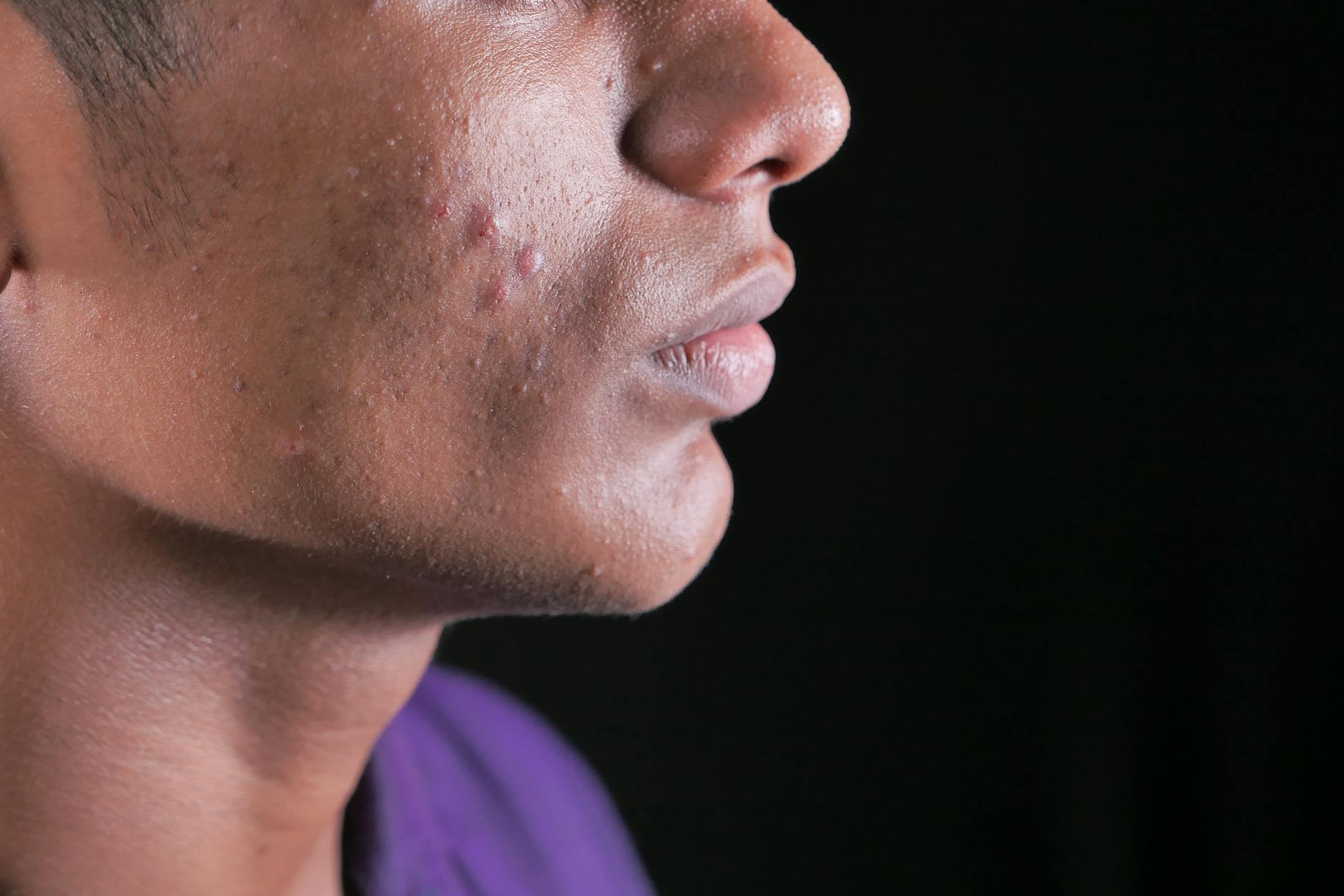
The efficacy of spironolactone for acne is dose-dependent, with the strongest evidence supporting daily doses of 50 to 100 milligrams. The 2025 JAAD Reviews evidence review found that these doses consistently improved acne across the 16 randomized controlled trials and 52 nonrandomized studies included in the analysis. Evidence also suggests that doses above 100 milligrams daily may confer additional benefit, though dermatologists typically start at lower doses and titrate upward based on response and tolerability. However, spironolactone is not a universal acne treatment. It is only appropriate for female patients because of its anti-androgenic mechanism, and it is contraindicated in pregnancy due to the risk of feminizing a male fetus. Women who are or may become pregnant must use reliable contraception, and many dermatologists co-prescribe an oral contraceptive for this reason.
The medication also tends to work best for the specific pattern of hormonal acne — deep, cystic breakouts along the jawline, chin, and lower face — rather than the widespread comedonal acne more typical of adolescence. A teenager with forehead blackheads is not the right candidate. A 32-year-old woman with monthly flares of painful cysts along her jaw, who has already tried topical retinoids and benzoyl peroxide, is the classic patient profile. It is also worth noting that spironolactone takes time. Most patients do not see meaningful improvement for two to three months, and full results may take six months. Patients expecting the rapid clearing that a course of antibiotics can provide may be frustrated. Dermatologists who prescribe it emphasize setting realistic expectations upfront and maintaining topical treatments during the waiting period.
Spironolactone’s Expanding Role in Female Pattern Hair Loss
One of the most significant recent developments is the growing use of spironolactone for female pattern hair loss, a condition that affects an estimated 30 million women in the United States. A 2025 randomized, double-blind, placebo-controlled trial found that spironolactone at 100 milligrams daily for 24 weeks showed synergistic effects with topical minoxidil in premenopausal women aged 21 to 45. The combination therapy produced a 65.80 percent improvement rate compared to 43.21 percent for monotherapy, with an overall improved hair loss rate of 56.60 percent. Long-term data is equally encouraging.
Spironolactone monotherapy can prevent further hair thinning in 85 to 100 percent of women with female pattern hair loss and promote actual regrowth in 33 to 49 percent. For context, topical minoxidil alone typically stabilizes hair loss in roughly 60 to 80 percent of users but produces visible regrowth in a smaller subset. The combination approach appears to offer something neither treatment achieves as well alone. This dual-use potential — a single oral medication that can address both hormonal acne and androgenetic hair thinning — has made spironolactone particularly attractive for women dealing with overlapping conditions. A dermatologist treating a 35-year-old woman who presents with both persistent jawline acne and a widening hair part can address both concerns with one prescription, rather than adding separate treatments for each problem.

How Updated Safety Guidelines Lowered the Barrier to Prescribing
For years, the conventional wisdom was that any patient on spironolactone needed regular blood draws to monitor potassium levels, since the drug is a potassium-sparing diuretic and hyperkalemia can be dangerous. This monitoring requirement created friction — additional office visits, lab costs, and patient inconvenience — that made some dermatologists hesitant to prescribe it for a cosmetic indication like acne. The 2024 AAD guidelines changed that calculation by stating that potassium monitoring is not needed in otherwise healthy patients taking spironolactone for acne. This guideline change was grounded in data showing that the hyperkalemia rate among young, healthy women on spironolactone is equivalent to the baseline population rate. In other words, the drug does not meaningfully increase potassium levels in patients without kidney disease, heart failure, or other predisposing conditions.
The practical impact has been significant: a dermatologist can now prescribe spironolactone with the same workflow simplicity as prescribing an oral antibiotic, without scheduling follow-up labs. However, this simplified monitoring applies specifically to healthy patients. Women with renal impairment, those taking ACE inhibitors or ARBs, patients on potassium supplements, or those over 45 with cardiovascular risk factors should still have their potassium levels checked. The guideline change does not mean monitoring is never needed — it means that the young, otherwise healthy women who make up the majority of acne patients can skip the blood draws. Clinicians who apply the relaxed monitoring broadly without considering individual risk factors would be making a mistake.
Side Effects and the Real-World Safety Picture
Spironolactone’s side effect profile is generally well tolerated at dermatological doses, but it is not side-effect-free. The most common complaints include menstrual irregularities, breast tenderness, and increased urination — all consequences of its anti-androgenic and diuretic properties. Many patients find these manageable, particularly when the alternative is continuing to live with severe hormonal acne or progressive hair loss. But some women find the menstrual disruption significant enough to discontinue the medication. A 2026 retrospective cohort study of 432 patients on combination spironolactone and low-dose oral minoxidil provides a useful window into real-world tolerability. Adverse effects were reported in 37.7 percent of patients, with the most common being hypertrichosis at 12.3 percent and dizziness or orthostasis at 12.0 percent.
The hypertrichosis — excess hair growth on the face or body — is particularly ironic for patients taking the medication for hair loss, and it appears to be primarily attributable to the minoxidil component. Dizziness upon standing is a consequence of blood pressure lowering and tends to be more pronounced in patients who are already on the lower end of normal blood pressure. There are also populations for whom spironolactone carries additional caution. It should not be used during pregnancy, and the labeling carries a black box warning related to tumor findings in animal studies at doses far exceeding human use. While decades of real-world prescribing have not demonstrated a cancer signal in humans, this warning persists and occasionally surfaces in patient discussions. Clinicians should be prepared to address it honestly rather than dismissing it.

Spironolactone Versus Isotretinoin — When Each Makes Sense
The rise of spironolactone has created a clearer delineation in how dermatologists approach severe acne in women. Isotretinoin remains the gold standard for severe nodulocystic acne, particularly when scarring is a concern, because it can produce lasting remission after a single course.
But isotretinoin requires enrollment in the iPLEDGE program, monthly pregnancy tests, regular bloodwork, and carries a well-documented side effect profile including severe dryness, potential mood effects, and teratogenicity. For a woman whose primary problem is chronic moderate hormonal acne rather than severe cystic disease, spironolactone offers ongoing control with a lighter monitoring burden — though it must be continued indefinitely to maintain results, unlike the finite course of isotretinoin.
Where Spironolactone Prescribing Goes From Here
The trajectory suggests continued growth. As more randomized controlled trial data accumulates, as the AAD guidelines continue to reflect its safety in healthy populations, and as antibiotic resistance pressures mount, spironolactone is likely to become even more central to dermatological practice.
Research into optimal dosing, combination protocols with topical treatments, and its role in conditions beyond acne and hair loss — including hidradenitis suppurativa and androgenetic alopecia in specific populations — is ongoing. The medication’s patent expired long ago, making it inexpensive as a generic, which removes the cost barrier that limits access to newer branded therapies. What was once considered an off-label curiosity has become, by the data, a standard of care.
Conclusion
The surge in spironolactone prescribing reflects a rational response to accumulating evidence, updated guidelines, and the practical limitations of long-term antibiotic therapy. A 300 percent increase in prescriptions over three years is not a fad — it is a clinical course correction driven by randomized trial data, simplified safety monitoring, and the pressing need for antibiotic alternatives in chronic skin conditions.
Its dual utility in both hormonal acne and female pattern hair loss gives it a versatility that few dermatological medications can match. For women considering spironolactone, the conversation with a dermatologist should include realistic expectations about the timeline to results, an honest discussion of side effects, and an assessment of individual risk factors that might warrant monitoring. It is not the right medication for everyone, but for the right patient, it has become one of the most evidence-supported tools in a dermatologist’s prescribing repertoire.
Frequently Asked Questions
Q1: Is spironolactone FDA-approved for acne?
A1: No. Spironolactone is FDA-approved for heart failure, hypertension, edema, and primary hyperaldosteronism. Its use in acne and hair loss is off-label, though supported by extensive clinical evidence including 16 randomized controlled trials identified in a 2025 JAAD Reviews analysis.
Q2: Do I need blood tests while taking spironolactone for acne?
A2: According to the 2024 AAD guidelines, potassium monitoring is not needed in otherwise healthy patients. However, women with kidney disease, those on potassium-raising medications, or those with cardiovascular risk factors should still have labs checked.
Q3: How long does spironolactone take to work for acne?
A3: Most patients begin to see improvement at two to three months, with full results at around six months. It requires ongoing use — acne typically returns if the medication is stopped.
Q4: Can spironolactone help with hair loss?
A4: Yes. Long-term studies show it can prevent further thinning in 85 to 100 percent of women with female pattern hair loss and promote regrowth in 33 to 49 percent. A 2025 trial found combining it with topical minoxidil produced a 65.80 percent improvement rate.
Q5: Can men take spironolactone for acne?
A5: Generally no. Its anti-androgenic effects cause feminizing side effects in men, including breast enlargement and sexual dysfunction. It is used almost exclusively in female patients for dermatological indications.
Q6: What are the most common side effects?
A6: Menstrual irregularities, breast tenderness, and increased urination are the most frequently reported. In a 2026 study of patients on combination spironolactone and oral minoxidil, 37.7 percent reported adverse effects, most commonly hypertrichosis and dizziness.