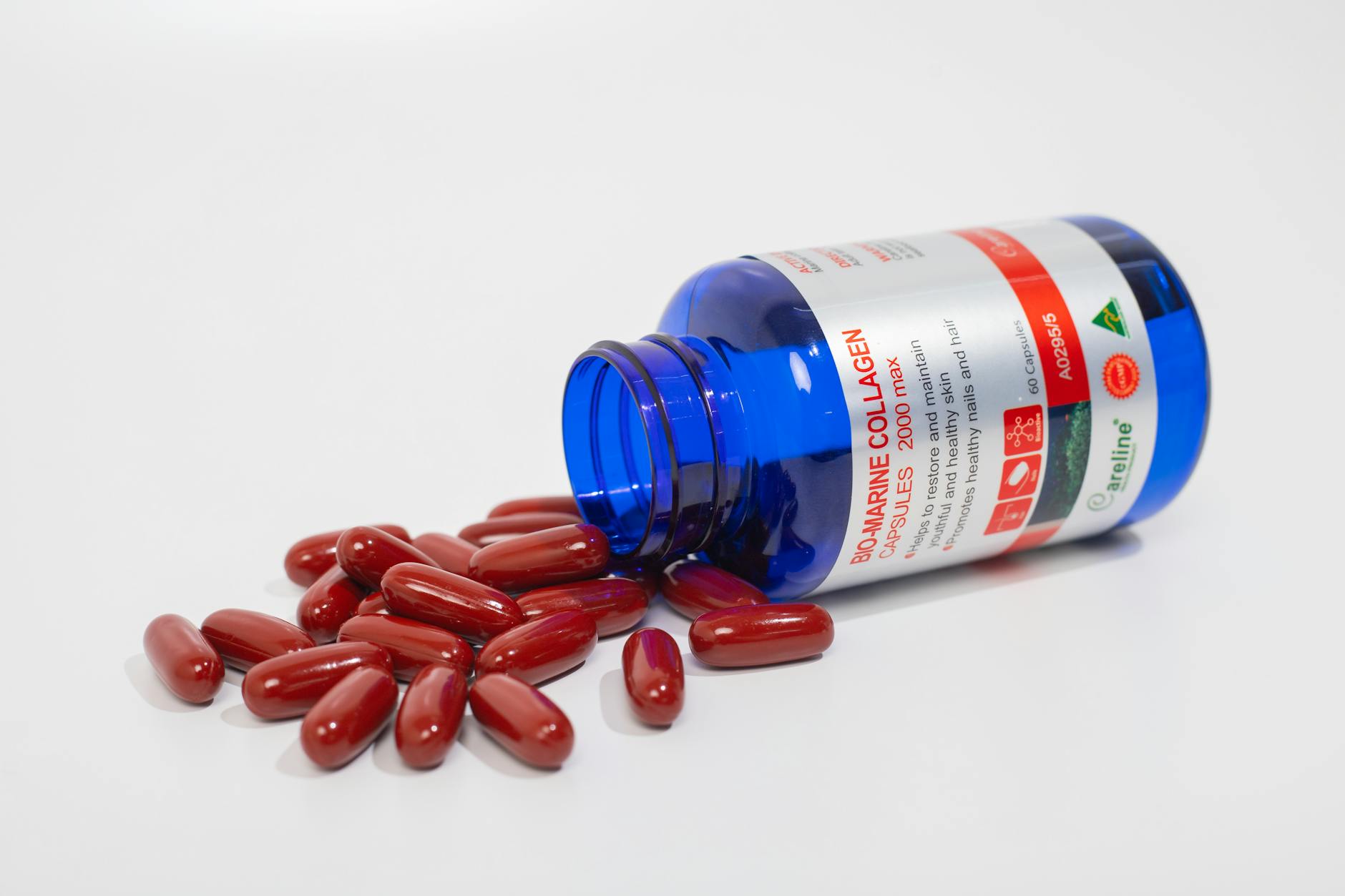
Collagen supplements sits at the center of this dementia and brain health question.
The honest answer is that collagen supplements probably do not work the way most people think they do, and the science backing their most popular claims is far weaker than the marketing suggests. A 2025 meta-analysis published in the American Journal of Medicine examined 23 randomized controlled trials and found that when you strip away industry-funded research, independently-funded studies showed no significant effect on skin hydration, elasticity, or wrinkles. For the millions of Americans spending part of a $3.75 billion global market on collagen powders and pills, that finding should give serious pause. That does not mean the picture is entirely bleak. A March 2026 evidence review reported by U.S. News concluded that collagen supplements do appear to improve skin elasticity and reduce osteoarthritis pain and stiffness, particularly with longer use.
So the science is genuinely split, and where you land depends heavily on which studies you trust and what outcome you care about. Joint health benefits currently rest on somewhat firmer ground than skin anti-aging claims. For readers of this site, the relevance extends beyond vanity. Many older adults managing dementia or cognitive decline also deal with joint pain, reduced mobility, and skin fragility. Understanding what collagen supplements can and cannot do matters for making sound decisions about a loved one’s care plan. This article walks through the clinical evidence, the funding bias problem, safety concerns, what dermatologists actually recommend, and practical alternatives that have stronger science behind them.
Table of Contents
- Do Collagen Supplements Actually Work, or Is the Evidence Misleading?
- Why Your Body Might Not Use Collagen the Way Supplement Labels Imply
- Collagen and Joint Pain — Where the Evidence Is Slightly Stronger
- What Dermatologists Recommend Instead of Collagen Supplements
- Safety Risks and the Regulation Gap Most Consumers Do Not Know About
- The Business Behind the Collagen Boom
- Where Collagen Research Goes From Here
- Conclusion
- Frequently Asked Questions
Do Collagen Supplements Actually Work, or Is the Evidence Misleading?
The most damning finding in recent collagen research has nothing to do with biology and everything to do with money. The American Journal of Medicine meta-analysis, which pooled data from 1,474 participants across 23 trials, initially appeared to show positive results for skin outcomes. But when the researchers filtered by funding source, the pattern fractured. Industry-funded studies consistently showed benefits. Independently-funded studies did not. High-quality studies showed no significant benefit. Low-quality studies did. The authors concluded bluntly that there is “currently no clinical evidence to support the use of collagen supplements to prevent or treat skin aging.” This funding bias is not unique to collagen, but it is especially pronounced in the supplement industry, where companies routinely sponsor their own clinical trials.
Across 28 clinical trials reviewed in a 2025 Frontiers in Nutrition analysis, the average study enrolled only about 93 participants, lasted 11.6 weeks, and used a daily dosage of roughly 8.4 grams. Those are small studies over short timeframes, which makes them more susceptible to statistical noise and cherry-picked outcomes. Compare that to pharmaceutical trials, which typically require thousands of participants and multi-year follow-up before regulators will approve a drug. The evidentiary bar for supplements is dramatically lower. However, it would be intellectually dishonest to dismiss every positive finding. The March 2026 evidence review did find measurable improvements in skin elasticity and hydration, along with reduced arthritis symptoms, particularly among people who took collagen consistently over longer periods. So the question is not simply whether collagen works or does not work. It is whether the positive results hold up when the research is conducted without the financial thumb of industry on the scale.
Why Your Body Might Not Use Collagen the Way Supplement Labels Imply
The fundamental biological challenge with oral collagen supplements is digestion. When you swallow a collagen peptide capsule or stir collagen powder into your coffee, your digestive system breaks those proteins down into individual amino acids and small peptide fragments. There is no guaranteed delivery system that routes those fragments specifically to your skin, your joints, or anywhere else you might want them. Your body uses amino acids where it determines they are needed, not where a supplement label promises they will go. Dermatologists made this point explicitly in January 2026. As reported by ScienceDaily, experts stated that “oral collagen supplements are not currently recommended to treat skin aging, although they can be considered along with other more effective and well-studied interventions.” The logic is straightforward: consuming collagen does not necessarily deliver collagen to your skin or joints, because your body disassembles it first.
This is a critical distinction that supplement marketing consistently glosses over. This matters especially for older adults and dementia caregivers weighing supplement options. If someone you care for has limited appetite or difficulty swallowing, adding a collagen supplement may not be the best use of their nutritional intake. A protein-rich meal that also provides vitamin C, zinc, and other cofactors the body needs to manufacture its own collagen may be more effective gram for gram. The body already knows how to make collagen. The question is whether it has the raw materials and metabolic capacity to do so, not whether you can bypass the process by swallowing pre-made collagen.
Collagen and Joint Pain — Where the Evidence Is Slightly Stronger
If there is one area where collagen supplements have a more credible case, it is joint health. A 2017 meta-analysis found that collagen supplementation produced small but statistically significant improvements in osteoarthritis pain and function compared to placebo. The March 2026 evidence review reinforced this finding, concluding that arthritis pain and stiffness tend to ease with collagen use, with benefits increasing over longer supplementation periods. For older adults living with dementia, joint pain is not a minor issue. It can reduce mobility, increase fall risk, worsen agitation, and make daily care routines more difficult for both the person and their caregiver. A person with moderate Alzheimer’s who also has knee osteoarthritis may become more resistant to walking or physical therapy if their joints hurt.
In that context, even a modest reduction in pain could have meaningful downstream effects on quality of life and functional independence. The caveat is that “small but statistically significant” does not mean dramatic. Collagen is not a replacement for physical therapy, appropriate pain management, or joint-preserving exercise. If a caregiver is considering collagen for a loved one’s arthritis symptoms, it should be discussed with their physician as a potential complement to existing treatments, not as a standalone solution. And the specific type of collagen matters. Most joint-health studies use type II collagen or hydrolyzed collagen peptides, so grabbing any random collagen product off the shelf may not replicate the study conditions.

What Dermatologists Recommend Instead of Collagen Supplements
If the goal is preserving skin integrity or slowing visible aging, dermatologists point to interventions with far more robust evidence than collagen supplements. The top recommendations, as reported by SciTechDaily, include daily sunscreen use, topical retinoids, and a nutrient-rich diet high in protein and vitamin C. Foods like strawberries, kiwis, bell peppers, and citrus fruits provide the building blocks and enzymatic cofactors your body needs to produce its own collagen naturally. The tradeoff here is effort versus convenience. A collagen supplement feels simple: open a packet, stir it into a drink, and move on.
Building a diet that supports endogenous collagen production requires more planning, especially for caregivers managing meals for someone with dementia who may have food aversions, swallowing difficulties, or a shrinking appetite. But the evidence favoring dietary approaches and topical treatments over oral supplements is substantially stronger. Sunscreen alone does more to preserve existing collagen than any supplement does to replace it. For caregivers, the practical takeaway is this: before spending money on collagen supplements for skin health, make sure the basics are covered. Is your loved one eating adequate protein? Are they getting enough vitamin C from fruits and vegetables? Is sunscreen being applied on days with sun exposure? These interventions have decades of evidence behind them. Collagen supplements, for skin purposes, do not yet clear that bar.
Safety Risks and the Regulation Gap Most Consumers Do Not Know About
Collagen supplements exist in a regulatory gray zone that most consumers do not fully appreciate. Unlike prescription medications, dietary supplements in the United States are not required to prove safety or effectiveness before they hit store shelves. The FDA does not review supplement claims the way it reviews drug claims. This means the collagen powder you buy at a pharmacy or online could contain more or less collagen than the label states, along with contaminants that were never tested for. Marine-sourced collagen supplements carry a specific risk worth knowing about: methylmercury contamination. Fish-derived collagen has become popular due to marketing claims about superior absorption, but fish tissues can accumulate mercury, and supplement manufacturers are not uniformly testing for it.
Harvard Health has noted that most oral collagen supplements lack third-party verification and do not have clear ingredient labeling. If you are considering a collagen product, look for one that has been independently tested by a third-party organization like NSF International, USP, or ConsumerLab. If the product does not carry one of these certifications, you are trusting the manufacturer’s word alone. This is especially relevant for people managing dementia. Older adults may already be taking multiple medications, and unregulated supplements introduce the risk of interactions or contamination that a physician cannot anticipate if they do not know exactly what is in the product. Always discuss any new supplement with a healthcare provider, and bring the actual product label to the appointment so the doctor can review ingredients and dosages.

The Business Behind the Collagen Boom
The global collagen supplements market is valued at approximately $3.75 billion in 2026, growing at a compound annual growth rate of roughly 9.2 percent, with projections to reach $5.82 billion by 2031, according to Mordor Intelligence. Powder format dominates with 57.64 percent of market share, and animal-based collagen accounts for 85.52 percent of total sales. That is an enormous amount of money flowing toward a product category where the highest-quality independent science often fails to confirm the marketed benefits.
This does not mean every collagen company is acting in bad faith. But it does mean that the financial incentives to produce favorable research are powerful, and consumers should recognize that the flood of positive collagen content on social media, in wellness magazines, and on product packaging is driven in large part by a multi-billion-dollar industry with a vested interest in encouraging purchases. Following the money is always good practice when evaluating health claims.
Where Collagen Research Goes From Here
The split in the evidence base means that collagen research is likely to intensify over the next several years. What the field needs most are large, long-duration, independently-funded trials, meaning studies not paid for by the companies selling the products. The existing trials averaging 93 participants over 11.6 weeks simply cannot provide definitive answers, and both advocates and skeptics can find studies that support their position.
For the dementia care community, the more interesting frontier may be collagen’s role in musculoskeletal health rather than skin appearance. If larger trials confirm even modest benefits for joint pain and mobility in older adults, that could have practical implications for fall prevention and physical function in people with cognitive decline. For now, the prudent approach is cautious optimism about joint-related benefits, healthy skepticism about skin claims, and a firm commitment to discussing any supplement with a physician before starting it.
Conclusion
Collagen supplements occupy an uncomfortable middle ground in evidence-based health. The joint health evidence is modestly encouraging, particularly for osteoarthritis pain, while the skin anti-aging claims largely crumble under independent scrutiny. The 2025 American Journal of Medicine meta-analysis revealed a troubling pattern: studies funded by supplement companies find benefits, while studies without that financial backing generally do not. Until independently-funded, large-scale trials settle the question, consumers are making a bet rather than an informed medical decision.
For caregivers navigating the health needs of someone with dementia, the priorities should remain clear. Focus on adequate protein intake, vitamin C-rich foods, sun protection, physical activity, and evidence-based medical treatments for joint pain. If you choose to try collagen supplements, select a product with third-party testing, discuss it with a physician, and set realistic expectations. No supplement should replace the fundamentals of good nutrition and medical care, especially for a vulnerable older adult whose overall health depends on getting the basics right.
Frequently Asked Questions
Are collagen supplements safe for someone with dementia?
Collagen supplements are generally considered safe for most adults, but they are not regulated like medications. Marine-sourced collagen may carry methylmercury contamination risk. Always consult a physician before adding any supplement, particularly for someone already taking multiple medications, to avoid unknown interactions.
How long do you need to take collagen supplements to see results?
Most clinical trials lasted an average of 11.6 weeks, and the March 2026 evidence review noted that longer use was associated with greater benefits. However, whether those benefits are clinically meaningful or driven by placebo remains debated, especially for skin outcomes.
What type of collagen is best for joint pain?
Most joint-health studies have used type II collagen or hydrolyzed collagen peptides. Not all collagen products contain the same type or dosage used in clinical trials, so check the label carefully and look for third-party verification from organizations like NSF International or USP.
Can you get enough collagen from food instead of supplements?
Your body manufactures its own collagen from amino acids, vitamin C, and other nutrients. A diet rich in protein sources like chicken, fish, eggs, and beans, combined with vitamin C from fruits and vegetables, provides the raw materials your body needs without the uncertainties of supplementation.
Why do some studies show collagen works while others do not?
Funding source is a major factor. The American Journal of Medicine meta-analysis found that industry-funded studies showed positive effects while independently-funded studies did not. Study quality also mattered, as lower-quality studies tended to show benefits while higher-quality studies did not.
Should caregivers prioritize collagen supplements over other health interventions?
No. Dermatologists and nutritional experts recommend prioritizing sunscreen, topical retinoids, adequate dietary protein, and vitamin C-rich foods over collagen supplements. For joint pain, physical therapy and appropriate medical treatment should come first, with collagen considered only as a potential complement.
You Might Also Like
- Why Doctors Are Worried About the Supplement That’s Everywhere Right Now
- The Vitamin That Actually Prevents Dementia — According to New Research
- Paxlovid Rebound: What Doctors Know Now About COVID Treatment
For more, see NIH MedlinePlus — dementia.