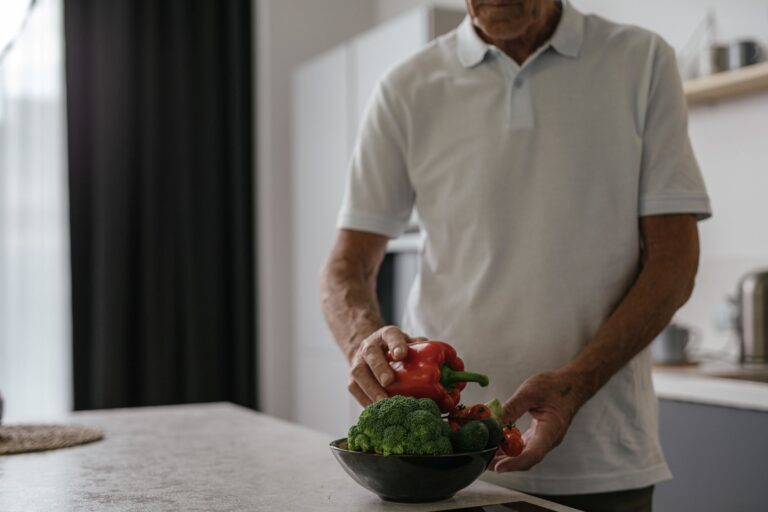
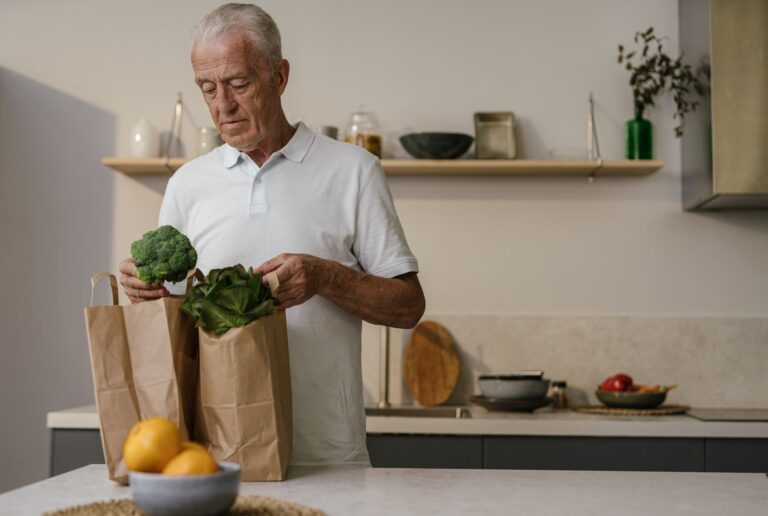
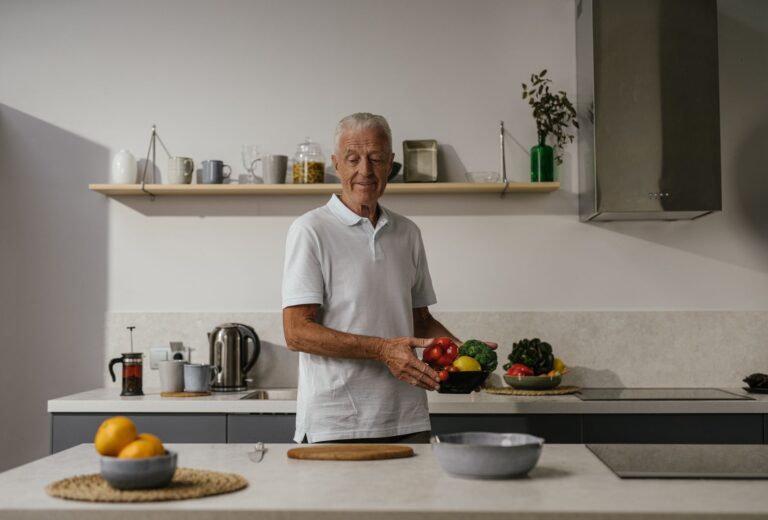
Common food sits at the center of this dementia and brain health question.
Leafy green vegetables, particularly those rich in vitamin K like kale, spinach, and broccoli, can severely undermine the effectiveness of warfarin, one of the most commonly prescribed blood thinners for older adults, including those living with dementia. Vitamin K directly counteracts warfarin’s mechanism of action, and even a single large salad loaded with raw spinach can shift a patient’s INR (International Normalized Ratio) enough to increase the risk of dangerous blood clots. For a person with dementia who may already struggle with medication adherence and dietary consistency, this interaction poses a particularly serious threat that caregivers need to understand. This is not a fringe concern.
Warfarin remains widely used among older adults with atrial fibrillation, deep vein thrombosis, and mechanical heart valves, and many of these same patients are also managing cognitive decline. The challenge is that vitamin K is not something to avoid entirely; it plays a critical role in bone health and other bodily functions. The real danger lies in inconsistency, eating large amounts of vitamin K-rich foods one week and almost none the next. This article covers how vitamin K interferes with warfarin specifically, which foods carry the highest risk, how dementia complicates the picture, what caregivers can do to manage dietary consistency, and when it might be worth discussing alternative blood thinners with a physician.
Table of Contents
- How Can Common Foods Make Your Blood Thinner Dangerously Ineffective?
- Why Dementia Makes This Drug-Food Interaction Far More Dangerous
- Specific Foods and Their Vitamin K Content Ranked by Risk
- Practical Steps Caregivers Can Take to Manage Vitamin K Intake
- When to Consider Switching Away from Warfarin Entirely
- Other Supplements and Herbal Products That Compound the Problem
- Looking Ahead at Anticoagulation Management for Aging Populations
- Conclusion
- Frequently Asked Questions
How Can Common Foods Make Your Blood Thinner Dangerously Ineffective?
warfarin works by inhibiting the vitamin K-dependent clotting factors in your liver. When you eat foods high in vitamin K, you are essentially giving your body more of the raw material it needs to produce those clotting factors, which directly opposes what the medication is trying to do. The result is a drop in your INR, meaning your blood becomes more prone to clotting. An INR that falls below the therapeutic range, typically between 2.0 and 3.0 for most conditions, means the warfarin is no longer providing adequate protection against stroke or embolism. To put this in perspective, one cup of raw spinach contains roughly 145 micrograms of vitamin K, and one cup of chopped kale contains over 500 micrograms. Compare that to a cup of iceberg lettuce at about 17 micrograms.
A patient who normally eats iceberg lettuce but switches to a kale-heavy diet for a week could see their INR drop by a full point or more. In clinical settings, this kind of fluctuation is one of the most common reasons patients on warfarin end up with subtherapeutic levels, and it is entirely preventable with dietary awareness. The foods that cause the most trouble are not exotic or unusual. They are ordinary staples: spinach, kale, collard greens, Swiss chard, Brussels sprouts, broccoli, green cabbage, and even green tea. Certain cooking oils, particularly soybean and canola oil, also contribute meaningful amounts of vitamin K. The issue is compounded by the fact that many of these foods are promoted as health foods, so patients and caregivers sometimes increase intake without realizing the consequences.
Why Dementia Makes This Drug-Food Interaction Far More Dangerous
For someone with intact cognition, managing the warfarin-vitamin K balance is already tricky. It requires consistent eating habits, regular blood tests, and the ability to communicate dietary changes to a healthcare provider. Dementia strips away each of these safeguards. A person with moderate Alzheimer’s may not remember what they ate yesterday, let alone track their vitamin K intake over the course of a week. They may refuse foods they previously enjoyed or suddenly develop a fixation on one particular food, creating exactly the kind of dietary inconsistency that destabilizes warfarin levels. Caregivers in both home and facility settings often focus, understandably, on getting the person to eat at all. When a loved one with dementia willingly eats a large plate of steamed broccoli or a spinach salad, it feels like a victory.
But if that same person was eating mostly starches and protein the week before, the sudden influx of vitamin K can knock their INR out of range without anyone noticing until the next blood draw, or worse, until a clot forms. This is a scenario that plays out regularly in geriatric medicine and is one of the strongest arguments for close dietary monitoring when warfarin is involved. However, the answer is not simply to ban all green vegetables. Restricting vitamin K-rich foods entirely can lead to nutritional deficiencies and bone density loss, which is already a serious concern for older adults. The clinical guidance is consistency, not avoidance. If the person eats one serving of broccoli most days, their warfarin dose can be calibrated to account for that. The problem arises only when intake swings wildly from day to day or week to week.
Specific Foods and Their Vitamin K Content Ranked by Risk
Not all vitamin K-rich foods carry the same level of risk. The highest-risk foods are raw leafy greens, because cooking reduces volume and people tend to eat smaller portions of cooked greens. One cup of raw kale delivers over 500 micrograms of vitamin K, while one cup of cooked kale, though still high at roughly 1,000 micrograms per cup, is consumed in much smaller actual portions because of how much it wilts. The practical risk depends on how much a person is likely to eat in a sitting. The moderate-risk category includes foods like asparagus, green peas, green beans, and certain lettuces such as romaine and butterhead. These contain enough vitamin K to matter if consumed in large quantities but are unlikely to cause dramatic INR shifts in normal portions.
Then there are foods that people rarely suspect: certain cooking oils, mayonnaise made with soybean oil, and even some meal replacement shakes that are fortified with vitamin K. A caregiver who switches a dementia patient from one nutritional supplement brand to another may unknowingly change their daily vitamin K intake by 50 or 100 micrograms. A practical example: one geriatric care manager reported a case where a patient’s INR dropped from 2.5 to 1.4 over two weeks. The culprit turned out to be a well-meaning family member who had started making daily green smoothies with spinach and kale for the patient, believing it would boost their overall health. Nobody thought to mention it to the anticoagulation clinic. The patient required a warfarin dose adjustment and close monitoring for weeks afterward.
Practical Steps Caregivers Can Take to Manage Vitamin K Intake
The most effective strategy is to create a consistent daily meal plan and stick to it. This does not mean eliminating vegetables. It means choosing a set amount of vitamin K-rich food and incorporating it at roughly the same level every day. For instance, a half-cup of cooked broccoli with dinner most nights is far safer than no broccoli for six days followed by a large broccoli-heavy casserole on Sunday. Write the plan down. Post it on the refrigerator. Share it with anyone who helps prepare meals.
For caregivers managing someone with dementia who lives in a memory care facility, the key step is communicating with the dietary staff. Many facilities have standard menus that rotate weekly, and the vitamin K content can vary substantially from day to day. Ask the facility’s dietitian to review the menu for vitamin K consistency, and request that the resident’s chart include a flag about warfarin use and dietary requirements. This is a reasonable accommodation that most facilities can make but may not think to do unless prompted. There is a tradeoff to acknowledge here. Strict meal planning can reduce flexibility and sometimes create conflict, especially when a person with dementia has unpredictable food preferences. A caregiver who insists on identical meals every day may face resistance, and the stress of forced consistency can be worse than a moderate INR fluctuation. The practical middle ground is aiming for consistency within a range rather than exact replication, and communicating any significant deviations to the prescribing physician so the warfarin dose can be adjusted proactively rather than reactively.
When to Consider Switching Away from Warfarin Entirely
The challenges of managing warfarin alongside dementia-related dietary inconsistency raise a legitimate question: should the patient be on warfarin at all? Newer direct oral anticoagulants, often called DOACs, including apixaban (Eliquis), rivarelbain (Xarelto), and dabigatran (Pradaxa), do not interact with vitamin K. They do not require regular INR monitoring, and their dosing is fixed. For many older adults with atrial fibrillation, DOACs have become the preferred first-line treatment precisely because they are easier to manage. However, DOACs are not suitable for everyone. Patients with mechanical heart valves must use warfarin; DOACs are contraindicated for this population.
Patients with severe kidney impairment may not be able to use certain DOACs safely. And DOACs are significantly more expensive than warfarin, which can be a barrier for patients on fixed incomes or those navigating Medicare Part D coverage gaps. There is also the fact that warfarin has a well-established reversal agent (vitamin K itself, ironically), while DOAC reversal agents are newer, less widely available, and extremely costly. The conversation about switching medications should involve the patient’s cardiologist or hematologist, the primary care physician, and the caregiver who manages daily meals and medications. It is not a decision to make casually, but for a dementia patient whose dietary intake is genuinely unpredictable and whose INR has been difficult to control, it is a conversation worth initiating sooner rather than later.

Other Supplements and Herbal Products That Compound the Problem
Vitamin K in food is not the only dietary factor that affects warfarin. Several supplements and herbal products that are sometimes given to dementia patients can either amplify or diminish warfarin’s effect in ways that stack on top of dietary vitamin K changes. Ginkgo biloba, sometimes taken with the hope of improving cognitive function, can increase bleeding risk by adding its own antiplatelet effect on top of warfarin. Conversely, St.
John’s wort, coenzyme Q10, and high-dose vitamin E can all alter warfarin metabolism. A specific scenario that arises more often than clinicians would like: a family member reads about turmeric or fish oil as anti-inflammatory supplements for brain health and starts adding them to the patient’s regimen without consulting the prescriber. Both turmeric and fish oil have mild anticoagulant properties. Combined with warfarin, they can tip the balance toward excessive bleeding. Any supplement change for a person on warfarin should be treated with the same seriousness as a medication change.
Looking Ahead at Anticoagulation Management for Aging Populations
The intersection of anticoagulation therapy and dementia care is an area that geriatric medicine is only beginning to address systematically. Point-of-care INR testing devices that allow home monitoring are becoming more accessible, and some dementia care programs are beginning to integrate dietary tracking into their care plans.
Research into longer-acting anticoagulants with fewer dietary interactions continues, though no major breakthroughs are imminent. What is clear is that the current system places an enormous burden on caregivers to manage a drug interaction that most people do not fully understand. Better education at the point of prescribing, more routine dietary counseling for patients on warfarin, and lower barriers to switching to DOACs when appropriate would all reduce the preventable harm that occurs when a well-meaning plate of spinach quietly renders a critical medication ineffective.
Conclusion
Vitamin K-rich foods, the ordinary leafy greens that fill grocery store produce sections, can and do make warfarin dangerously ineffective when consumed inconsistently. For people living with dementia, this risk is magnified by cognitive impairment, unpredictable eating habits, and the practical difficulty of monitoring dietary intake day after day. Caregivers are the front line of defense, and the single most important thing they can do is maintain dietary consistency rather than eliminate healthy foods entirely.
If you are caring for someone with dementia who takes warfarin, talk to their prescribing physician about whether a DOAC might be a safer option. If warfarin remains the best choice, create a written meal plan that accounts for vitamin K content, share it with everyone involved in the person’s care, and report any significant dietary changes to the anticoagulation clinic promptly. These are straightforward steps, but they require awareness and vigilance, and they can prevent a medical emergency that nobody sees coming.
Frequently Asked Questions
Can I just stop giving my loved one all green vegetables while they are on warfarin?
No. Eliminating vitamin K entirely is not recommended because it leads to nutritional deficiencies and can actually make warfarin levels harder to control. The goal is consistent daily intake, not zero intake. Work with a dietitian to find a sustainable level.
How quickly can vitamin K-rich food affect warfarin levels?
Changes in vitamin K intake can begin affecting INR within 24 to 48 hours, but the full impact may not show up for several days. A single high-vitamin-K meal is unlikely to cause a crisis, but several days of significantly increased intake can meaningfully lower INR.
Does cooking vegetables reduce their vitamin K content?
Cooking does not significantly reduce vitamin K content per gram. However, cooked greens wilt considerably, so people tend to eat smaller actual volumes of cooked versus raw greens. One cup of raw spinach and one cup of cooked spinach deliver very different amounts of vitamin K simply because of how much spinach it takes to make a cooked cup.
Are DOACs completely free of food interactions?
Largely yes, but not entirely. Rivaroxaban (Xarelto) should be taken with food to ensure proper absorption. Grapefruit juice can potentially interact with some DOACs. However, none of the DOACs have the vitamin K interaction that makes warfarin so challenging to manage alongside a variable diet.
My loved one with dementia is in a memory care facility. Who is responsible for monitoring this?
Ultimately the prescribing physician manages warfarin dosing, but the facility’s nursing staff and dietary team play critical roles. As a family caregiver, you should ensure the facility is aware of the warfarin prescription, ask about dietary vitamin K consistency, and confirm that INR testing is being done on schedule.
You Might Also Like
- The Food That Makes Your Thyroid Pill Completely Ineffective
- This Antihistamine Can Spike Your Blood Pressure — Most People Don’t Know
- The Blood Thinner Side Effect That Can Be Fatal If Ignored
For more, see Alzheimer’s Association.