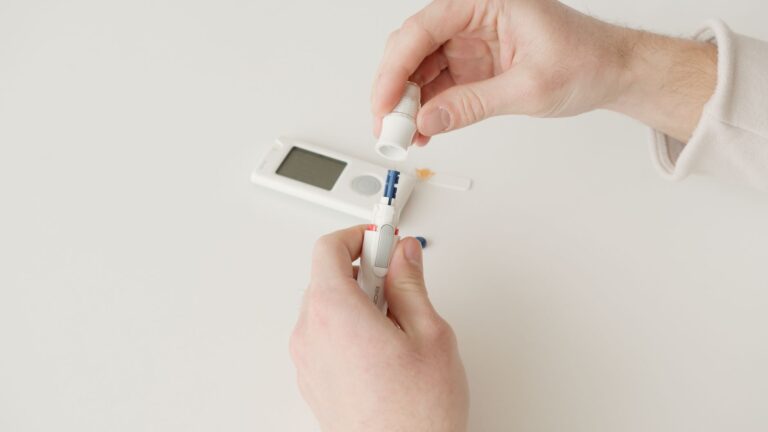
Heartburn pill sits at the center of this dementia and brain health question.
For a broader overview, see our dementia activities and engagement guide.
Heartburn Pill Youve: this caregiver-focused guide explains what heartburn pill youve means in plain English, the day-to-day implications for families, and when to bring it up with a clinician. If you arrived here looking for a quick orientation on heartburn pill youve, the table of contents below points to the section you need; the full guide picks up after it.
Table of contents
- Table of Contents
- What Exactly Are the Heartburn Pills Linked to Dementia — and How Strong Is the Evidence?
- Why Some Researchers Say the Dementia Link Is Overblown
- How a Heartburn Pill Could Reach Your Brain — The Biological Mechanisms
- Should You Stop Taking Your PPI? Weighing the Risks Against the Benefits
- The Billion-Dollar Lawsuits Against PPI Manufacturers
- Who Is Most at Risk — Age, Duration, and Specific Drugs
- What Comes Next — Research, Regulation, and the Push for Smarter Prescribing
If you have been reaching for Nexium, Prilosec, or Prevacid every morning for years, a growing body of research suggests you may be raising your risk of dementia. Multiple large-scale studies now link prolonged use of proton pump inhibitors — the blockbuster class of heartburn drugs taken by tens of millions of people worldwide — to measurable increases in dementia risk, particularly among older adults and those who stay on the drugs for more than four years. The connection is not settled science, and some rigorous analyses have found no causal relationship, but the sheer volume of concerning data has forced a difficult conversation between patients and their doctors. Consider a 68-year-old who started taking omeprazole for chronic acid reflux in her late fifties.
A decade later, she is part of the demographic most consistently flagged in the research: long-term PPI users over 65 who show elevated dementia risk ratios in study after study. Her doctor never discussed a stop date because the drug worked, it was available over the counter, and there seemed to be no reason to revisit it. That scenario plays out in millions of households, and it is exactly the kind of passive, indefinite use that researchers are now scrutinizing. This article breaks down what the science actually says, where the studies disagree, the biological mechanisms that could explain a brain connection, the massive ongoing lawsuits against PPI manufacturers, and what practical steps you should consider if you have been taking these drugs for years.
Table of Contents
- What Exactly Are the Heartburn Pills Linked to Dementia — and How Strong Is the Evidence?
- Why Some Researchers Say the Dementia Link Is Overblown
- How a Heartburn Pill Could Reach Your Brain — The Biological Mechanisms
- Should You Stop Taking Your PPI? Weighing the Risks Against the Benefits
- The Billion-Dollar Lawsuits Against PPI Manufacturers
- Who Is Most at Risk — Age, Duration, and Specific Drugs
- What Comes Next — Research, Regulation, and the Push for Smarter Prescribing
- Conclusion
What Exactly Are the Heartburn Pills Linked to Dementia — and How Strong Is the Evidence?
Proton pump inhibitors work by blocking the enzyme system in the stomach lining that produces acid. Brand names include Nexium (esomeprazole), Prilosec (omeprazole), Prevacid (lansoprazole), Protonix (pantoprazole), and several others. They were originally designed for short-term use — typically four to eight weeks — to heal ulcers and treat gastroesophageal reflux disease. But because they are effective and widely available without a prescription, many people have taken them daily for years or even decades without medical oversight. The most frequently cited study on the dementia link comes from the Atherosclerosis Risk in Communities (ARIC) cohort, published in *Neurology* in 2023.
Researchers found that people who used PPIs for more than 4.4 cumulative years had a 33 percent higher risk of developing dementia compared to non-users. Crucially, shorter durations of use showed no significant association, which suggests this is a dose-dependent concern rather than an immediate danger. A 2016 study published in *JAMA Neurology* found an even sharper signal among adults aged 75 and older, reporting a 44 percent higher dementia risk in PPI users. More recently, a 2024 Danish nationwide study covering nearly two million individuals found that PPI use was associated with an incidence rate ratio of 1.36 for people aged 60 to 69 at diagnosis — a meaningful elevation — though the association diminished to non-significance for those diagnosed at age 90 and above. A South Korean cohort study of roughly one million people added another layer: it found an adjusted dementia risk ratio of 1.21 after three years of PPI use, with omeprazole specifically carrying a slightly higher ratio of 1.24. The pattern across these studies is consistent enough to warrant attention — the risk appears real, it appears to grow with duration, and it appears to be most pronounced in people under 75 who start long-term use relatively early.

Why Some Researchers Say the Dementia Link Is Overblown
Not all the evidence points in the same direction, and some of the strongest study designs have found no causal connection. The most recent meta-analysis, published in *Brain Sciences* on January 29, 2026, pooled 18 studies encompassing more than 6.3 million participants and found no statistically significant overall association between PPI use and dementia, with a relative risk of 1.14 and a confidence interval that crossed 1.0. However — and this is a critical caveat — when the researchers isolated subgroups aged 65 and older, the risk estimate climbed to 1.21, which is consistent with what the individual studies found. A Mendelian randomization study published in *Scientific Reports* in November 2024 used genetic variants to simulate the effects of PPI use and found no robust causal link to dementia.
The authors concluded it would be “inappropriate to restrict clinically justified PPI prescriptions merely due to potential cognitive risks.” Similarly, the ASPREE prospective cohort study, published in *Gastroenterology* in 2023, followed adults aged 65 and older for more than six years and found no association between PPI use and incident dementia, cognitive impairment, or cognitive decline. The limitation here is important to understand: observational studies, which make up the bulk of the alarming findings, cannot prove causation. People who take PPIs long-term may also have other risk factors — poor diet, obesity, sedentary lifestyles, polypharmacy — that independently raise dementia risk. However, if you are over 65 and have been on a PPI for several years, the precautionary principle suggests at least having a conversation with your physician, even if the causal link remains unproven. The absence of definitive proof is not the same as proof of safety.
How a Heartburn Pill Could Reach Your Brain — The Biological Mechanisms
The idea that a stomach acid drug could affect the brain sounds implausible until you look at the pharmacology. Research has identified at least three plausible pathways through which PPIs could influence cognitive function, and none of them are trivial. First, PPIs are known to reduce absorption of vitamin B12, a nutrient essential for maintaining the myelin sheath that protects nerve fibers. Chronic B12 deficiency has long been linked to cognitive impairment and is a recognized reversible cause of dementia-like symptoms. Second, and more alarming, a study found that lansoprazole increased levels of amyloid beta peptides in both cell cultures and mouse models.
Amyloid beta accumulation is one of the defining hallmarks of Alzheimer’s disease, and any drug that promotes its production deserves serious scrutiny. Third, researchers at the Karolinska Institutet in Sweden discovered in 2020 that PPIs can bind to choline acetyltransferase, the enzyme responsible for synthesizing acetylcholine — a neurotransmitter that is critical for memory and learning and that is already depleted in Alzheimer’s patients. There is also the basic question of how much of the drug gets into the brain in the first place. Studies have shown that up to 15 percent of an intravenous dose of omeprazole can reach the central nervous system. That is a substantial amount for a drug that was never intended to have neurological effects. Taken together, these mechanisms do not prove that PPIs cause dementia, but they do provide biologically credible explanations for why the epidemiological signal keeps appearing.

Should You Stop Taking Your PPI? Weighing the Risks Against the Benefits
The answer is not a simple yes or no, and anyone who tells you otherwise is not being honest about the complexity. PPIs remain highly effective drugs for serious conditions including Barrett’s esophagus, Zollinger-Ellison syndrome, severe erosive esophagitis, and as part of the treatment regimen for H. pylori infection. For these conditions, the American Gastroenterological Association advises that patients should generally stay on their medication, as “benefits can outweigh risks.” The tradeoff becomes murkier for people using PPIs for garden-variety heartburn or mild reflux that could be managed with lifestyle changes or less potent medications like H2 blockers (famotidine, for example). H2 blockers work differently — they block histamine receptors rather than the proton pump itself — and have not been linked to the same dementia concerns.
They are less powerful at suppressing acid, which makes them a poor substitute for severe GERD, but perfectly adequate for occasional heartburn. The critical comparison: if your reflux can be managed with famotidine, dietary changes, and elevating the head of your bed, you may be taking on unnecessary risk by staying on a PPI indefinitely. The worst scenario is unsupervised, indefinite use — buying Prilosec over the counter month after month without ever discussing it with a doctor. Study author Kamakshi Lakshminarayan has noted that long-term PPI use has also been linked to stroke, bone fractures, and chronic kidney disease, making the cognitive concern just one item on a growing list. If you have been on a PPI for more than a year, a medication review is overdue regardless of where you stand on the dementia question.
The Billion-Dollar Lawsuits Against PPI Manufacturers
The legal landscape surrounding PPIs has escalated dramatically. As of February 2026, 18,706 lawsuits have been filed against PPI manufacturers in the United States, with 11,322 still active in a multidistrict litigation consolidated in New Jersey. These lawsuits have already produced significant financial consequences for the industry: AstraZeneca, maker of Nexium and Prilosec, settled for $425 million in June 2024 to resolve U.S. heartburn drug lawsuits. Total settlements secured from AstraZeneca, GlaxoSmithKline, Procter & Gamble, Pfizer, and Takeda have reached $590.4 million. An important caveat: these lawsuits primarily concern kidney damage, not dementia.
The kidney injury claims have stronger evidentiary support at this stage, and attorneys have focused their cases there. However, the litigation has brought broader PPI safety concerns into public awareness and may eventually expand to include cognitive injury claims as the epidemiological data matures. Some plaintiffs are expected to see initial payouts by early 2026. If you have experienced serious health complications after long-term PPI use, the legal window may still be open, but any claim would need to be evaluated on its specific medical facts. The American College of Gastroenterology has pushed back against what it calls “sensational” claims about PPIs and dementia, publishing a formal rebuttal stating that PPIs are “NOT associated with dementia.” Yet even the ACG acknowledges that PPIs are overprescribed — a concession that undercuts the argument for complacency. A drug can be safe when used appropriately and still cause harm when used carelessly at scale.

Who Is Most at Risk — Age, Duration, and Specific Drugs
The research consistently points to two factors that amplify the potential risk: age and duration. The Danish study found the strongest signal among people aged 60 to 69, while the ARIC study identified 4.4 cumulative years as the threshold where risk became statistically significant. Among specific PPIs, omeprazole has been singled out more than once — the South Korean study found it carried a slightly higher adjusted risk ratio of 1.24 compared to other PPIs, and it is also the drug shown to cross into the central nervous system at meaningful concentrations.
This does not mean that a 45-year-old who takes omeprazole for six months is in danger. The data suggests that the concern is concentrated among older adults with years of cumulative exposure. But that is precisely the population least able to afford any additional dementia risk, and the one most likely to be taking PPIs without regular reassessment.
What Comes Next — Research, Regulation, and the Push for Smarter Prescribing
The scientific community is moving toward better answers. The conflicting results between observational studies and Mendelian randomization analyses highlight the need for large, randomized controlled trials specifically designed to measure cognitive outcomes in long-term PPI users. Until those trials are completed, clinicians are left navigating uncertainty with imperfect data.
What seems likely to change regardless of future findings is prescribing behavior. The era of indefinite, unmonitored PPI use is ending. More physicians are adopting step-down protocols — gradually reducing PPI doses and transitioning patients to H2 blockers or lifestyle management — and pharmacists are increasingly flagging long-term PPI prescriptions for review. For patients, the takeaway is straightforward: do not stop your medication abruptly, but do ask your doctor whether you still need it, whether a lower dose would work, and whether an alternative could manage your symptoms with fewer long-term unknowns.
Conclusion
The link between proton pump inhibitors and dementia is neither proven nor dismissed. Large studies involving millions of participants have found consistent associations between long-term PPI use and elevated dementia risk, particularly among adults over 65 and those with more than four years of cumulative exposure. At the same time, the most rigorous causal analyses have failed to confirm a direct relationship, and major gastroenterology organizations maintain that PPIs remain safe when used appropriately. The biological mechanisms — B12 depletion, amyloid beta promotion, acetylcholine interference — are plausible but not conclusive.
What is conclusive is that tens of millions of people are taking these drugs longer than intended, often without medical supervision, and that the potential consequences extend beyond dementia to include kidney disease, bone fractures, and stroke. If you have been on a PPI for years, the most important step you can take is a simple one: schedule a medication review with your doctor. Ask whether you still need the drug, whether a lower dose is possible, and whether alternatives like H2 blockers or lifestyle modifications could work for your situation. The goal is not to scare you off a medication that may be keeping you healthy — it is to make sure you are not taking unnecessary risks for a condition that might have a simpler solution.
You Might Also Like
- New Study Links Sleeping Pills to Higher Dementia Risk
- Why So Many Women Are Undiagnosed With Thyroid Disease
- Your Thyroid Medication Is Worthless If You’re Taking It Wrong
Sources used for this Heartburn Pill Youve guide
- National Institute on Aging — Alzheimer’s and related dementias
- Alzheimer’s Association
- Mayo Clinic — Dementia
This article is informational and not medical advice. See our Editorial Policy for how we research and review content. Last reviewed May 30, 2026.
For more, see Alzheimer’s Association — medical tests.