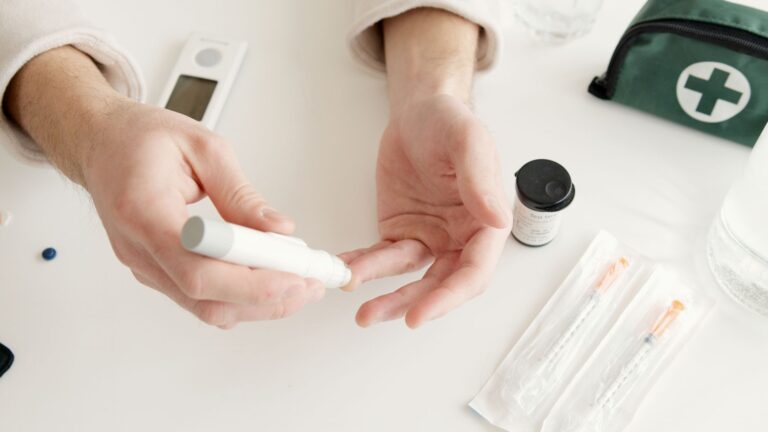
So many women go undiagnosed with thyroid disease because the symptoms — fatigue, weight gain, mood swings, hair loss — look almost identical to what women are told to expect during menopause, postpartum recovery, depression, and normal aging. Doctors and patients alike chalk these complaints up to life stages rather than ordering a simple blood test, and the result is staggering: up to 60 percent of people with thyroid disease have no idea they have it, according to the American Thyroid Association. An estimated 2.5 million American women with autoimmune thyroid disease remain undiagnosed right now. Consider a 42-year-old mother of two who has spent three years being prescribed antidepressants and told her exhaustion is just the reality of parenting. Her thyroid has never been checked.
She is not an outlier — she is the norm. The consequences of this diagnostic gap reach far beyond feeling tired. Untreated thyroid disease raises the risk of cardiovascular disease, osteoporosis, infertility, and in women over 60, dementia. For a brain health audience, that last connection matters enormously. This article breaks down the biological reasons women are disproportionately affected, the specific ways symptoms get misattributed, the real-world health consequences of staying undiagnosed, and what women and their families can do to push for proper screening.
Table of Contents
- Why Are Women So Disproportionately Affected by Undiagnosed Thyroid Disease?
- How Thyroid Symptoms Get Buried Under Other Diagnoses
- The Postpartum Blind Spot That Leaves New Mothers at Risk
- What a Proper Thyroid Screening Actually Involves and Why It Does Not Happen More Often
- The Cognitive and Cardiovascular Consequences That Make This a Brain Health Issue
- When Treatment Exists But Still Falls Short
- Closing the Diagnostic Gap Going Forward
- Conclusion
- Frequently Asked Questions
Why Are Women So Disproportionately Affected by Undiagnosed Thyroid Disease?
Women are five to eight times more likely than men to develop thyroid problems, according to the Office on Women’s Health at the U.S. Department of Health and Human Services. One in eight women will develop a thyroid disorder during her lifetime. A 2025 study published in the Journal of the Endocrine Society, using data from the National Health and Nutrition Examination Survey, estimated that 8.8 million women in the United States have autoimmune thyroid disease compared to 2.8 million men. The female predominance is driven largely by sex-based differences in immune function — women’s immune systems are more reactive, which protects them from certain infections but also makes them more prone to autoimmune conditions where the body attacks its own tissue, including the thyroid gland.
The timing of thyroid vulnerability tracks closely with major hormonal transitions. Postpartum thyroiditis affects roughly 10 percent of women after giving birth, and menopause is another high-risk window. Compare this to men, whose thyroid risk stays relatively flat across their lives. A man experiencing fatigue and weight gain at 50 might get a full metabolic workup. A woman experiencing the same symptoms at the same age is far more likely to hear that her body is simply changing. This difference in clinical attention compounds the biological vulnerability women already carry.

How Thyroid Symptoms Get Buried Under Other Diagnoses
The core problem with thyroid disease detection is that its symptoms are nonspecific. Fatigue, brain fog, weight gain, depression, dry skin, thinning hair, and feeling cold are all classic signs of hypothyroidism — and every one of them can be attributed to something else entirely. When a woman in her late 30s or 40s walks into a doctor’s office reporting these complaints, the conversation often turns to stress, sleep hygiene, or mood disorders long before anyone considers the thyroid. Clinical literature suggests that as many as 30 percent of women aged 35 to 60 who are taking antidepressants may actually have misdiagnosed hypothyroidism, a figure cited by Dr. Aviva Romm and supported by broader endocrinology research. The situation gets more complicated with subclinical hypothyroidism, which accounts for approximately 80 percent of undiagnosed cases.
In subclinical hypothyroidism, TSH levels are mildly elevated but the thyroid hormone T4 remains in normal range. Symptoms are present but subtle — enough to make someone feel off, not enough to trigger alarm. A European meta-analysis found that four to seven percent of populations in the U.S. and Europe have undiagnosed hypothyroidism, and roughly four out of five of those cases are subclinical. However, if a woman already has a diagnosed condition like depression or perimenopause, a provider is even less likely to order thyroid labs because there is an existing explanation sitting right there on the chart. The average time to reach a proper thyroid diagnosis can stretch to five years — five years of accumulating health damage.
The Postpartum Blind Spot That Leaves New Mothers at Risk
Postpartum thyroiditis is one of the most consistently overlooked thyroid conditions. About 10 percent of women develop it after giving birth, yet it rarely gets caught because its symptoms are nearly indistinguishable from what everyone expects new mothers to experience. Exhaustion, mood instability, difficulty concentrating, weight changes — these are the hallmarks of postpartum thyroiditis, and they are also exactly what society tells women is normal after having a baby. A new mother who reports feeling crushingly tired and emotionally fragile at her six-week checkup is unlikely to leave with a TSH order. She is far more likely to leave with reassurance or a prescription for a selective serotonin reuptake inhibitor.
This matters because postpartum thyroiditis is not just discomfort. When hypothyroidism goes unrecognized during and after pregnancy, the stakes are medical. Pregnant women with undiagnosed hypothyroidism face elevated risk of miscarriage, preterm delivery, and severe developmental problems in their children. A woman whose thyroid was never checked after her first pregnancy might enter her second pregnancy with an already-compromised thyroid, compounding the danger. The period right after pregnancy is one of the two most vulnerable windows for thyroid disease — the other being menopause — and both are times when women’s symptoms are most likely to be dismissed.
What a Proper Thyroid Screening Actually Involves and Why It Does Not Happen More Often
Diagnosing thyroid disease requires a blood test measuring TSH, or thyroid-stimulating hormone. It is inexpensive, widely available, and fast. When TSH comes back elevated, further testing of free T4 and thyroid antibodies can confirm the diagnosis and identify whether the cause is autoimmune. The test itself is not the barrier. The barrier is that it does not get ordered. Providers who see a patient with fatigue and weight gain may run a basic metabolic panel and a complete blood count, but skip thyroid function unless someone specifically requests it or the provider has thyroid disease on their radar.
There is also a tradeoff in screening philosophy. The U.S. Preventive Services Task Force has not recommended universal thyroid screening for asymptomatic adults, partly because subclinical hypothyroidism does not always progress to overt disease, and treatment of mild cases remains debated. However, the American Thyroid Association recommends screening beginning at age 35 and every five years thereafter, especially for women. This disagreement between major medical bodies creates a gray zone where individual providers make their own calls — and many default to not testing unless symptoms are severe. Women who are proactive about requesting thyroid panels, particularly during and after pregnancy and approaching menopause, are more likely to catch the disease early. Those who wait for their doctor to suggest it may wait a very long time.
The Cognitive and Cardiovascular Consequences That Make This a Brain Health Issue
For readers of a dementia care and brain health site, the connection between thyroid disease and cognitive decline is the part of this story that hits closest to home. In women in their 60s, untreated hypothyroidism can increase the risk of both heart disease and dementia. The mechanism is not mysterious: thyroid hormones regulate metabolism throughout the body, including the brain. When those hormones are insufficient over years or decades, the brain does not receive adequate metabolic support. This can manifest as persistent brain fog, slowed processing speed, and memory problems that look a lot like early-stage cognitive decline — and sometimes accelerate actual neurodegeneration.
The cardiovascular connection compounds the cognitive risk. Hypothyroidism raises cholesterol, increases arterial stiffness, and promotes systemic inflammation, all of which are independent risk factors for vascular dementia and Alzheimer’s disease. A woman who has been living with undiagnosed subclinical hypothyroidism since her 40s may arrive at 65 with both cardiovascular damage and cognitive changes that could have been mitigated or prevented. It is worth stating clearly: this is not a guarantee of dementia, and thyroid treatment is not a dementia cure. But undiagnosed thyroid disease is a modifiable risk factor, and the tragedy is how often it goes unmodified simply because nobody ran the test.

When Treatment Exists But Still Falls Short
Even among women who do get diagnosed, the problems do not necessarily end. Research indicates that up to one-third of patients receiving thyroid treatment are not receiving adequate treatment. Standard care is levothyroxine, a synthetic form of the T4 hormone, dosed based on TSH levels.
But some patients continue to experience symptoms even when their TSH normalizes on paper. A woman whose TSH reads 4.0 — technically within the reference range at many labs — might feel significantly better at 2.0. There is ongoing debate among endocrinologists about where the optimal TSH target should be, and many general practitioners dose conservatively, leaving patients in a zone that is medically acceptable but functionally inadequate.
Closing the Diagnostic Gap Going Forward
The 2025 study published in the Journal of the Endocrine Society represents a shift in how this problem is being quantified. By using NHANES data to estimate that one-third of women with autoimmune thyroid disease remain undiagnosed — roughly 2.5 million women — the research puts a concrete number on a problem that has been discussed in generalities for too long. Awareness campaigns, routine screening recommendations that providers actually follow, and a cultural shift in how women’s symptoms are received in clinical settings are all necessary pieces of closing this gap.
For families navigating dementia care or watching an aging parent struggle with cognitive changes, asking whether thyroid function has been checked recently is one of the simplest, most actionable steps available. It takes one blood draw. It should not take five years.
Conclusion
The reasons so many women remain undiagnosed with thyroid disease are systemic, not mysterious. A combination of nonspecific symptoms, hormonal life transitions that mask thyroid dysfunction, medical guidance that does not mandate routine screening, and a clinical culture that too often attributes women’s physical complaints to stress or aging creates an environment where millions of cases go undetected. The consequences are not abstract — they include cardiovascular disease, infertility, pregnancy complications, and increased risk of cognitive decline and dementia.
If there is one takeaway, it is that thyroid testing is simple, inexpensive, and available today. Women over 35, women who have recently given birth, women approaching or past menopause, and anyone experiencing unexplained fatigue, cognitive fog, or mood changes should ask for a TSH blood test. For families concerned about a loved one’s brain health or early signs of cognitive decline, thyroid function should be one of the first things checked — not the last.
Frequently Asked Questions
What is the single most important test for thyroid disease?
A TSH (thyroid-stimulating hormone) blood test is the standard first-line screening. If TSH is abnormal, follow-up tests for free T4 and thyroid antibodies can confirm the diagnosis and identify the underlying cause.
Can thyroid disease actually cause dementia?
Untreated hypothyroidism in older women is associated with increased risk of dementia and cognitive decline. It is a modifiable risk factor, meaning that diagnosis and treatment may reduce that risk, though thyroid treatment alone is not a cure or guarantee of prevention.
Why don’t doctors test the thyroid routinely?
The U.S. Preventive Services Task Force has not endorsed universal screening for asymptomatic adults, which means many providers do not include it in standard checkups. The American Thyroid Association recommends screening starting at age 35, but adherence varies widely among clinicians.
How is postpartum thyroiditis different from postpartum depression?
Postpartum thyroiditis is an inflammatory condition of the thyroid gland that can cause both hyperthyroid and hypothyroid phases after childbirth. Its symptoms — mood changes, fatigue, weight fluctuations — overlap significantly with postpartum depression, but the underlying cause and treatment are different. A blood test is the only way to distinguish between them.
What does subclinical hypothyroidism mean?
Subclinical hypothyroidism means TSH is mildly elevated but free T4 levels remain normal. Symptoms tend to be subtle and may include mild fatigue, slight weight gain, or brain fog. It accounts for about 80 percent of undiagnosed hypothyroidism cases and does not always require treatment, though monitoring is important.