The best art therapy activities for dementia patients include painting with watercolors or acrylics, drawing with pencils and charcoal, structured coloring books, clay modeling, collage making, and textile arts like sewing or beading. These activities work because they engage sensory pathways, tap into procedural memory, and provide a nonverbal channel for emotional expression — capacities that often remain intact long after language and short-term memory have declined. A person in the moderate stages of Alzheimer’s who can no longer follow a conversation, for instance, may still spend a focused hour arranging torn paper into a collage, experiencing a sense of accomplishment that few other interventions can match.
Research backs this up, though with important caveats. A 2021 systematic review examining 17 studies and 853 participants found that 88 percent of the studies reported at least one significant positive outcome from art-based interventions. A larger 2023 network meta-analysis of 39 articles and 2,801 participants rated the evidence quality as high for improvements in depression, anxiety, and quality of life, and moderate for cognitive function and agitation. This article covers the specific activities that work best at different stages, what the science actually shows and where it falls short, how to set up sessions for success, and the often-overlooked benefits for caregivers.
Table of Contents
- Which Art Therapy Activities Work Best for Dementia Patients at Different Stages?
- What Does the Research Actually Show About Art Therapy and Dementia?
- How Art Therapy Affects the Brain in Dementia
- Setting Up Art Therapy Sessions That Actually Work
- Limitations, Risks, and When Art Therapy May Not Be Appropriate
- The Overlooked Benefits for Caregivers
- Where Art Therapy for Dementia Is Heading
- Conclusion
- Frequently Asked Questions
Which Art Therapy Activities Work Best for Dementia Patients at Different Stages?
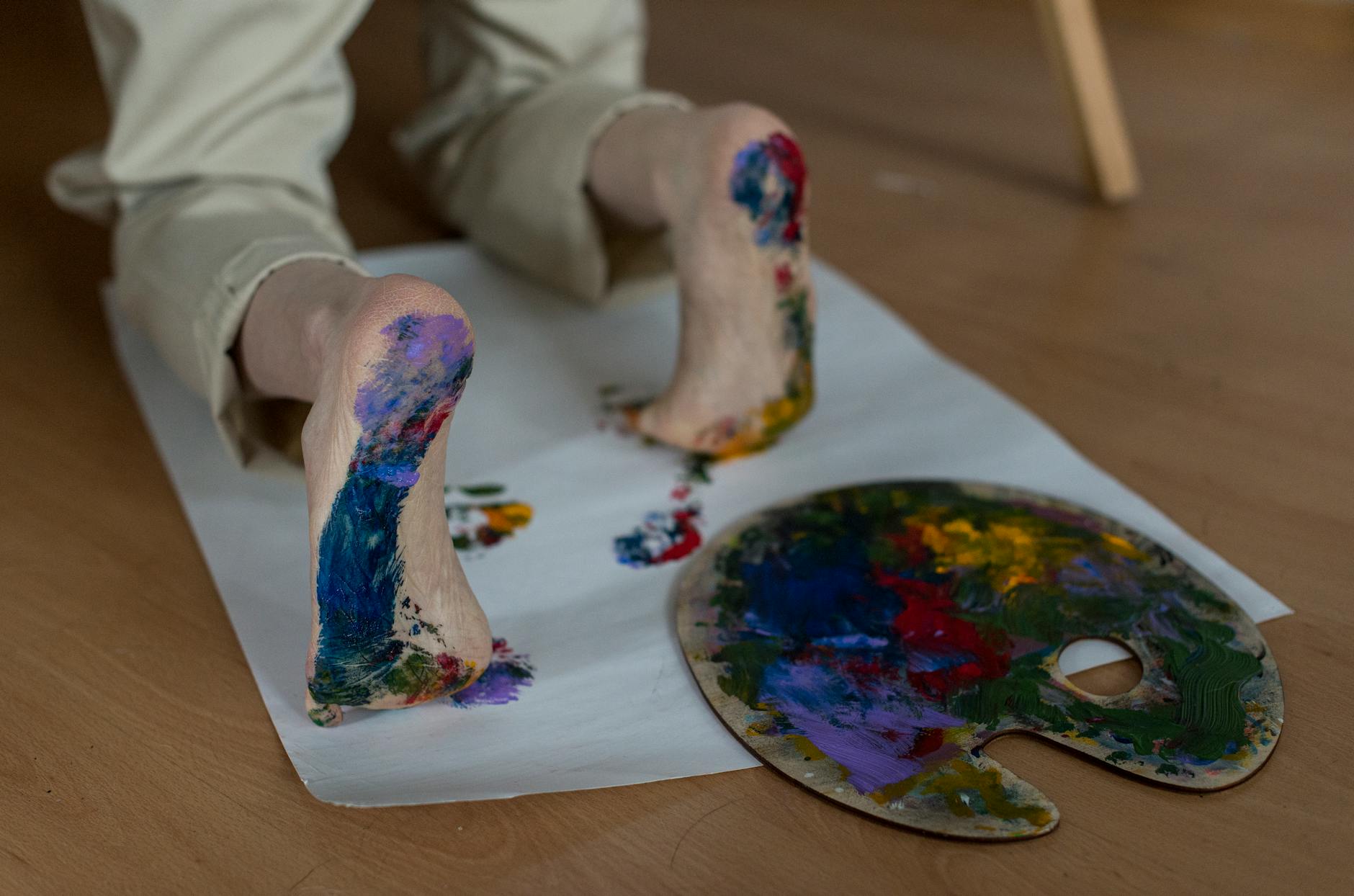
Not every activity suits every person, and the stage of dementia matters enormously. In the early stages, when fine motor skills and decision-making are relatively preserved, drawing with pencils or charcoal and painting with acrylics offer enough creative freedom to feel genuinely expressive without being overwhelming. Watercolor painting is considered particularly forgiving for beginners because mistakes blend naturally and the medium rewards loose, spontaneous brushwork rather than precision. Textile arts — knitting, simple sewing, jewelry making with large beads — can also work well for people who practiced these skills earlier in life, since procedural memory tends to outlast other types. As dementia progresses into middle and later stages, the calculus shifts toward activities that are more sensory and more structured. Finger painting eliminates the need to grip a brush and provides direct tactile stimulation. Coloring with adult coloring books gives patients a guided framework, which reduces the anxiety that open-ended tasks can trigger when executive function is impaired.
Collage making — cutting or tearing images from magazines and arranging them on paper — remains accessible even for people with significant fine motor limitations, because it requires less precision than drawing or painting. Clay modeling and paper mache engage the hands in a fundamentally different way, activating tactile and proprioceptive pathways that visual art alone does not. The comparison worth making is between structured and unstructured activities. A blank canvas can paralyze someone in the moderate stages of dementia who still has enough awareness to feel self-conscious about their abilities. A coloring page or a collage template removes that barrier. On the other hand, too much structure can feel infantilizing to a person in the early stages who is still quite capable. The guiding principle is to match the activity to the individual, not to the diagnosis.
What Does the Research Actually Show About Art Therapy and Dementia?
The evidence base for art therapy in dementia care has grown substantially in recent years, and the overall picture is encouraging — but it is not yet definitive. The 2023 network meta-analysis published in Frontiers in Psychiatry analyzed 39 articles comprising 2,801 participants across six types of art therapies. The researchers found high-quality evidence that art therapy reduces depression, anxiety, and improves quality of life. Evidence for improvements in cognitive function, daily living activities, and agitation was rated as moderate. These are meaningful findings, particularly for depression and anxiety, which are among the most common and distressing symptoms in dementia. A 2025 randomized controlled trial published in Scientific Reports tested a more specific approach: a creative expressive art-based storytelling program delivered twice weekly for 12 weeks to 78 patient-caregiver dyads. The results were notable not just for their breadth — significantly lower behavioral and psychological symptoms, reduced caregiver distress and burden, and higher quality of life and social communication scores — but for their durability.
Benefits persisted through a 24-week follow-up, suggesting the intervention had lasting effects rather than just providing temporary relief during sessions. However, it would be misleading to present the evidence as settled. A Cochrane-level assessment found insufficient evidence from randomized controlled trials to draw definitive conclusions about art therapy’s efficacy for dementia. The problem is not that the studies show negative results — they generally do not. The problem is variability: session lengths differ, activity types differ, control conditions differ, and outcome measures differ across studies. This makes it difficult to compare results or determine which specific elements of art therapy are responsible for benefits. Families and care providers should approach art therapy as a promising intervention with meaningful research support, not as a clinically proven treatment with guaranteed outcomes.
How Art Therapy Affects the Brain in Dementia
The cognitive and emotional mechanisms behind art therapy’s benefits are becoming clearer, even if the clinical trial evidence remains mixed. A narrative review in PMC found that visual art enhances sustained attention, intellectual engagement, episodic memory, and learning in people with dementia. These are not small claims. Sustained attention — the ability to focus on a task for an extended period — is one of the first casualties of Alzheimer’s disease, yet art activities appear to recruit it in ways that other interventions struggle to match. The sensory richness of working with colors, textures, and shapes may activate neural networks that verbal or purely cognitive exercises do not reach. On the emotional side, the same review documented reductions in anxiety, agitation, depression, ruminative thoughts, and worries about death. Consider what this means in practice: a person with moderate dementia who spends much of their day in a state of low-grade confusion and anxiety sits down to paint.
For that hour, the anxiety recedes. They are focused on choosing a color, moving the brush, watching the paint spread. This is not a cure, but it is a meaningful reduction in suffering — and it comes without the side effects of pharmacological alternatives like antipsychotics, which carry serious risks in elderly populations including increased mortality. The social dimension deserves attention as well. The 2025 randomized controlled trial found improved communication ability and social functioning among participants. Dementia progressively strips away the tools people use to connect with others — vocabulary shrinks, conversation becomes halting, facial expressions flatten. Art provides an alternative vocabulary. A painting or collage becomes something to discuss, react to, and share, creating moments of genuine social connection that the disease has otherwise eroded.
Setting Up Art Therapy Sessions That Actually Work
The difference between an art therapy session that engages a dementia patient and one that frustrates them often comes down to preparation and environment rather than the activity itself. Best practices drawn from clinical settings and memory care communities center on several principles: tailor activities to the individual’s current abilities, create a calm and well-lit environment, provide clear step-by-step guidance, use adaptive tools that are easy to grip, and — perhaps most importantly — celebrate effort and process rather than the finished product. The comparison between a well-run and poorly run session is stark. In a well-run session, the facilitator sets out three or four paint colors rather than twelve, offers a thick-handled brush rather than a thin one, and describes each step individually rather than explaining the whole project upfront. The room is quiet, the lighting is good, and there is no time pressure. In a poorly run session, too many choices overwhelm the patient, instructions are given all at once, other residents are being loud in the background, and the facilitator inadvertently focuses on the result — “Let’s make a nice painting for the wall!” — rather than the experience.
The first session produces calm engagement. The second produces anxiety, refusal, or agitation. Adaptive tools deserve specific mention. Triangular pencil grips, foam-handled brushes, non-spill paint cups, and pre-cut collage materials can make the difference between independence and frustration for someone with diminished fine motor control. These are inexpensive modifications, but they require intentional planning. A caregiver who decides on a whim to “do some art” and hands a standard thin paintbrush to someone with advanced arthritis and moderate dementia is setting everyone up for a difficult afternoon.
Limitations, Risks, and When Art Therapy May Not Be Appropriate
Art therapy is not universally beneficial, and it is worth being honest about the situations where it may not work or could even cause harm. Some patients in the later stages of dementia become agitated by sensory stimulation rather than soothed by it. Bright colors, unfamiliar textures, or the mess associated with painting can trigger distress in people who are already disoriented. Finger painting, which provides excellent sensory engagement for some patients, can feel invasive or confusing for others. There is no way to predict this in advance — it requires trial, observation, and willingness to stop an activity that is not working. A subtler risk is the emotional one. Art can surface feelings.
A person with dementia who paints a picture of their childhood home may experience a wave of grief for a life they can no longer fully access. This is not necessarily a bad thing — emotional expression is part of the therapeutic value — but it requires a facilitator who is prepared to sit with that emotion rather than rush to redirect it. Untrained family members or activity staff without art therapy backgrounds may find themselves unprepared for these moments. This is one reason why professional art therapists, when available, bring genuine value that casual art activities cannot fully replicate. The research limitations matter here too. Because the Cochrane review found insufficient evidence to draw definitive conclusions, it would be irresponsible to present art therapy as a substitute for other evidence-based interventions like cognitive stimulation therapy, physical exercise, or appropriate pharmacological management. It works best as a complement to a broader care plan, not as a standalone treatment. Families who invest heavily in art therapy while neglecting medication management or physical activity are likely not optimizing their loved one’s care.

The Overlooked Benefits for Caregivers
One of the most significant findings from recent research is that art therapy benefits extend to caregivers, not just patients. The 2025 randomized controlled trial in Scientific Reports found reduced caregiver distress and burden alongside patient improvements — and these benefits persisted through the 24-week follow-up. This matters because caregiver burnout is one of the largest predictors of premature institutional placement for people with dementia. Anything that reduces caregiver burden has downstream effects on the entire care trajectory.
The mechanism is partly practical and partly relational. On the practical side, a patient who is calmly engaged in a collage for 45 minutes gives their caregiver a window of reduced vigilance. On the relational side, creating art together can restore a sense of partnership and shared experience that dementia has eroded. A spouse who has watched their partner lose the ability to hold a conversation may find that sitting side by side painting watercolors offers a kind of companionship that requires no words. The 2021 systematic review, which included 180 carers among its 853 participants, reflected this broader recognition that dementia care interventions must account for the caregiver as well as the patient.
Where Art Therapy for Dementia Is Heading
The field is moving in promising directions. The 2025 randomized controlled trial’s combination of creative expression with structured storytelling represents a trend toward more intentional program design — rather than simply handing patients art supplies, researchers are developing specific protocols that integrate multiple forms of expression and social interaction. The durability of benefits through the 24-week follow-up in that trial is particularly encouraging, as it suggests these programs may produce lasting changes in mood, behavior, and social functioning rather than effects that vanish when the sessions end. The outstanding question is scalability.
Professional art therapists are expensive and not widely available, particularly in rural areas and in countries with less developed elder care infrastructure. Research will need to address whether trained volunteers, family caregivers with structured guides, or digital art programs can approximate the benefits achieved in clinical settings. The evidence so far is strongest for in-person, professionally facilitated programs, but the reality of dementia care is that most of it happens at home, delivered by exhausted family members with no clinical training. Bridging that gap — between what works in research and what is possible in a living room — is the field’s most important challenge.
Conclusion
Art therapy offers dementia patients a rare combination: an intervention that addresses cognitive, emotional, and social symptoms simultaneously, with a growing body of evidence behind it and minimal risk of side effects. The best activities range from watercolor painting and drawing in earlier stages to finger painting, coloring books, and collage making as the disease progresses. A 2023 meta-analysis of 2,801 participants found high-quality evidence for improvements in depression, anxiety, and quality of life, while a 2025 trial demonstrated benefits that lasted months after the program ended — including for caregivers.
The practical takeaway is straightforward: art therapy is worth trying for nearly any dementia patient, provided the activity is matched to their abilities, the environment is calm and supportive, and expectations center on the process rather than the product. It is not a cure, and it should not replace other elements of a comprehensive care plan. But in a disease that systematically strips away the tools people use to express themselves and connect with others, art offers an alternative language — one that often endures long after words have failed.
Frequently Asked Questions
Does a dementia patient need prior art experience for art therapy to work?
No. Most art therapy activities for dementia are designed for people with no artistic background. Watercolor painting is considered particularly forgiving for beginners, and activities like collage making and coloring require no drawing ability at all. Prior experience can help with textile arts like knitting, since procedural memory may preserve skills learned decades ago.
How often should art therapy sessions be held?
The 2025 randomized controlled trial that showed lasting benefits used a schedule of twice weekly for 12 weeks. However, there is no single proven frequency. Even occasional sessions can provide in-the-moment benefits for mood and engagement, though more consistent programs appear more likely to produce measurable, lasting changes.
Can art therapy replace medication for behavioral symptoms of dementia?
No. While art therapy can reduce agitation, anxiety, and depression, it should be viewed as a complement to — not a replacement for — pharmacological treatment when medications are indicated. The Cochrane review noted insufficient evidence to draw definitive conclusions about art therapy as a standalone treatment.
Is art therapy safe for all stages of dementia?
It is generally safe, but some patients in later stages may become agitated rather than calmed by sensory stimulation. Finger painting or working with unfamiliar textures can trigger distress in some individuals. The key is to observe the patient’s response closely and stop any activity that causes agitation rather than relief.
What is the difference between art therapy and art activities?
Art therapy is conducted by a credentialed art therapist who uses creative processes with specific therapeutic goals and clinical training to manage emotional responses. Art activities are informal creative sessions that anyone can facilitate. Both can benefit dementia patients, but the research evidence is strongest for structured, professionally facilitated programs.
Does art therapy help caregivers too?
Yes. The 2025 clinical trial found reduced caregiver distress and burden that persisted through a 24-week follow-up. Creating art alongside a loved one with dementia can also restore a sense of shared experience and partnership that the disease has eroded.