Emotional stages sits at the center of this dementia and brain health question.
The emotional stages of accepting a dementia diagnosis typically include denial, fear, anger, guilt, sadness, and — eventually for many — some form of acceptance. But these stages rarely unfold in a neat sequence. A person might feel crushing sadness on Monday, unexpected relief on Tuesday because the diagnosis finally explains months of confusing symptoms, and raw anger by Wednesday. Both the person diagnosed and their family members cycle through these emotions, often on different timelines and in different orders. The Alzheimer’s Association notes that denial, fear, anger, guilt, sadness, and even relief are all normal reactions, and no two people move through them the same way. Consider a retired schoolteacher who spent two years brushing off her increasing forgetfulness as normal aging.
When her neurologist confirmed early-stage Alzheimer’s, her first reaction was not grief but relief — finally, someone had put a name to what she had been experiencing. Her husband, meanwhile, was blindsided by anger he did not know how to direct. Their adult daughter immediately began researching care options, burying her sadness under logistics. All three were processing the same diagnosis through completely different emotional lenses, and all three responses were valid. This article examines each of these emotional stages in detail, explains why the familiar Kübler-Ross grief model does not quite fit dementia, explores the unique phenomenon researchers call “dementia grief,” and offers evidence-based strategies for adaptive coping drawn from 2025 research. Whether you are the one diagnosed or someone who loves them, understanding these emotional patterns can help you feel less alone in what is often an isolating experience.
Table of Contents
- What Emotional Stages Do People Experience After a Dementia Diagnosis?
- Why the Kübler-Ross Five Stages of Grief Fall Short for Dementia
- Understanding Dementia Grief — Mourning Someone Who Has Not Died
- Practical Coping Strategies Backed by 2025 Research
- When Denial Becomes Dangerous and Other Emotional Pitfalls
- How the Diagnosis Affects the Entire Family System
- Moving Forward After the Emotional Storm
- Conclusion
- Frequently Asked Questions
What Emotional Stages Do People Experience After a Dementia Diagnosis?
The most commonly documented emotional reactions following a dementia diagnosis are denial, fear, anger, guilt, sadness or depression, relief, and acceptance. According to the Alzheimer’s Association, denial often arrives first and can actually serve as a healthy short-term coping mechanism, giving the brain time to absorb information it is not yet ready to fully process. Fear typically follows close behind — fear of disease progression, fear of losing independence, fear of becoming unrecognizable to the people you love. Anger arises because life is changing in ways that feel uncontrollable and deeply unfair. Dementia UK reports that deep sadness, loss of interest in previously enjoyed activities, and difficulty imagining a hopeful future are also extremely common responses. What catches many people off guard is relief. The Alzheimer’s Association acknowledges that some individuals feel genuine relief at diagnosis because it confirms what they have suspected for months or even years.
Strange behaviors, forgotten conversations, missed appointments — all of it suddenly has an explanation beyond personal failure. This does not mean the person is happy about having dementia. It means the uncertainty was its own form of suffering, and the diagnosis at least ends that particular torment. Guilt tends to surface in both directions: the person with dementia may feel guilty about becoming a burden, while caregivers may feel guilty for moments of frustration, impatience, or the private wish that this were happening to someone else. The Alzheimer’s Society UK emphasizes that guilt in caregivers is nearly universal and does not make someone a bad person. A critical point that research consistently reinforces is that these stages do not follow a fixed order. Someone may reach what feels like acceptance and then be thrown back into anger after a particularly difficult day. Forward with Dementia, an international initiative focused on post-diagnosis support, emphasizes that there is no single right way to react — responses are highly individual, shaped by personality, cultural background, support systems, and the specific type and stage of dementia involved.

Why the Kübler-Ross Five Stages of Grief Fall Short for Dementia
Many people instinctively turn to the Kübler-Ross model — denial, anger, bargaining, depression, acceptance — when trying to make sense of their emotional response to a dementia diagnosis. It is the grief framework most of us learned, and it offers a comforting sense of progression, as though grief has a finish line. However, Kübler-Ross herself emphasized that people may move back and forth between stages or experience several simultaneously, and the model was never intended to be a rigid prescription. When it comes to dementia specifically, the model’s limitations become even more pronounced. The core problem is that the Kübler-Ross model was originally developed for people facing their own terminal illness and was later extended to bereavement. It assumes a single loss event.
Dementia, by contrast, involves cascading losses over months and years — the loss of short-term memory, then the ability to drive, then the recognition of a spouse’s face, then language, then the capacity to eat independently. Each new loss can restart the grief cycle from the beginning. McGill University researchers have gone further, noting that the five-stage model has been criticized as empirically unsupported because it was not based on systematic research. Applying it too rigidly to dementia can actually be harmful: a caregiver who has not reached “acceptance” after a year may feel like they are failing at grief, when in reality, the situation keeps changing in ways that demand new emotional processing. If you find the stage model helpful as a loose framework for naming what you feel, there is nothing wrong with that. But if you find yourself stuck because your emotions do not match the expected sequence — if you never really experienced bargaining, or if your anger intensified rather than faded over time — that does not mean you are grieving incorrectly. It means the model was not designed for a disease this complicated.
Understanding Dementia Grief — Mourning Someone Who Has Not Died
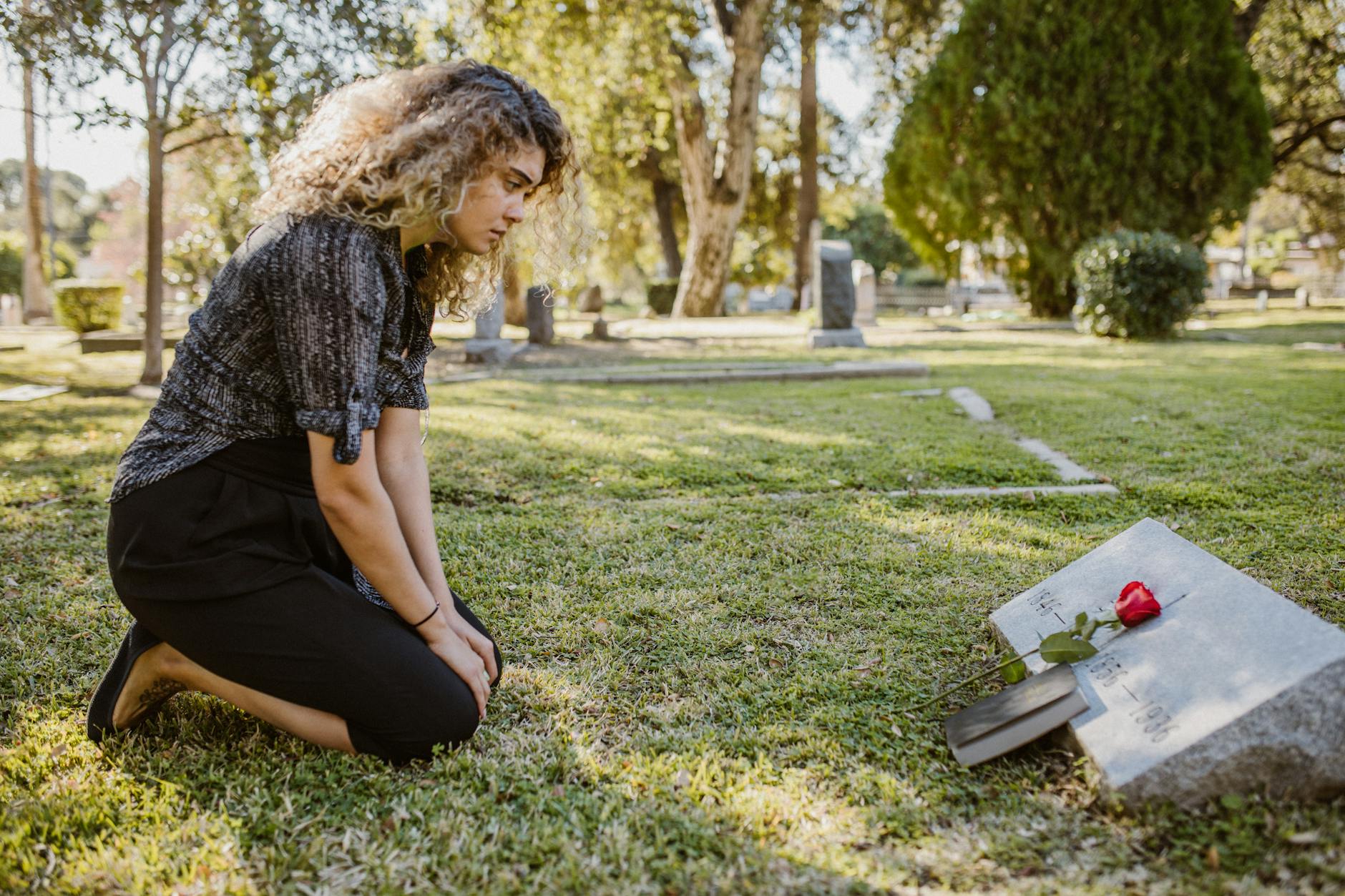
One of the most painful aspects of a dementia diagnosis is a phenomenon researchers and clinicians call “dementia grief” — the experience of mourning someone who is physically present but cognitively changing. The Alzheimer’s Society UK describes this as grieving someone who has not died, and it is a form of loss that most cultural scripts for bereavement do not account for. There is no funeral, no casserole brigade, no socially recognized moment when the grief begins. Instead, it seeps in gradually as the person you knew becomes someone slightly different, then significantly different, then unrecognizable in certain fundamental ways. A husband whose wife with frontotemporal dementia no longer laughs at his jokes, no longer remembers their honeymoon, and sometimes does not recognize him at all is living with active, ongoing grief — but he may also be making her breakfast every morning and watching television with her every evening. The grief and the relationship coexist. A 2025 study published in Taylor & Francis found that family caregivers of people with dementia experience pre-death grief reactions that are a significant risk factor for both pre- and post-bereavement distress.
In other words, the grief that begins at diagnosis does not simply end when the person dies. It compounds. The Dementia Grief Model, published in PMC, identifies three iterative states that caregivers and family members move through: separation, liminality, and re-emergence. Separation involves the painful recognition that the relationship is changing. Liminality is the disorienting in-between space — the person is here but not here, and you are neither fully a partner nor fully a caregiver nor fully bereaved. Re-emergence is the gradual process of finding new meaning and identity within the changed circumstances. These states are not linear either. A caregiver might experience re-emergence for months, only to be pulled back into separation when the disease progresses to a new stage.
Practical Coping Strategies Backed by 2025 Research
Recent research has moved beyond simply naming the emotional stages and begun identifying what actually helps people cope. A 2025 study published in SAGE Journals identified three key attributes of adaptive grief in dementia caregivers: rebuilding purpose through community, integrating change by blending past, present, and future identities, and growing toward potential through personal goals. These are not abstract concepts. Rebuilding purpose through community might mean joining a caregiver support group, volunteering for an Alzheimer’s advocacy organization, or simply maintaining friendships outside the caregiving role. Integrating change means finding ways to honor who the person was while engaging with who they are now — looking through photo albums together, for example, even when the person with dementia cannot identify everyone in the pictures. A separate 2025 study published in MDPI Healthcare examined coping styles and found that both emotion-focused coping (allowing yourself to feel and process difficult emotions) and problem-focused coping (taking concrete steps to address challenges, such as arranging respite care or consulting an elder law attorney) are linked to lower grief levels. Dysfunctional coping — which includes avoidance, substance use, denial that persists beyond its initial protective phase, and self-blame — elevates grief and worsens outcomes for both the caregiver and the person with dementia.
The tradeoff here is real. Problem-focused coping can feel cold or clinical to someone in the thick of emotional pain, and pushing too hard toward action before emotions have been processed can backfire. Conversely, spending too long in pure emotion-focused processing without taking practical steps can leave a family unprepared for the logistical realities of dementia care. The research suggests that the most resilient caregivers use both approaches, adjusting the balance depending on what the day demands. Some days require a good cry. Other days require calling the insurance company. Neither cancels out the other.
When Denial Becomes Dangerous and Other Emotional Pitfalls
Denial after a dementia diagnosis is normal and, in the short term, even protective. The Alzheimer’s Association explicitly frames early denial as a healthy coping mechanism that gives the brain time to adjust. But there is a threshold beyond which denial becomes harmful, and that threshold is different for every person and family. When denial prevents someone from completing advance directives, arranging financial power of attorney, discussing care preferences, or taking medications that could slow progression, it has shifted from protective buffer to active obstacle. This is particularly fraught in families where the person with dementia is in denial and their loved ones are not, or vice versa. A daughter who has accepted her father’s diagnosis may find it excruciating to watch him refuse to stop driving, insist nothing is wrong, and dismiss every doctor’s recommendation. Pushing too hard risks damaging the relationship during a time when connection matters enormously.
But saying nothing risks safety — his and others’. There is no clean answer here, and anyone who offers one is oversimplifying. Clinicians generally recommend gentle, repeated conversations rather than a single confrontation, involving the diagnosing physician when possible, and focusing on specific safety concerns rather than demanding blanket acceptance of the diagnosis. Depression is another area where normal grief and clinical concern can blur. Sadness after a dementia diagnosis is expected and healthy. But when sadness deepens into persistent hopelessness, withdrawal from all activities, significant weight change, or expressions of wanting to die, it has crossed into territory that likely requires professional intervention — for the person with dementia, the caregiver, or both. With 7.2 million Americans aged 65 and older now estimated to have Alzheimer’s dementia in 2025, according to the Alzheimer’s Association, the scale of unaddressed caregiver depression is a public health concern in its own right.

How the Diagnosis Affects the Entire Family System
Dementia does not happen to one person. It happens to a family. Siblings who have not spoken in years may suddenly be forced into joint decisions about a parent’s care. A spouse who has never managed household finances may need to take over overnight.
Adult children may disagree about whether Mom should move to a memory care facility or stay home with round-the-clock aides, and those disagreements often become proxies for decades of unresolved family dynamics. Each family member is processing their own emotional stages independently while also navigating the collective emotional terrain. With about 1 in 9 people aged 65 and older affected by Alzheimer’s and 42 percent of Americans over 55 estimated to eventually develop dementia according to NIH projections, this is not a rare family disruption. It is an increasingly common one, and the projected costs — $384 billion in 2025, approaching $1 trillion by 2050 according to the Alzheimer’s Association — reflect not just medical expenses but the economic weight of millions of families restructuring their lives around a diagnosis. Family meetings, ideally facilitated by a social worker or counselor experienced in dementia care, can help surface assumptions and distribute responsibilities before resentment calcifies.
Moving Forward After the Emotional Storm
Acceptance, when it comes, rarely looks like peace. It looks more like functionality — the ability to plan, to laugh occasionally, to find meaning in small moments even while carrying grief. The Alzheimer’s Society UK describes acceptance as finding ways to live with the diagnosis and focus on what can still be done, which is a more honest framing than the notion that acceptance means being okay with what is happening. Nobody is okay with dementia.
Acceptance means learning to live alongside something that is not okay. What 2025 research increasingly shows is that the emotional journey after a dementia diagnosis is not a problem to be solved but a process to be supported. The Forward with Dementia initiative emphasizes the deeply individual nature of these responses, and the emerging evidence on adaptive grief suggests that people who remain connected to community, maintain a sense of personal identity beyond caregiving, and allow themselves to feel without being consumed by feeling tend to navigate the long road of dementia with less psychological damage. None of that is easy. But knowing that the emotional chaos following a diagnosis is normal, shared by millions, and survivable can itself be a small form of relief.
Conclusion
The emotional stages of accepting a dementia diagnosis — denial, fear, anger, guilt, sadness, relief, and acceptance — are not a linear path but a recurring landscape that both the person diagnosed and their loved ones will traverse repeatedly as the disease progresses. The Kübler-Ross model offers familiar vocabulary but not an accurate map. Dementia grief is its own category of loss, defined by the painful paradox of mourning someone who is still physically present. Understanding this can help families stop judging their own emotional responses against an unrealistic standard of orderly progression.
What matters most, according to the best available evidence, is not reaching acceptance on any particular timeline but developing adaptive coping strategies — staying connected to community, balancing emotional processing with practical action, seeking professional help when sadness deepens into depression, and making critical legal and financial decisions while the person with dementia can still participate in them. With 7.2 million Americans currently living with Alzheimer’s and that number projected to keep climbing, the emotional aftermath of a dementia diagnosis is one of the most common and least discussed experiences in American family life. If you are in the middle of it, you are not doing it wrong. You are doing something extraordinarily hard, and the feelings — all of them, even the contradictory ones — are part of doing it honestly.
Frequently Asked Questions
Is it normal to feel relief after a dementia diagnosis?
Yes. The Alzheimer’s Association recognizes that relief is a common and valid response, particularly when the diagnosis explains symptoms that have been causing confusion and worry for months or years. Relief does not mean you are not also sad or scared — multiple emotions can and do coexist.
How long does denial typically last after a dementia diagnosis?
There is no standard timeline. For some people, denial lifts within days or weeks. For others, it persists for months, especially if symptoms are still mild. Denial becomes a concern when it prevents necessary planning — completing advance directives, arranging power of attorney, or addressing safety issues like driving.
Can the person with dementia grieve their own diagnosis?
Absolutely, particularly in the early stages when awareness is still intact. Many people with early-stage dementia experience the full range of emotional responses — fear, anger, sadness, and sometimes relief. As the disease progresses and awareness diminishes, the nature of their emotional experience changes, but it does not disappear.
Should I force a family member to accept their dementia diagnosis?
Forcing acceptance is generally counterproductive and can damage trust during a critical period. Clinicians recommend gentle, repeated conversations over time, involving the diagnosing physician when helpful, and focusing on specific safety or planning concerns rather than demanding emotional acceptance of the diagnosis itself.
When should grief after a dementia diagnosis prompt professional help?
When sadness becomes persistent hopelessness, when a caregiver or patient withdraws from all activities, when there are significant changes in sleep or appetite, or when anyone expresses thoughts of self-harm. A 2025 study confirmed that pre-death grief in dementia caregivers is a significant risk factor for long-term psychological distress, making early intervention important.
Are the emotional stages different for early-onset dementia?
The core emotions are similar, but early-onset dementia — diagnosed before age 65 — often intensifies certain reactions, particularly anger and fear. The person may still be working, raising children, or paying a mortgage, and the diagnosis disrupts life plans in ways that feel qualitatively different from a diagnosis at 80. Financial stress and identity loss tend to be more acute.
You Might Also Like
- What are the psychological effects of a dementia diagnosis
- What are the warning signs of financial abuse in dementia patients
- What are the state by state differences in dementia care laws
For more, see CDC — Alzheimer’s and Dementia.