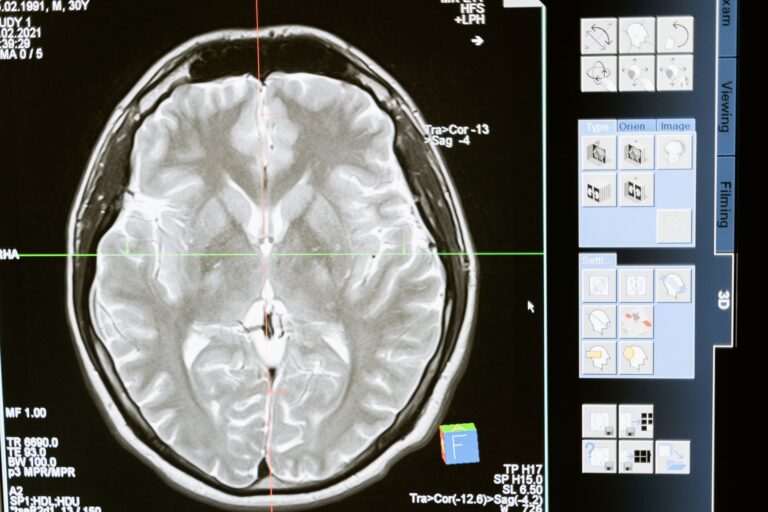
Sleep quality sits at the center of this dementia and brain health question.
Yes, improving your sleep quality can meaningfully reduce your risk of developing Alzheimer’s disease. The evidence is no longer speculative. A 2025 systematic review and meta-analysis of 30 studies encompassing roughly 15,000 participants found that poor sleep quality is directly associated with greater amyloid-beta burden in the brain — one of the defining hallmarks of Alzheimer’s. Separately, a 17-year longitudinal study showed that each 1% annual decrease in deep sleep was linked to a 27% rise in dementia risk and a 32% increased risk of Alzheimer’s specifically. These are not marginal numbers. They suggest that sleep is one of the most powerful levers we have in the fight against cognitive decline.
Consider someone in their early fifties who consistently sleeps five hours a night due to work demands. According to research from Harvard, that person has double the risk of developing dementia compared to someone sleeping six to eight hours. The damage is not theoretical or distant — it is accumulating nightly in the form of toxic protein buildup that the brain cannot adequately clear. The good news is that sleep is a modifiable risk factor. Up to 40% of dementia cases may be preventable or delayable through behavioral changes, and sleep hygiene is recognized as one of those key interventions. This article examines how sleep affects Alzheimer’s risk at a biological level, why deep sleep matters more than total hours, what the research says about timing and midlife habits, and what practical steps you can take to protect your brain starting now.
Table of Contents
- How Does Sleep Quality Directly Affect Your Alzheimer’s Risk?
- Why Deep Sleep Matters More Than Total Hours in Bed
- The Midlife Window — When Sleep Habits Matter Most
- How Much Sleep Do You Actually Need to Protect Your Brain?
- Sleep Disorders, Medications, and the Limits of Current Knowledge
- Interventions Being Studied Right Now
- Where the Science Is Heading
- Conclusion
- Frequently Asked Questions
How Does Sleep Quality Directly Affect Your Alzheimer’s Risk?
The relationship between sleep and Alzheimer’s is not simply correlational — there is a biological mechanism at work. The brain’s glymphatic system, a waste-clearance network that functions like a nighttime cleaning crew, is most active during sleep. When you sleep, neurons physically shrink, expanding the interstitial space between cells by up to 60%. This expansion allows cerebrospinal fluid to flush out amyloid-beta and tau proteins — the two toxic substances most closely associated with Alzheimer’s progression. A randomized crossover trial with 39 participants confirmed this process: normal sleep led to increased morning plasma levels of Alzheimer’s biomarkers, indicating that the brain had successfully cleared those proteins overnight. Under sleep deprivation conditions, that clearance was significantly impaired. What makes this finding so consequential is that amyloid-beta accumulation is believed to begin decades before any cognitive symptoms appear.
So the nightly failure to clear these proteins is not something you would notice immediately. It is more like a slow leak — undetectable for years until the damage reaches a tipping point. Research from the Barcelona Beta Research Center has shown that better sleep quality reduces not only the likelihood of developing clinical Alzheimer’s but also reduces the development of tau tangle pathology in the brain. Tau tangles are particularly significant because they correlate more closely with actual cognitive decline than amyloid plaques do. The comparison is stark. someone who sleeps well and allows their brain adequate time to engage this clearance system is giving themselves a nightly reset. Someone who consistently sleeps poorly is essentially allowing metabolic waste to accumulate in the brain night after night. It is one of the few areas of Alzheimer’s prevention where the mechanism is well understood and the intervention — better sleep — is accessible to most people.

Why Deep Sleep Matters More Than Total Hours in Bed
Total sleep duration matters, but the quality of that sleep — specifically, how much time you spend in deep sleep, also known as slow-wave sleep — may matter even more. A study tracking participants over 17 years found that each 1% decrease in deep sleep per year was associated with a 27% rise in dementia risk and a 32% increased risk of Alzheimer’s disease. Deep sleep is the stage during which the glymphatic system operates at peak efficiency, and it is also the stage that declines most dramatically with age. By the time most people reach their sixties, they are getting significantly less deep sleep than they did in their thirties, often without realizing it. Research from the American Academy of Sleep Medicine has further shown that lower proportions of deep sleep stages are associated with reduced brain volume in regions that are particularly vulnerable to Alzheimer’s. This includes the hippocampus and prefrontal cortex — areas critical for memory consolidation and executive function.
The implication is that deep sleep is not just a passive state of rest but an active period of brain maintenance and repair. However, there is an important caveat. You cannot simply force yourself into more deep sleep through willpower. Deep sleep is influenced by factors including physical activity, alcohol consumption, ambient temperature, and underlying sleep disorders. Someone who sleeps eight hours but wakes frequently due to untreated sleep apnea may actually get less deep sleep than someone who sleeps seven uninterrupted hours. This is why focusing exclusively on sleep duration without addressing sleep quality can be misleading. A sleep study or wearable device that tracks sleep stages can help identify whether you are actually reaching sufficient deep sleep or merely spending enough hours in bed.
The Midlife Window — When Sleep Habits Matter Most
Not all periods of life carry equal weight when it comes to sleep and dementia risk. A 2023 study from the University of California, San Francisco found that sleep quality in midlife — roughly ages 40 to 60 — may matter more for dementia prevention than sleep quality later in life. This finding aligns with what we know about Alzheimer’s pathology: the disease begins developing in the brain 15 to 20 years before symptoms emerge. What you do in your forties and fifties, it turns out, may set the trajectory for your seventies and eighties. Consider two hypothetical 45-year-olds. One prioritizes sleep, maintains a consistent schedule, and addresses a snoring issue that turned out to be mild sleep apnea.
The other works late, uses screens until midnight, and averages five to six hours of fragmented sleep. Harvard research indicates that sleeping six hours or less at ages 50, 60, and 70 is associated with a 30% increase in dementia risk compared to a normal seven-hour sleep duration. The person who neglects sleep during midlife is not just tired — they are accumulating a biological deficit that compounds over decades. This has practical implications for how we think about prevention. Much of the public conversation around Alzheimer’s focuses on older adults, but the midlife window represents an earlier and potentially more impactful opportunity for intervention. If you are in your forties or fifties and struggling with sleep, the time to address it is now — not when memory concerns begin to surface.

How Much Sleep Do You Actually Need to Protect Your Brain?
The research points to a clear optimal range: seven to eight hours of quality sleep per night. Sleeping fewer than five hours doubles your risk of dementia and death according to Harvard data. But the relationship is not linear in the way many people assume. Oversleeping carries its own risks. A 2024 study with a 10-year follow-up found that sleeping more than eight hours per night was associated with a 64% increased risk of incident dementia and a twofold higher risk of Alzheimer’s compared to those sleeping seven to eight hours. This U-shaped relationship means that both too little and too much sleep are problematic, and the sweet spot is narrower than people might expect.
The challenge is that long sleep can itself be an early symptom of neurodegeneration rather than a cause — the brain may demand more sleep as it becomes less efficient. So if someone who previously slept seven hours begins regularly sleeping nine or ten hours without an obvious explanation like illness or medication changes, that shift warrants a conversation with a physician. The tradeoff is worth acknowledging. In a culture that often glorifies productivity and treats sleep as expendable, deliberately protecting seven to eight hours of sleep requires sacrificing something else — late-night work, early-morning exercise, or evening social activities. But viewed through the lens of Alzheimer’s prevention, those seven to eight hours may be the single most productive thing you do in a 24-hour period. No supplement, brain game, or superfood has the same weight of evidence behind it as consistently adequate sleep.
Sleep Disorders, Medications, and the Limits of Current Knowledge
While the case for sleep improvement is compelling, there are important limitations to acknowledge. Most of the research linking sleep to Alzheimer’s is observational. We know that poor sleep and Alzheimer’s are strongly associated, but the causal direction can be difficult to untangle. Alzheimer’s pathology itself disrupts sleep circuitry in the brain, meaning that some people who sleep poorly may already have early-stage disease driving their insomnia. This creates a chicken-and-egg problem that researchers are still working to resolve. Sleep disorders like obstructive sleep apnea present a particular challenge. Apnea fragments sleep and reduces oxygen delivery to the brain, and it is estimated to affect a significant percentage of middle-aged and older adults, many of whom are undiagnosed.
Treating sleep apnea with CPAP therapy may improve sleep quality and potentially reduce dementia risk, but long-term randomized trials are still limited. Similarly, the role of sleep medications is uncertain. Many common prescription sleep aids — particularly benzodiazepines and anticholinergic drugs — have themselves been associated with increased dementia risk in some studies. This means that achieving better sleep through medication is not necessarily protective and may even be counterproductive. The warning here is straightforward: improving sleep quality for brain health is not as simple as taking a pill. Pharmacological solutions may mask the problem without delivering the deep, restorative sleep stages that the brain needs. Anyone with persistent sleep difficulties should pursue evaluation for underlying disorders before defaulting to medication.

Interventions Being Studied Right Now
The scientific community is actively testing whether targeted sleep interventions can reduce Alzheimer’s biomarkers and clinical risk. Among the most promising approaches is Cognitive Behavioral Therapy for Insomnia, known as CBT-I. Unlike sleep medications, CBT-I addresses the behavioral and cognitive patterns that perpetuate insomnia — things like anxiety about not sleeping, irregular sleep schedules, and excessive time spent in bed awake.
Clinical trials are currently underway, including trials listed on Alzheimers.gov, that are specifically evaluating whether CBT-I and multi-modal sleep interventions can alter Alzheimer’s disease risk trajectories. Exercise is another intervention under study, both for its direct effects on sleep architecture and its independent benefits for brain health. Regular aerobic exercise has been shown to increase the proportion of time spent in deep sleep, which is precisely the sleep stage most closely linked to amyloid and tau clearance. The convergence of these two benefits — better sleep and direct neuroprotection — makes exercise one of the most efficient tools available for dementia risk reduction.
Where the Science Is Heading
The next decade of Alzheimer’s research is likely to sharpen our understanding of exactly how much sleep improvement is needed to move the needle on risk. Large-scale interventional trials — rather than observational studies — will be critical for establishing whether fixing sleep can truly prevent or delay the disease, as opposed to merely being associated with lower risk. The Alzheimer’s Drug Discovery Foundation has identified sleep as one of the modifiable risk factors within the broader finding that up to 40% of dementia cases may be preventable or delayable through behavioral changes.
What is already clear is that sleep is no longer a footnote in the Alzheimer’s prevention conversation. It has moved to the center. The glymphatic system, deep sleep architecture, and midlife sleep habits are now active research frontiers with real clinical implications. For individuals and families navigating dementia risk, this shift represents something genuinely hopeful: a domain where personal choices, made consistently over years, may offer meaningful protection against a disease that currently has no cure.
Conclusion
The evidence connecting sleep quality to Alzheimer’s risk is substantial and growing. Poor sleep accelerates amyloid-beta and tau accumulation, reduces brain volume in vulnerable regions, and is associated with significantly elevated dementia risk — particularly when sleep problems begin in midlife. Both too little and too much sleep are problematic, with seven to eight hours of quality sleep representing the optimal target. Deep sleep stages appear to be especially critical, as they enable the glymphatic system to clear the toxic proteins that drive Alzheimer’s pathology.
If you take one thing from this article, let it be this: sleep is not a luxury or a passive state. It is an active, biologically essential process that your brain depends on for self-maintenance. Prioritizing sleep hygiene, seeking evaluation for sleep disorders, considering evidence-based interventions like CBT-I, and maintaining consistent sleep habits — especially during your forties and fifties — are among the most concrete steps you can take to reduce your Alzheimer’s risk. No single intervention guarantees prevention, but few modifiable factors have as much evidence behind them as sleep.
Frequently Asked Questions
How many hours of sleep per night reduce Alzheimer’s risk the most?
Research consistently points to seven to eight hours as the optimal range. Sleeping fewer than five hours doubles dementia risk, while sleeping more than eight hours is associated with a 64% increased risk of incident dementia. The target is not just duration but quality — uninterrupted sleep with adequate time in deep sleep stages.
Can napping make up for poor nighttime sleep in terms of brain health?
There is limited evidence that naps can compensate for chronically poor nighttime sleep when it comes to Alzheimer’s risk. The glymphatic system’s waste-clearance process appears to depend on sustained periods of deep sleep, which are more reliably achieved during a full night of sleep. Naps may offer short-term cognitive benefits, but they are not a substitute for addressing underlying sleep problems.
Does sleep apnea increase Alzheimer’s risk?
Sleep apnea fragments sleep and reduces oxygen flow to the brain, both of which are associated with higher dementia risk. Treating sleep apnea — typically with CPAP therapy — may help improve sleep quality and protect brain health, though long-term randomized trial data on dementia outcomes specifically are still limited.
Are sleeping pills safe to use for Alzheimer’s prevention?
This is an area of concern. Some common sleep medications, particularly benzodiazepines and anticholinergic drugs, have been linked to increased dementia risk in observational studies. These medications may also suppress deep sleep stages, which are the very stages most important for brain waste clearance. Non-pharmacological approaches like CBT-I are generally recommended as first-line treatments for chronic insomnia.
At what age should I start worrying about sleep and dementia risk?
The research suggests that midlife — ages 40 to 60 — is the most critical window for sleep-related dementia prevention. Since Alzheimer’s pathology begins developing 15 to 20 years before symptoms appear, establishing good sleep habits in your forties and fifties may have more protective impact than changes made later in life.
Does improving sleep quality help if Alzheimer’s already runs in my family?
While genetic risk factors like the APOE4 gene variant cannot be changed, sleep is a modifiable risk factor that may help offset some genetic predisposition. Up to 40% of dementia cases are considered potentially preventable through behavioral modifications, and sleep is among the most impactful of those factors. Good sleep hygiene is worth pursuing regardless of family history.
You Might Also Like
- What is the average lifetime cost of caring for someone with alzheimers
- How to create a trust for someone with alzheimers disease
- Why do people with dementia sleep all day and stay awake at night
For more, see NIH MedlinePlus — cognitive testing.