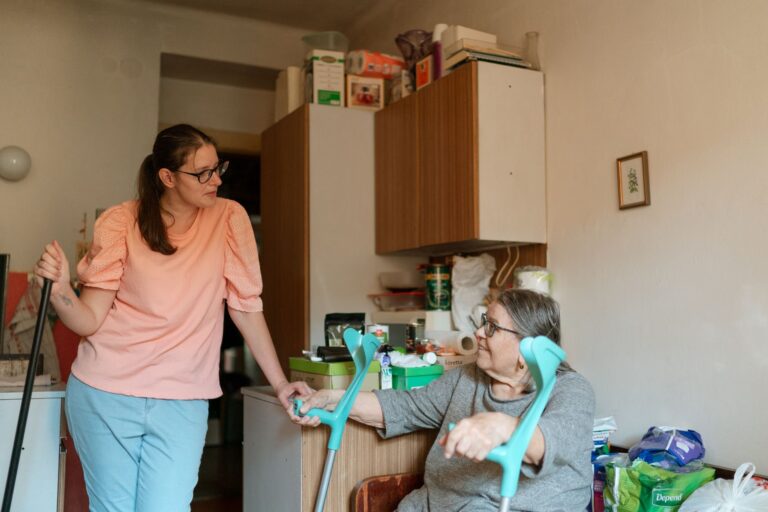
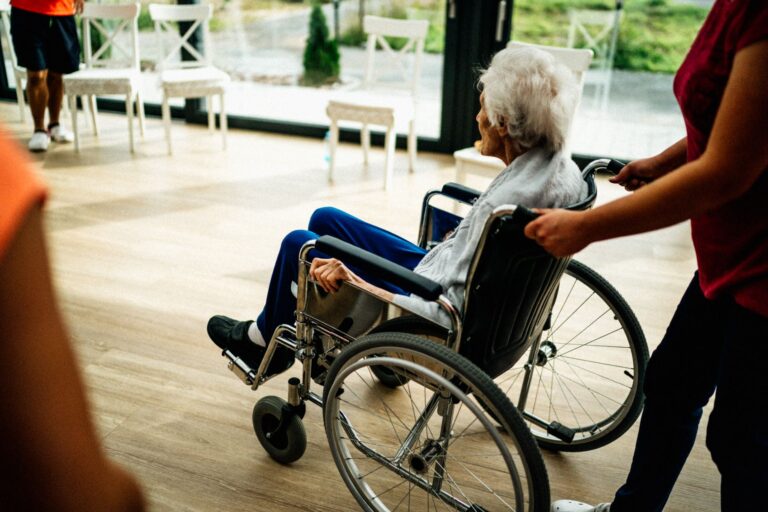
Skilled nursing and memory care serve fundamentally different populations with different needs. Skilled nursing facilities provide intensive, round-the-clock medical treatment delivered by registered nurses and licensed professionals — think post-surgical recovery, wound care, IV therapy, and rehabilitation. Memory care, by contrast, is specialized residential care built exclusively around the needs of people living with Alzheimer’s disease, dementia, and other cognitive impairments, where the focus is on behavioral support, safety, and daily routine rather than acute medical intervention. A person recovering from a hip replacement needs skilled nursing. A person in the middle stages of Alzheimer’s who wanders at night and struggles to recognize family members needs memory care. These are not interchangeable settings, and placing someone in the wrong one can mean either paying for medical services they don’t need or, worse, leaving a cognitively impaired person in an environment that isn’t designed to keep them safe.
The distinction matters more than ever. According to the Alzheimer’s Association’s 2025 Facts and Figures report, 7.2 million Americans age 65 and older are now living with Alzheimer’s, with projections reaching 13.8 million by 2060 without medical breakthroughs. Nearly 1 in 9 people over 65 has the disease, and almost two-thirds of them are women. Health and long-term care costs for dementia are projected at $384 billion in 2025 alone. Families facing these numbers need to understand exactly what each type of care provides, what it costs, and what insurance will and won’t cover. This article breaks down the staffing, environment, cost, and coverage differences between skilled nursing and memory care so you can make an informed decision for someone you love.
Table of Contents
- What Exactly Separates Skilled Nursing From Memory Care?
- How Much Does Each Type of Care Actually Cost?
- Staffing Requirements and What They Mean for Your Family Member
- How to Evaluate the Physical Environment of Each Facility
- What Medicare and Medicaid Will and Won’t Pay For
- When Someone Needs Both Skilled Nursing and Memory Care
- Planning Ahead as Dementia Progresses
- Conclusion
- Frequently Asked Questions
What Exactly Separates Skilled Nursing From Memory Care?
The core difference comes down to what problem each facility is solving. Skilled nursing facilities, sometimes called SNFs, operate under physician supervision with registered nurses on-site 24 hours a day. They handle medical complexity — managing feeding tubes, administering intravenous medications, providing physical and occupational therapy after a stroke or surgery, and monitoring chronic conditions that require constant clinical attention. The environment resembles a hospital more than a home, with nurses’ stations, medical equipment, and clinical protocols governing daily operations. Memory care communities are designed around cognition, not clinical acuity. The residents are typically medically stable — they don’t need IV drips or post-surgical wound care — but they need an environment that compensates for severe cognitive loss. That means secured entrances and exits to prevent wandering, color-coded hallways so residents can find their rooms, simplified floor plans that reduce confusion, and consistent caregiver assignments so residents see the same faces each day.
For someone with moderate-to-advanced Alzheimer’s, encountering a rotating cast of unfamiliar staff can trigger agitation and fear. Memory care facilities are built to minimize that kind of distress. Here’s a practical example of why the distinction matters. Consider a 78-year-old woman with mid-stage Alzheimer’s who breaks her hip. During recovery, she needs skilled nursing — someone has to manage her surgical wound, oversee physical therapy, and monitor her for post-operative complications. But once she’s healed, she doesn’t need that level of medical infrastructure anymore. What she needs is a secure, structured environment where trained staff can manage her sundowning episodes, redirect her when she tries to leave, and help her through activities of daily living. Keeping her in a skilled nursing facility long-term would mean paying for medical capacity she isn’t using, in an environment that isn’t optimized for her actual condition.

How Much Does Each Type of Care Actually Cost?
Cost is often the first question families ask, and the numbers are significant either way. The national median for skilled nursing runs $9,277 per month for a semi-private room and $10,646 per month for a private room, translating to roughly $314 to $361 per day. For 2026, the average annual cost for a shared room in a nursing home is projected at $119,340. Memory care is somewhat less expensive at a national median of approximately $6,988 to $7,505 per month, though a typical two- to three-year stay still adds up to between $180,000 and $270,000 in total. Memory care typically costs $1,000 to $3,000 less per month than skilled nursing, and the reason is straightforward — nursing homes employ more licensed medical professionals and maintain more clinical infrastructure. However, memory care costs vary enormously by state, ranging from about $4,000 per month on the low end to over $11,000 per month in high-cost areas.
Costs rose in every state between 2024 and 2025, and 2026 estimates are trending higher still. Families in rural parts of the Midwest may find memory care at $4,500 a month, while families in the Northeast or along the West Coast may see bills exceeding $9,000 monthly for comparable services. One warning that catches families off guard: the lower sticker price for memory care doesn’t always mean lower total spending. Many memory care communities charge a base rate that covers room, board, and a standard level of assistance, then add tiered fees as a resident’s needs increase. A person in early-stage dementia might pay the base rate, but as the disease progresses and the resident needs more help with eating, bathing, and behavioral management, monthly charges can climb by $1,000 to $2,000 or more. Always ask about tiered pricing before signing a contract.
Staffing Requirements and What They Mean for Your Family Member
Staffing is where the practical, day-to-day experience of care diverges sharply between these two settings. Under the CMS final rule (CMS-3442-F), skilled nursing facilities must provide a minimum of 3.48 hours of direct care per resident per day, broken down into at least 0.55 hours of registered nurse care and 2.45 hours of nurse aide care. An RN must be on-site 24 hours a day, 7 days a week. This is a federal floor — many facilities exceed it, and some states impose higher minimums. Memory care staffing works differently. Rather than specifying hours of nursing time, memory care communities aim for staff-to-resident ratios, with the ideal being 1 staff member for every 5 to 6 residents during waking hours. The best facilities operate at a 1-to-3 ratio.
Staff in memory care must receive at least 6 hours of continuing dementia-specific training annually, covering topics like de-escalation techniques, communication strategies for people with aphasia, and recognizing pain in residents who can no longer articulate what hurts. A skilled nursing aide might be excellent at wound care but have no idea how to redirect a resident experiencing a paranoid delusion — that’s a fundamentally different skill set. Consider the practical implications. In a skilled nursing facility, the staff priority is medical: administering medications on schedule, monitoring vital signs, managing clinical equipment. In memory care, the staff priority is behavioral and emotional: coaxing a resistant resident through a shower, calming someone who believes strangers are in their home, or leading structured activities designed to preserve remaining cognitive function. If your family member’s primary challenge is medical complexity, skilled nursing staffing serves them. If their primary challenge is cognitive decline with behavioral symptoms, memory care staffing is what they need.

How to Evaluate the Physical Environment of Each Facility
Walk into a skilled nursing facility and you’ll see something that looks and feels like a medical institution. There are nurses’ stations with medication carts, hallways wide enough for hospital beds and wheelchairs, shared rooms with curtain dividers, and clinical equipment visible throughout. The design prioritizes efficiency of medical care delivery — staff need to reach patients quickly, monitor multiple people simultaneously, and move equipment between rooms. Walk into a well-designed memory care community and the experience is deliberately different. Secured entrances and exits prevent residents from wandering into parking lots or streets — a real and potentially fatal risk, since 6 in 10 people with dementia will wander at some point. Hallways may be color-coded so residents can identify different wings. Floor plans are simplified, often in loops rather than dead ends, so a wandering resident naturally circles back rather than getting trapped and agitated.
Outdoor spaces are enclosed and secured. Lighting is designed to reduce sundowning symptoms. And the overall atmosphere aims to feel residential rather than clinical, because a hospital-like environment can increase confusion and anxiety in people with dementia. The tradeoff is real, though. Memory care communities, because they’re designed around cognitive needs rather than medical ones, typically have less medical equipment and fewer licensed nurses on staff. If a memory care resident develops a serious medical condition — pneumonia, a urinary tract infection that leads to sepsis, a fall resulting in a fracture — they may need to be transferred to a hospital or skilled nursing facility for treatment. Families should ask any memory care community what happens when a resident’s medical needs escalate beyond what the facility can handle. The answer should be specific, not vague.
What Medicare and Medicaid Will and Won’t Pay For
Insurance coverage is where many families hit a wall, because the rules are counterintuitive. Medicare Part A covers up to 100 days in a skilled nursing facility after a qualifying 3-day hospital stay. The first 20 days are fully covered. Days 21 through 100 require a daily coinsurance of $209.50 in 2025. After day 100, Medicare coverage stops entirely. This benefit is designed for short-term rehabilitation — recovering from surgery, regaining function after a stroke — not for long-term custodial care. Medicare pays zero dollars toward memory care. The program classifies memory care as custodial care, meaning it helps with daily living activities rather than treating a medical condition, and custodial care falls outside Medicare’s coverage mandate.
This surprises and frustrates families who reasonably argue that Alzheimer’s is a disease, not a lifestyle choice, but the coverage rules are what they are. Medicaid, on the other hand, generally covers 100 percent of nursing home costs for people who qualify — room, board, nursing, and therapy. However, Medicaid typically does not cover room and board in standalone memory care or assisted living facilities. Some states offer Home and Community-Based Services waivers that may partially cover memory care, but availability varies widely and waitlists can be long. Medicaid eligibility thresholds are strict: roughly $2,900 per month in income and $2,000 in countable assets for an individual, though exact figures vary by state. Many families find themselves in a painful middle ground — too much in assets to qualify for Medicaid, but not enough to comfortably afford $7,000 to $10,000 per month out of pocket for years. Long-term care insurance, if purchased years before it’s needed, can help bridge this gap, but fewer than 10 percent of Americans over 65 carry such policies. If you’re planning ahead for a family member’s potential dementia care, investigate your state’s Medicaid waiver programs and long-term care insurance options well before a crisis forces a decision.
When Someone Needs Both Skilled Nursing and Memory Care
Some residents don’t fit neatly into one category. A person with advanced Alzheimer’s who also has diabetes requiring insulin management, a chronic wound, or a degenerative condition needing regular skilled intervention presents a challenge. Some skilled nursing facilities have dedicated memory care units or wings, which attempt to combine clinical staffing with dementia-appropriate design features.
These hybrid arrangements can work well, but quality varies enormously. A “memory care wing” in a nursing home might be a genuinely specialized unit with trained staff, secured doors, and structured activities — or it might simply be a locked hallway with the same staff and same routines as the rest of the building. When evaluating a hybrid facility, ask specific questions. How many hours of dementia-specific training do staff on this unit receive? Is the unit physically separated from the general nursing population? Are there dedicated activity programs designed for cognitive engagement? What is the staff-to-resident ratio on this unit compared to the rest of the facility? If the answers are vague or the unit looks like an afterthought, it probably is.
Planning Ahead as Dementia Progresses
Dementia is a progressive disease, which means the right care setting today may not be the right one in two years. Many families start with in-home care, move to an assisted living community with memory care services as the disease advances, and eventually face a decision about skilled nursing if medical needs become dominant in the final stages. Planning for these transitions in advance — understanding the cost trajectory, identifying facilities, exploring Medicaid eligibility and spend-down strategies — is far better than scrambling during a crisis hospitalization. With 7.2 million Americans currently living with Alzheimer’s and that number projected to nearly double by 2060, the demand for both memory care and skilled nursing will intensify.
Costs will continue rising. Medicaid programs will face increasing pressure. Families who start the conversation early, visit facilities before they’re needed, and understand the financial landscape will be in a far stronger position to secure appropriate care. The roughly 200,000 Americans under 65 with younger-onset dementia face an especially long planning horizon and should begin this process as soon as possible after diagnosis.
Conclusion
Skilled nursing and memory care exist to solve different problems. Skilled nursing is built for medical intensity — the staff, the equipment, and the environment are designed to deliver clinical treatment around the clock. Memory care is built for cognitive safety — the secured spaces, the trained caregivers, the structured routines, and the simplified environments are designed to support people whose primary challenge is dementia, not acute medical illness. Skilled nursing costs more per month because of its higher medical staffing requirements, but memory care’s costs accumulate over longer stays and can increase as the disease progresses. The most important step you can take is to honestly assess what your family member actually needs right now and what they’re likely to need in the near future.
Talk to their physician. Visit both types of facilities. Ask hard questions about staffing ratios, training requirements, and what happens when needs change. And start understanding the financial picture — what Medicare and Medicaid will and won’t cover, what your state’s waiver programs look like, and whether long-term care insurance is still an option. The decision between skilled nursing and memory care isn’t just a medical one. It’s a financial, emotional, and logistical decision that deserves careful, informed attention.
Frequently Asked Questions
Can someone with dementia be in a skilled nursing facility?
Yes. Many skilled nursing facilities accept residents with dementia, and some have dedicated memory care units. However, a standard skilled nursing environment isn’t designed around cognitive needs — it lacks the secured exits, simplified layouts, and dementia-trained staffing ratios that memory care provides. If the person’s primary need is medical, skilled nursing may be appropriate. If their primary need is cognitive and behavioral support, memory care is the better fit.
Does Medicare ever pay for memory care?
No. Medicare classifies memory care as custodial care and does not cover it. Medicare Part A will cover up to 100 days in a skilled nursing facility after a qualifying hospital stay, but it pays nothing toward memory care. Medicaid may partially cover memory care in some states through Home and Community-Based Services waivers, but coverage varies widely.
How long do people typically stay in memory care?
The average stay in memory care is approximately two to three years, though this varies significantly depending on the stage of dementia at admission and overall health. Total costs over a typical stay range from roughly $180,000 to $270,000 at national median rates.
What should I look for when touring a memory care facility?
Pay attention to whether doors and exits are secured, whether the layout is simple and navigable, whether staff know residents by name, and whether there are structured daily activities. Ask about the staff-to-resident ratio during waking hours — the ideal is 1-to-5 or 1-to-6, with the best facilities at 1-to-3. Ask how many hours of dementia-specific training staff receive annually, and ask what happens if a resident’s medical needs exceed what the facility can manage.
Is memory care the same as assisted living?
No. Memory care is a specialized subset of assisted living designed specifically for people with dementia. Standard assisted living communities serve older adults who need help with daily activities but are generally cognitively intact. Memory care adds secured environments, dementia-trained staff, higher caregiver ratios, and structured programming that standard assisted living does not provide. Memory care typically costs more than standard assisted living as a result.