The most powerful protective factors against Alzheimer’s disease are not locked inside a laboratory or a prescription bottle — many of them are choices made across a lifetime. According to the 2024 Lancet Commission, addressing 14 modifiable risk factors could prevent or delay up to 45 to 49 percent of all dementia cases worldwide. That means nearly half of Alzheimer’s cases may not be inevitable.
The factors span three phases of life: education and cognitive engagement in early life, blood pressure and hearing health in midlife, and social connection and physical activity in later years. Managing just one of them — untreated hearing loss — accounts for the single largest share of preventable cases at 7 percent. This article covers the full landscape of what current science says protects the brain against Alzheimer’s, from the well-established (exercise, blood pressure control, not smoking) to the genuinely surprising (the shingles vaccine, specific immune cells in the brain). It also looks at emerging research from 2025 and 2026 that is beginning to explain the biological mechanisms behind these protections — and what they might mean for anyone trying to reduce their risk or support a loved one.
Table of Contents
- What Are the Most Evidence-Based Protective Factors Against Alzheimer’s Disease?
- How Does Hearing Loss and Vision Loss Fit Into Alzheimer’s Prevention?
- The Role of Physical Activity and Cardiovascular Health in Brain Protection
- Cognitive Stimulation, Education, and Building Brain Reserve
- Social Connection, Depression, and Isolation — Underestimated Risks
- The Shingles Vaccine — A Surprising Finding in Dementia Prevention
- Emerging Science — What New Research Reveals About Brain Protection
- Conclusion
- Frequently Asked Questions
What Are the Most Evidence-Based Protective Factors Against Alzheimer’s Disease?
The 2024 Lancet Commission on Dementia Prevention, Intervention, and Care published the most comprehensive analysis to date, identifying 14 modifiable risk factors and estimating how much of the global dementia burden each one contributes. The two newest additions to the list — high LDL cholesterol and uncorrected vision loss — each carry meaningful weight: cholesterol accounts for 7 percent of attributable cases, on par with hearing loss, while uncorrected vision accounts for roughly 2 percent. Together, these additions reinforced something the research community has been moving toward for years: Alzheimer’s is not simply a disease of old age or bad luck. It is deeply shaped by how we live. To understand the scale of what “modifiable” means here, consider a practical example. A 55-year-old with untreated hypertension, who is sedentary and moderately isolated from social contact, may be carrying three or four of these risk factors simultaneously. Individually, each adds perhaps 2 to 5 percent to population-level dementia risk.
But in combination, and compounded over decades, the effect is cumulative. The commission’s estimate of 45 to 49 percent prevention potential assumes that all 14 factors are addressed — a theoretical ceiling, not a guarantee — but even partial progress across several factors can meaningfully shift risk. The protective factors are best understood as the inverse of these risks. Getting a quality education early in life builds what researchers call cognitive reserve — extra neural capacity that the brain draws on when damage begins. Managing blood pressure in your 40s and 50s protects the small blood vessels in the brain. Staying physically active, maintaining social connections in later life, and treating depression are not merely good lifestyle advice — they are now recognized as genuine neurological interventions. The evidence does not suggest any single factor is sufficient on its own, but it does show that the accumulation of protective choices matters enormously.

How Does Hearing Loss and Vision Loss Fit Into Alzheimer’s Prevention?
Hearing impairment was already on the Lancet Commission’s list before 2024, but its prominence — representing 7 percent of attributable dementia cases — is still underappreciated by many people. The mechanism is not fully settled, but the leading theories point to cognitive load: when the brain is constantly straining to decode degraded sound, it diverts resources away from memory and attention. Social withdrawal caused by hearing difficulty may compound this, adding isolation-related risk on top of sensory strain. Crucially, this is one area where an intervention has shown direct clinical benefit. A clinical trial — cited by the National Institute on Aging — demonstrated that correcting hearing loss with hearing aids or cochlear implants reduced the rate of cognitive decline in older adults who were already at higher dementia risk. This is a significant finding because it moves hearing intervention from the category of “probably helpful” to something tested in a controlled setting.
For a family supporting an older relative who resists hearing aids, this is worth raising with their doctor. The limitation is that the benefit appears strongest in people with identifiable risk factors for dementia — the effect in the general low-risk population is less clear. Vision loss was added as a newly recognized risk factor in 2024, accounting for about 2 percent of cases. Uncorrected vision loss, like hearing loss, likely creates cognitive strain and contributes to social isolation and reduced physical activity. The protective action is straightforward: regular eye exams, appropriate corrective lenses, and prompt treatment of conditions like cataracts. However, if a person’s vision loss is due to a condition that cannot be corrected — such as advanced macular degeneration — the benefits of this particular intervention are limited. Addressing what is correctable remains worth doing, but it should not generate false certainty.
The Role of Physical Activity and Cardiovascular Health in Brain Protection
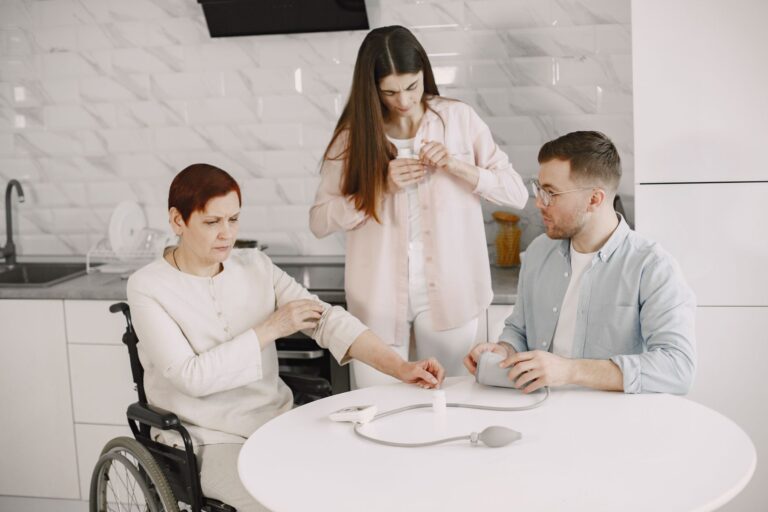
Physical activity sits at an intersection of multiple protective mechanisms. It supports cardiovascular health, reduces blood pressure, helps regulate body weight and blood sugar, lifts mood, and appears to have direct effects on brain structure — particularly the hippocampus, which is central to memory formation. The National Institute on Aging notes that physical activity is associated with slower cognitive decline and that preliminary evidence supports a role in actually reducing Alzheimer’s risk, though the evidence is not yet definitive enough to state a specific dose or type of exercise as protective. What is well-established is the role of cardiovascular risk management more broadly. High blood pressure in midlife — particularly the 40s and 50s — is one of the clearest modifiable contributors to dementia.
The brain’s small blood vessels are uniquely vulnerable to hypertensive damage, and this damage accumulates silently over decades before cognitive symptoms appear. Managing hypertension is therefore both a heart health measure and a brain health measure. The Alzheimer’s Drug Discovery Foundation explicitly identifies this as one of the strongest levers available through lifestyle intervention. As an example of how these factors interact: a person who begins a regular walking routine at age 50 is simultaneously addressing physical inactivity, likely managing weight and blood pressure, and potentially reducing depression risk — three separate items on the Lancet Commission’s list. This is why researchers emphasize that protective behaviors cluster together. The cumulative effect of addressing several risk factors at once is larger than addressing any single one in isolation.

Cognitive Stimulation, Education, and Building Brain Reserve
Education in early life is one of the original items on the Lancet Commission list, attributed to roughly 5 percent of dementia cases. The working theory is that education builds synaptic density and functional connectivity — a kind of cognitive reserve that allows the brain to tolerate more damage before symptoms become apparent. Someone with a high level of cognitive reserve may carry significant amyloid plaque burden and still function relatively well; someone with lower reserve may show symptoms earlier with equivalent pathology. What is encouraging is that this principle does not stop at formal schooling. Research published in January 2026, reported by myScience.org, found that early cognitive training in Alzheimer’s disease models restored synaptic plasticity markers and produced a less reactive neuroinflammatory profile around amyloid plaques. In practical terms, the brain exposed to cognitive challenge showed measurable biological differences in how it responded to the disease process.
This is preliminary — the research was conducted in animal models — but it adds biological plausibility to the long-standing recommendation to stay mentally active across the lifespan. The tradeoff worth understanding here is that cognitive stimulation is not a treatment. It does not clear amyloid or reverse neurodegeneration. Someone already in the moderate stages of Alzheimer’s will not benefit from crossword puzzles in the way a healthy 60-year-old might benefit from sustained intellectual engagement. The protective effect appears strongest when started early — in midlife or earlier — and maintained consistently. Treating cognitive activity as a long-term habit, rather than a last-minute intervention, is how the evidence best supports it.
Social Connection, Depression, and Isolation — Underestimated Risks
Social isolation in later life accounts for approximately 5 percent of dementia cases in the Lancet Commission’s analysis. This is not a trivial figure. For context, it is the same magnitude as low educational attainment in early life. Yet isolation often goes unaddressed in routine medical care, in part because it does not have an obvious clinical solution the way elevated blood pressure does. The protective factor here is genuine social engagement — not superficial contact, but meaningful connection. The distinction matters.
Research on loneliness in older adults suggests that the subjective experience of loneliness carries health consequences independent of objective social contact. A person who sees family regularly but feels disconnected may experience similar neurological stress as someone who is entirely alone. This makes the intervention more complex: it is not simply about arranging more visits, but about the quality and meaning of social relationships. Depression also belongs in this section, because it is both a risk factor for dementia and often a consequence of social isolation — and because the relationship may be bidirectional. Depression in midlife and later life is associated with increased dementia risk, and the mechanisms likely include inflammation, cortisol dysregulation, and reduced engagement in protective behaviors. A warning worth stating plainly: treating depression aggressively, rather than normalizing it as an inevitable part of aging, is part of brain health care. If an older adult’s depression is going unmanaged, the downstream neurological consequences are not trivial.

The Shingles Vaccine — A Surprising Finding in Dementia Prevention
One of the more unexpected findings in recent dementia research came from a natural experiment in Wales, where the rollout of the shingles vaccine (herpes zoster vaccine) was associated with a striking reduction in dementia incidence among vaccinated seniors. This finding is cited in the NIH’s 2025 Research Progress Report and has generated significant interest because it suggests a possible viral or inflammatory pathway in dementia development. The herpes zoster virus, which causes shingles, remains dormant in the nervous system after a chickenpox infection and can reactivate in older age.
The hypothesis is that viral reactivation — even subclinical — may trigger neuroinflammation that accelerates Alzheimer’s pathology. The vaccine preventing this reactivation could therefore have neuroprotective effects beyond its primary purpose. This does not mean the shingles vaccine is a dementia treatment, and the evidence remains observational rather than from a randomized controlled trial. However, it adds to a growing body of research suggesting that chronic or recurrent infections may play a role in brain aging, and that vaccination may have benefits extending beyond the conditions they are designed to prevent.
Emerging Science — What New Research Reveals About Brain Protection
Two findings from late 2025 and early 2026 are beginning to illuminate the cellular and molecular biology behind why some people’s brains appear more resistant to Alzheimer’s pathology. In November 2025, researchers reported in ScienceDaily that a specific population of microglia — the brain’s immune cells — with lower PU.1 transcription factor expression and higher CD28 receptor expression appeared to be protective against brain inflammation associated with Alzheimer’s. Microglia are the brain’s resident immune cells, and their behavior around amyloid plaques and damaged neurons appears to be critical in determining how quickly the disease progresses.
Separately, a January 2026 finding identified what researchers described as a “master regulator” of brain aging — a protein whose manipulation appeared capable of reversing some features of brain aging in experimental models. These discoveries are early-stage and far from clinical application, but they point toward a future where protective interventions may include biological targets — not just lifestyle modifications. For now, the practical takeaway is that the biology of brain resilience is an active and rapidly developing field, and the current lifestyle-based protective factors sit alongside, not instead of, potential future medical tools.
Conclusion
The evidence from the 2024 Lancet Commission and subsequent research makes a compelling case that Alzheimer’s disease is partly preventable — not fully, and not for everyone, but substantially and meaningfully. Nearly half of all dementia cases may be linked to 14 modifiable risk factors, which means the protective actions are not obscure or inaccessible. They include things like getting hearing loss treated, managing blood pressure through midlife, staying physically active, maintaining social connections, avoiding smoking, and building a lifetime habit of cognitive engagement. None of these requires a clinical trial result or a prescription. They require sustained attention over decades. The newer findings — on the shingles vaccine, on specific brain immune cells, on a potential protein that regulates brain aging — suggest that the landscape of protective strategies will expand.
But the foundation is already solid. For anyone managing their own brain health, or supporting a family member at risk, the most actionable step is to treat the 14 Lancet risk factors not as a checklist to revisit once but as a framework for ongoing decisions. Address what is correctable. Treat conditions rather than tolerating them. Stay connected. The science supports the effort.
Frequently Asked Questions
Can Alzheimer’s disease actually be prevented?
Not entirely, and not for everyone. Genetics, particularly APOE e4 status, plays a real role in individual risk. But the 2024 Lancet Commission found that up to 45 to 49 percent of dementia cases may be preventable or delayable by addressing modifiable risk factors. Prevention does not mean guaranteed protection — it means meaningfully shifting the odds.
At what age should I start thinking about Alzheimer’s prevention?
The research suggests that protective behaviors matter across the entire lifespan. Low education in early life is a risk factor; physical inactivity and social isolation in later life are also risk factors. Midlife — roughly ages 40 to 65 — appears to be a particularly important window for managing blood pressure, weight, hearing, and cholesterol. Starting earlier is better, but starting later is still better than not starting.
Does the shingles vaccine really reduce dementia risk?
A natural experiment in Wales found a striking association between shingles vaccination and reduced dementia incidence. This is observational evidence, not a randomized controlled trial, so it cannot establish definitive cause and effect. However, it is a credible finding reported by the NIH, and it aligns with broader hypotheses about viral inflammation and brain aging. Getting the shingles vaccine is already recommended for older adults — the potential dementia-related benefit is an added reason to follow that recommendation.
Is there anything I can do if I already have mild cognitive impairment?
The same lifestyle factors that are protective earlier in life — physical activity, social engagement, blood pressure control, treating depression — remain relevant after a mild cognitive impairment diagnosis. Cognitive stimulation, while not curative, may help maintain function. Correcting hearing or vision loss at any stage is still worthwhile. The goal shifts from prevention to slowing progression, but many of the same tools apply.
How much does diet matter for Alzheimer’s risk?
Diet appears in the research indirectly through the risk factors it influences — obesity, high LDL cholesterol, high blood pressure, and diabetes are all diet-related conditions on the Lancet Commission’s list. Large observational studies link healthy dietary patterns, particularly those reducing cardiovascular risk, to better cognitive outcomes. The MIND diet (a hybrid of Mediterranean and DASH diets) has been specifically studied in this context with promising but not conclusive results.