Yes, the evidence suggests that volunteering and maintaining a strong sense of purpose can meaningfully reduce the risk of developing dementia. A large UC Davis study published in August 2025 in the American Journal of Geriatric Psychiatry followed more than 13,000 adults aged 45 and older for up to 15 years and found that those with a higher sense of purpose were approximately 28% less likely to develop cognitive impairment or dementia. A separate meta-analysis confirmed a roughly 30% reduced risk associated with purpose in life. These are not trivial numbers — they place purposeful living in the same conversation as physical exercise and diet when it comes to brain health.
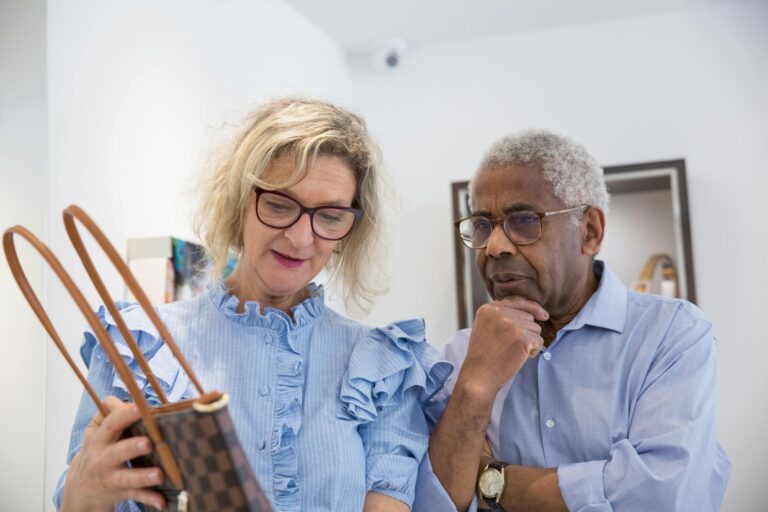
Consider someone who retires at 65 and spends the next decade volunteering at a local food bank several times a week. They are not just filling time. According to a 2023 UC Davis study analyzing nearly 2,500 older adults, frequent volunteers showed measurably better executive function and verbal episodic memory scores compared to non-volunteers, even after accounting for age, education, income, and sex. The protective effects appear to work through several biological pathways — stress reduction, increased blood flow to the brain, and the building of cognitive reserve over time. This article explores what the research actually says, what the biological mechanisms might be, and what limitations remain before we can call volunteering a proven prevention strategy.
Table of Contents
- What Does the Research Say About Volunteering and Dementia Risk?
- How Does a Sense of Purpose Protect the Aging Brain?
- What Is the Biological Mechanism Linking Social Activity to Brain Health?
- What Types of Volunteering and Purposeful Activity Are Most Beneficial?
- Does This Apply Equally to Everyone, or Are There Important Limitations?
- What About People Who Cannot Volunteer — Are There Alternatives That Confer Similar Benefits?
- Where Is the Research Headed, and What Should We Watch For?
- Conclusion
- Frequently Asked Questions
What Does the Research Say About Volunteering and Dementia Risk?
The most detailed recent data on volunteering and brain health comes from the KHANDLE study, a racially and ethnically diverse cohort analyzed by UC Davis researchers and presented at the Alzheimer’s Association International Conference in Amsterdam in July 2023. The study examined 2,476 older adults with an average age of 74 — 48% Black, 20% white, 17% Asian, and 14% Latino. Of those participants, 43% reported volunteering in the past year. Volunteers consistently outperformed non-volunteers on measures of executive function and verbal episodic memory, two cognitive domains that are early casualties of Alzheimer’s disease.
Crucially, those who volunteered several times per week showed the highest executive function levels of any group. The dose-response relationship matters here: occasional volunteering produced some benefit, but regular, frequent engagement produced the most. A follow-up study published in 2026 in the journal Alzheimer’s and Dementia further examined volunteering’s cognitive effects across both the KHANDLE and STAR study cohorts, reinforcing the finding across different populations. What makes these results notable is the diversity of the study participants — most prior brain health research has skewed heavily white and highly educated, leaving large gaps in our understanding of who benefits and how.

How Does a Sense of Purpose Protect the Aging Brain?
The August 2025 UC Davis study distinguished itself by following participants for up to 15 years, long enough to observe actual cognitive decline trajectories rather than just cross-sectional snapshots. The 28% lower dementia risk associated with higher purpose persisted even after researchers controlled for education, depression, and the APOE4 gene — the most significant genetic risk factor for late-onset Alzheimer’s. That last control is particularly important: the protective effect of purpose was not simply a byproduct of being genetically lucky. Perhaps most striking, people who carried genetic risk for Alzheimer’s but also reported a strong sense of purpose showed a later onset of cognitive decline compared to high-risk individuals who lacked that psychological buffer. This suggests that purpose may interact with biology in ways that slow the expression of underlying vulnerability rather than simply reflecting an absence of risk factors.
A meta-analysis drawing on multiple studies confirmed approximately 30% reduced dementia risk overall — a figure robust enough to appear across different study designs and populations. There is an important caveat, however. A strong sense of purpose in midlife and beyond tends to correlate with other health-protective behaviors: better sleep, more physical activity, stronger social networks, and lower rates of depression. Researchers work hard to control for these confounders, and the purpose-dementia association survives those controls, but it remains genuinely difficult to disentangle purpose itself from the constellation of habits it tends to accompany. For someone already battling clinical depression or severe chronic illness, the relationship between purpose and brain health may look different than it does in the general population.
What Is the Biological Mechanism Linking Social Activity to Brain Health?
Research points to several plausible biological pathways through which volunteering and purposeful activity may protect the brain. Social and cognitively stimulating activity appears to promote synaptogenesis — the formation of new synaptic connections — and may support neurogenesis in the hippocampus, the brain region most vulnerable to early Alzheimer’s pathology. These processes contribute to what researchers call cognitive reserve: a surplus of neural capacity that allows the brain to tolerate damage before symptoms appear. Social engagement also reduces chronic stress, which matters because sustained activation of the hypothalamic-pituitary-adrenal (HPA) axis — the body’s core stress response system — elevates cortisol in ways that damage hippocampal neurons over time.
Volunteering and purposeful activity, by contrast, appear to dampen this stress response. Physical components of volunteering, such as moving around a community garden or walking between shelter stations, may also increase cerebral blood flow and stimulate production of brain-derived neurotrophic factor (BDNF), a protein sometimes described as fertilizer for brain cells. A review published in Nature Aging found that greater social participation in midlife and late life is associated with 30 to 50% lower subsequent dementia risk across multiple studies — a range that underscores how consistently this relationship appears across different research methods. Another analysis in PMC found that late-life social activity independently predicted lower dementia incidence after controlling for baseline cognition and health status. Together, these converging lines of evidence make a reasonably coherent biological case, even if the exact mechanisms are not fully resolved.

What Types of Volunteering and Purposeful Activity Are Most Beneficial?
Not all purposeful activity looks the same, and the research offers some guidance on what appears most protective. Frequency matters: the KHANDLE data showed a gradient, with those volunteering several times per week enjoying greater cognitive benefits than those who volunteered rarely or occasionally. This parallels what we know about physical exercise — sporadic effort produces less benefit than consistent practice, and the brain appears to respond similarly to mental and social engagement. The nature of the activity also likely plays a role, though direct comparisons across activity types are limited in the literature. Volunteering that involves problem-solving, interaction with diverse people, and physical movement — tutoring students, coordinating food drives, staffing health clinics — may deliver more cognitive stimulation than solitary or passive activities.
That said, researchers have not yet established a definitive ranking, and even modest forms of purposeful engagement appear to confer some benefit. A retired accountant who volunteers once a week to help seniors with tax forms is doing something cognitively different from someone who spends that same hour watching television, even if neither intervention has been formally tested as a dementia prevention program. The tradeoff worth naming is this: highly structured volunteering programs through large organizations may offer consistency and social integration that informal activity does not, but they also require transportation, scheduling, and energy that can be barriers for older adults with mobility or health limitations. Purpose built around family caregiving, creative work, spiritual practice, or mentorship can serve similar psychological functions without those logistical demands. The research does not suggest that formal volunteering is the only path — only that purposeful engagement, in whatever form it takes, appears to matter.
Does This Apply Equally to Everyone, or Are There Important Limitations?
The KHANDLE study’s racial and ethnic diversity is one of its strengths, and the finding that protective effects appeared across Black, white, Asian, and Latino participants is meaningful. The UC Davis sense-of-purpose study also found its 28% risk reduction held across racial and ethnic groups. This cross-group consistency is reassuring and suggests that the underlying mechanisms are not limited to any particular demographic. However, researchers are careful to note that these studies establish association, not causation. A person with higher purpose may also have a healthier lifestyle, stronger support systems, and greater access to resources — all of which contribute independently to lower dementia risk.
The studies control for many of these variables, but no statistical model captures everything. It is also possible that early, subclinical cognitive changes actually reduce a person’s sense of purpose and their ability to volunteer, reversing the apparent direction of causality. This is known as reverse causation, and it is a recognized challenge in all longitudinal dementia research. The important warning here is that volunteering is not a guaranteed shield against Alzheimer’s disease, and people with a strong family history or significant genetic risk should not interpret this research as an alternative to medical screening, lifestyle management, or consultation with a neurologist. The research supports adding purposeful activity to a comprehensive brain health strategy — not substituting it for one. Researchers themselves are calling for rigorous intervention studies, where people are randomly assigned to purpose-building programs and followed over time, before the field can claim a causal link with confidence.
What About People Who Cannot Volunteer — Are There Alternatives That Confer Similar Benefits?
Formal volunteering is not accessible to everyone, particularly those managing chronic illness, disability, caregiving responsibilities, or financial constraints that limit their time. The research on purpose and social engagement suggests the cognitive benefit may lie in the psychological experience of meaningful contribution, not the specific mechanism of organized charity work. A grandmother who is deeply involved in raising her grandchildren, a retired engineer who mentors young people in his community, or a person who maintains an active role in a religious congregation may be drawing on the same biological pathways as someone logging hours at a nonprofit.
The Nature Aging and PMC analyses both used broad definitions of social participation that included informal social roles, not just formal volunteering. This matters practically: it means that building and maintaining purposeful connections in whatever form is feasible may be more important than the label attached to the activity. For people with limited mobility or social access, even structured online engagement or telephone-based mentorship programs may provide some degree of the same benefit, though this specific modality has not been as thoroughly studied in dementia research.
Where Is the Research Headed, and What Should We Watch For?
The field is moving toward intervention studies — randomized trials that would assign older adults to purpose-building programs and track cognitive outcomes over years. These are expensive, methodologically complex, and slow to produce results, but they are the necessary next step if the scientific community is going to move from “association” to “prevention strategy.” Several research groups are already designing such trials in the wake of the KHANDLE findings and the 2025 UC Davis purpose study.
What these future studies may also help clarify is the question of timing: does purpose and social engagement in midlife matter more than the same activity begun in late life? Some dementia researchers argue that the decades between 45 and 65 may be the most critical window for building cognitive reserve, while others point to evidence that benefit accrues even when engagement begins after retirement. The answer has significant implications for public health messaging and program design. In the meantime, the existing evidence is consistent enough to support action — not as a guaranteed prevention, but as a sensible investment in long-term brain health.
Conclusion
The research on volunteering and purposeful activity represents one of the more encouraging developments in dementia prevention science in recent years. A 28% lower risk of cognitive impairment associated with higher purpose, confirmed across 13,000 adults followed for up to 15 years, is a substantial finding. The parallel evidence from the KHANDLE volunteering studies — showing better memory and executive function in older adults who volunteer regularly — points in the same direction through a different lens.
Biological mechanisms involving cognitive reserve, stress reduction, and BDNF production provide a plausible explanation for why these associations exist. The honest summary is that purposeful engagement is not a cure and has not yet been proven in controlled prevention trials, but the evidence is strong enough that no comprehensive brain health strategy should ignore it. For people trying to protect their cognitive health as they age, adding regular meaningful activity — whether formal volunteering, mentorship, creative engagement, or community involvement — is a low-risk, potentially high-reward investment. The goal is not to eliminate Alzheimer’s disease with good deeds, but to build the kind of cognitive and psychological resilience that gives the brain every possible advantage.
Frequently Asked Questions
Does volunteering directly prevent dementia, or is the relationship more complicated?
Current research shows an association between volunteering and lower dementia risk, but not a proven causal relationship. People who volunteer may also engage in other health-protective behaviors. Researchers are working toward intervention trials that would test causation more directly.
How much volunteering is needed to see cognitive benefits?
The KHANDLE study found a dose-response pattern, with those volunteering several times per week showing the highest executive function scores. Even less frequent volunteering showed some benefit, but regular engagement appeared most protective.
Does this research apply to people with the APOE4 gene, which raises Alzheimer’s risk?
Yes. The UC Davis 2025 study found that the protective effect of purpose held even after controlling for APOE4 status. People with genetic risk who had high purpose showed later cognitive decline than those with similar genetic risk but lower purpose.
Can someone get the same benefit from informal purposeful activities instead of organized volunteering?
Possibly. The research on social participation and purpose uses broad definitions that include informal roles like caregiving, mentorship, and community involvement. The psychological experience of meaningful contribution may matter more than the formal label.
At what age should someone start focusing on purposeful activity for brain health?
The evidence suggests benefit at multiple life stages, but some researchers believe midlife — roughly 45 to 65 — may be a particularly important window for building cognitive reserve. The 2025 UC Davis study enrolled adults from age 45 onward.
Is a sense of purpose something that can be intentionally cultivated, or is it a fixed personality trait?
Research in positive psychology suggests purpose can be developed through deliberate practice — reflecting on values, taking on meaningful roles, and engaging with communities. Whether purpose-building programs can reduce dementia risk is currently an open research question.